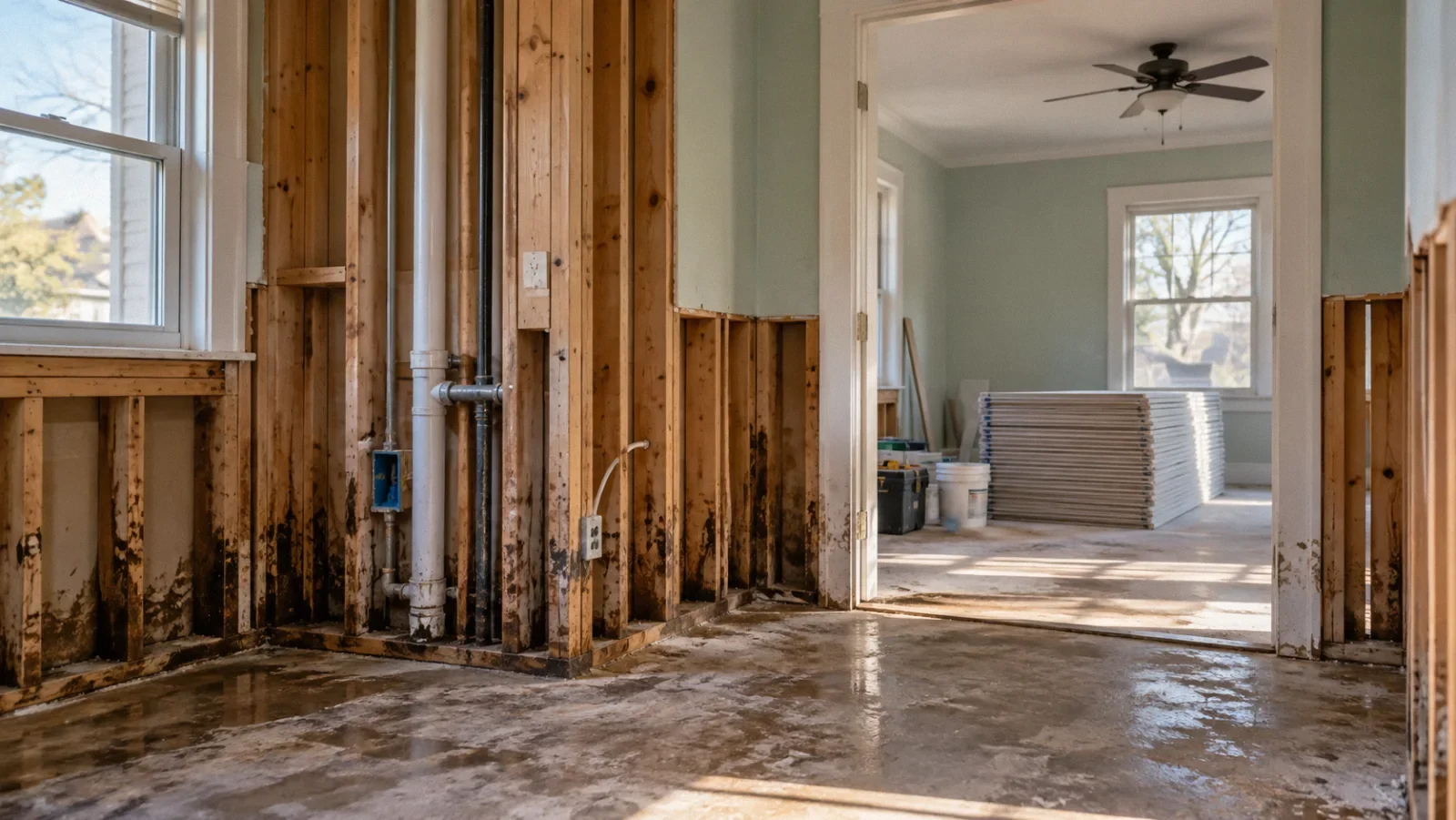
When hidden damage changes the job, document the finding and approve a defined change in scope, price and schedule. An unexpected condition should not become an unlimited authorization.
Establish what changed
A valid change discussion starts with a new fact or an owner decision. Examples include a concealed damaged layer, an inaccessible wet cavity, a required inspection finding or a requested finish upgrade. Record which of these triggered the proposal. The explanation should distinguish genuinely new work from an omission in the original estimate.
Ask for photographs, location and the reason the new task is proposed. If a wall must be opened further, identify how far and for what purpose. If the extent remains uncertain, authorize a defined investigation step and another review point. This approach gives the crew a workable next action while preserving control of a developing scope.
Make the change document complete
A change order should refer to the original contract, describe additions and deletions, state the price effect and identify schedule consequences. It should also address related tasks that the change makes necessary, such as protecting adjacent finishes or revising access. Avoid accepting a brief text that says extra work approved without the corresponding commercial terms.
California CSLB requires written changes signed before the change for the home-improvement contracts discussed in its guidance. Other jurisdictions can have different rules. The FTC likewise encourages contracts that reflect actual promises. Use the applicable local requirements, but do not treat a verbal instruction as the clearest available record for a substantial adjustment.
Separate emergency protection from optional expansion
Some new conditions require immediate protective action. Others can wait for pricing, insurer review or material selection. Ask the contractor to explain the distinction. A continuing leak may need prompt response, while replacing an undamaged adjacent vanity is a separate owner choice. Do not let the urgency of one task authorize unrelated improvements.
If urgent work proceeds under an existing contractual provision, request a timely written record of what was done, why and how it was priced. That record should not retroactively invent consent that was never given. Where authorization is disputed, preserve the facts and seek appropriate advice rather than casually signing a backdated document.
Coordinate the insurer supplement without confusing approvals
The contractor change order and insurer supplement serve different purposes. One changes the owner purchase agreement; the other asks the insurer to evaluate additional payment under the policy. Insurer approval does not automatically amend the contractor scope, and an owner signature does not ensure coverage.
Ask whether the added cost is contingent on insurer approval or remains the owner obligation regardless. Put that understanding in writing. If the contractor is waiting for a response, identify whether work will pause, continue on another area or incur standby or storage costs. Undefined waiting periods can create avoidable disagreements even when everyone agrees additional damage exists.
Maintain a running contract total
Track the original amount, approved additions, approved credits, payments and remaining balance. A change removing work should appear as a credit where appropriate, not disappear from the record. Version control matters when several trades are affected by the same condition. Ensure the supervisor and billing office use the same approved scope.
The Reddit example of an invoice rising after an earlier quote highlights this need. A larger final bill may have an explanation, but the owner should be able to trace it to documented decisions. At each major milestone, reconcile the current scope and total before the next phase begins rather than discovering all revisions in the final invoice.
- Finding: what new condition or owner choice triggered the change, and where is it documented?
- Scope: what is added, removed or substituted, including affected rooms and materials?
- Commercial effect: what changes in price, payment timing, schedule and responsibility?
- Authorization: who approved the defined change and which dated version controls the work?
Your next-step checklist
- Photograph newly revealed conditions before they are covered.
- Request a defined investigation step when extent is uncertain.
- Separate necessary repair from elective owner improvements.
- Record price, credits and schedule effects in the change document.
- Keep insurer review status separate from contractor authorization.
Related questions
Is every unforeseen condition an extra charge?
Not automatically. The original scope, risk allocation, exclusions and local law matter. Ask why the task is outside the existing agreement and what evidence supports the proposed adjustment.
Can I approve work by text?
The legal effect depends on the agreement and jurisdiction. For practical clarity, use a complete change document that captures scope, price, timing and approval rather than relying on an ambiguous short message.
Sources & context
Public guidance supports the principles in this article. The practical questions and examples are editorial interpretation, not a site assessment or a coverage decision. State-specific rules apply only where identified.
Community questions behind this topic
These discussions helped identify reader concerns. They are anecdotal, not technical or legal authority.