Identify who contracts with, supervises and pays every trade. A restoration company using subcontractors should provide a clear responsibility map rather than leaving the owner to resolve gaps between crews.
Find the contract chain
A project may involve a mitigation business, plumber, electrician, reconstruction contractor and specialist assessor. Some may be hired by the owner directly; others may work under the prime contractor. Write down the relationship for each participant. The person who appears on site is not always the person who owes contractual performance to the owner.
Ask who can instruct each trade, approve changes and accept completed work. If the owner gives a subcontractor an informal extra instruction, clarify whether it changes the prime contract or creates a separate purchase. Avoid a situation where two parties assume the other has authorized a task and neither has recorded its price.
Verify relevant qualifications and scope
Check licenses where required for the actual trade and jurisdiction, rather than relying only on the main restoration business credentials. Ask who obtains permits and arranges inspections. A general statement that all work is included should be supported by a scope showing the tasks and responsible parties.
California CSLB lien-prevention guidance recommends identifying subcontractors and suppliers and checking licensing. Those legal details apply in California, but the coordination lesson is useful elsewhere. A written list of participating businesses makes access, safety, payment and warranty questions easier to route when the project becomes complicated.
Define interfaces between trades
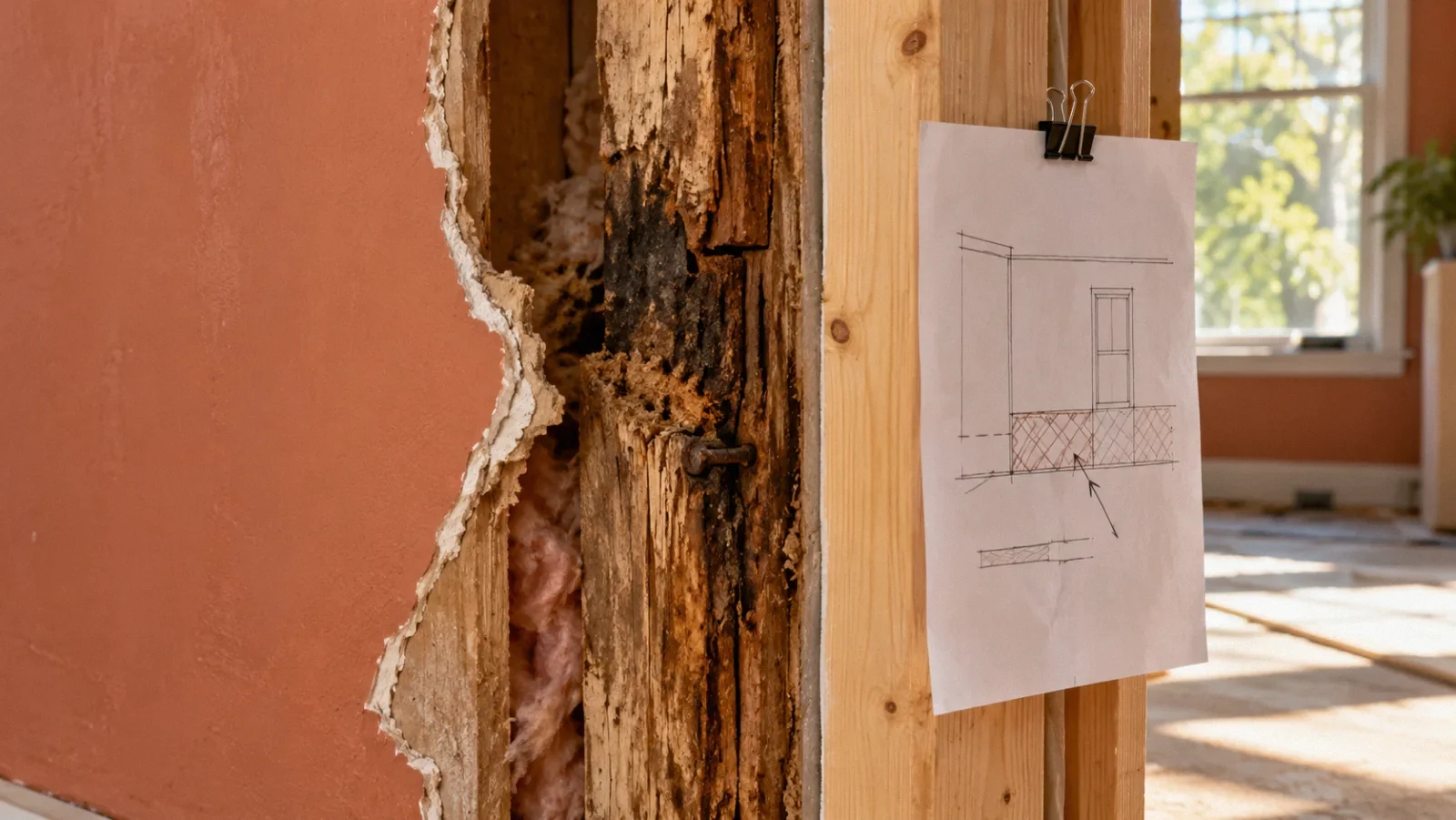
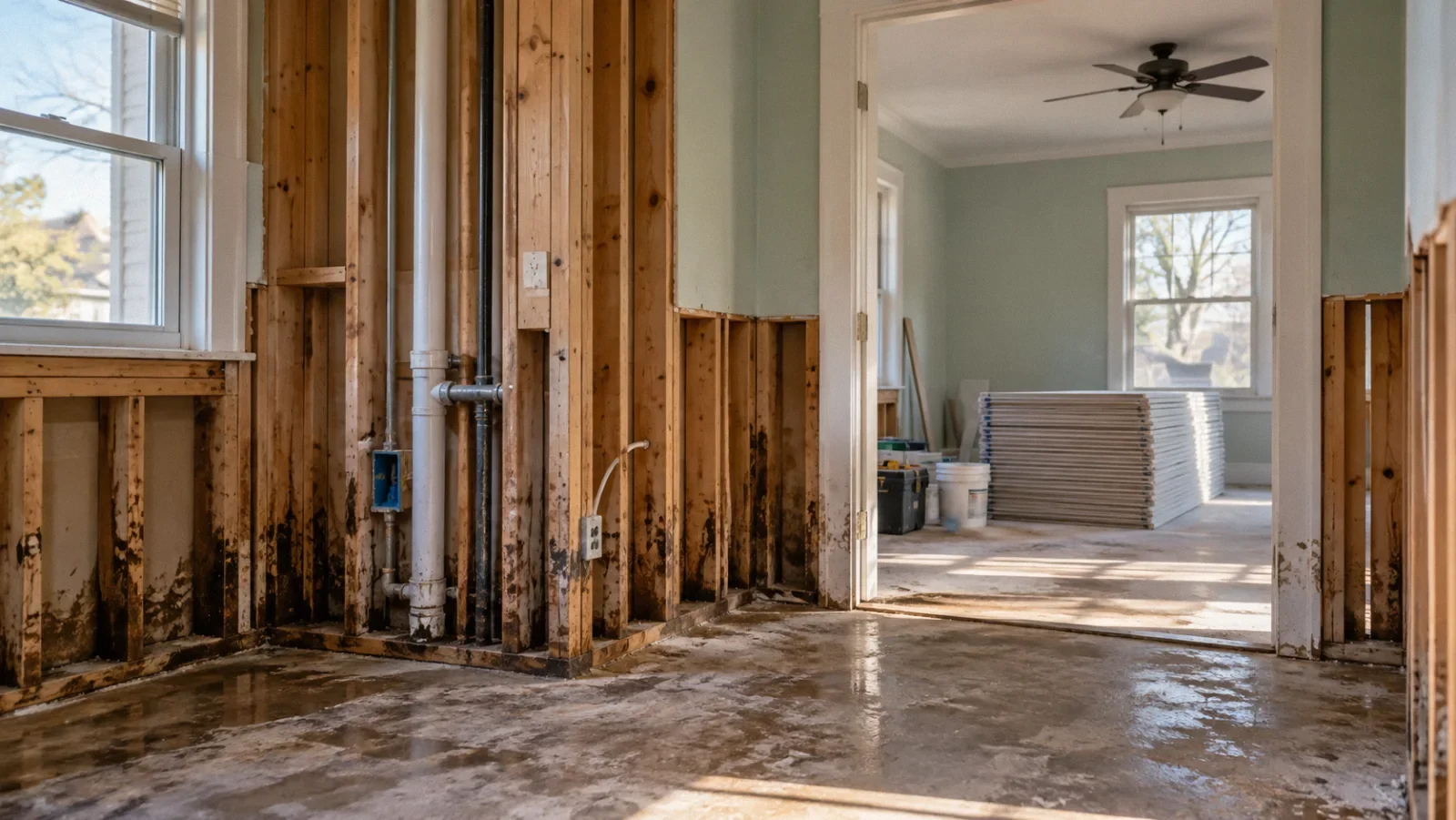
Many defects arise at the handoff rather than within one trade isolated task. A plumber may remove a fixture, the drying crew may open the wall and the reconstruction crew may close it. Who confirms the source repair before closure? Who reinstalls and tests the fixture? Who repairs incidental damage caused during access?
Use the room scope to assign these interfaces explicitly. Do not accept an outcome where each contractor completed its narrow task but the room remains unusable. Ask the prime contractor to coordinate the sequence and identify completion evidence for each dependency. If the owner manages separate contracts, that coordination role should be consciously assigned rather than left to chance.
Track payment and potential lien exposure
Paying the prime contractor may not prove that subcontractors and suppliers have been paid. California CSLB explains how unpaid participants can create mechanics-lien exposure under its state rules. The relevant notice, release and deadline requirements vary elsewhere. Ask for the appropriate local payment-control documents and keep them with the project ledger.
A preliminary notice is not necessarily an accusation or a lien already filed. It can be part of preserving rights under local law. Do not discard it because the sender is unfamiliar. Match it to the subcontractor list, save the receipt date and ask the prime contractor how the corresponding payment will be handled.
Handle a subcontractor problem through the correct route
If a trade damages property or leaves incomplete work, photograph the condition and notify the party responsible under your agreement. Request a written correction plan identifying who will attend and when. Do not assume that asking a subcontractor directly to fix a problem releases the prime contractor from its obligations.
If an alleged installation defect caused the original water loss, preserve that separate evidence as well. The Reddit sample included a condo owner who believed an upstairs water-heater replacement caused the damage. That allegation requires source findings and contract records; it should not be treated as established fault simply because several trades were involved.
- Contract map: owner-hired businesses, prime-contractor subcontractors and any insurer-appointed participants.
- Scope map: each trade task, exclusions, permit responsibility and interface with the next trade.
- Authority map: who gives instructions, approves changes and signs completion records.
- Payment map: invoices, progress payments, notices and appropriate releases for the work performed.
Resolve a three-trade handoff before closing the wall
A plumber repairs a supply connection, a mitigation crew dries the cavity and a builder plans to install wallboard. The owner should know who confirms the plumbing repair, who supplies the drying record and who authorizes closure. If each trade assumes another has checked the preceding step, the final wall can conceal an unresolved problem despite everyone completing a narrow task.
Ask the project lead for a short handoff record identifying the source repair, relevant inspection or test, moisture completion information and any remaining limitation. Where a permit or official inspection applies, include that requirement in the sequence. A contractor internal signoff should not be mistaken for a required public inspection.
Payment coordination needs similar clarity. If the owner contracts directly with the plumber but the builder hires the finish trade, the invoices and release questions follow different relationships. Mark those relationships on the project ledger. When a subcontractor requests an extra task directly from the owner, route the proposal through the agreed authority before assuming it belongs in the prime price. This prevents a later situation where both the subcontractor and prime contractor invoice the owner for different interpretations of the same conversation. Record the approved scope and who will pay it.
Your next-step checklist
- Request the names and roles of subcontractors and major suppliers.
- Verify qualifications relevant to each regulated activity.
- Assign source repair, testing, reconnection and final inspection explicitly.
- Save notices and use the correct local release process.
- Route defects to the responsible contracting party with dated evidence.
Related questions
Does the prime contractor have no responsibility because a subcontractor did the work?
Do not accept that conclusion without examining the contract and applicable law. Ask the prime contractor to identify its supervision and correction obligations and seek local advice if it disclaims them.
Should I pay a subcontractor directly if it says it has not been paid?
Do not make an informal duplicate payment without understanding the contract and lien implications. Verify the debt and obtain appropriate written arrangements or advice, potentially using a lawful joint-payment method.
Sources & context
Public guidance supports the principles in this article. The practical questions and examples are editorial interpretation, not a site assessment or a coverage decision. State-specific rules apply only where identified.
- California CSLB: How To Prevent a Mechanics Lienofficial
- California CSLB: What Is a Contract?official
Community questions behind this topic
These discussions helped identify reader concerns. They are anecdotal, not technical or legal authority.