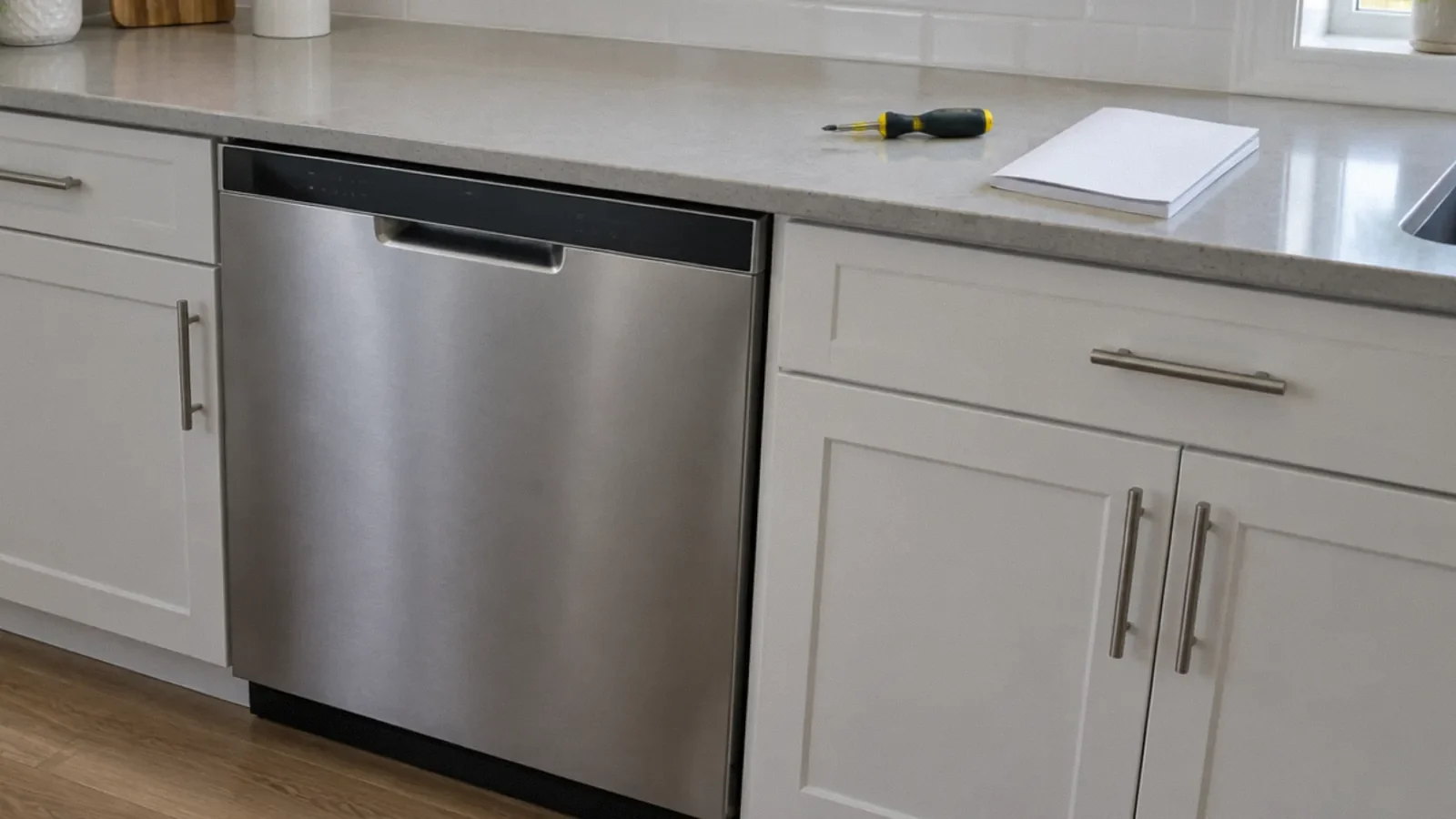
Check that the cycle finished, then inspect the removable filter and the visible drain path according to your model’s instructions. A blocked sink connection, kinked hose or recently installed disposal plug may also prevent draining. Stop if water is leaking or electrical components need attention.
First decide whether the water is unusual
A pool across the bottom of the tub after a completed cycle can indicate a drainage problem, but a little water in the filter area may be normal for some models. Whirlpool notes that water in that area helps keep seals from drying on certain machines. Check the owner’s manual for your appliance before treating every trace of water as a fault.
Make sure the cycle actually completed. A power interruption or an opened door can interrupt a cycle. Consult the control instructions for the model and note any displayed error code. Avoid restarting repeatedly if water is rising, leaking or backing up into the sink. Protect nearby flooring with towels and arrange service if the machine cannot be used without spilling.
Prepare before handling the filter
Stop the appliance and follow its manual for disconnecting power before cleaning the filter or handling standing water. If the power connection cannot be reached safely, or water is close to an outlet or wiring, keep clear and call a qualified professional. Do not reach into hidden machinery or work on electrical components.
Remove dishes and the lower rack as needed for access. A cup and absorbent towels can remove excess water from the tub if it is safe to do so. Wear suitable gloves and watch for sharp fragments. Never use a household chemical drain opener inside the dishwasher: it can be hazardous to a person who later services the machine and may damage components. Follow the appliance manufacturer’s product guidance.
Clean and reinstall the filter
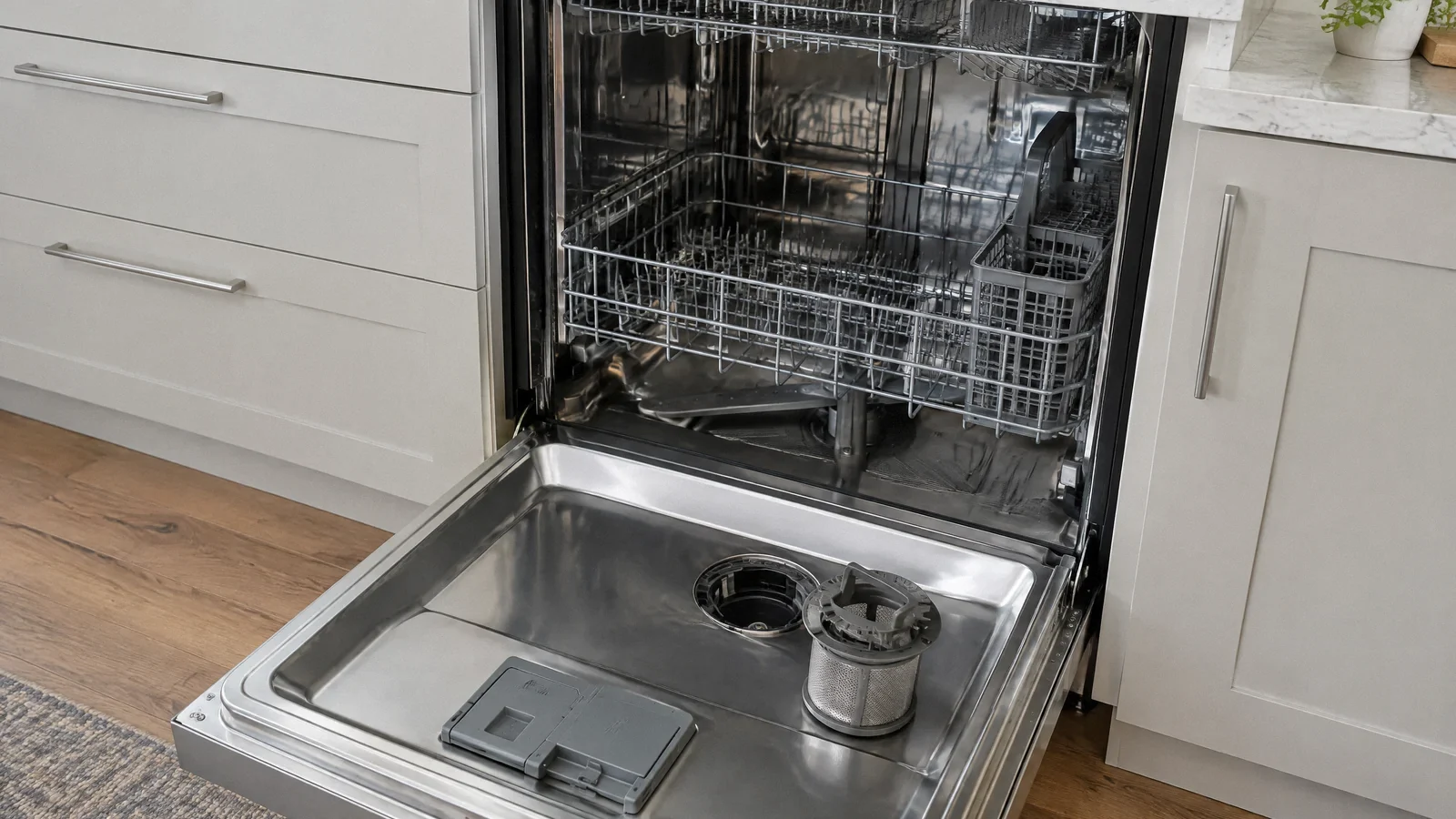
Find the removable filter in the bottom of the tub and release it as shown in the manual. Designs differ: do not force a component that is not intended for routine removal. Rinse the filter under running water and gently remove food residue using a soft brush if the manufacturer permits. Inspect accessible openings for visible debris without reaching into a pump or using a sharp tool.
Seat the filter correctly and lock it as instructed. An incorrectly fitted filter can permit debris into the drain system or affect operation. Replace the rack and check that it moves normally. If the filter is damaged or will not seat, obtain the correct replacement or ask a technician rather than running the machine with it loose.
Check the sink and disposal connection
A dishwasher usually drains through a hose connected to the sink plumbing, sometimes via an air gap or garbage disposal. If the sink itself is slow or backing up, the problem may be downstream of the dishwasher. Avoid running more water into a backed-up sink; a plumber can locate the obstruction.
If a garbage disposal was installed recently and the dishwasher stopped draining afterward, ask the installer to check whether the dishwasher inlet knockout plug was removed. Whirlpool identifies a retained plug as a possible cause. Do not put hands or tools into a disposal. If an air gap is present, consult the appliance and air-gap instructions for the accessible cap; water discharging from it can indicate an obstruction downstream.
Look for a kinked hose or backflow
Look at the visible hose under the sink without pulling the dishwasher out. A hose crushed by stored items or sharply kinked can restrict flow. Remove the pressure if this can be done without disturbing the connection. A proper high loop or air gap helps protect against wastewater flowing back; the correct arrangement depends on local requirements and the installation instructions. Do not lower or remove an existing loop just to make the hose look neater.
If the hose or connection needs to be disconnected, have a qualified person do the work if you are unsure. Water can spill, clamps can leak when reassembled, and an incorrect connection can allow backflow. A blocked hose, pump fault or control problem may require appliance service. Tell the technician what you observed and whether any disposal or plumbing was recently replaced.
Test once and know when to call
After the filter is correctly installed and the visible checks are complete, restore power only when safe and run the short test or drain cycle specified by the manufacturer. Watch accessible connections for leaks and stop the test if water escapes or backs up. Check the tub at the end and compare any remaining water with the manual’s description.
Call for service if water remains across the tub, the pump makes an unusual sound, an error returns, or the machine leaks. A technician can distinguish an obstruction from a failed pump or controls without guessing at replacement parts. A plumber may be the better first call when the sink or household drain is also backing up.
Prevent repeat blockages
Scrape large food scraps into the trash before loading, and clean the filter on the schedule recommended for the model. Keep the hose protected from crushing under the sink. Use detergent intended for dishwashers and the amount recommended for your conditions; ordinary hand dish soap can create excessive suds.
If the problem recurs, record whether it happens on every cycle, only when the sink is in use, or after a plumbing change. This history helps the technician locate the restriction and reduces the chance of paying for an unnecessary part.
Your next-step checklist
- Confirm the cycle completed and consult the manual.
- Disconnect power safely and clean the removable filter.
- Check the sink, air gap and visible hose for obvious problems.
- Ask about the disposal knockout plug after a new installation.
- Run one supervised test and call for service if the problem persists.
Related questions
Is a little water below the filter always a clog?
No. Some models retain a small amount there normally. Check your model’s instructions and distinguish that from water pooled across the tub.
Should I pour drain cleaner into the dishwasher?
Avoid household chemical drain openers in the appliance. Follow the manufacturer’s instructions and call a professional for a blockage you cannot safely access.
Sources & context
Public guidance supports the principles in this article. The practical questions and examples are editorial interpretation, not a site assessment or a coverage decision. State-specific rules apply only where identified.
- Dishwasher Not Drainingmanufacturer
- Water Remains at End of Cyclemanufacturer