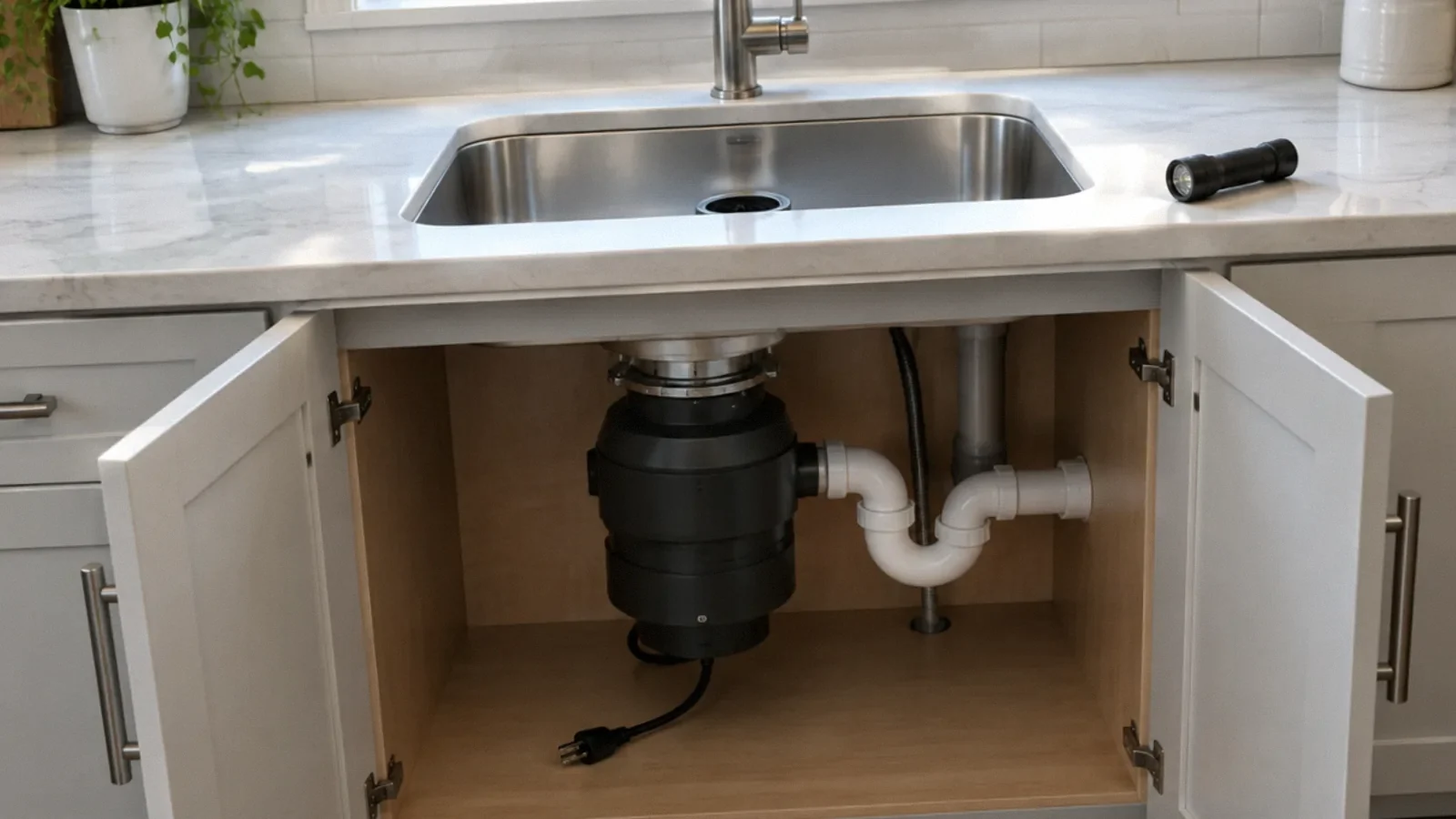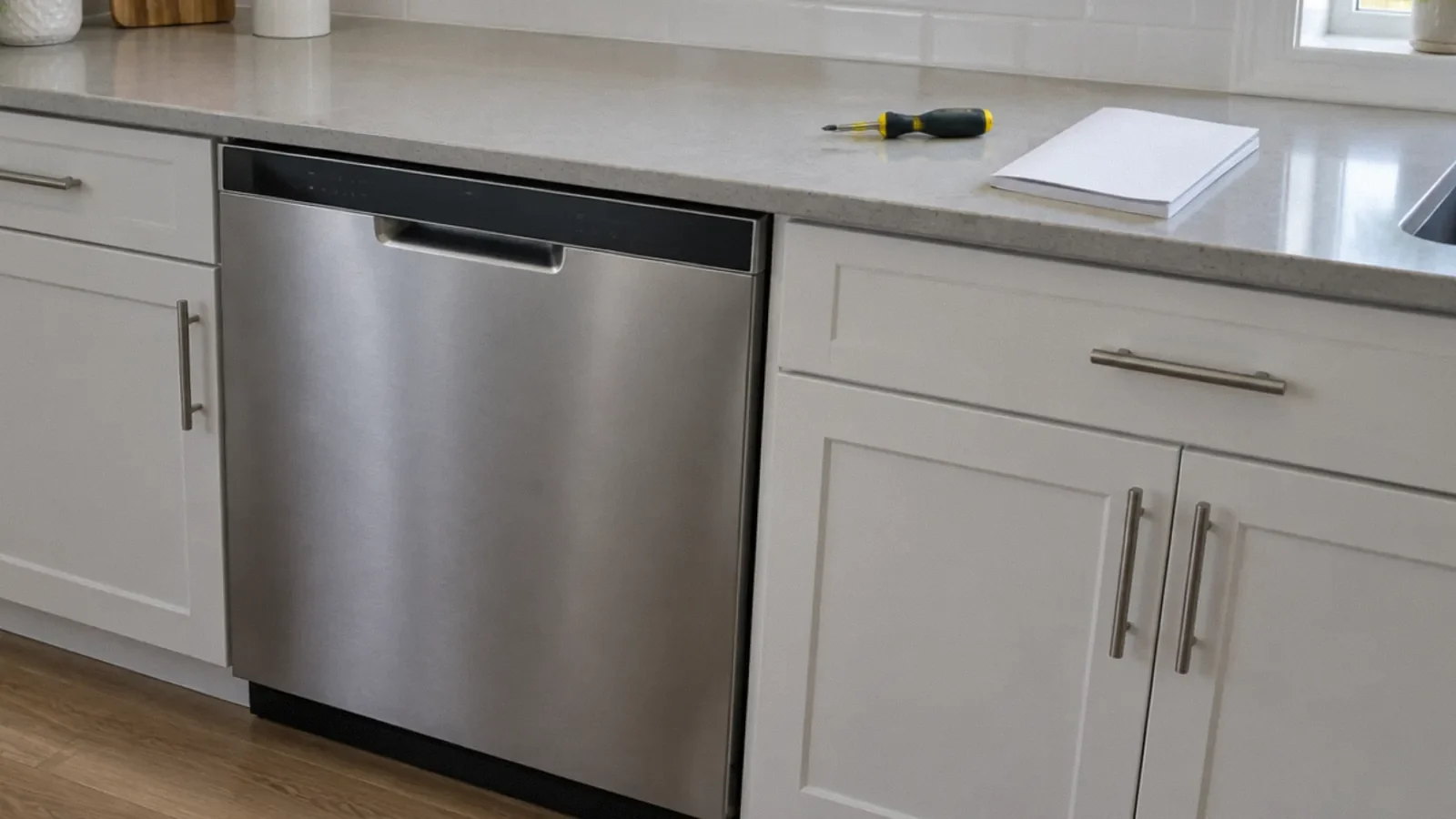
Identify the symptom and consult the dishwasher’s model-specific instructions. Check only controls, power and filters that are safely accessible to the owner. Do not open electrical panels or work on a wet connection. A qualified appliance technician or plumber can diagnose persistent electrical, mechanical or drainage problems.
Start with the symptom
A dishwasher that does not start, stops during a cycle, leaves water in the tub or makes an unfamiliar noise can have different causes. Record any error code exactly as shown, when the problem started and whether it follows a power outage or recent installation. A code’s meaning depends on the make and model.
Do not keep restarting a machine that smells burned, sparks, smokes or leaks onto electrical components. Stop using it and arrange qualified help. If there is an immediate fire or electrical danger, leave the area and contact emergency services.
Check simple controls
Confirm that the door closes fully, the selected cycle has started and any control lock or delay setting is understood. Consult the owner’s manual before changing settings. A dish rack, utensil or seal out of position can prevent a door from closing properly, but do not force the latch.
If the display is blank, a power supply problem is possible. Check only a safely accessible switch, plug or breaker from a dry location and follow the manual. A breaker that trips again needs professional attention; repeated resets do not identify or correct the fault.
Isolate power before owner maintenance
Before removing a filter or performing any maintenance that the manufacturer permits, turn off and disconnect power as the manual directs. Some dishwashers are hardwired and require a qualified electrician or technician to isolate the circuit. Do not remove access panels or touch wiring.
If water is on the floor near the plug, outlet or electrical controls, stay clear and have power isolated safely. Never stand in water to reach a switch. A shutoff valve can stop a supply leak if it is accessible and can be operated without entering a hazard.
A dishwasher that will not drain
A failure to drain has its own diagnostic guide. Stop the machine and consult its model manual; call an appliance technician if the cause is not clear.
Noise, poor cleaning or an incomplete cycle
A loose utensil, incorrectly loaded rack or blocked spray arm can cause noise or poor washing. Check the owner-accessible parts described in the manual and remove objects only after the appliance is safely stopped. Persistent grinding, a hot electrical smell or a damaged component calls for service.
Low water pressure, temperature, detergent and loading can affect performance. Do not bypass a door latch, safety switch or sensor to force a cycle. A technician can determine whether an electrical or mechanical component needs repair.
Leaks require a separate assessment
Water on the floor can come from the door seal, supply line, drain hose, sink plumbing or the appliance itself. Stop the machine and shut off an accessible supply valve only if it is safe. Keep water away from outlets and do not pull out a heavy appliance without considering the hoses, wiring and floor protection.
A damp cabinet or floor may remain wet after the visible puddle is wiped up. Arrange repair and assess affected materials if water has entered beneath flooring or cabinets. Do not assume that a new door gasket solves every leak without identifying its source.
Who to call and what to ask
An appliance technician may diagnose controls, pumps, motors and manufacturer error codes; a plumber may be needed for supply or drain connections; a qualified electrician should address building wiring. The correct trade depends on the observed problem and the installation. Some service companies can coordinate more than one part of the work.
Provide the make, model, symptoms, error code and any relevant leak history. Ask whether the diagnostic fee is included in a repair, whether parts and labor are covered by a warranty, and how an additional repair will be approved. Do not authorize work on an unidentified fault solely because a generic part often fails.
Check the result after service
Ask the technician what was found, which part was repaired or replaced and how the machine was tested. Confirm that water connections are dry, the appliance is secured and any removed panels are restored. Keep the invoice, part information and model-specific instructions.
Monitor the first normal cycles from a safe position and stop the machine if leaking, smoke, a burning smell or repeated breaker trips return. A successful repair of one component does not prove every unrelated component is in perfect condition.
If a dishwasher floods the kitchen
Stop the appliance and water supply if safe. Keep away from electrical hazards and arrange appropriate water cleanup.
Separate drain and flood problems
A dishwasher that does not drain needs a symptom-specific diagnosis; consult the model manual and arrange appliance service if basic checks do not resolve it. Water spreading across the kitchen requires stopping the appliance and water supply only when safe, keeping away from electrical hazards and arranging appropriate cleanup. Each problem has a separate guide in the related reading.
Your next-step checklist
- Record the symptom, make, model and error code.
- Do not touch electrical connections in a wet area.
- Follow the manual for owner-accessible maintenance.
- Never bypass safety switches or repeatedly reset a tripping breaker.
- Request a diagnosis and test record from the service professional.
Related questions
Why will my dishwasher not start?
A door, control setting, power supply or component fault may be involved. Follow the model instructions and seek service if simple safe checks do not resolve it.
Who fixes a dishwasher?
An appliance technician commonly diagnoses the machine; a plumber or electrician may be needed for supply, drainage or building wiring.
Can I clean the filter myself?
Only if the manufacturer identifies it as owner-accessible and you can safely isolate the appliance and follow its instructions.
What should I do if water reaches an outlet?
Stay clear of the wet electrical area and have power isolated safely by a qualified professional.
Why will my dishwasher not drain?
A clogged filter, sink connection or another component may be involved. Follow the model instructions and seek qualified service for leaks, electrical concerns or unresolved problems. Do not put drain-opening chemicals in the dishwasher.
Sources & context
Public guidance supports the principles in this article. The practical questions and examples are editorial interpretation, not a site assessment or a coverage decision. State-specific rules apply only where identified.
- US EPA: Home maintenanceofficial guidance
- US EPA: Household hazardous wasteofficial guidance
- CDC: Reentering a flooded homepublic health guidance
- Whirlpool: Dishwasher not drainingmanufacturer guidance