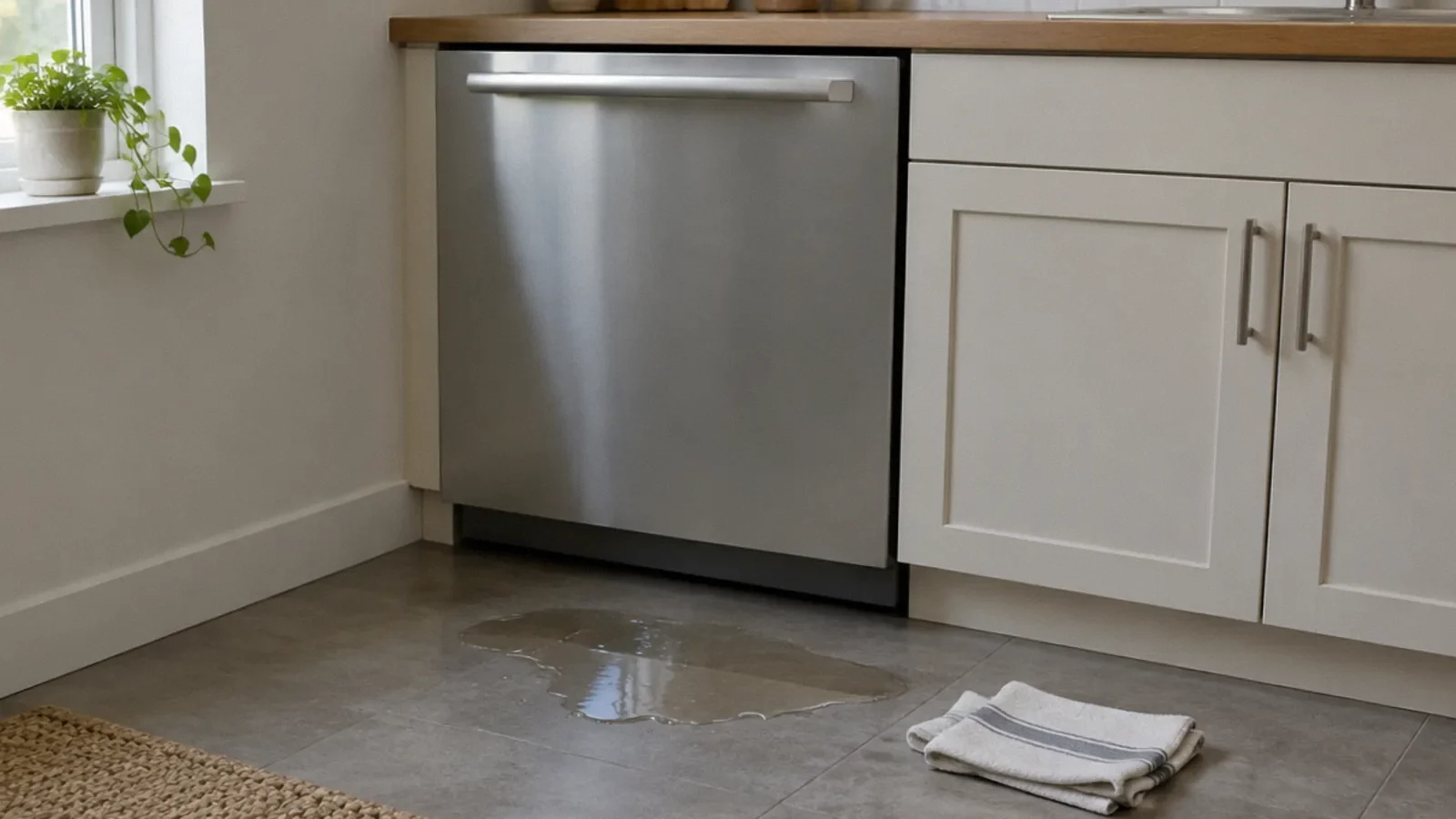
Stop using the dishwasher and keep people away from water near electrical equipment. If the dishwasher’s water shutoff is clearly identified and safely reachable, closing it may limit a supply leak. A door seal, supply connection, drain problem or another fault can cause leakage, including when the machine is not running; a technician must identify the actual source.
Keep away from electrical hazards
Do not touch the appliance plug, a switch or electrical panel while standing in water or if the equipment is wet. If you cannot isolate power safely from a dry location, contact a qualified electrician. For sparks, smoke or an immediate danger, leave and call emergency services from a safe place.
Stop the appliance only if its controls are safely accessible. Do not pull the dishwasher out across a wet floor or reach behind it to find a plug or leak. An appliance service technician can assess the unit once the area is safe.
Stop the water if the valve is accessible
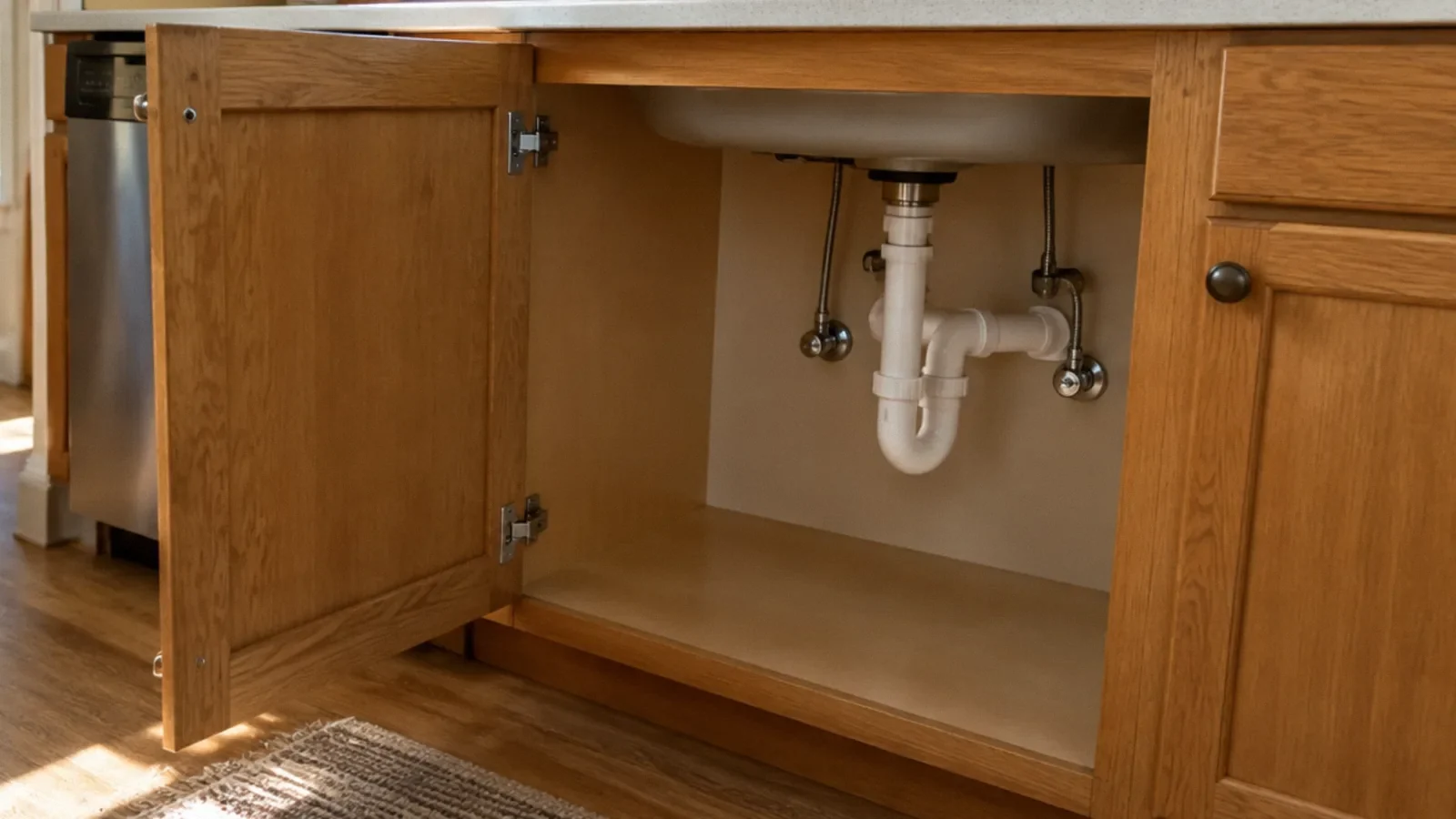
Many installations have a dedicated supply shutoff, often near the sink, but placement and control vary. If you can positively identify and safely reach the valve, closing it may limit leakage from the supply side. Do not force a stuck valve or reach through water near electricity.
If the dedicated valve cannot be reached or does not stop the leak, a safely accessible main water shutoff may be needed. Contact a plumber, property manager or utility for help with isolation. Stopping the supply does not remove water already trapped under cabinets or flooring.
Where a dishwasher leak can start
A damaged or dirty door gasket, a latch problem, incorrect detergent or excessive suds can allow water to escape during a cycle. Whirlpool also lists a damaged supply line and leveling issues among possible causes. The actual source needs inspection; do not replace parts based only on a wet spot.
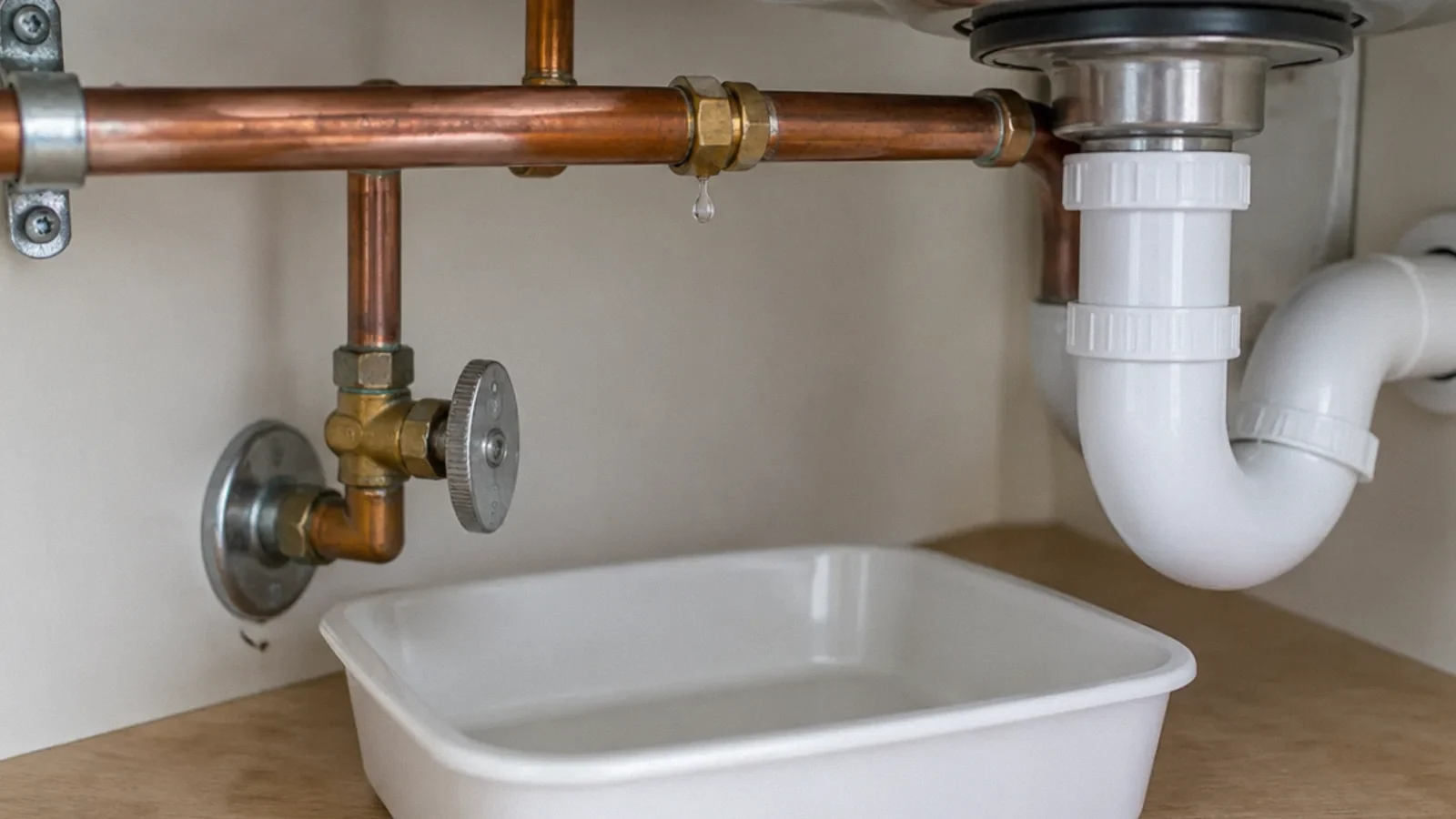
A drain hose, connection or adjacent sink plumbing can also leak or back up. Water may travel along the cabinet base before appearing in front of the machine. Record where the water first appeared and whether the sink, disposal or dishwasher was in use.
Why might it leak when not running?
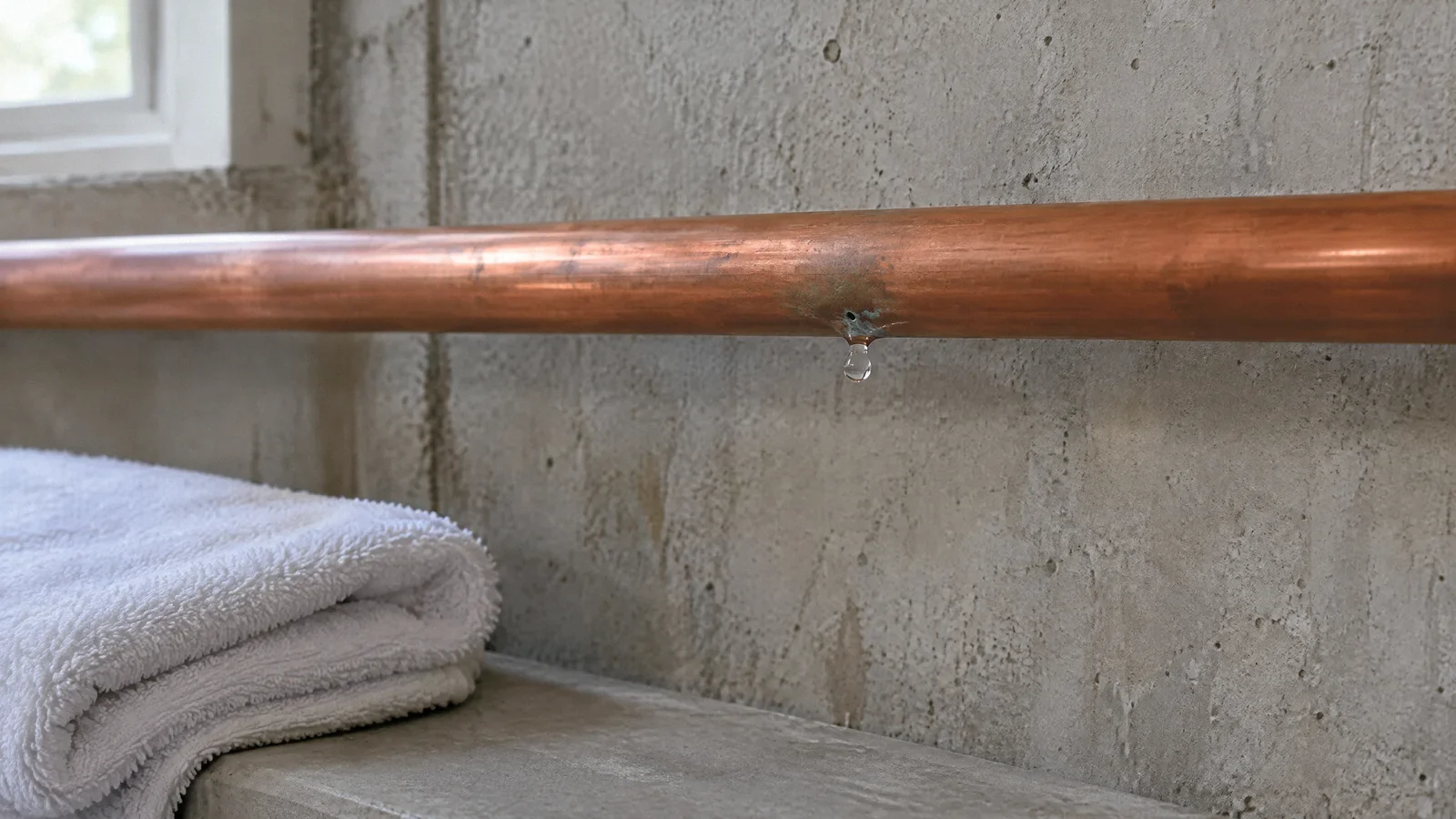
A supply hose, connection or valve may remain pressurized when the dishwasher is off, and water can also come from nearby sink plumbing or another appliance. A leak during inactivity therefore does not prove the dishwasher’s controls or door are at fault. The timing is a useful clue, not a diagnosis.
If water continues to accumulate, do not restart the machine to reproduce the leak. Close the relevant supply if it can be done safely and arrange service. Tell the technician when the water was observed and whether the sink or other fixtures were being used.
Check the floor and cabinets
Water can move beneath flooring, the cabinet toe-kick, underlayment and adjacent rooms. A dry-looking surface does not prove that the hidden layers are dry. After power and water hazards are controlled, photograph visible conditions and arrange moisture assessment if water traveled under materials.
Do not lift damaged flooring, open walls or move a heavy appliance without evaluating electrical, structural and material hazards. Wet particleboard, swollen cabinet bases or an affected ceiling below can require different repairs. Keep clear of a sagging ceiling.
Clean up according to the water source
A small amount of water from a clean supply line may be handled differently from wastewater backing up through a drain. Keep people and pets away from potentially contaminated water and use help appropriate to the size and source. Do not use an ordinary household vacuum on standing water or wet electrical equipment.
A restoration professional can assess affected layers and a safe drying plan. If visible mold has developed, avoid blowing fans directly at the growth and follow appropriate cleanup guidance. Correct the leak before relying on drying or repainting.
Document for service or insurance
Record the discovery time, visible rooms and materials, any safe shutoff action, and the service technician’s findings. Keep photographs and receipts. Notify the insurer or property manager promptly if damage may involve a claim, but do not assume that the appliance, plumbing repair and resulting floor damage have identical coverage.
Ask the insurer how to document emergency mitigation and when an inspection is needed. Coverage depends on the cause, policy and facts. If you have a home service contract, check its reporting and authorization requirements separately.
Prevent another leak
Use detergent intended for the appliance and follow the manufacturer’s loading, cleaning and maintenance instructions. Check accessible door seals and report recurring moisture; do not bypass a safety device or keep running a leaking unit because the puddle is small.
After repair, ask the technician what failed, what was replaced and how the repair was checked. Confirm that affected building materials have been assessed and dried before replacing finishes. Periodically look for new moisture around accessible cabinet bases.
Safe checks before calling for repair
Stop using the dishwasher and shut its accessible supply valve only if it is safe to reach. Without removing panels or restarting a leaking machine, inspect the exposed door gasket for food debris, displacement or damage, and check that the detergent and amount match the model instructions. Look for drips or staining at accessible connections, repeated moisture, swollen cabinet bases and musty odor. Photograph findings; a technician can test hoses, pump, valve and concealed connections safely. Do not operate the machine merely to reproduce a leak.
Water on a ceiling below
Keep people away from a bulging, sagging or dripping ceiling and electrical fixtures. Do not puncture it or stand beneath it. Contact building management and a qualified professional; switch off power only if the disconnect can be reached safely without entering wet areas. Repairing the dishwasher alone does not establish that the ceiling cavity, insulation and floor assembly have dried. Ask the assessor to document the affected layers before closing them.
Your next-step checklist
- Stop using the dishwasher and stay away from wet electrical equipment.
- Close the identified supply valve only if it is safe and accessible.
- Arrange appliance or plumbing service without moving the unit through water.
- Check for hidden water under cabinets and flooring.
- Document the loss and follow insurer or service-contract instructions.
Related questions
Why is my dishwasher leaking onto the floor?
Possible causes include the door gasket, latch, detergent, supply connection, drain or nearby plumbing. A technician must identify the actual source.
Can a dishwasher leak when it is not running?
Yes. A supply connection may remain pressurized, and nearby plumbing can leak independently. Timing alone does not identify the fault.
Should I pull the dishwasher out to find the leak?
Do not move it through standing water or reach behind wet electrical equipment. Arrange qualified help when the area and supply are safe.
Does homeowners insurance cover dishwasher water damage?
It depends on the cause, policy and circumstances. Appliance repair and resulting damage may be treated differently; ask the insurer for a written explanation.
Sources & context
Public guidance supports the principles in this article. The practical questions and examples are editorial interpretation, not a site assessment or a coverage decision. State-specific rules apply only where identified.
- Whirlpool: Dishwasher leak causesmanufacturer guidance
- GE Appliances: Dishwasher frequently asked questionsmanufacturer guidance
- California Department of Insurance: Residential property claimsstate insurance guidance
- U.S. EPA: Mold and moisture guidefederal moisture guidance