Turn the disposal switch off and keep hands and tools out of the grinding chamber. A silent unit, a humming unit and a sink that will not drain can have different causes. Follow the exact manufacturer’s instructions for power isolation and any reset or jam-clearing procedure; call a qualified professional if you are unsure.
Begin with power and personal safety
A garbage disposal can start unexpectedly and cause serious injury. Turn the wall switch off and disconnect power according to the appliance instructions before any inspection or service. Never put your hand into the grinding chamber, even if you believe the unit is off. Keep children away from the switch and sink.
If the plug, wiring or cabinet is wet, damaged or inaccessible, do not reach into the area to disconnect it. Keep clear and have a qualified electrician or service professional isolate the circuit safely. A switch in the off position is not proof that all electrical hazards have been removed.
Notice what happens when the switch is used
A unit that is completely silent may have lost power or tripped its overload protection. A humming sound can indicate that the motor is energized but the mechanism cannot rotate. A disposal that runs but leaves water in the sink may have a downstream drainage problem. These are clues, not definitive diagnoses.
Do not keep switching on a humming unit or hold the switch while it fails to turn. Stop, turn it off and follow the manufacturer’s troubleshooting instructions. Running a jammed motor can cause additional damage and make the problem more difficult to assess.
Check the power supply without opening wiring
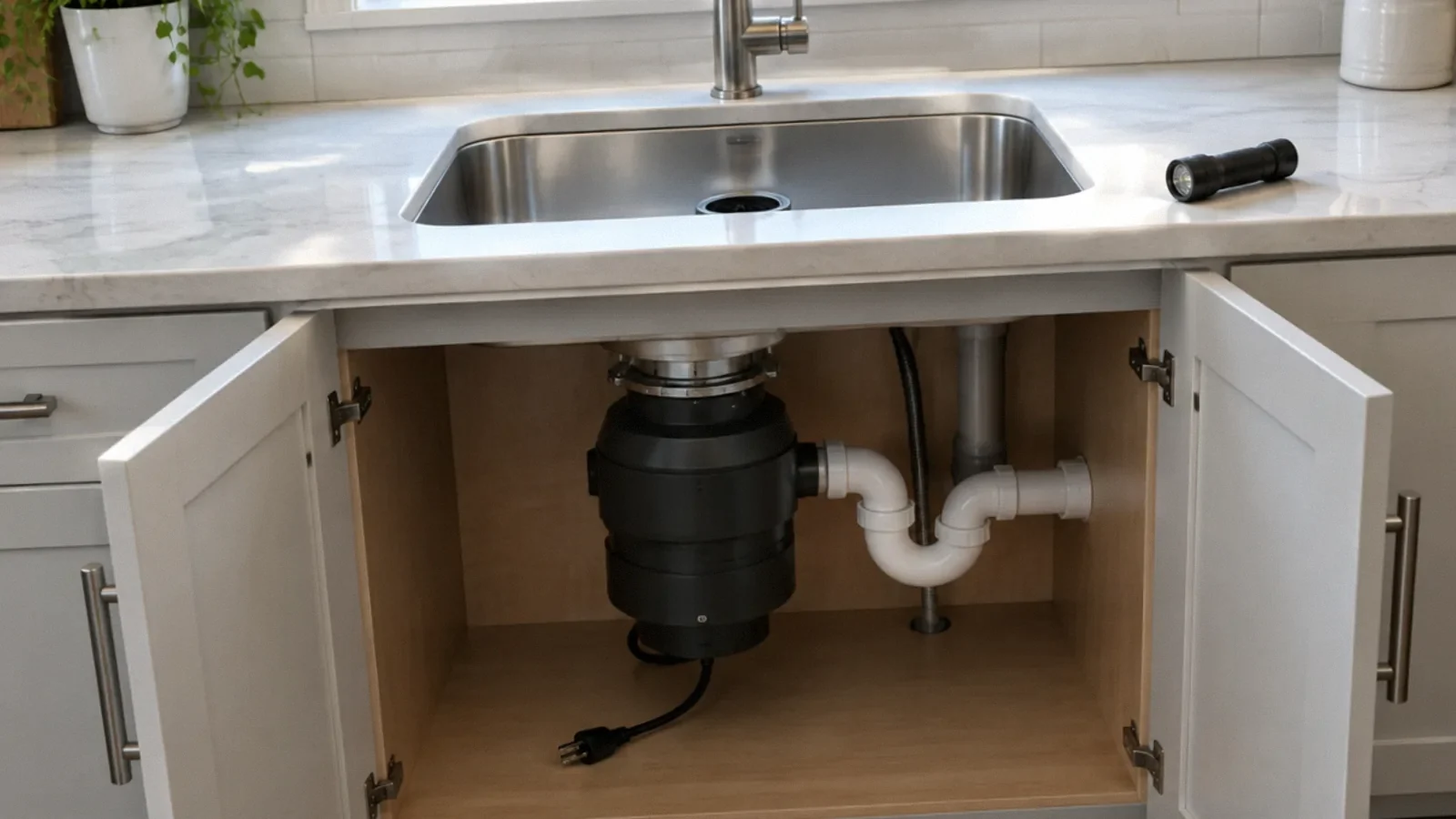
If it is safe to access, verify that the plug is connected and that the circuit has not tripped. Some installations use a ground-fault protected outlet or a dedicated circuit. If a breaker or protective device trips repeatedly, stop resetting it and arrange an electrical inspection. Do not remove a cover or probe wiring.
An outlet can lose power for reasons unrelated to the disposal. A tripped breaker is not a complete explanation for water under a sink or damaged wiring. If the cabinet is damp, find and address the leak separately before returning electrical equipment to service.
Use a reset only as directed
Many disposals have an overload reset button, but location and procedure vary. InSinkErator instructs owners to turn the disposal switch off before resetting its models. Read the model-specific manual, allow the motor to cool if instructed and press the reset only as directed.
If the reset will not stay engaged or the unit trips again, do not repeatedly force it. A jam, motor problem or electrical fault may remain. Record the model and symptoms and contact a qualified appliance service provider or plumber.
If the disposal is jammed
After isolating power as the manufacturer requires, use only the supplied tool or method specified for that model. Some units have a bottom socket for a manual wrench; other designs differ. Never put fingers into the chamber and do not improvise with tools that can damage the mechanism or get stuck.
If an object is visible and the instructions allow removal, follow the manufacturer’s safe method and maintain power isolation. If you cannot confirm that power is disconnected, cannot reach the mechanism safely or cannot free the obstruction without force, stop and call a professional.
If the sink does not drain
A disposal that turns on does not guarantee the connected drain is clear. A blocked trap, branch line or dishwasher connection can affect drainage. Stop adding water when it is backing up and contain any leak. Avoid pouring chemical drain cleaner into a disposal unless the appliance and product instructions expressly permit it.
Never mix drain cleaners with other chemicals. Tell a plumber if a chemical has already been used so the technician can take precautions. A drain blockage and a disposal motor problem can occur together, but one does not prove the other.
Leaks and dishwasher connections
Water under the sink can come from the disposal body, sink flange, dishwasher hose, trap or another fitting. Dry the accessible exterior and observe only from a safe position; do not run the unit with an open electrical compartment or place your hands near moving parts. Persistent leaks need inspection.
If a dishwasher connection was recently installed, a qualified installer can check it against the appliance instructions. Avoid disconnecting hoses when the cabinet is flooded or the contents may spill. Document the source if visible and protect nearby stored items.
Repair or replacement
Contact the manufacturer or a qualified service professional if the housing is cracked, the motor repeatedly trips, the unit leaks from its body or safe troubleshooting does not restore normal operation. Ask whether diagnosis, removal, replacement and disposal are included in the estimate.
Keep the model number and warranty information. A new disposal should be compatible with the sink, electrical supply and dishwasher connection. After any work, check for leaks and abnormal noise under normal operating conditions without reaching into the chamber.
Choose the next step from the symptom
A silent unit, a humming motor and water that backs up are different symptoms and can have different causes. Record which occurs, whether a reset has already been attempted and whether other fixtures also drain slowly. Avoid repeatedly operating a stalled motor.
A clog in a disposal or drain needs its own diagnosis; routine cleaning and maintenance are separate from restoring a nonworking motor. Consult the related guides for those tasks and disclose any drain product to the service provider.
Your next-step checklist
- Turn the switch off and isolate power before service.
- Never put a hand into the grinding chamber.
- Do not keep running a humming or repeatedly tripping unit.
- Avoid electrical contact if the cabinet is wet.
- Follow the model-specific reset and jam-clearing instructions.
Related questions
Why is my disposal humming but not turning?
A jam can prevent the mechanism from rotating. Turn it off and follow the manufacturer’s safe isolation and troubleshooting procedure.
Where is the reset button?
Its position varies by model. Check the appliance manual and turn the switch off before using the reset as directed.
Why is the sink not draining when the disposal runs?
The obstruction may be in the disposal or connected drain. Stop adding water and arrange appropriate inspection.
Can I reach into the disposal if the switch is off?
No. Never put a hand into the grinding chamber; isolate power and follow the manufacturer’s instructions.
How should I maintain a garbage disposal?
Follow its manufacturer’s instructions, keep unsuitable material out and address recurring jams or leaks. Never place a hand inside the unit.
Sources & context
Public guidance supports the principles in this article. The practical questions and examples are editorial interpretation, not a site assessment or a coverage decision. State-specific rules apply only where identified.
- US EPA: Home maintenanceofficial home maintenance guidance
- Moen: Garbage disposal has no power and motor resetmanufacturer guidance