Turn off and disconnect power before cleaning accessible parts, and never put your hand into the disposal. Follow the model’s instructions for removing and washing its splash guard. Some manufacturers permit ice for certain models, but it does not fix a blockage or substitute for cleaning the guard.
Start with power and safety
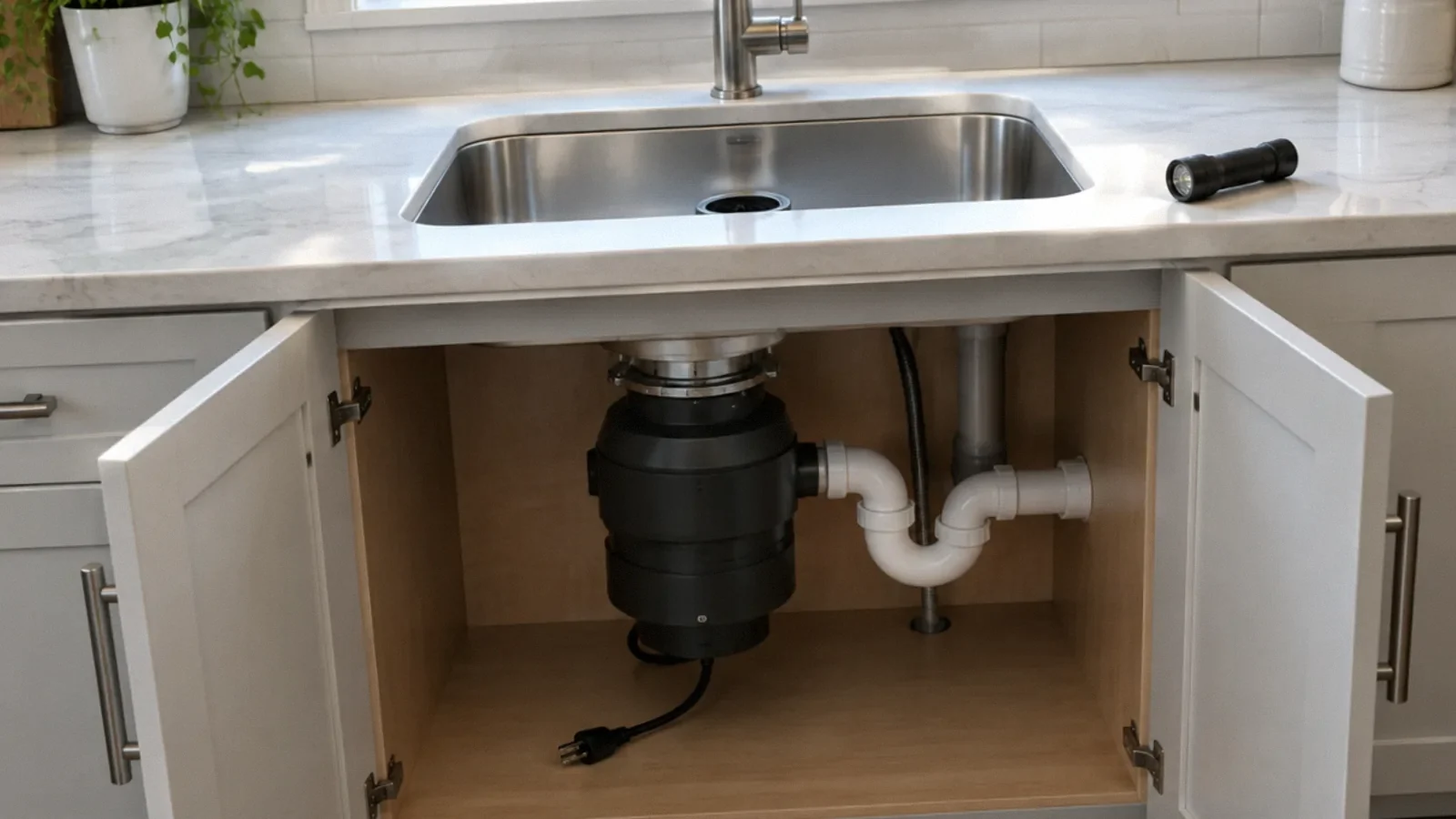
A disposal can cause serious injury if it starts unexpectedly. Turn off its switch and disconnect power according to the manufacturer’s instructions before cleaning any accessible part. If a safe disconnection is unclear or the wiring is hardwired, ask a qualified professional. Never reach into the disposal chamber, even when it is off.
Keep children away while cleaning. Do not use a wet plug or work at an electrical outlet while standing in water. If the sink is backed up, the unit hums, the housing leaks or there is an electrical problem, stop cleaning and arrange assessment.
Clean a removable splash guard
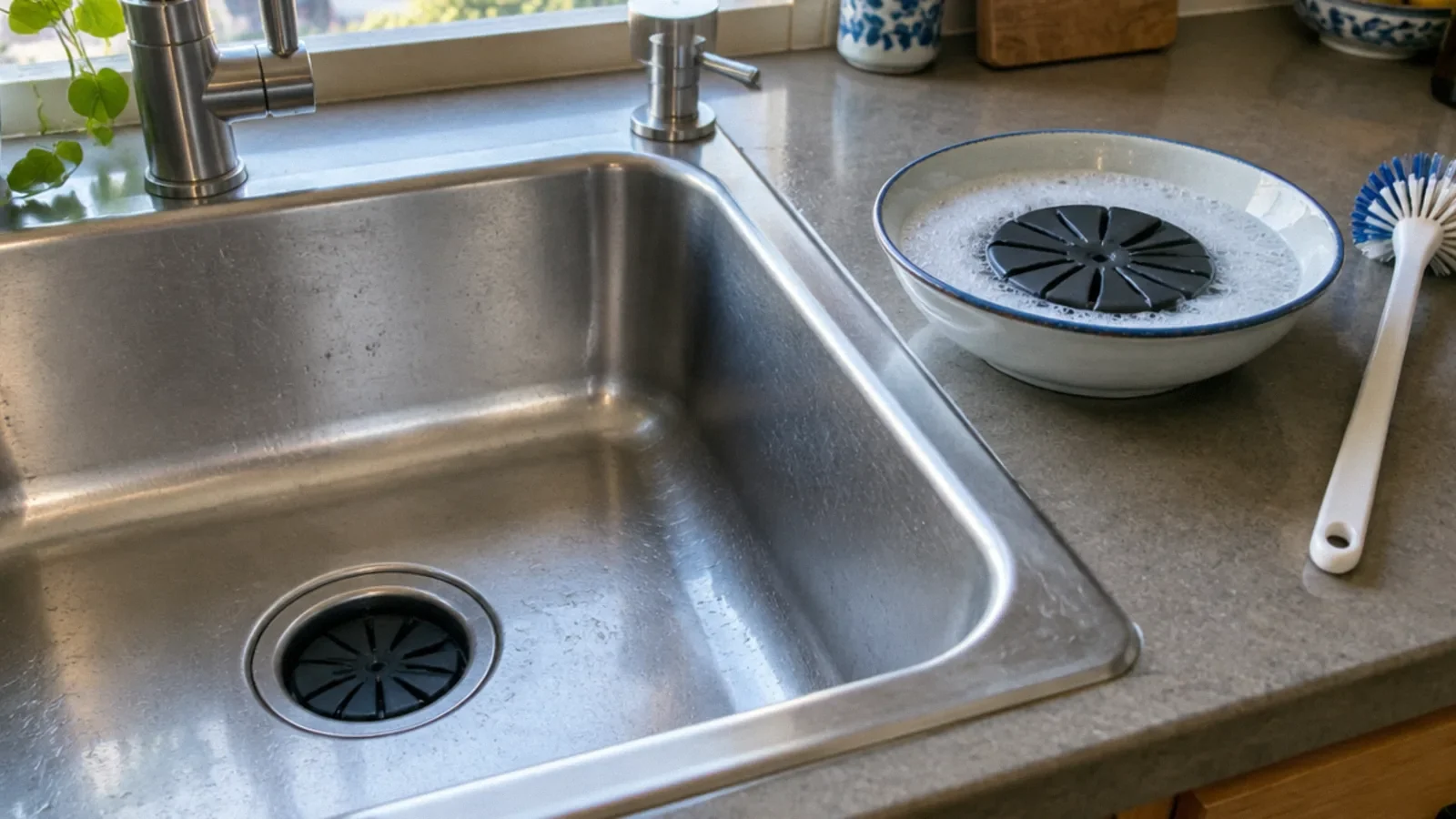
Food residue can collect under the rubber baffle or splash guard at the sink opening and cause odor. Some models have a guard designed to lift out; others do not. Consult the manual and remove only a part intended to be removed by the user after power is disconnected.
Clean the removed piece in a separate sink or bowl with mild dish soap, water and a brush, following the appliance instructions. Rinse and reinstall it as directed before restoring power. If it is not removable or cannot be cleaned without reaching inside the chamber, seek model-specific instructions or service.
Rinse the sink and accessible rim
Wash the sink basin and readily accessible rim with dish soap and water. A long-handled brush can help clean accessible surfaces without placing a hand inside the disposal. Do not force a tool past the guard or attempt to scrape the grinding mechanism.
Rinse the sink as the manufacturer directs. Cleaning the visible sink is useful housekeeping, but it cannot establish the condition of a hidden drain or clear a blocked trap. Look under the sink for drips only when the area and electrical connections are safe.
Can you clean a disposal with ice?
Some InSinkErator instructions permit grinding ice with a medium stream of cold water, while certain GE guidance gives different directions for its appliances. Check your exact model rather than assuming one procedure fits every unit. Restore the properly installed guard before any permitted operation and follow the manual.
Ice is not a way to sharpen a disposal, clear a sewer blockage or sanitize the entire drain. If the motor does not run normally, stop rather than adding ice to a jammed unit. Avoid adding rock salt, citrus, scouring powder or other materials unless your own manufacturer permits them.
Avoid damaging cleaning chemicals
Do not pour chemical drain openers into the disposal. InSinkErator warns against bleach and chemical drain cleaners in its care instructions; GE also warns that caustic cleaners can damage components. Never mix cleaning products, particularly bleach and acids.
A product marketed for disposals may have restrictions for the appliance or plumbing. Read both the appliance manual and product label before use. If a drain cleaner was already added and the sink remains blocked, tell the plumber what was used so they can take appropriate precautions.
How often should you clean it?
There is no universal cleaning interval for every model. Inspect the removable guard and clean it according to the manual and actual buildup; a household that uses the disposal often may need attention sooner than one that rarely uses it. Record recurrent odors rather than masking them with fragrance.
During normal use, follow the manufacturer’s water-flow and operation instructions. InSinkErator advises a moderate flow of cold water during grinding and for a few seconds afterward. The right cleaning and operating steps still depend on the particular model.
What should stay out of the drain?
Do not pour cooking oil, grease or fat into the disposal or sink. EPA explains that disposals do not prevent grease from entering and accumulating in sewer pipes. Collect cooled grease for disposal according to local rules, and use a strainer or appropriate food-scrap collection.
Households with septic systems should consider EPA guidance to limit disposal use because food solids add to the tank load and can affect pumping frequency. Follow local waste rules and the equipment manual; a disposal is not a substitute for normal septic maintenance.
When odor needs a plumber
If the odor returns after the accessible guard and sink are cleaned, the source may be elsewhere in the drain, a dishwasher connection or another plumbing component. Do not claim a particular cause without inspection. A slow drain, repeated backup, leakage or unusual motor noise is a reason to seek service.
Explain what you observed, which cleaning products were used and whether the dishwasher or another fixture is affected. Do not dismantle a wet electrical appliance or remove plumbing you cannot safely handle. A separate troubleshooting guide covers a disposal that will not run.
Emptying, jams and routine maintenance
A typical household disposal grinds food into the drain; it does not have a storage tank that needs regular emptying. Run water as directed by the appliance maker, keep grease and unsuitable scraps out, and periodically inspect the accessible guard for residue. Follow the model manual for its permitted foods and cleaning interval.
If a spoon or other object is stuck, switch off and disconnect power as instructed. Never put a hand into the chamber. Use only a manufacturer-approved removal method and tool if the object can be safely reached without entering the chamber; otherwise call a technician. A humming motor or backed-up sink needs diagnosis, not repeated operation.
Your next-step checklist
- Switch off and disconnect power before cleaning.
- Never put a hand into the disposal chamber.
- Wash a removable guard separately and reinstall it.
- Follow the model manual before using ice.
- Keep grease and chemical drain openers out.
Related questions
How do I clean a garbage disposal with ice?
Only use ice if your model’s manufacturer permits it, and follow its specific instructions. Ice does not clear a serious blockage or replace cleaning the removable guard.
How often should I clean the splash guard?
Follow the manual and clean according to visible buildup and use. There is no single interval for every household.
Can I put bleach or drain cleaner in it?
InSinkErator warns against bleach and chemical drain cleaners in its disposals. Follow your model instructions and never mix cleaners.
Why does the sink still smell after cleaning?
Residue, the connected drain or another source may need assessment. Seek service for a persistent odor, leak or backup.
How do I empty a garbage disposal safely?
Never put your hand into the chamber. Turn off and isolate power as directed by the manufacturer, avoid reaching into the unit and call a plumber or appliance technician for an object that cannot be removed safely.
Sources & context
Public guidance supports the principles in this article. The practical questions and examples are editorial interpretation, not a site assessment or a coverage decision. State-specific rules apply only where identified.
- InSinkErator: Garbage disposal care and use manualmanufacturer instructions
- U.S. EPA: Fats, oils and grease in sewersfederal guidance
- U.S. EPA: Septic system questionsfederal guidance
- InSinkErator: disposal cleaning and icemanufacturer guidance
- InSinkErator: care instructionsmanufacturer guidance