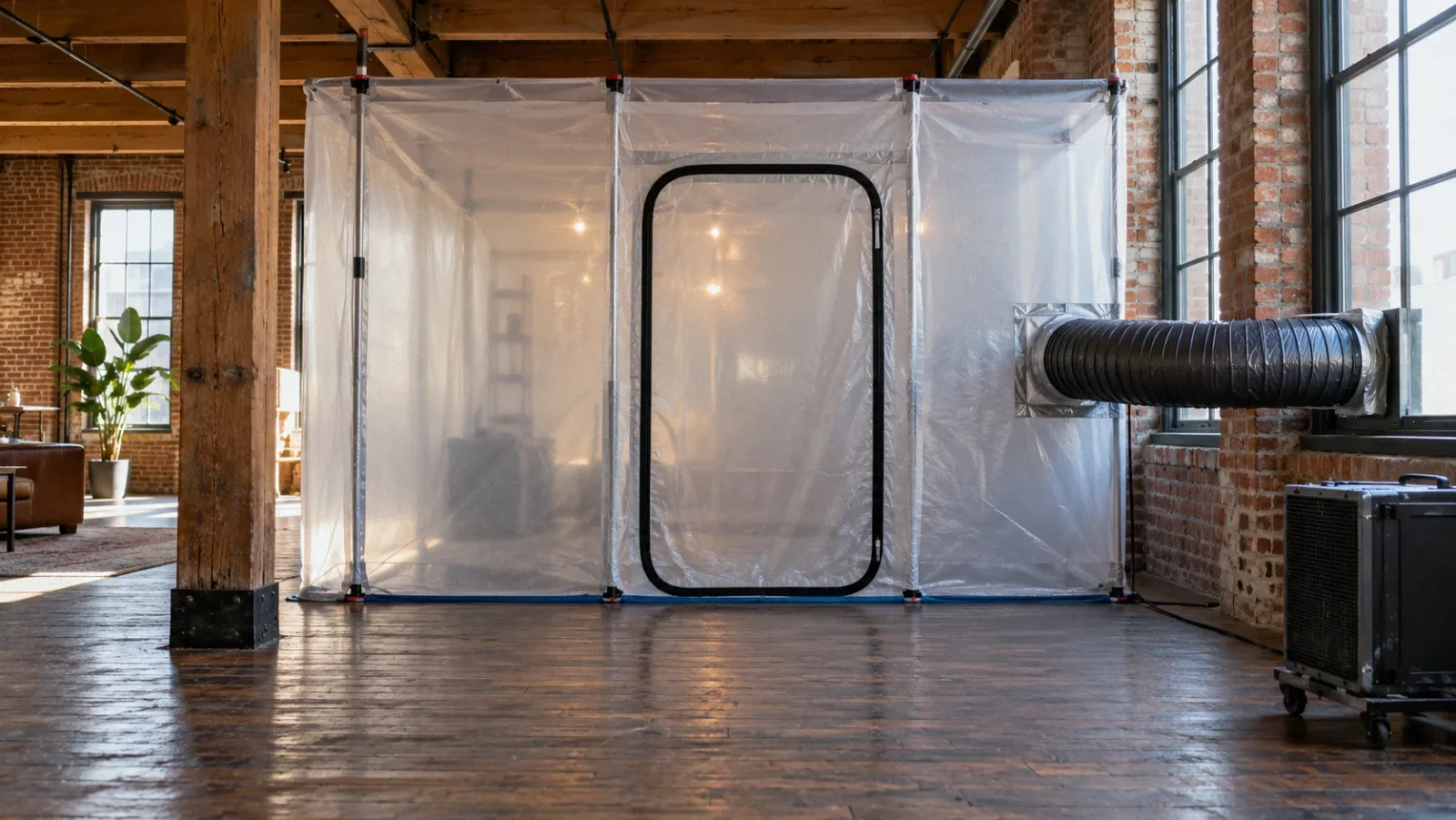
Sewage changes the job from removing moisture to controlling contamination as well. Keep occupants away, stop use of affected drains, and arrange experienced cleanup. A material that becomes dry is not automatically clean, salvageable, or ready to be enclosed.
Treat the route of entry as evidence
Water rising from a sewer-connected drain, toilet, or backup point requires a different response from a confirmed clean supply leak. Appearance and odor do not reliably establish sanitary conditions. Explain the route, timing, and fixtures involved to the plumber and cleanup team. Do not assume a small depth means a small contamination problem.
Prevent further use of plumbing that may feed the backup, as directed by the plumber or utility. A blockage in the building and a public sewer surcharge have different remedies. Extraction without diagnosing the cause can leave the home vulnerable to the next discharge.
Separate people from cleanup activity
EPA advises professional help when water or mold damage involves sewage or other contaminated water. Keep children and pets out and avoid moving dirty belongings into unaffected rooms. Do not use fans to blow air across contamination. The clean-water drying recommendations in EPA’s material table do not apply unchanged to a sewage event.
The crew should explain how it will protect adjoining rooms, move waste, clean tools, and handle personal protective equipment. These controls matter even when the basement is unfinished. Open stairs, HVAC pathways, and storage traffic can connect a work area to occupied space.
Make salvage decisions at the layer level
A smooth tile surface may be cleanable while contamination remains below it or in adjoining walls. Carpet, pad, insulation, and upholstered contents can retain contamination in inaccessible pores. Decisions should account for material construction, depth of exposure, ability to clean every affected surface, and physical deterioration. CDC advises discarding drywall and insulation contaminated with sewage or floodwater, and discarding porous items such as carpet and padding when they cannot be cleaned or dried quickly. Ask the cleanup professional to explain any proposed retention against the actual exposure and local guidance.
Ask the contractor to distinguish extraction, removal, cleaning, and drying on the scope. A spray application is not a substitute for removing contamination or unsalvageable material. Likewise, an air scrubber does not clean the underside of flooring. Each proposed treatment should have a clear target and a way to verify that target was addressed.
Document a boundary that can change
Begin with a floor plan showing where water reached, but allow the boundary to expand if demolition reveals a longer pathway. Mark cabinets, stairs, wall bases, and items stored directly on the floor. Record inaccessible spaces explicitly rather than treating them as unaffected.
Photograph contents before disposal when safe, and coordinate documentation requirements with the insurer. Keeping contaminated material indefinitely merely to preserve evidence can obstruct cleanup. Written descriptions, photographs, and a disposal inventory usually provide a more useful record than a pile left in an occupied walkway.
A shallow backup can still affect a complicated assembly
Imagine a thin layer of backup water crossing a tiled basement into a carpeted closet. The tile face may be accessible for cleaning, while the carpet pad, wall bases, and cabinet underside present different problems. The depth alone does not determine cleanability. The crew needs to trace the contact area and explain which layers can actually be treated.
Request a clear distinction between items discarded because of contamination and items removed to gain access. That record helps explain why a visually undamaged baseboard or pad may be included, without turning every neighboring material into an automatic replacement. If the water boundary is uncertain, targeted investigation should resolve the uncertainty rather than assuming the least or most extensive scenario.
An important exception is a backup involving additional chemical or industrial contaminants. Ordinary residential sewage guidance may not cover that exposure. Tell the responder about unusual sources, stored chemicals, or affected utility spaces so the appropriate expertise can be involved.
Pause ordinary rebuilding if drainage remains unreliable, contaminated material is still being discovered, or the cleanup plan has no way to reach affected concealed surfaces. Closing the assembly can make a future corrective inspection more disruptive. The endpoint should explain what was removed, what was cleaned, what was retained, and what remains outside the verified scope.
Return-to-use requires more than dry air
Request the final cleaning record, retained-material moisture assessment, remaining limitations, and source-repair information. If an independent evaluation is warranted by the complexity or contamination, arrange its scope before work is closed. No single odor check or humidity reading establishes that every surface was addressed.
Consider the next incident separately from this cleanup. A backwater valve, drainage repair, or sewer maintenance plan must match the diagnosed cause and local requirements. A sump pump for groundwater does not automatically prevent sewer backup, and a valve can require maintenance and operating restrictions.
If a septic system backs up
Stop using water and fixtures that feed the system, keep people and pets away from wastewater and contact a qualified septic professional or local authority. A blocked building drain, full or malfunctioning tank, saturated drainfield or another problem can produce a backup; the symptom alone does not identify the cause.
Never enter a septic tank or other confined space, where hazardous gases can be fatal. Do not open covers or operate electrical equipment in standing water. Contaminated building materials need assessment and cleanup appropriate to the source.
Immediate actions and who to call
Stop using toilets, sinks and appliances that discharge into the affected drain. Keep everyone away from wastewater, do not touch electrical equipment or use an ordinary household vacuum. If the shutoff is safely accessible, close it to prevent further use; do not enter standing water to reach it.
Call a plumber for a suspected private building drain or line; call the municipal sewer utility if the public main or street network may be involved. A renter should also notify the property manager. A septic contractor investigates a private septic system. Arrange an experienced sewage cleanup contractor after reporting the source; source repair and contaminated material cleanup are separate jobs.
Basement, crawl space and outdoor spills
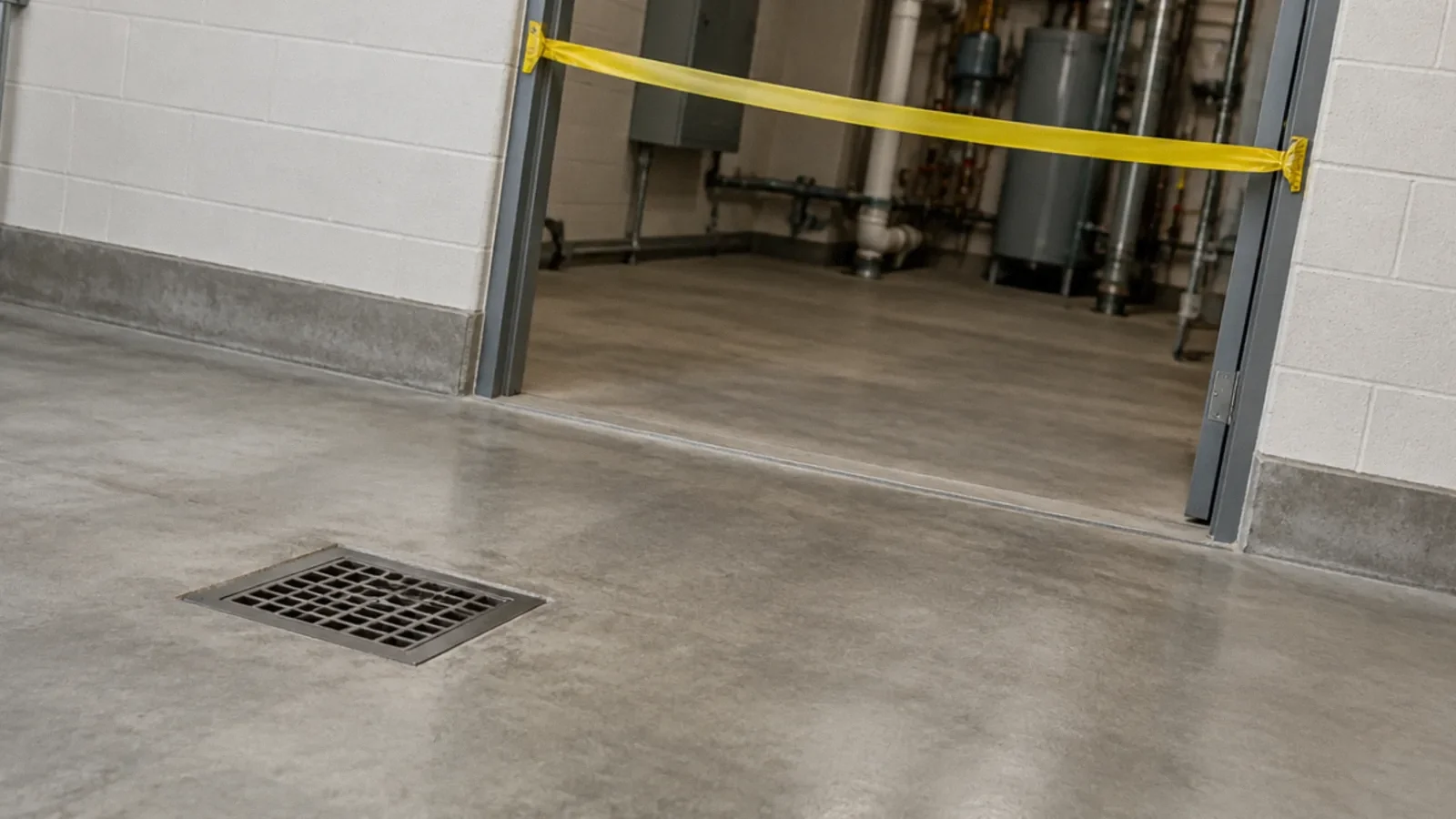
Sewage in a basement may emerge at a floor drain or other low fixture. Tell responders whether the building uses municipal sewer or septic service and when the water appeared, including during rain. A septic backup into the basement requires stopping water use, septic or plumbing diagnosis, and a separate professional assessment of contaminated materials.
Do not enter a contaminated crawl space. The cleanup specialist should assess soil, vapor barrier, insulation and inaccessible framing as well as the visible liquid. For an outdoor spill, keep people and animals away, prevent contact with drains or waterways and notify the local health or environmental authority for reporting and disposal instructions.
Professional cleanup sequence and exposure
After the responsible specialist controls the source, the cleanup team isolates affected areas, removes sewage with suitable professional equipment, assesses hidden layers, removes unsalvageable material, cleans accessible surfaces, disposes of waste under local rules and dries retained materials. Ask for documentation of the boundary, cleaning and retained-material moisture before rebuilding.
Contact can occur through skin, eyes, mouth or contaminated objects; avoid touching the water or tracking it through the home. If exposure occurs, wash exposed skin and seek medical advice about symptoms or a specific exposure. Do not infer an illness from the appearance of wastewater.
Recognize a backup and the cleanout
Gurgling drains, wastewater rising at a low fixture, or several fixtures draining poorly can point to a blockage or surcharge, but no single sign identifies the location. Rain may overload a public combined system or a private drainage connection; the responsible plumber or utility must investigate. A sewer backup is wastewater flowing back into a building or out of an access point rather than draining normally.
A sewer cleanout is an access fitting used by a professional to inspect or clear a line. Its location and presence depend on the property and local construction; not every house has an obvious accessible one. Sewage coming out of it is a reason to keep clear and call the plumber or responsible utility. Do not open it or attempt to clear a pressurized or overflowing line yourself.
Your next-step checklist
- Keep the affected area isolated from ordinary household traffic.
- Identify the sewer-connected entry point and the professional responsible for restoring drainage.
- Request separate line items for contaminated-material removal, cleaning, and drying.
- Record concealed spaces that could not initially be inspected.
- Retain photographs and disposal records without postponing necessary contamination control.
Related questions
If the water looks clear, can I treat it as a supply leak?
No. Water emerging from a sewer-connected backup may carry contaminants without obvious solids or a strong odor. The known pathway matters more than appearance.
Can carpet be kept after shampooing?
Surface shampooing is not sufficient to establish that sewage-contaminated carpet, backing, and pad are safe to retain. CDC advises discarding porous items such as carpet and padding when they cannot be cleaned or dried quickly. Have an experienced cleanup professional assess all affected layers and follow applicable local guidance.
Does disinfectant replace drying?
No. Cleaning and any appropriate product treatment address contamination; drying addresses retained moisture. Both the material condition and the cleanup result must be considered before reconstruction.
What if one area cannot be reached for cleaning?
Have the contractor explain the access limitation and the available removal or treatment options. An inaccessible affected layer should not be accepted solely because surrounding surfaces are clean. Record how the final decision resolves the actual contamination pathway.
What causes a sewer backup?
A blockage in a private line or a problem in the public system can contribute. A plumber or utility should investigate the route and cause before a prevention plan is selected.
What if a sewage pipe bursts?
Avoid contact with wastewater, stop using affected fixtures and contact a qualified plumber and cleanup professional. Stay away from water near electrical equipment.
How is sewage cleaned from a basement?
Keep away from contaminated water and electrical hazards, stop using affected fixtures and arrange experienced professional assessment, cleanup and drying.
What should I do if sewage backs up in the basement?
Stay out of contaminated water and away from electrical hazards, stop using plumbing and call a plumber or the responsible utility. Arrange qualified cleanup for affected materials.
What if raw sewage is under the house?
Keep people and pets away and avoid entering a contaminated crawl space. Reduce water use, report the issue to the appropriate utility or property manager and arrange qualified sewage and plumbing assessment. Electrical and structural hazards can also be present.
Sources & context
Public guidance supports the principles in this article. The practical questions and examples are editorial interpretation, not a site assessment or a coverage decision. State-specific rules apply only where identified.
- CDC: Reentering Your Flooded Homeofficial
- EPA: Mold Cleanup in Your Homeofficial
- CDC: Guidelines for Cleaning Safely After a Disasterofficial
- EPA: Septic systems after a floodofficial
- EPA: Sanitary sewer overflowsfederal guidance
Community questions behind this topic
These discussions helped identify reader concerns. They are anecdotal, not technical or legal authority.