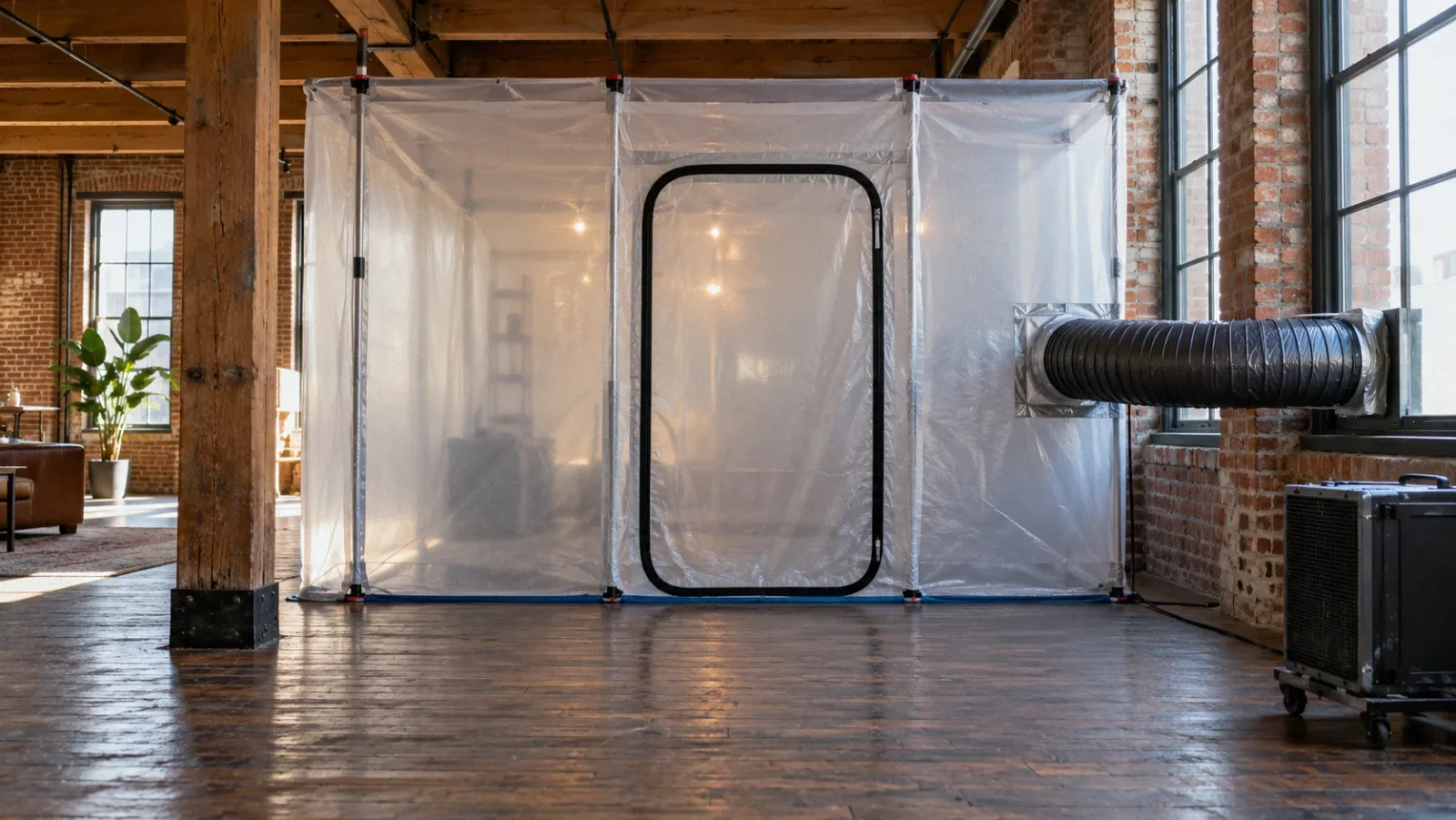
Containment limits the movement of contamination, while negative pressure directs air into the work area relative to adjacent spaces. The setup must account for barriers, exhaust, makeup air, building systems, and verification. It is more than placing a filter unit behind plastic.
Begin with the exposure problem
Water damage that involves mold or contaminated material can release particles during opening, removal, and cleaning. The aim of containment is to reduce transfer to occupied areas and protect people doing the work. EPA’s remediation guide explains that professional judgment should consider the extent and nature of contamination, not only area.
Ask why containment is or is not proposed for the actual task. A small but heavily affected cavity adjacent to occupied space may require more careful controls than its dimensions suggest. An apparently large clean-water drying zone presents different concerns.
For mold containment, the proposed boundary should match the materials to be disturbed, the likely release of particles, occupant locations and paths connecting the work to other rooms. EPA describes limited and full containment for school and commercial remediation and emphasizes professional judgment; its size ranges are guidance, not a substitute for evaluating the actual work and any applicable requirements.
Understand airflow direction
Negative pressure means the work area is maintained at lower pressure than the neighboring space, so air tends to move inward through openings rather than outward carrying contamination. Achieving that relationship requires an intentional arrangement, not simply a running fan.
EPA discusses HEPA-filtered exhaust, barriers, and adequate makeup air in remediation containment. The responsible contractor should select the setup and explain how it is checked. This article is not a step-by-step design for an occupant to improvise around combustion appliances or complex building systems.
Coordinate the building systems
HVAC openings, chases, doorways, and other pathways can connect the work zone to the rest of the building. Their treatment must fit the containment plan and the building’s operating needs. Pressure changes can also affect combustion appliances and other exhaust systems, requiring qualified consideration.
Do not independently tape over vents, change fan directions, or close a makeup-air route because it feels drafty. Tell the contractor about comfort, odors, and access problems so the system can be adjusted while preserving its intended function.
Controls have to survive ordinary work
Waste removal, worker entry, and moving tools can compromise a barrier. Ask how debris will be bagged or otherwise contained, which path it will take, and how surfaces or equipment leaving the zone will be addressed. The control system needs to accommodate the job’s traffic.
Occupants should receive clear boundaries and a contact for unexpected openings or stopped equipment. If a barrier tears or airflow changes, the response should be to pause and correct the issue as appropriate, not assume that filtration elsewhere compensates for it.
Plan for an occupied room next to the work
A bathroom opening beside an occupied bedroom creates a different exposure pathway from an isolated utility space. Ask how workers and debris will move without tracking material through the sleeping area, whether belongings need relocation, and how the boundary will be maintained during access. The answer should fit the layout.
If the bedroom cannot remain comfortably or practically separated, discuss temporary use of another space rather than expecting occupants to negotiate an active barrier repeatedly. This is a work-planning decision; the article cannot declare a particular room medically safe or unsafe based only on area.
A containment design also needs a response to equipment failure. Identify who is contacted if power stops or a barrier opens and what activities should pause pending correction. The household should not be left to decide whether the pressure relationship still works by listening to the fan.
Verify function, then preserve the conditions
EPA describes inward movement of containment sheeting as one practical observation of the intended relationship, but an observation at one moment does not replace ongoing attention to the system. The contractor should select the verification appropriate to the job and document material changes in configuration.
Opening exterior doors, operating exhaust appliances, or changing HVAC conditions can influence building pressure. Tell the contractor about ordinary systems that will run during the work so the plan can account for them. Combustion-safety concerns deserve qualified evaluation; negative pressure is not a reason to improvise around fuel-burning appliances.
The handoff should state when removal and cleaning were completed, how the controlled area was evaluated, and what conditions supported dismantling the barriers. If further demolition is expected, removing containment merely because one day’s work ended may not fit the plan. The control period should follow the activities and evidence, with clear responsibility for each transition.
Close the work area deliberately
Removing plastic is a transition in the project, not just cleanup of temporary materials. Before that transition, the agreed removal, cleaning, and verification tasks should be complete. Drying status and contamination cleanup are related but separate findings.
Request the final scope, remaining limitations, and any independent assessment specified for the project. No containment arrangement can promise an absolute absence of airborne particles. Its value lies in a correctly selected, maintained, and documented control strategy.
Your next-step checklist
- Ask which exposure pathways the containment plan addresses.
- Identify the intended air direction and how performance is checked.
- Coordinate HVAC, makeup air, exhaust, and combustion-system concerns.
- Set controlled entry and waste-removal routes.
- Define the conditions for removing barriers and returning space to ordinary use.
Related questions
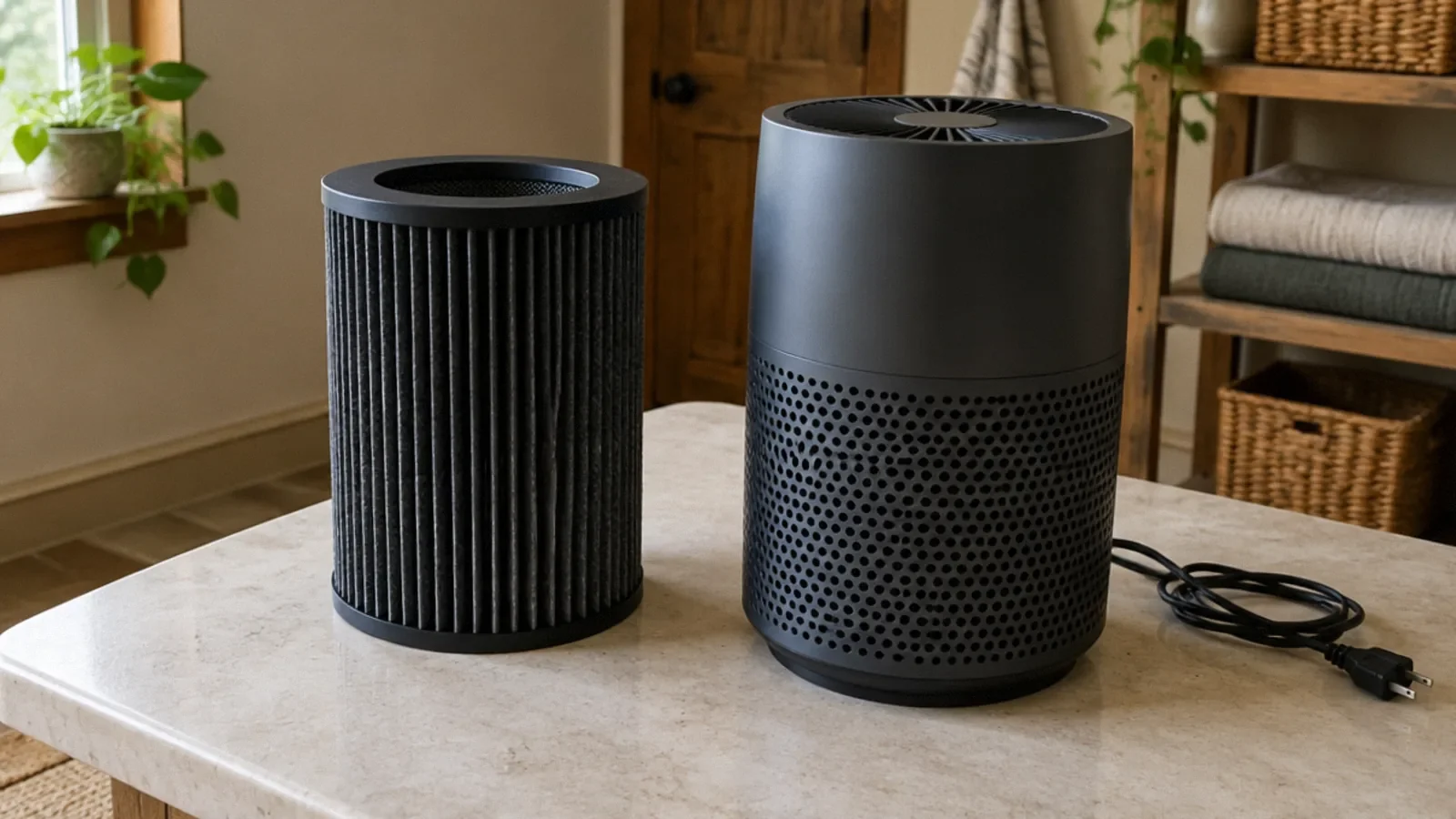
Is a recirculating air scrubber negative air?
Not necessarily. Pressure control requires an appropriate exhaust and enclosure arrangement. Recirculation alone does not establish the intended pressure relationship.
Can I open the containment to retrieve belongings?
Coordinate access with the crew. Opening barriers can change airflow and expose occupants to the work area; the retrieval route should be planned.
Does every small leak need plastic containment?
No. The need depends on contamination, disturbance, occupancy, and pathways. Ask for a rationale grounded in the actual conditions rather than a universal rule.
Should the cleanup plan identify a power-loss response?
Yes. The crew should explain whom to contact and which activities should pause if the pressure-control equipment stops. Occupants should not improvise another fan arrangement. The response needs to preserve the plan’s exposure controls while the fault is addressed.
Sources & context
Public guidance supports the principles in this article. The practical questions and examples are editorial interpretation, not a site assessment or a coverage decision. State-specific rules apply only where identified.
- EPA: Mold remediation in schools and commercial buildings, containmentofficial
- EPA: Mold Cleanup in Your Homeofficial
- EPA: Mold course, containmentofficial
Community questions behind this topic
These discussions helped identify reader concerns. They are anecdotal, not technical or legal authority.