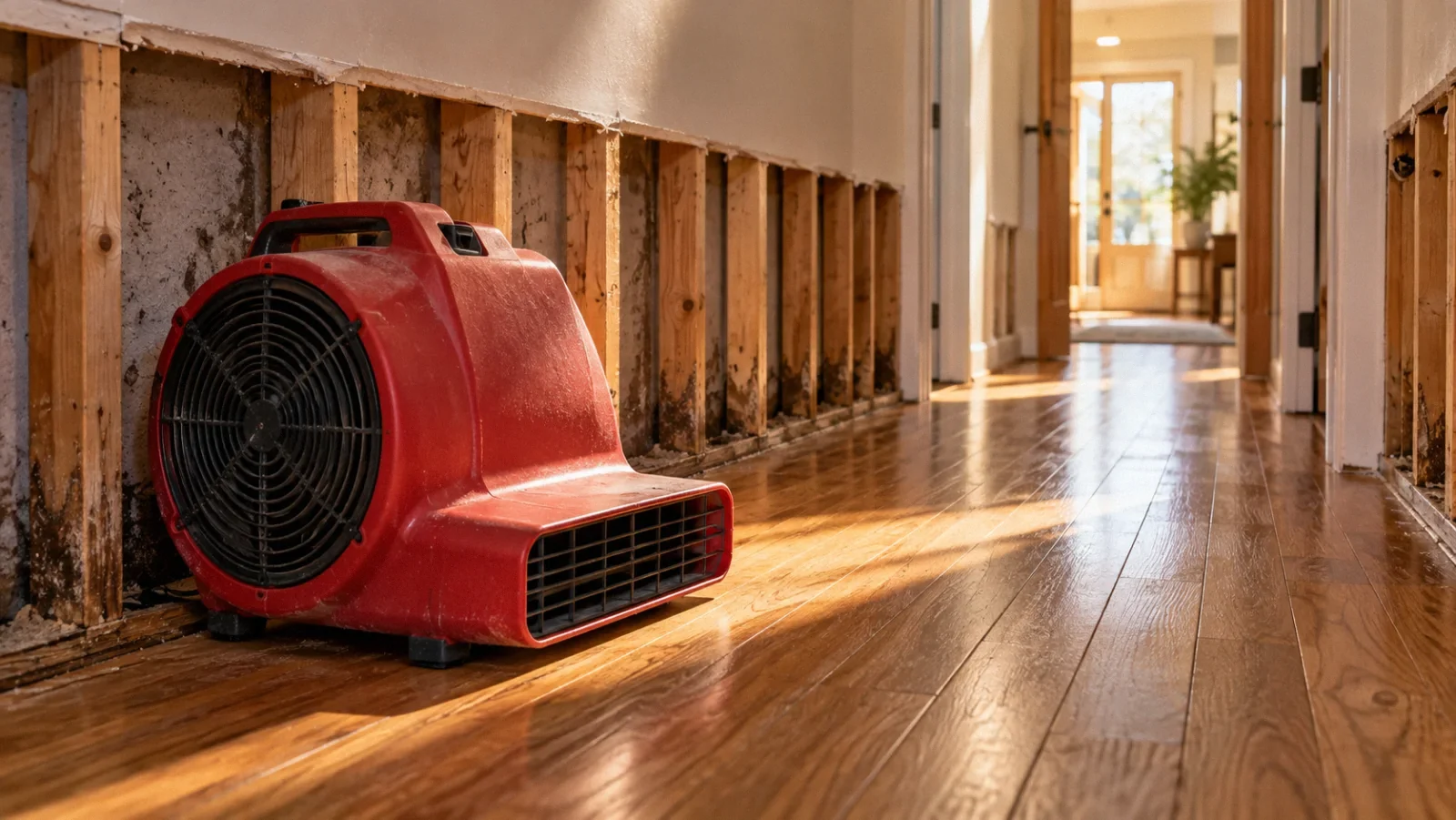
Air movers support evaporation at reachable wet surfaces. Their number and placement should follow material access and measured progress, with contamination and electrical conditions assessed first. More airflow is not a substitute for extracting liquid, removing vapor, or exposing a trapped layer.
Direct airflow toward an identified target
A drying crew should be able to explain what each air mover is intended to dry. Exposed framing, a floor surface, and a wall cavity present different geometries. Air that simply circulates around furniture may miss the relevant material.
Begin with the moisture map and the access plan. If a wet layer is behind cabinetry or below flooring, ask how airflow reaches it. A visible row of machines can look thorough while leaving the most important area inaccessible.
Assess contamination before increasing air movement
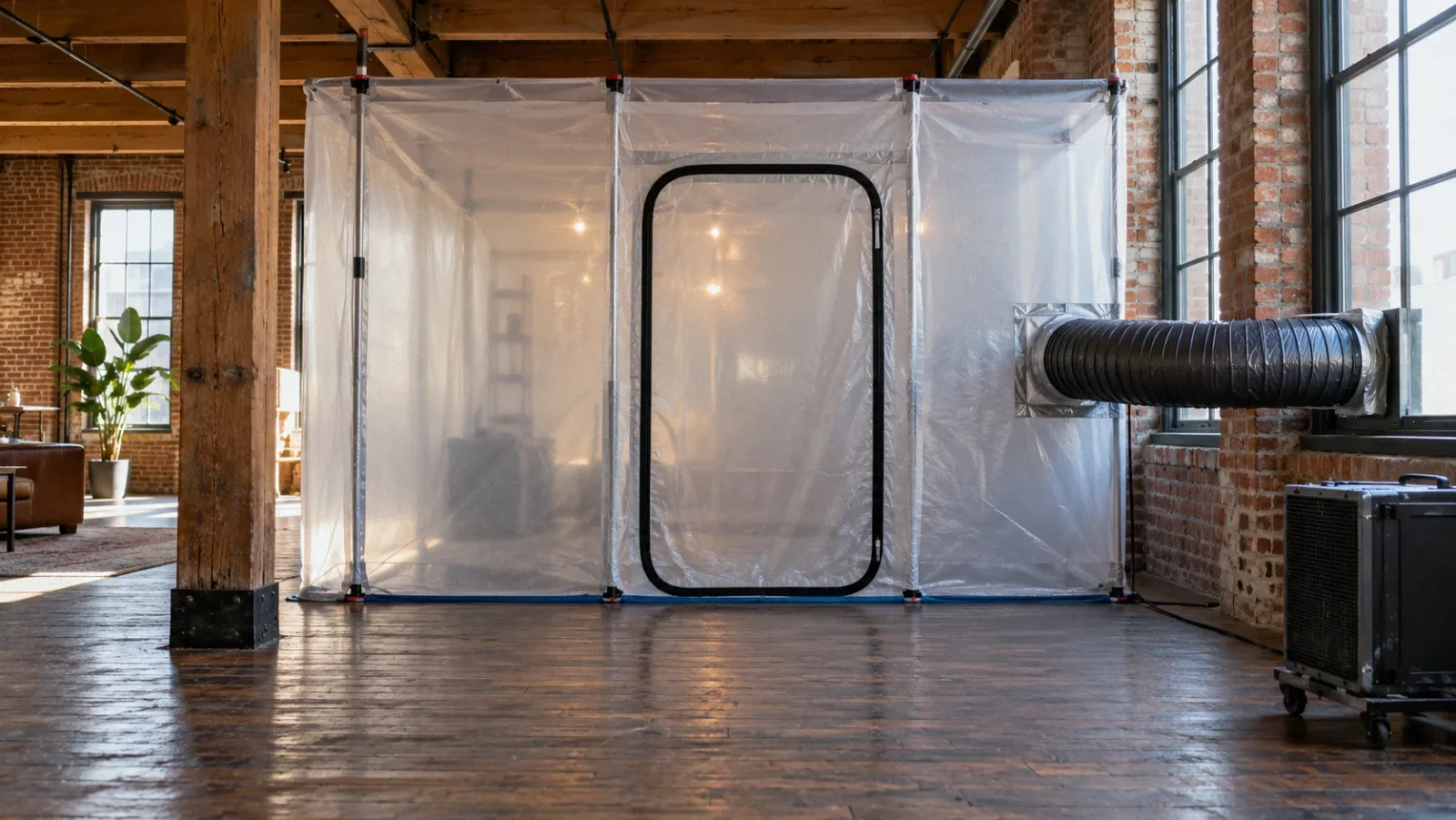
EPA’s clean-water table warns against fans before water is known to be clean or sanitary. Visible mold or contaminated water may require removal, cleaning, and containment before drying air is directed across surfaces. Do not assume that an air scrubber elsewhere cancels the effect of blowing through contamination.
Keep occupants away from a work area undergoing material removal. If new mold or contaminated debris is exposed, the crew should reassess the controls rather than continuing the original clean-water arrangement unchanged.
Airflow and vapor removal need to work together
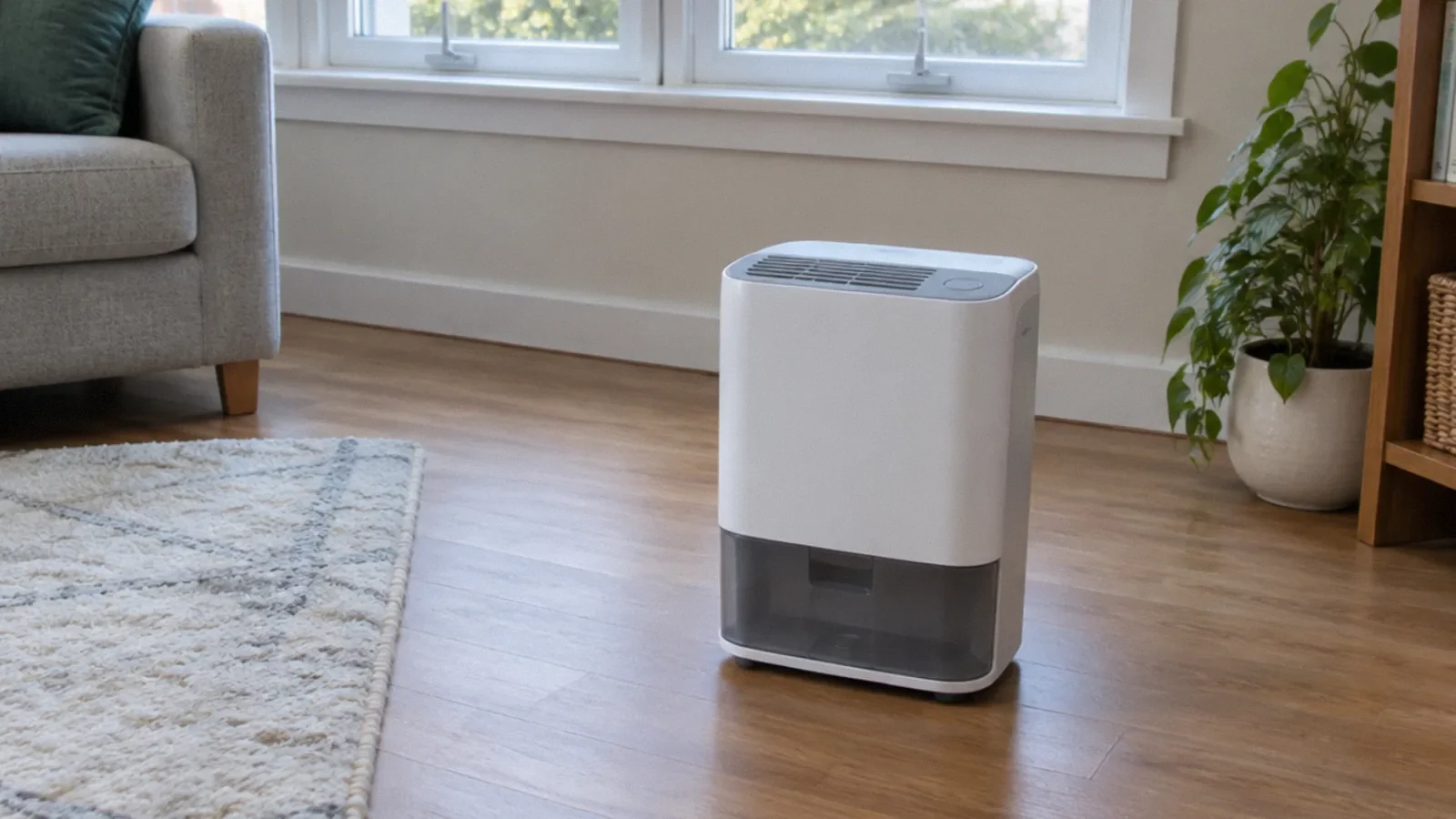
Air movement can speed evaporation, but moisture released into the room still needs somewhere to go. Dehumidification or appropriate ventilation addresses that part of the process. EPA describes these tools together for several clean-water-damaged materials.
If a room becomes very humid or condensation appears on cool surfaces, report it. If the room air improves while a concealed material remains wet, the issue may instead be access. Monitoring should distinguish those situations rather than treating every slow area with another fan.
Protect access and power reliability
Air movers, cords, and hoses can obstruct doors or walking routes. Their electrical demand must fit a safe power arrangement, particularly after water has affected the installation. Do not move equipment onto wet surfaces or connect improvised extensions to solve a reach problem.
Ask what can be moved for household access and what should remain in its assigned position. Equipment shutdowns for noise or sleep should be discussed, not hidden; the monitoring record needs to reflect actual operating time. Report tripped circuits rather than repeatedly resetting them.
A placement problem that more units may not solve
Suppose air movers circulate strongly across a room, but readings remain elevated beneath a cabinet run. Adding another unit to the center may increase noise without changing conditions at the cabinet base. The next question is whether a safe inspection and drying opening provides an effective path to that target.
Likewise, a wall cavity may contain blocking or insulation that prevents the expected air movement. The contractor should explain how the method reaches each affected section. Airflow felt at one opening does not establish uniform treatment throughout the cavity.
An exposed floor can present a different issue: airflow reaches the surface, but humidity builds because vapor is not adequately removed. That calls for review of the whole system. The moisture map, air conditions, and equipment arrangement together help distinguish these limitations.
Define household instructions around the real setup
Ask which doors should remain open within the drying zone and which barriers or doors must stay closed. The answer can differ depending on whether a door improves circulation within a clean drying space or separates a controlled work area from occupied rooms. General advice to open every door is not adequate for all jobs.
Keep safe walking and exit routes explicit. If an arrangement cannot be lived with, tell the crew early so it can be redesigned or occupancy addressed. Quietly unplugging units every night makes the recorded plan different from the actual work.
The stopping criteria should be material-specific. When a unit’s target reaches its appropriate goal, the crew may remove or reposition it while continuing elsewhere. If progress stops, the next step is to identify why, not merely keep the same noisy arrangement indefinitely. A documented change in access or method is evidence that monitoring is informing the job.
Placement should change when the evidence changes
As exposed surfaces approach their goals, a remaining wet area may justify relocation, different access, or another drying method. The plan should evolve with material readings. Removing some units can be reasonable when their target is complete, while another part of the room still needs work.
Request a final explanation of the hardest-to-dry locations. Surface comfort, a warm room, and a long equipment run are not adequate acceptance evidence. Retained materials and the next repair requirements determine the endpoint.
Your next-step checklist
- Name the material and location served by each airflow zone.
- Resolve contamination concerns before directing air across affected surfaces.
- Coordinate airflow with extraction and vapor removal.
- Keep exits clear and power connections professionally assessed.
- Record interruptions and adjust placement based on material progress.
Related questions
Can I point a fan into a wall opening?
Not before the contents, utilities, and contamination have been assessed. An opening can expose mold or debris, and airflow may distribute it.
How many air movers should a room have?
There is no useful universal count based only on room area. Material load, geometry, access, equipment characteristics, and the plan’s results matter.
Should fans run after everything feels dry?
Touch is not a sufficient endpoint. Ask whether the retained materials have met the documented goal and whether any concealed areas remain unresolved.
What should happen if a unit is moved during cleaning?
Record the change and have the responsible technician restore or revise its intended placement. The new position may alter which material receives airflow. If the original target no longer needs the unit, that decision should follow measurements rather than an accidental relocation.
Sources & context
Public guidance supports the principles in this article. The practical questions and examples are editorial interpretation, not a site assessment or a coverage decision. State-specific rules apply only where identified.
- EPA: Table 1, Water Damage Cleanup and Mold Prevention (clean-water material guidance)official
- EPA: Mold Cleanup in Your Homeofficial
Community questions behind this topic
These discussions helped identify reader concerns. They are anecdotal, not technical or legal authority.