A HEPA air scrubber filters particles from air; a dehumidifier removes water vapor. Neither replaces cleaning or material assessment. A machine’s appearance, noise, or filter does not establish that it is performing the other machine’s job.
Identify the purpose of each machine
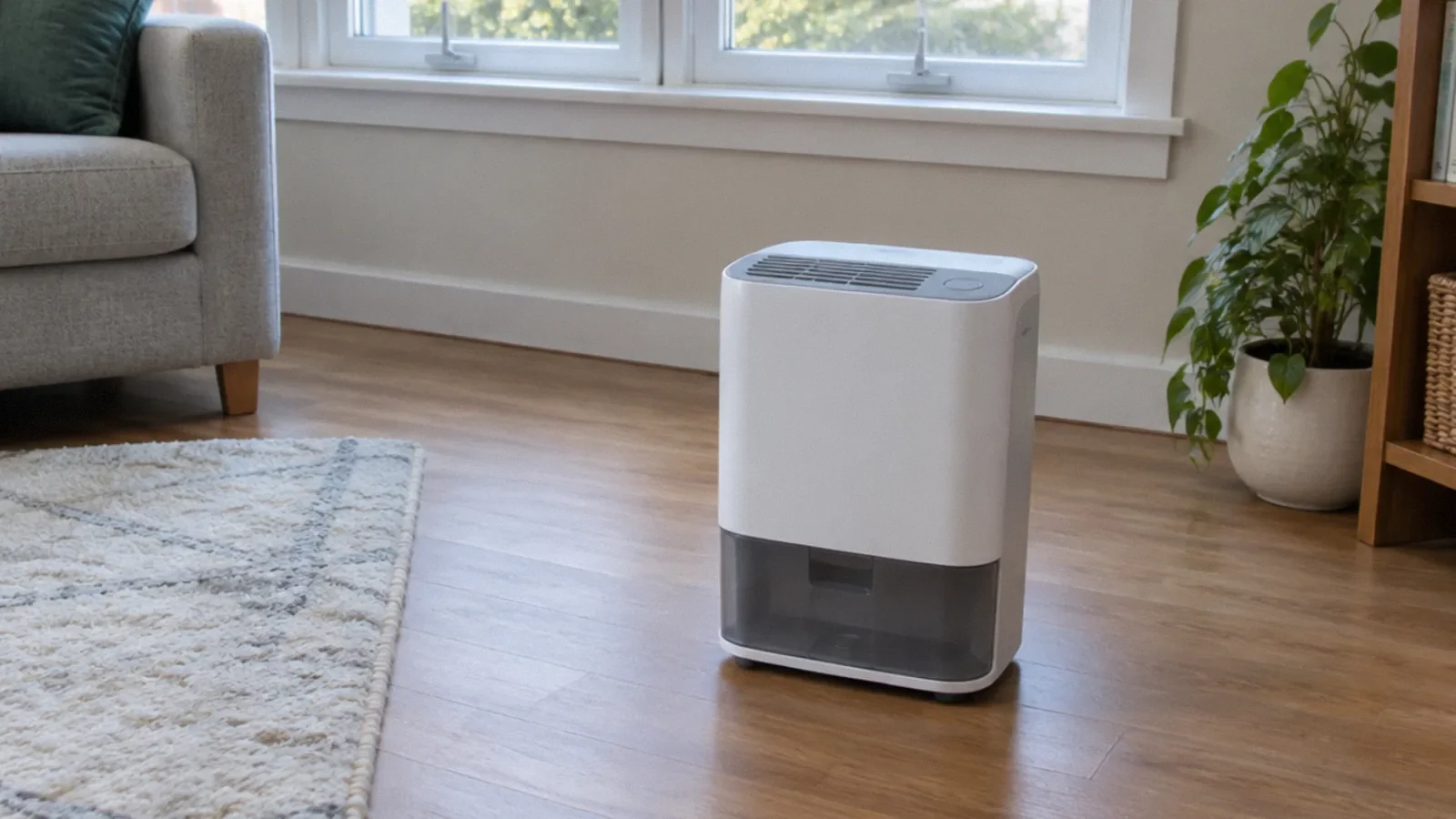
A refrigerant dehumidifier uses a cooling surface to condense moisture from the air, as described by DOE. It normally collects water or sends it through a drain arrangement. An air scrubber moves air through filtration to capture particles. These are distinct functions even when both machines contain fans and filters.
Ask the crew to label equipment by role. The household should know which unit is drying, which is filtering, and which may be part of pressure control. Confusion can lead to someone switching off the dehumidifier because another loud machine is still running.
Particle capture does not dry a wall
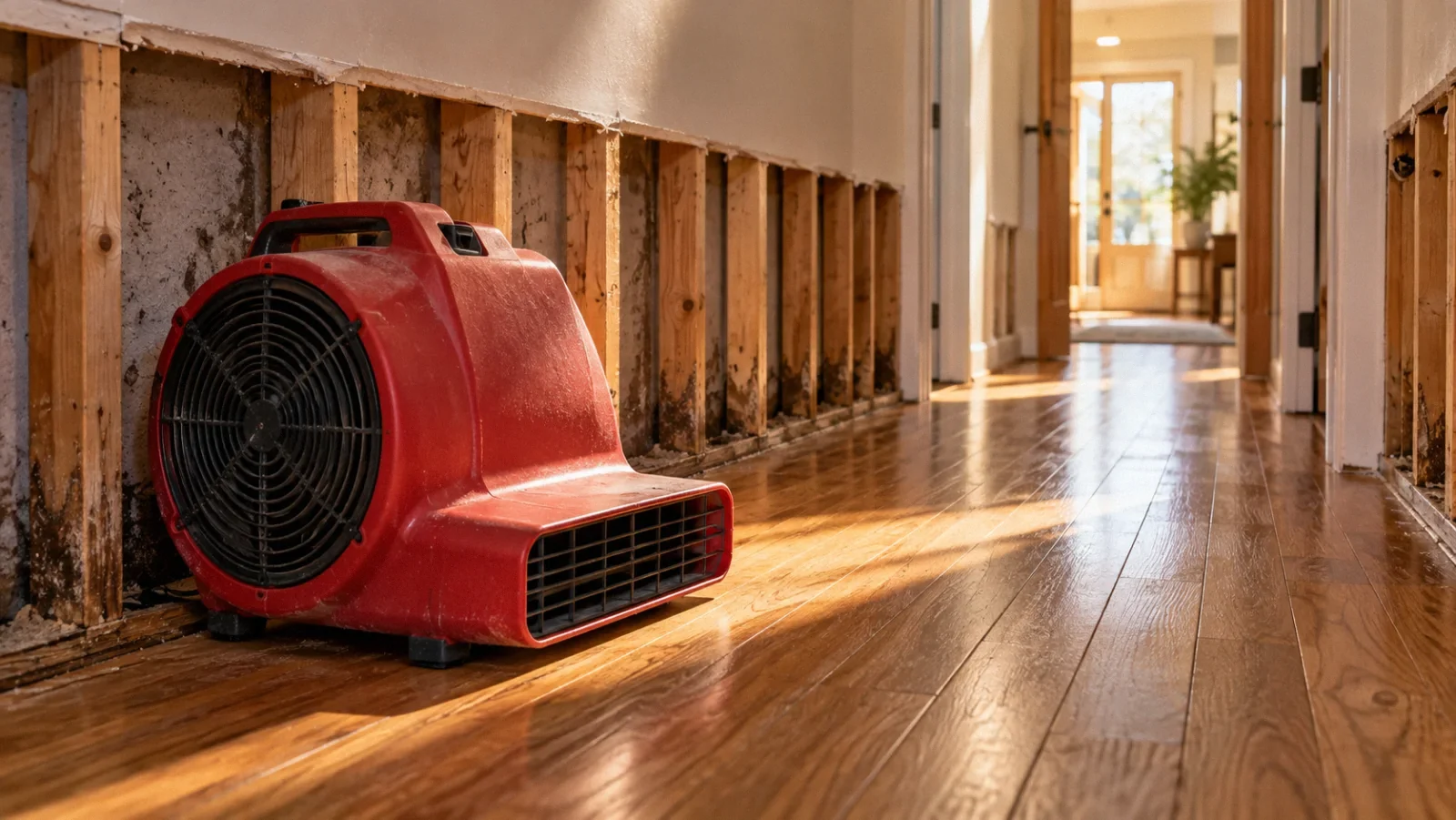
An air scrubber does not remove the water stored in drywall, framing, or a pad by filtration. Drying needs an effective moisture-release path and vapor removal or suitable ventilation. If the wall remains wet, more filtration does not solve that limitation.
Conversely, a dehumidifier’s protective intake filter should not be represented as an equivalent substitute for a properly specified HEPA filtration system. The machine may protect its own components without providing the containment or particle-control function the cleanup plan requires.
Neither machine replaces source removal
EPA remediation guidance uses cleaning, removal where appropriate, occupant protection, and containment as parts of the response. Filtering air while leaving moldy or contaminated material untreated does not complete that work. Drying can limit favorable moisture conditions without undoing physical damage or removing contamination already present.
Ask which surfaces and materials will be cleaned or removed and how the crew will prevent debris migration. Be wary of a proposal whose only treatment is to leave an air-cleaning device for a fixed number of days, with no inspection or material plan.
An air scrubber and negative-air system are not identical
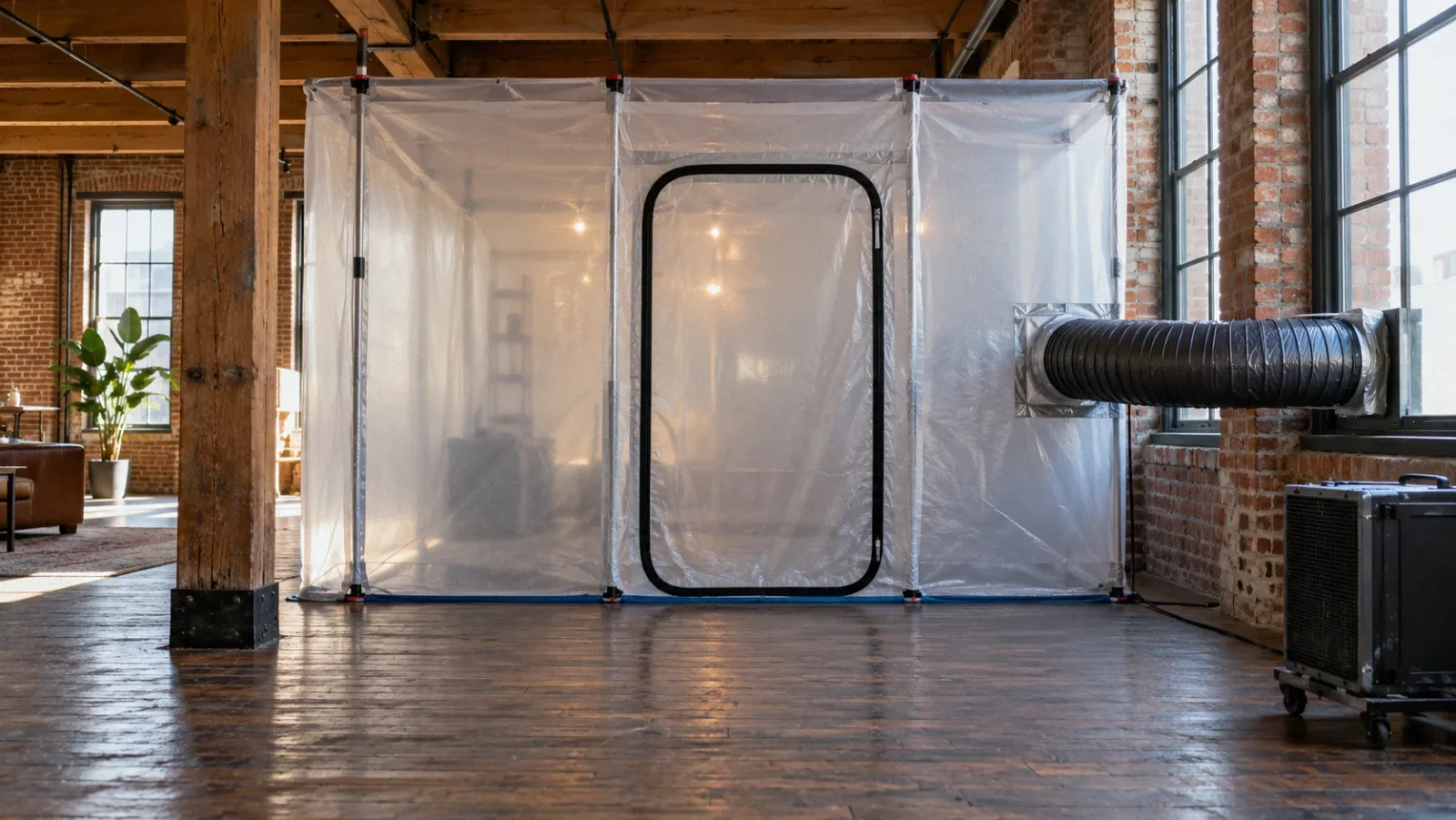
A unit recirculating filtered air within a room does not automatically create negative pressure relative to adjacent space. Pressure control depends on the enclosure, exhaust path, makeup air, and measured or otherwise verified performance. A plastic barrier alone does not prove the intended airflow direction.
If containment is part of the job, have the contractor explain the complete arrangement and how it will be checked. Occupants should not rearrange ducts or open barriers without coordination because those changes can affect the controls.
A common equipment misunderstanding
A household sees one large machine with a water hose and another with a filter face. The first may be removing vapor, while the second may be controlling particles. If the filter unit remains after the hose-connected unit leaves, that does not necessarily mean drying continues. Conversely, removal of filtration does not prove that every material has reached its moisture goal.
Ask for an equipment list with purpose, location, and removal criterion. That simple record connects the visible machines to the work instead of forcing occupants to infer the plan from noise or appearance. It also helps when a replacement technician arrives.
A combined device or unusual arrangement should be explained using its actual specifications; do not assume all machines fit the same external pattern. The point is to understand function, not identify models from photographs.
What maintenance questions can establish
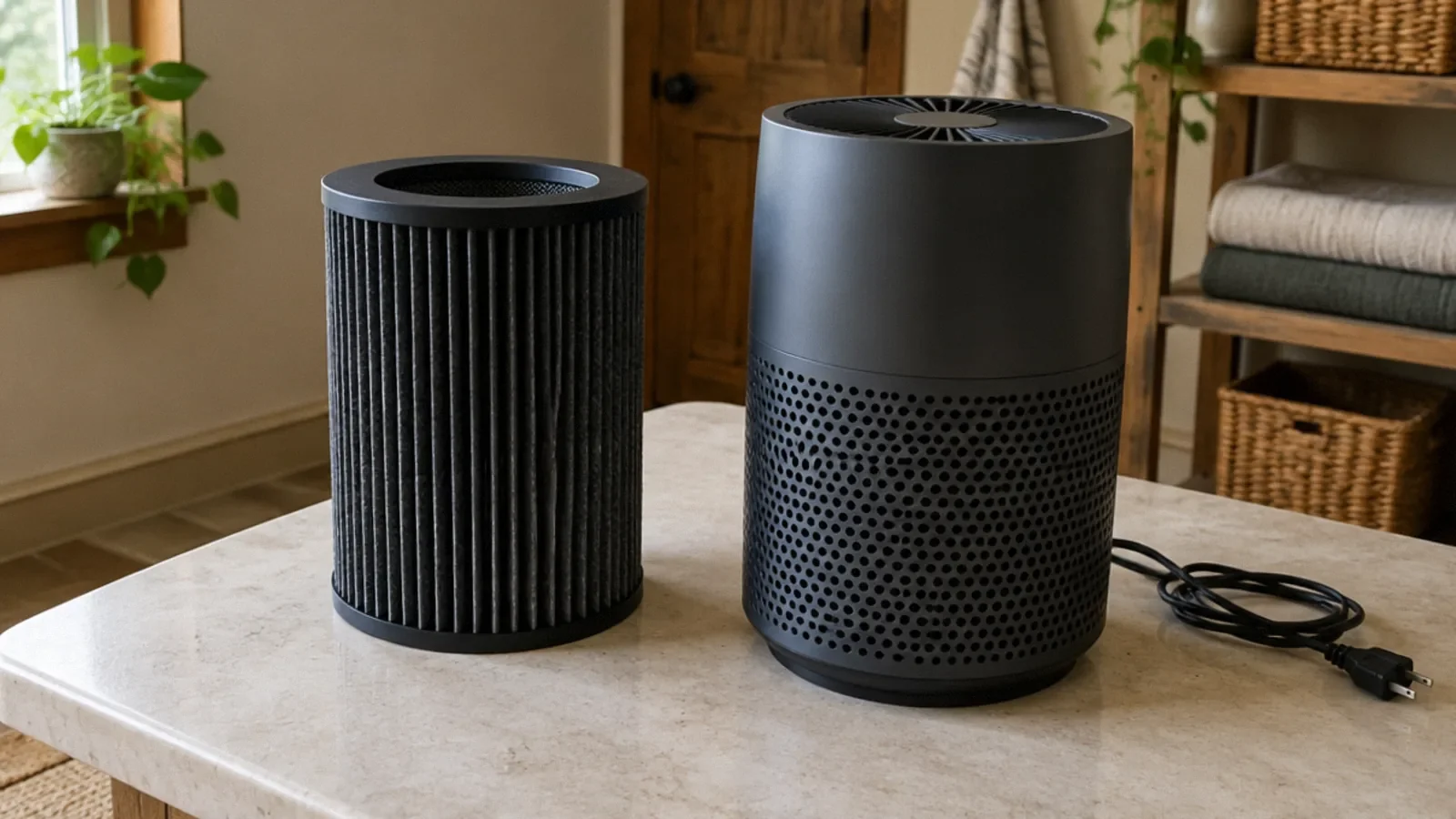
Ask whether the unit was inspected and cleaned before placement, whether the specified filters are installed correctly, and what prompts filter replacement or other service. These questions concern the current setup and its documented maintenance. They are more useful than a claim that a bright-white prefilter proves every internal component is clean.
Do not open or remove filters in an occupied room to inspect them yourself. Filter handling may release collected material and should follow the crew’s control procedures. Report visible damage, loose components, or unusual operation and ask the responsible person to evaluate them.
If occupants have symptoms or health concerns, equipment appearance cannot establish the cause or make a medical determination. Seek appropriate healthcare advice while the building professional evaluates the environmental work. The cleanup record should describe what was done and verified without promising that filtration will resolve a particular person’s symptoms. This keeps the equipment discussion practical and avoids converting an air-cleaning machine into an unsupported health guarantee.
Ask about equipment condition without guessing from a photo
Visible dust or a loose prefilter can justify questions about maintenance, cleaning, filter fit, and inspection. A photograph cannot determine every internal condition or establish what happened on prior jobs. Ask for the crew’s preparation and maintenance process rather than accepting blanket reassurance or making a contamination diagnosis from appearance.
Report unusual operation or damaged components. The final decision to remove equipment should follow its purpose: drying evidence for dehumidification, and the cleanup and containment plan for filtration. One unit’s removal does not certify every part of the project complete.
Portable air purifier versus dehumidifier
A portable air purifier moves air through a filter or another cleaning technology to reduce certain airborne pollutants; a dehumidifier removes water vapor from air. They answer different problems. An air purifier is not a substitute for controlling moisture, while a dehumidifier does not provide the same particle filtration.
A professional air scrubber used during restoration may have containment, airflow and filtration requirements beyond those of an ordinary room air cleaner. Ask what equipment is proposed and why. EPA advises fixing moisture problems and cleaning mold; filtration alone does not solve mold growth on a surface.
Do air filters help with mold?
A properly selected portable air cleaner with a high-efficiency particulate filter can capture some airborne particles, including some mold spores, as air passes through it. Its effectiveness depends on airflow, placement, filter fit and maintenance. A room device cannot reach every particle or prove that a building is mold-free.
Filtration does not remove growth on wet materials or correct a leak. Investigate and address the moisture source and affected surfaces; use professional containment and filtration where appropriate. Avoid ozone generators in occupied spaces.
Choose and maintain a room air cleaner
First stop the moisture source and arrange appropriate cleaning or removal of affected material. Where disturbance could spread contamination, ask the remediation contractor about containment before operating fans. Filtration is a supplement to these steps, not a way to kill every spore or prove a home is mold-free.
For the room being treated, compare the clean air delivery rate (CADR) with the manufacturer’s recommended room size; a HEPA filter can capture small airborne particles passing through it. Larger spaces, obstructions and operating speed affect the result. Fit the specified filter correctly, follow the replacement schedule and avoid devices that intentionally generate ozone. Settled particles and growth on materials are not removed simply by running a purifier.
Your next-step checklist
- Identify filtration, dehumidification, airflow, and pressure-control roles separately.
- Confirm that wet materials have a drying plan in addition to particle control.
- Request the surface cleaning and material-removal scope.
- Ask how filters, equipment cleaning, and fit are checked.
- Keep ducts and barriers in their planned configuration and report changes.
Related questions
Does a HEPA air scrubber make the room mold-free?
No machine can provide that blanket guarantee. Filtration can be part of exposure control, but source correction, material cleanup, and appropriate verification remain necessary.
Can a dehumidifier spread dust?
It moves air, so its use must be considered within the cleanup plan. Do not assume its function eliminates the need to control contamination before drying.
Why might both machines remain after demolition?
One may support drying while the other supports particle control during cleanup. Ask what evidence and work stage determine the endpoint for each.
How do I reduce mold particles in indoor air?
Correct moisture and appropriately clean or remove affected material first. A properly selected HEPA air cleaner can capture some airborne particles but cannot remove hidden growth or fix a leak. Avoid devices that intentionally generate ozone.
Does an air purifier remove moisture or prevent mold?
A standard particulate air purifier filters some airborne particles; it does not dehumidify the room or repair a leak. Moisture control and appropriate cleanup remain necessary. A dehumidifier performs a different function.
Sources & context
Public guidance supports the principles in this article. The practical questions and examples are editorial interpretation, not a site assessment or a coverage decision. State-specific rules apply only where identified.
- EPA: Mold Remediation, pp. 22–25 (containment and measurement equipment)official
- DOE: Consumer Dehumidifiersofficial
- U.S. EPA: Guide to air cleaners in the homefederal guidance
Community questions behind this topic
These discussions helped identify reader concerns. They are anecdotal, not technical or legal authority.