Stop adding water if wastewater is backing up, keep people away from sewage, and arrange a professional inspection. Slow drains and odors can indicate a problem in the plumbing, tank, pump, or drainfield; symptoms alone do not identify the failed part.
Recognize warning signs
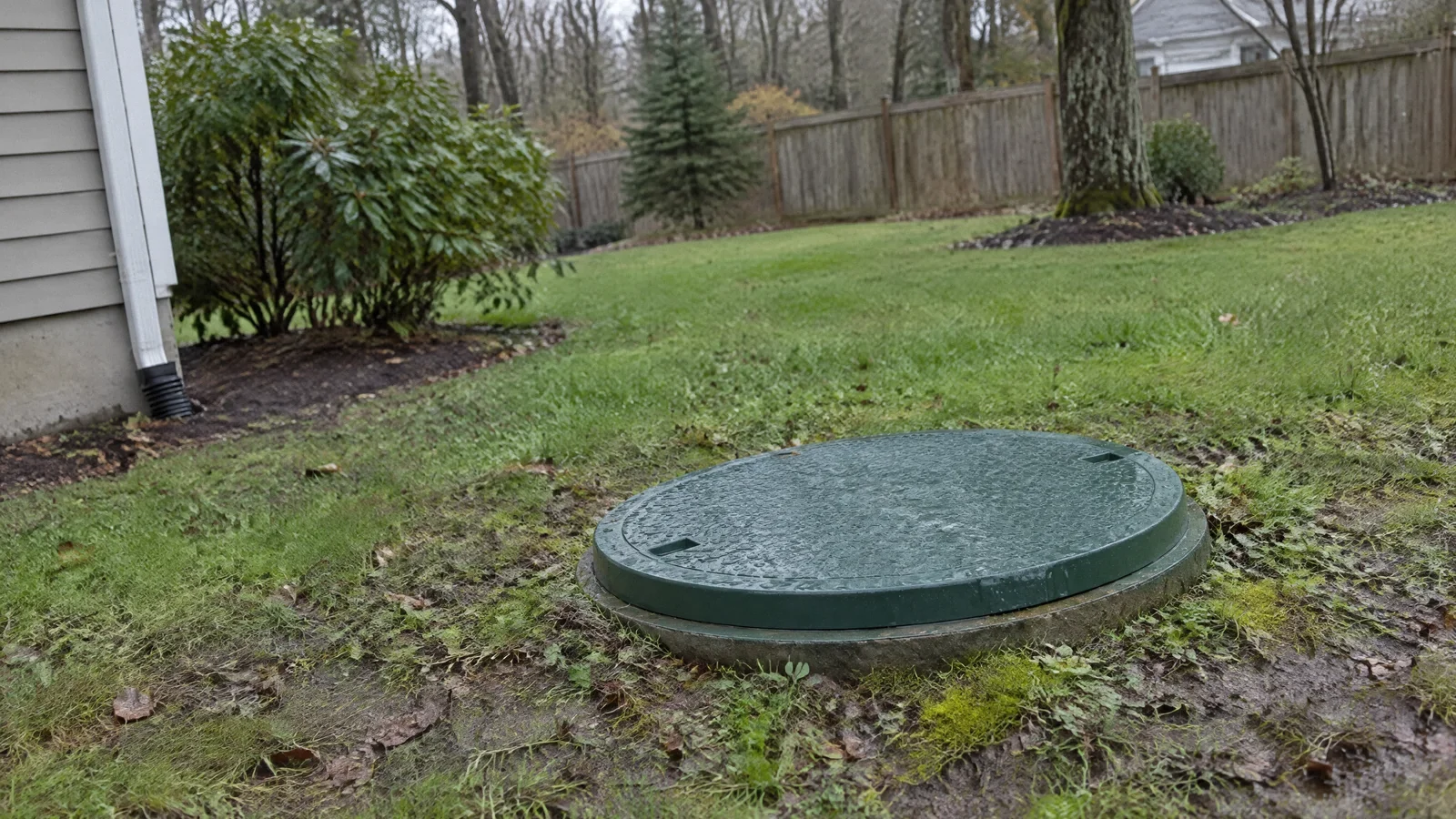
Several slow drains, gurgling plumbing, wastewater backing up, sewage odors, or unusually wet ground near a tank or drainfield may indicate a malfunction. EPA lists these among signs of septic failure. A single slow sink can instead be a local drain problem. Record which fixtures are affected and when the problem occurs.
An outdoor odor or wet patch is useful information, but its absence does not prove the system is working. Likewise, a backup is not proof that the tank simply needs pumping. The blockage or failure may be in the line, the tank, a pump, or the soil absorption area.
Reduce water use immediately
If sewage is backing up, stop using toilets, showers, laundry, dishwashers, and other fixtures until a qualified provider advises that the system can accept water. Tell everyone in the home and arrange an alternative bathroom. Keep children and pets away from wastewater and wet soil. Contact the local health department if sewage is surfacing.
Do not enter a septic tank, remove its lid, or lean over an opening. Tanks can contain dangerous gases and are confined spaces. Only trained specialists should open, clean, or repair them. Do not use drain chemicals as a substitute for identifying a system-wide failure; tell the service provider about any products already used.
Identify the affected part
Provide the professional with a site plan, system type, maintenance records, date of the last service, symptoms, recent water use, and recent flooding or heavy rain. If the home has a pump or alarm, report what you observed without opening electrical equipment. A tenant should notify the property owner or manager promptly.
An inspector may review the tank, inlet and outlet, pump and controls where installed, and the drainfield. A camera may help examine suitable pipes. Ask the provider to explain the evidence for the diagnosis and whether the problem is a blocked line, overloaded system, damaged component, or drainfield failure.
Understand pumping and repair
Septic tanks require periodic maintenance, but pumping alone will not necessarily fix a collapsed pipe, failed pump, or saturated drainfield. The appropriate remedy follows an inspection. Ask whether the estimate includes access, pumping, diagnostics, repair, permits, cleanup, and restoration of the yard.
If a drainfield is affected, local rules may govern repair or replacement. Contact the local permitting authority for requirements and qualified providers. Get the findings and proposed work in writing, including what remains uncertain until the system is opened or tested.
Take care after a flood
Flooding can saturate the soil absorption area and cause the system to back up even if no pipe is blocked. EPA advises not using a flooded sewage system until the water in the absorption field is lower than the water level around the house. Have suspected damage inspected and serviced professionally.
Do not pump large quantities of floodwater through the septic system. Ask the local health department about private well testing and any local restrictions. Avoid contact with standing wastewater and arrange suitable professional cleanup if it enters the building.
Prevent recurring problems
EPA recommends routine inspection and pumping as needed, efficient water use, and flushing only human waste and toilet paper. Wipes, grease, and other debris can obstruct a system even when packaging suggests they are disposable. Spread high-volume water use over time and repair leaks that add unnecessary flow.
Protect the drainfield from vehicle traffic and keep records of maintenance and repairs. After service, ask how the contractor verified operation and what signs should prompt another call. If symptoms recur, share the earlier diagnosis rather than assuming the same component failed again.
Prepare for the service visit
Make a list of fixtures that drain slowly and where any backup first appeared. Note whether the problem occurs after laundry, during heavy rain, or continuously, but avoid running additional water to reproduce it. Provide the contractor with the system diagram, if available, along with pumping invoices and previous inspection findings. Explain whether there is a pump, an alarm, or a history of high groundwater. If the home is rented, agree with the owner who will authorize inspection and receive the report. These details help the provider plan the visit without requiring the household to open the tank or investigate hazardous components.
Your next-step checklist
- Stop adding water during a backup.
- Keep people away from sewage and never enter the tank.
- Collect maintenance records and call a septic professional.
- Document the diagnosis and verify the repair.
Related questions
What should you do if a septic system appears clogged?
Stop adding water if wastewater is backing up, keep people away from sewage, and arrange a professional inspection. Slow drains and odors can indicate a problem in the plumbing, tank, pump, or drainfield; symptoms alone do not identify the failed part.
Sources & context
Public guidance supports the principles in this article. The practical questions and examples are editorial interpretation, not a site assessment or a coverage decision. State-specific rules apply only where identified.
- EPA septic malfunctionsprimary
- EPA septic careprimary
- EPA septic systems after floodingprimary