A stopped-up garbage disposal can mean either that its grinding mechanism is jammed or that water cannot drain through the plumbing. Turn the disposal off and stop running water before investigating. Disconnect its power before inspecting or removing an object, and never put a hand inside the chamber. If the sink backs up, chemicals were used, the unit leaks or the cause is unclear, a plumber can diagnose the drain and appliance safely.
Identify the problem
A stopped-up garbage disposal can mean either that its grinding mechanism is jammed or that water cannot drain through the plumbing. Turn the disposal off and stop running water before investigating. Disconnect its power before inspecting or removing an object, and never put a hand inside the chamber. If the sink backs up, chemicals were used, the unit leaks or the cause is unclear, a plumber can diagnose the drain and appliance safely.
Listen without repeated starts
Observe what happens without repeatedly switching the machine on. A hum with no grinding can indicate a jam; a silent unit may have lost power or tripped its overload protection. A motor that runs but leaves standing water suggests a drainage problem downstream or an obstruction in the outlet. These symptoms are clues rather than definitive diagnoses. Turn the switch off immediately if the unit hums or makes an unusual noise, and do not keep trying to run a jammed motor.
Prevent overflow
Stop the faucet and any dishwasher connected to the same drain. If the basin contains water, use a cup or small container to remove it into a bucket where safe, leaving the drain opening visible. Do not bail or plunge a basin containing chemical drain cleaner. Such products can cause burns and may remain trapped in a blocked pipe. If cleaner was used, stop and tell the plumber the product and timing. Never combine cleaning products or pour more chemicals into the sink.
Disconnect power
Disconnect the disposal from its power supply before looking into the chamber. For a plug-in unit, unplug it; for a hardwired unit, follow the manufacturer's instructions for isolating power and use a qualified person if you cannot do so safely. A wall switch alone is not a substitute for disconnecting power during inspection. Moen instructs owners to disconnect power and never put a hand in the disposal. Keep other people from restoring power while you work.
Look for an object
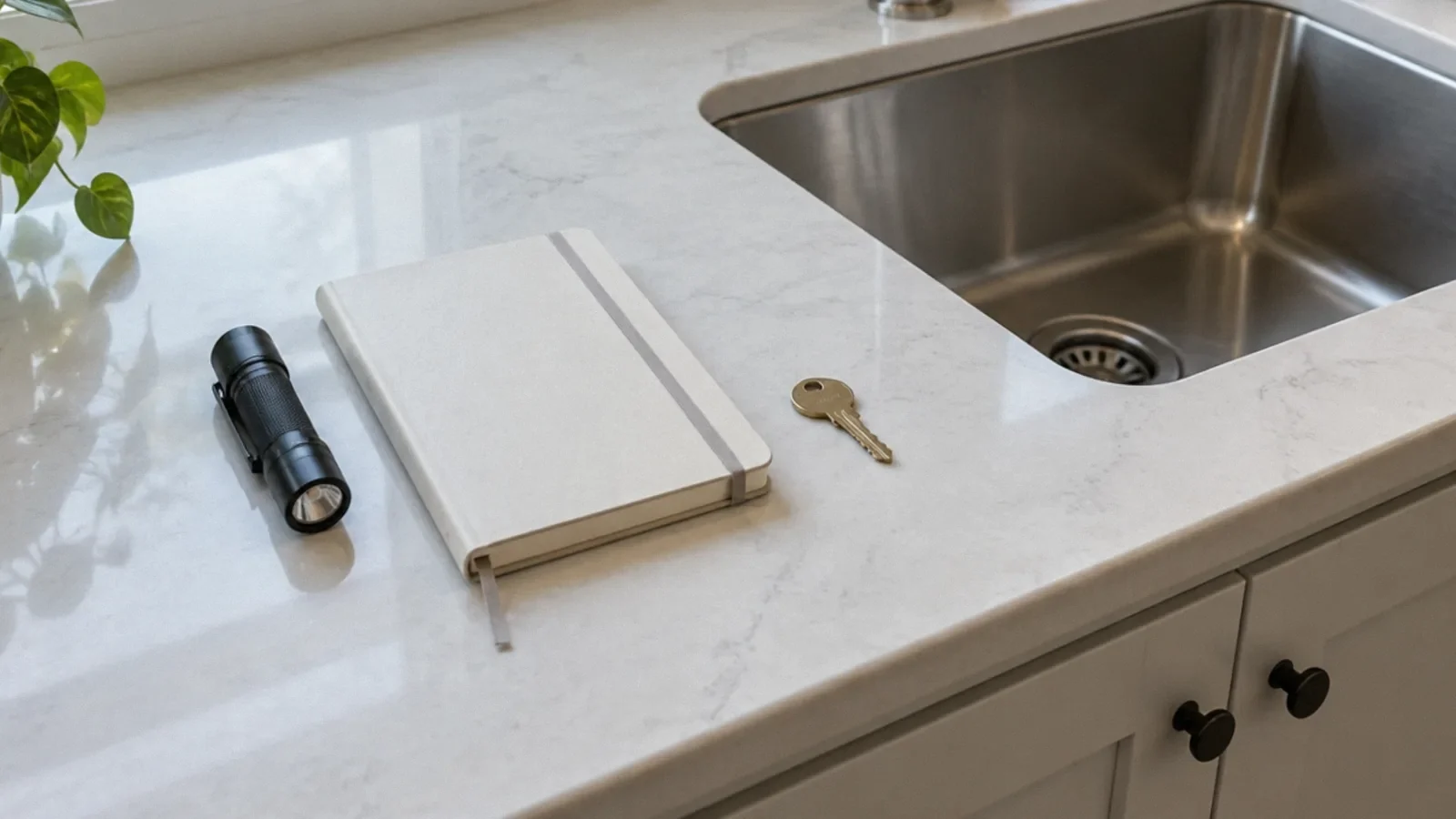
Use a flashlight to look for a visible utensil, bone, glass or other foreign object. With power disconnected, use long-handled tongs or pliers to remove an object that can be reached without forcing it. Never use fingers or a hand inside the opening. Some disposal guards are removable and others are fixed; follow the instructions for your model. Stop if the object is wedged, sharp debris cannot be safely removed, or you cannot see what you are doing.
Free a jam by the model instructions
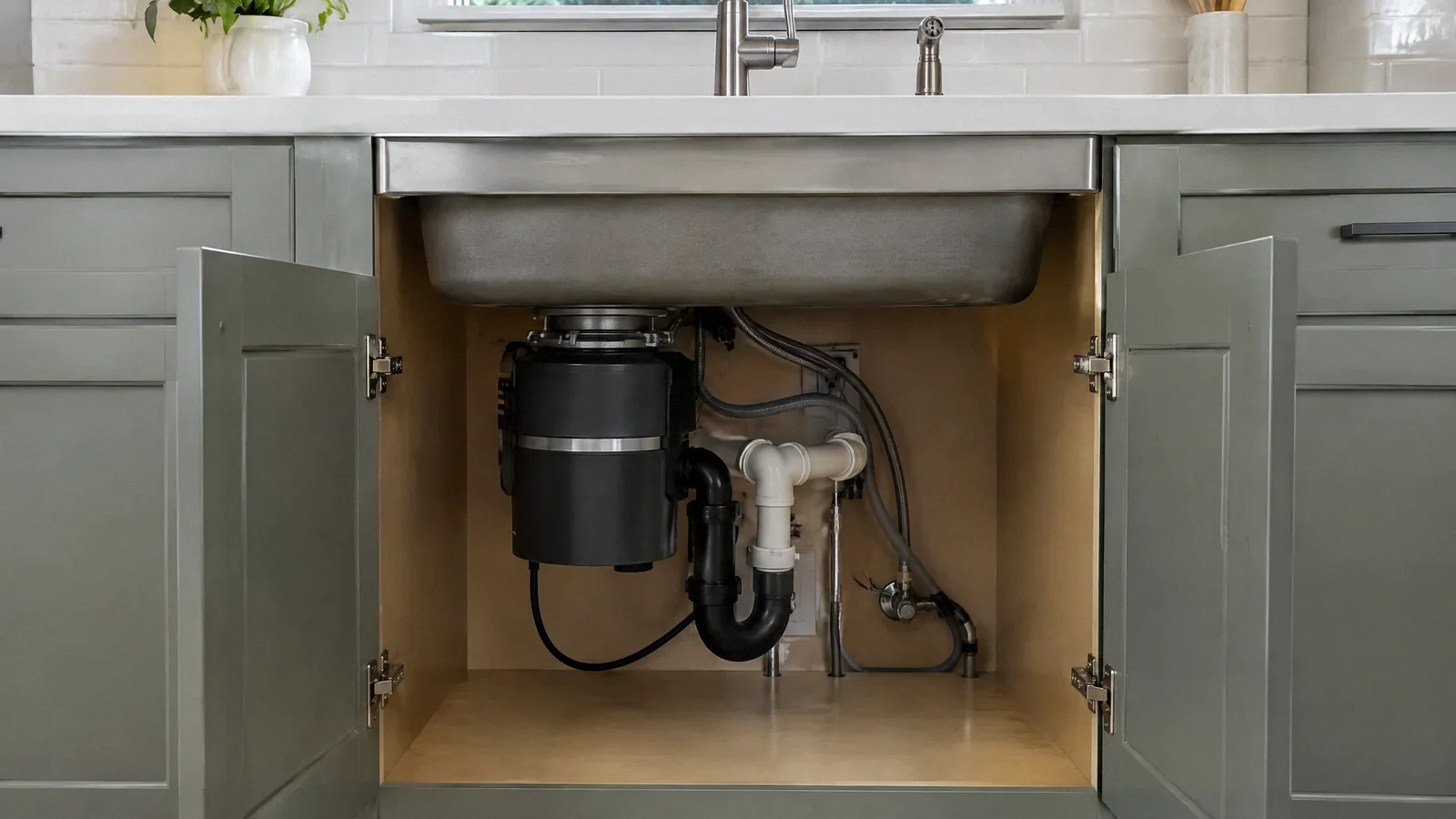
If the motor is jammed, consult the exact model's instructions before attempting to free it. Methods differ. Some InSinkErator models use a supplied wrench in a socket on the bottom, while Moen describes a different model-specific unjamming tool. With power disconnected, use only the method specified by the maker; do not force the mechanism or assume every unit has the same socket. If it will not move, a plumber or appliance technician can assess the jam. Remove the tool before restoring power.
Reset and test
After the obstruction is removed, the overload reset may need attention. Use the manufacturer's directions for your model and make sure the switch is off before reconnecting power. A reset is not a substitute for clearing a jam or fixing an electrical fault. If the reset repeatedly trips, the motor hums again, there is a burning smell, or the unit leaks, switch it off and arrange service. Do not dismantle its electrical housing or bypass a protective device.
Address a blocked drain
If the motor runs normally but the basin remains full, stop it and investigate the drain rather than repeatedly grinding. The obstruction may be in the outlet, trap or branch line. If no chemical cleaner is present and the plumbing is accessible, a plumber can inspect the trap and drain. A plunger may be suitable for some ordinary sink clogs, but using it can move water between connected basins and create splashes; follow the fixture instructions and protect the dishwasher connection. Never plunge a drain containing caustic cleaner.
Check the repair
After a repair, run a small amount of water and check for drainage and leaks around the disposal and accessible connections. Operate the disposal only as the manufacturer's instructions direct, with the sink area clear. Stop if water backs up, the unit rattles or leaks, or a breaker or reset trips again. A successful brief test does not rule out an intermittent downstream restriction, so watch the sink during subsequent normal use.
Prevent another blockage
Prevent recurrence by keeping utensils and nonfood items out of the opening and following the manufacturer's list of prohibited materials. Avoid pouring grease into the sink; it can collect in plumbing. Feed only suitable food scraps as directed and use the recommended water flow. A stopper or strainer can reduce accidental entry when the appliance is not in use. If backups affect several fixtures, wastewater appears elsewhere, or the problem returns after cleaning the local drain, contact a plumber to assess the larger system.
Your next-step checklist
- Turn off and disconnect power before inspection.
- Never put a hand inside the disposal.
- Avoid chemical drain cleaners.
- Call a professional for persistent jams or backups.
Related questions
Why does my disposal hum but not run?
A hum can indicate a jam. Turn it off, disconnect power and follow the model’s instructions for inspection.
Why does water remain when the motor runs?
The drain or disposal outlet may be blocked; continued operation will not necessarily clear it.
Sources & context
Public guidance supports the principles in this article. The practical questions and examples are editorial interpretation, not a site assessment or a coverage decision. State-specific rules apply only where identified.
- Moen unjamming instructionsprimary
- InSinkErator jam instructionsprimary
- EPA septic careprimary