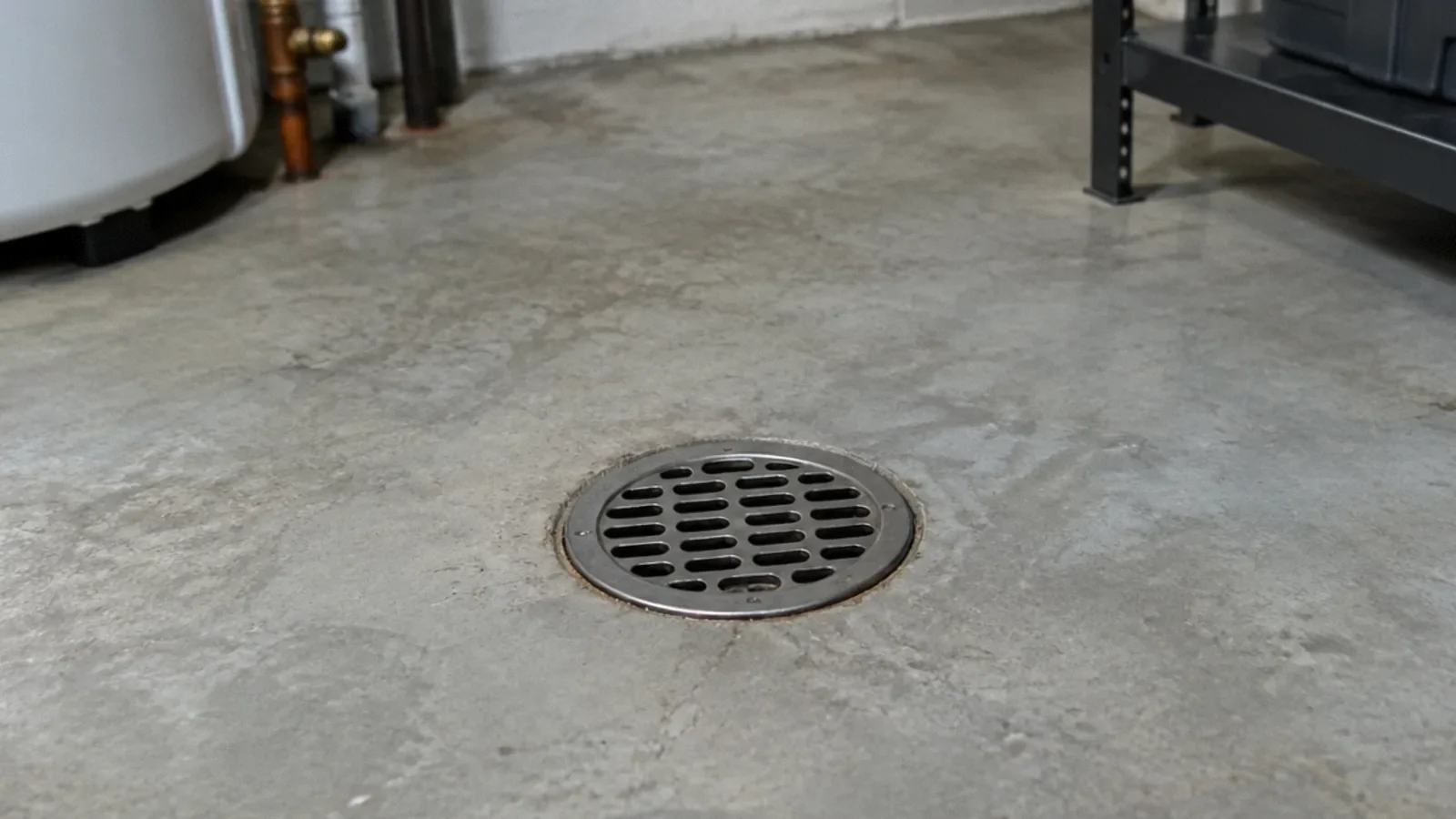
A floor drain is an opening designed to collect water from a floor and direct it into an approved drainage system. Many have a trap that holds water to block sewer gases. Slow drainage, recurring odor, damaged fittings or a backup warrants investigation; the repair depends on the actual connection and cause.
How a floor drain works
A grate at floor level allows water to enter a drain body and connected pipe. The destination varies: a building may have sanitary, storm or other approved drainage arrangements. A grate alone does not reveal where the pipe goes or whether it is functioning properly.
A plumbing trap holds water to form a barrier against sewer gases. If a rarely used trap dries out, odor can enter the room. Some systems use a trap primer or another approved seal; a professional can identify the arrangement in your building.
Floor drain versus cleanout or sump
A cleanout is an access point for inspecting or clearing a drain line; it is not necessarily a floor drain. A sump pit collects water for a pump or drainage system. The terms describe different functions even though components can be close together.
Do not remove a sealed cover or assume a floor opening is suitable for discharging any liquid. The building’s plumbing plans, local utility and a qualified plumber can help identify the connection. Never pour fuel, chemicals or other prohibited materials into a drain.
Slow drainage and backups
Hair, sediment, debris, a blocked branch line or a downstream sewer problem can slow drainage. A backup involving sewage can contaminate the area and may be associated with a larger system issue. Stop using connected fixtures and keep people away from suspect water.
Avoid wet electrical equipment and standing water near energized equipment. Do not mix drain chemicals or use a plunger after caustic cleaner has been added. Tell a plumber which products were used; inspection and clearing should match the actual obstruction.
Why a floor drain smells
A dried-out trap is one possible source of sewer odor, but a loose cover, damaged pipe or vent, blockage or another problem may also be responsible. EPA recommends a maintenance plan for drains whose traps dry out from infrequent use.
If the drain is known to be connected and functioning, and no backup or other hazard is present, local plumbing guidance may recommend adding water to restore the seal. Do not add water to an unknown opening or one that is overflowing. Persistent or strong odors need professional investigation.
What a repair assessment covers
A plumber can assess the drain grate and body, trap, accessible piping and downstream line, and determine whether a blockage, failed connection or damaged drain is responsible. Camera inspection or other testing may help where appropriate, but a written scope should state inspection limits.
Repairs might involve cleaning, replacing a damaged component or work below a slab. The correct approach depends on access and the system. Ask whether concrete cutting, restoration of the floor, permits and inspection are included in the quote.
Preventing repeated problems
Keep the grate accessible and remove ordinary debris only when it is safe and permitted. Follow a suitable trap-maintenance schedule and the building’s plumbing instructions. Do not rely on a floor drain as the only protection against an appliance leak or sewage backup.
A backwater valve or other flood protection may be appropriate in some systems, but selection, installation and maintenance depend on local requirements. A qualified plumber and the local utility can explain the property-specific options.
When to call for help
Call a plumber for repeated blockages, broken components, unexplained odors, water coming up through the drain or a suspected damaged line. Contact the local sewer utility if a public main issue is suspected; responsibility varies by location and property.
For sewage inside a building, avoid contact, limit access and arrange appropriate cleanup. If there is a strong chemical or fuel odor, leave and contact emergency services from a safe location instead of trying to flush the drain.
Basement drain maintenance and repair choices
In a basement, a floor drain may serve a utility area near a water heater or laundry; its destination and trap arrangement vary. Minneapolis suggests checking floor drains monthly with water. Use that as a local example, not a universal requirement: follow the system instructions and local guidance, and never add water to an unknown opening or one backing up. Inspect accessible grates and note odors or slow drainage.
A broken removable grate may need only a compatible replacement. A damaged body or trap can require more extensive work; a failed pipe below the slab may require excavation and concrete restoration. A plumber should distinguish blockage from breakage and explain inspection limits. Ask whether the written estimate includes access, permits and inspection, concrete removal and reinstatement, disposal and final testing.
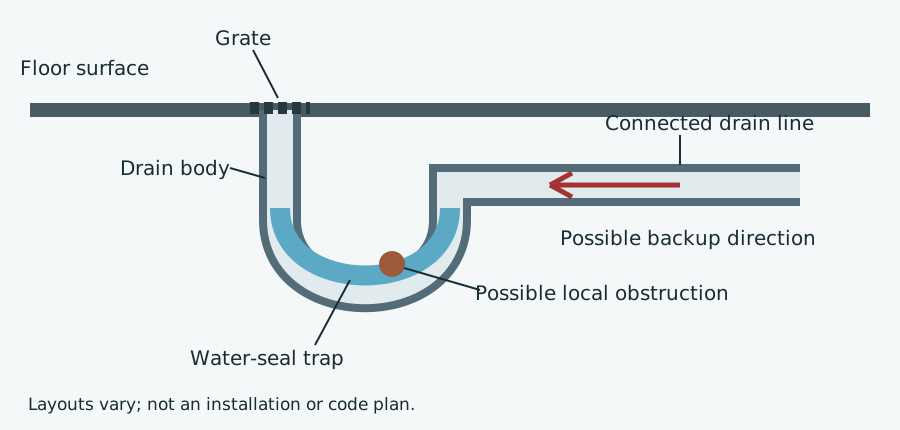
A local blockage can prevent water entering the drain from leaving, while downstream surcharge can force sewage up through it. Both can produce pooling, so appearance alone cannot prove which occurred. Stop using connected fixtures, keep away from suspect water, and contact a plumber and the sewer utility as appropriate. Never remove a cover or enter a confined space to investigate.
Reading the drain diagram
The diagram shows one common arrangement: water enters through a grate, passes a trap that retains a water seal, then travels toward a connected drain line. Debris near the trap is one possible local blockage; sewage can instead rise from a downstream line. Actual layouts, connections and cleanout locations vary. This is not an installation or code plan.
Your next-step checklist
- Identify the drain and its connection.
- Keep the grate accessible and avoid prohibited discharges.
- Stop using fixtures if sewage backs up.
- Do not mix drain chemicals.
- Request a written assessment for recurring odor or damage.
Related questions
What is a floor drain?
It is a floor-level opening that directs collected water to an approved drainage system. The actual connection depends on the building.
Why does a floor drain smell?
A dry trap is one possibility, but damaged or blocked plumbing and other sources can also cause odors.
Can a floor drain be repaired?
Often, but the repair depends on whether the problem is a blockage, trap, drain body or pipe. A plumber can inspect and explain the scope.
Can I pour gasoline down a floor drain?
No. Keep fuel and other prohibited chemicals out of drains, and seek emergency help for a hazardous spill or strong fuel odor.
Sources & context
Public guidance supports the principles in this article. The practical questions and examples are editorial interpretation, not a site assessment or a coverage decision. State-specific rules apply only where identified.
- U.S. EPA: Sewer gas barriers and trap primersfederal technical guidance
- City of Minneapolis: Plumbing systems and sewer backupsmunicipal guidance
- City of Minneapolis: Sewer safety and maintenancemunicipal guidance
- Public safety and technical guidanceofficial guidance