Keep water and electrical devices apart, use properly installed ground-fault circuit interrupter (GFCI) protection where required, and have a qualified electrician evaluate wet or damaged outlets. A GFCI reduces shock risk; it does not make water contact safe.
Why water near a receptacle matters
Water around an outlet creates a potential path for electric current and may damage the receptacle or wiring behind the wall. Splashes, leaks, flooding and condensation are different situations, but all deserve attention before a device is used. A dry-looking faceplate does not establish that the wiring or electrical box behind it is dry.
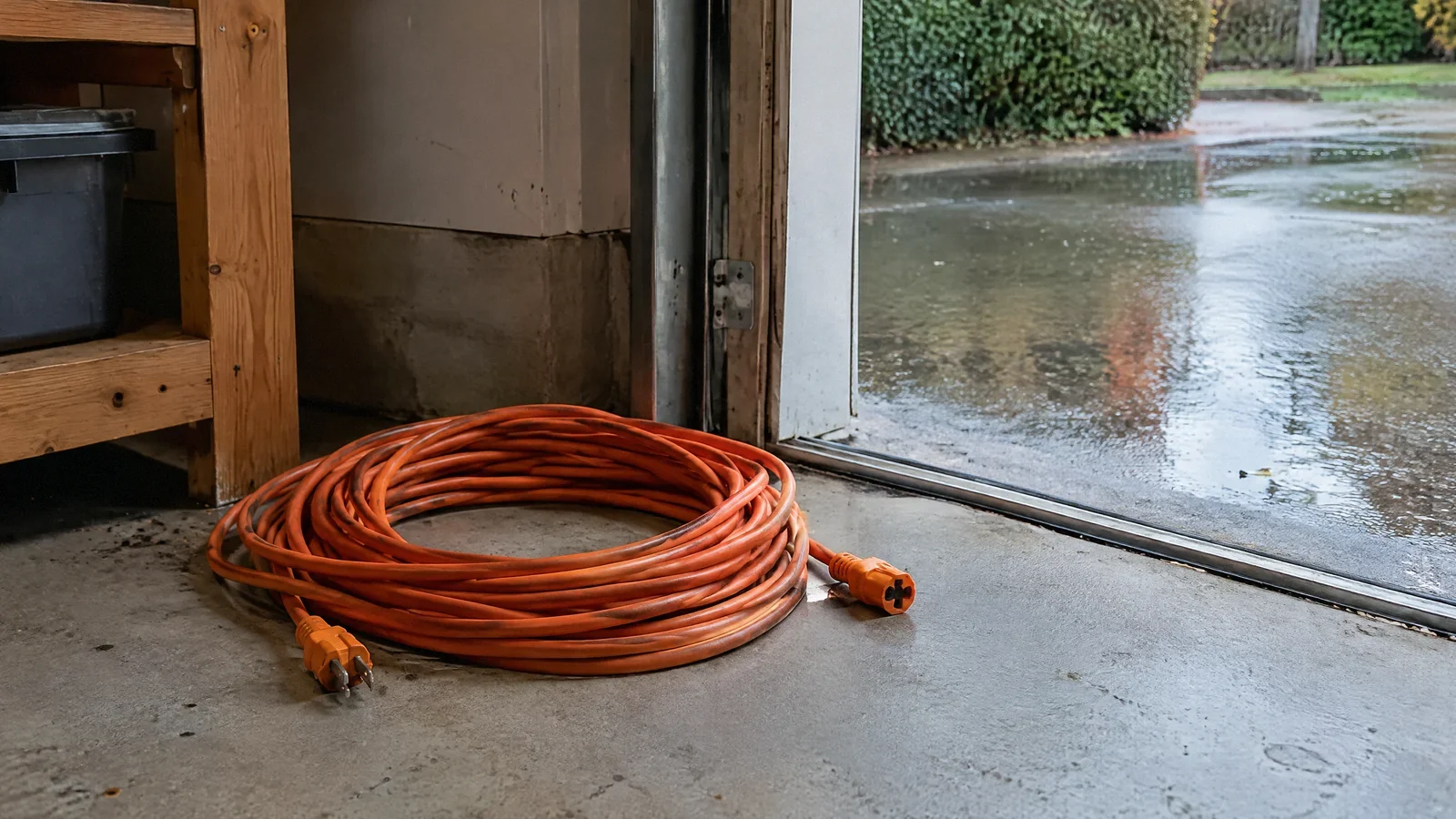
Keep portable electrical products and cords away from sinks, tubs and standing water. Do not handle a plug with wet hands or use equipment while standing in water. If water has entered an outlet or reached equipment, keep people away and obtain professional help before using it again.
What a GFCI does
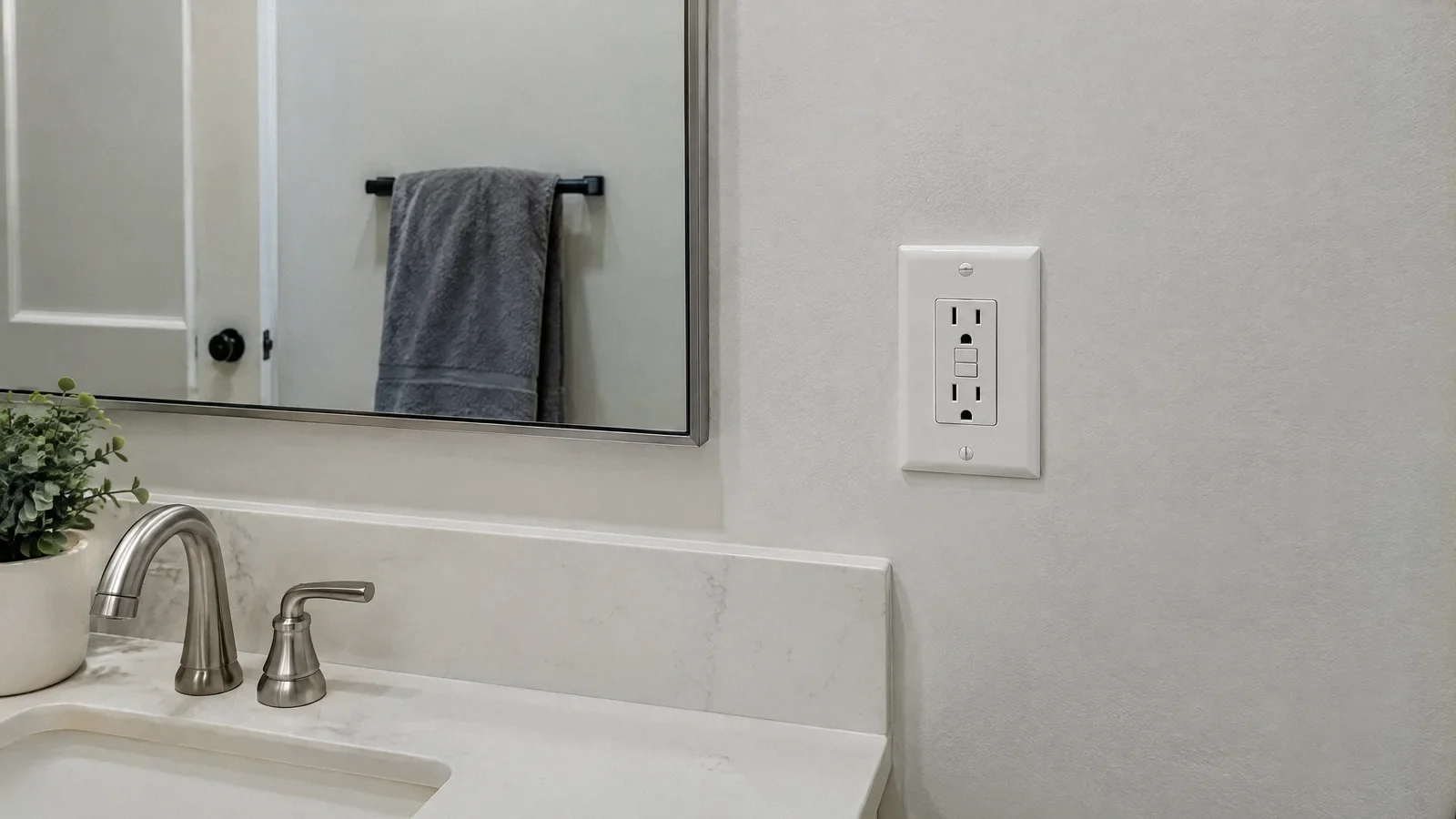
A ground-fault circuit interrupter monitors current and is designed to interrupt power quickly when it detects an imbalance consistent with a ground fault. GFCI protection can be provided by a receptacle, a breaker or another suitable device. A receptacle without test and reset buttons may still be protected upstream; appearance alone does not establish protection.
A GFCI does not prevent every shock, does not make damaged equipment safe, and is not a substitute for keeping electricity away from water. It also should not be assumed to protect against every overload or fire hazard. If you do not know whether a particular outlet is protected, ask a qualified electrician to check it and explain the protection.
Wet outlet: what to do now
Do not touch the wet outlet, plug, appliance or nearby water. If you can reach the relevant breaker from a dry, safe location without touching wet equipment, disconnecting power may be appropriate; if reaching the panel requires standing in water or the panel itself is wet, stay away and call an electrician or the utility. CDC advises never turning power on or off while standing in water.
Do not reset a tripped device repeatedly or test a wet outlet to see whether it works. Have the water source stopped and ask an electrician to evaluate the receptacle, box, wiring and any connected equipment before power is restored. After flooding, electrical components may remain wet inside walls even when the surface looks dry.
Placement, codes and outdoor covers
Bathrooms, kitchens, laundry rooms, garages, outdoor locations and other areas can have specific electrical protection requirements. Exact requirements depend on the adopted code, local amendments, installation date and circumstances. A distance measurement from a sink alone is not enough to determine whether an existing installation complies. Ask the local authority or a qualified electrician about the site.
Outside, a cover has to suit the exposure and intended use. CPSC notes that an ordinary closed cover may not keep water out when a cord is plugged in; a weatherproof while-in-use cover is intended for that situation. Outdoor protection and a GFCI still do not authorize placing a connection in standing water.
Routine testing and warning signs
Test a GFCI according to the device manufacturer’s instructions. The test interrupts power to protected outlets, so first consider connected equipment that should not unexpectedly lose power. If the device does not respond as instructed, cannot be reset, trips repeatedly, is damaged or feels hot, stop using the affected outlet and contact an electrician.
A trip may result from a fault in an appliance, cord, wiring or the protective device itself. It is a signal to investigate, not a reason to bypass protection. Do not replace a receptacle or diagnose energized wiring unless you are qualified to do that work.
Plan a safer setup
Choose a location that keeps appliances and their cords away from splashes and where the plug can be reached without crossing wet areas. A temporary extension cord is not a substitute for a suitable permanently installed outlet. For a recurring need near a sink, outdoor work area or laundry, ask an electrician to recommend an appropriate receptacle, protection and cover.
Before any planned work, describe the normal use, possible water exposure and connected equipment. Request a written scope and any required permit information. After installation, ask how to identify, test and reset the protection and which other outlets lose power when it trips.
After a flood or major leak
Floodwater may contaminate and damage electrical equipment in ways that cannot be assessed by appearance. Follow local authorities’ directions before reentry. CDC recommends having an electrician check the electrical system before power is restored after flooding; water-damaged devices should not simply be dried on the surface and switched back on.
Document the affected area from a safe location and inform the insurer or property manager as appropriate. Ask the electrician what must be replaced or evaluated and keep the written findings with the water-damage records. The drying contractor and electrician may need to coordinate, but neither a fan nor a GFCI test proves that concealed components are safe.
Your next-step checklist
- Keep hands, equipment and cords away from water.
- Do not touch a wet outlet or enter water to reach a panel.
- Have an electrician inspect water-damaged electrical equipment.
- Test dry GFCI protection as the manufacturer directs.
- Use a suitable weatherproof cover and protection outdoors.
Related questions
Is a GFCI outlet waterproof?
No. A GFCI reduces certain shock risks but does not make an outlet waterproof or make wet equipment safe.
Can an ordinary-looking outlet have GFCI protection?
Yes. It may be protected by an upstream GFCI or breaker. An electrician can verify the arrangement.
Can I reset a wet outlet?
Do not operate a wet or water-damaged device. Keep away and arrange a qualified inspection.
Sources & context
Public guidance supports the principles in this article. The practical questions and examples are editorial interpretation, not a site assessment or a coverage decision. State-specific rules apply only where identified.
- CPSC: Home Electrical Safety Checklistfederal guidance
- CDC: Reentering Your Flooded Homefederal guidance