A gasoline smell in a basement can indicate flammable vapors or another hazardous substance. Leave the building, keep others away, and call 911 or the fire department from a safe location. Do not operate switches or appliances or search for the source yourself.
Treat the odor as a safety issue
Gasoline evaporates readily and its vapors are flammable. ATSDR notes that the vapors can travel to an ignition source and collect in low areas. A basement may also contain electrical equipment and other possible ignition sources.
Do not rely on odor strength to decide that a concentration is safe. A gasoline-like smell does not prove which chemical is present or where it came from. Emergency responders can decide whether the area is safe and what investigation is needed.
Leave without creating sparks
Leave promptly by a safe route and take other occupants and pets with you if you can do so without delay or exposure. From outside and away from the building, call 911 or the fire department and describe the odor and any known spill.
Do not operate electrical switches, plugs, garage door openers, phones or appliances in the affected area. Do not light a flame, smoke, start equipment or enter the basement to investigate. Follow the dispatcher’s and responders’ directions.
Possible indoor sources
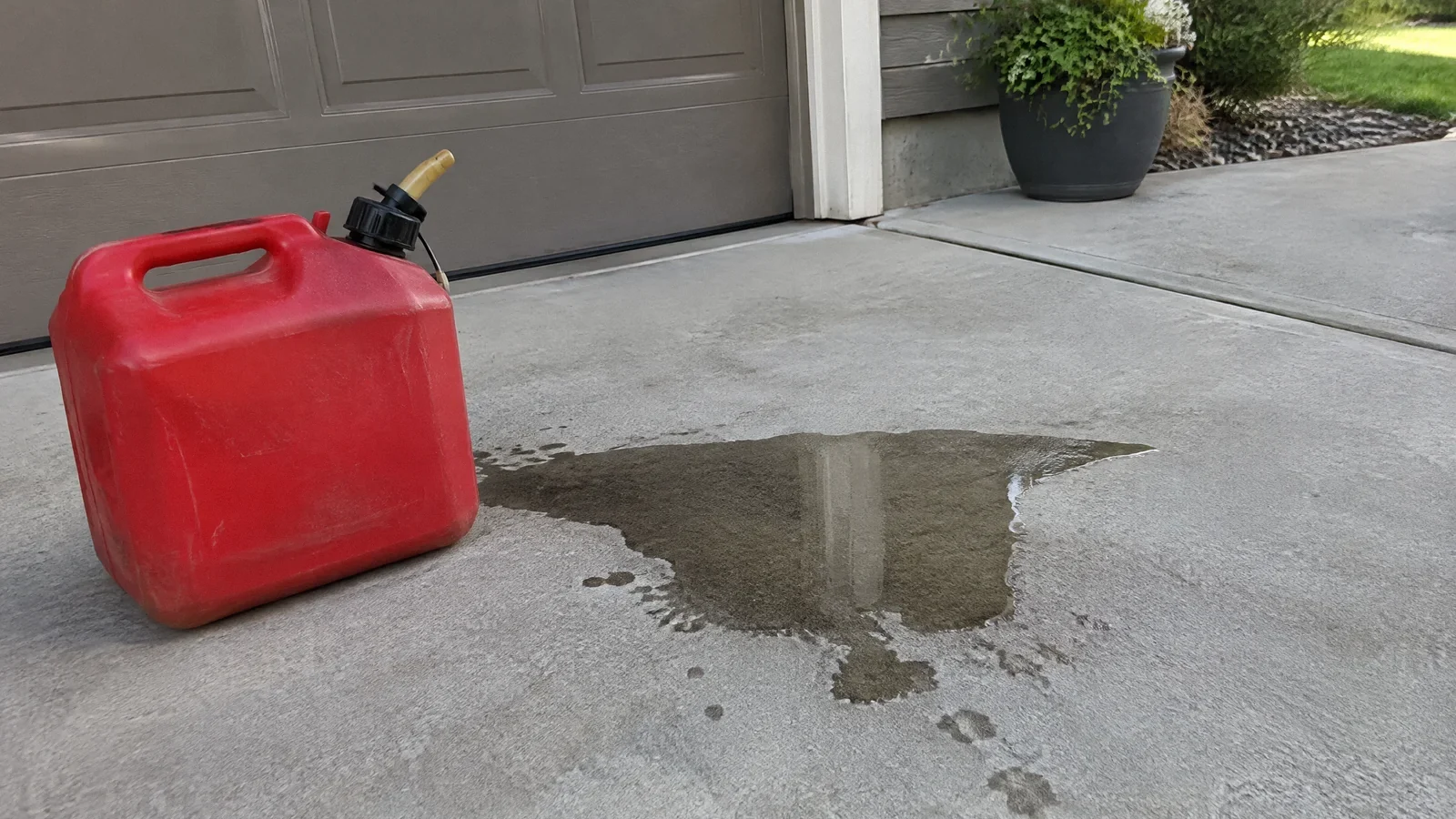
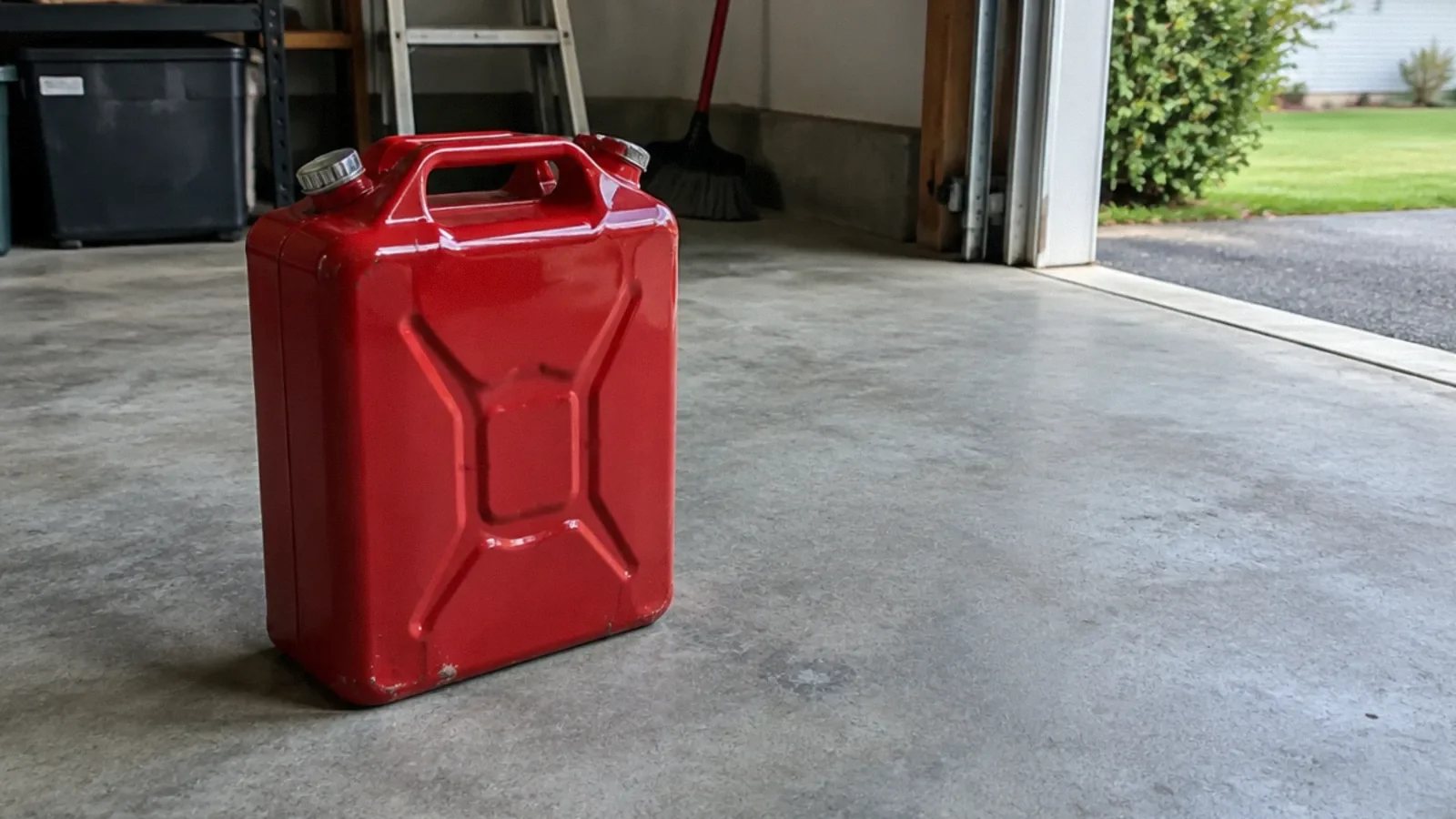
A leaking fuel container, stored equipment or a spill in an attached garage can be one possible source of a petroleum odor. Other products, such as solvents or fuel oil, may also produce a similar smell. These examples are not a diagnosis.
Do not move or open a suspect container if doing so would expose you to vapors or create a hazard. Tell responders what you know from a safe location. Do not run a vehicle or fuel-powered equipment in an attached garage.
Could vapors come from underground?
EPA explains that petroleum vapors can migrate from contaminated soil or groundwater into a building through foundation openings, utility penetrations or other pathways. This is called vapor intrusion. It is one possible explanation, not proof that a particular property has underground contamination.
If responders suspect an environmental source, they may involve local environmental or public health agencies. A qualified investigation considers indoor sources as well as possible subsurface sources. A consumer odor test cannot identify the pathway.
Health concerns and exposure
Breathing gasoline vapor can irritate the respiratory tract and cause other effects depending on the exposure. If someone has symptoms, has been exposed to liquid fuel or swallowed fuel, contact emergency services or a medical professional promptly and follow their instructions.
Do not make an exposed person vomit or return indoors to retrieve belongings. Responders and medical professionals can advise on safe decontamination and next steps for the individual situation.
What happens after the emergency response
Return only when responders say it is safe. If a leak or spill is confirmed, use qualified professionals and follow agency instructions for cleanup, disposal and any necessary environmental assessment. A fan, fragrance or open window alone is not proof that the source has been eliminated.
Keep any written reports and note when the odor was first noticed, recent work or spills and when responders attended. Tell a landlord or property manager and insurer as appropriate after the immediate hazard has been addressed.
Prevent future fuel hazards
Follow local fire rules and the manufacturer’s directions for fuel storage. EPA advises against storing flammable liquids in the home. Never store fuel near an ignition source or use gasoline to start a fire.
Maintain fuel-powered equipment and approved containers appropriately, and seek professional help for leaks. If the odor returns, leave and report it again rather than assuming a previous inspection covers a new condition.
After responders identify the source
A stored fuel container or equipment in an adjoining garage may be relevant even if the odor is most noticeable downstairs. Tell responders about nearby fuel, recent deliveries or ground disturbance, but do not enter to check. Their findings determine whether a spill response or environmental investigation is needed.
For the separate question of materials and procedures after a confirmed spill, see the gasoline-spill cleanup guide. Do not begin cleanup until the immediate vapor and ignition hazards have been assessed.
Your next-step checklist
- Leave the building and keep others away.
- Do not operate switches or equipment in the affected area.
- Call 911 or the fire department from a safe location.
- Tell responders about known fuel or spills.
- Return only after responders say it is safe.
Related questions
Why does a basement smell like gasoline?
Possible sources include a fuel spill or container, another chemical, or vapors entering from elsewhere. Only an investigation can determine the cause.
Can gasoline vapor collect in a basement?
Yes. Gasoline vapors can collect in low areas and present a fire and exposure hazard.
Should I turn on a fan to clear the smell?
Do not operate switches or appliances in a suspected vapor hazard. Leave and follow the fire department’s instructions.
Could the smell come from underground?
Petroleum vapor intrusion is possible in some circumstances, but the odor alone does not establish that source.
Sources & context
Public guidance supports the principles in this article. The practical questions and examples are editorial interpretation, not a site assessment or a coverage decision. State-specific rules apply only where identified.
- ATSDR: Gasoline medical managementfederal health guidance
- U.S. EPA: Petroleum vapor intrusionfederal environmental guidance
- U.S. EPA: Power outages and indoor air safetyfederal safety guidance