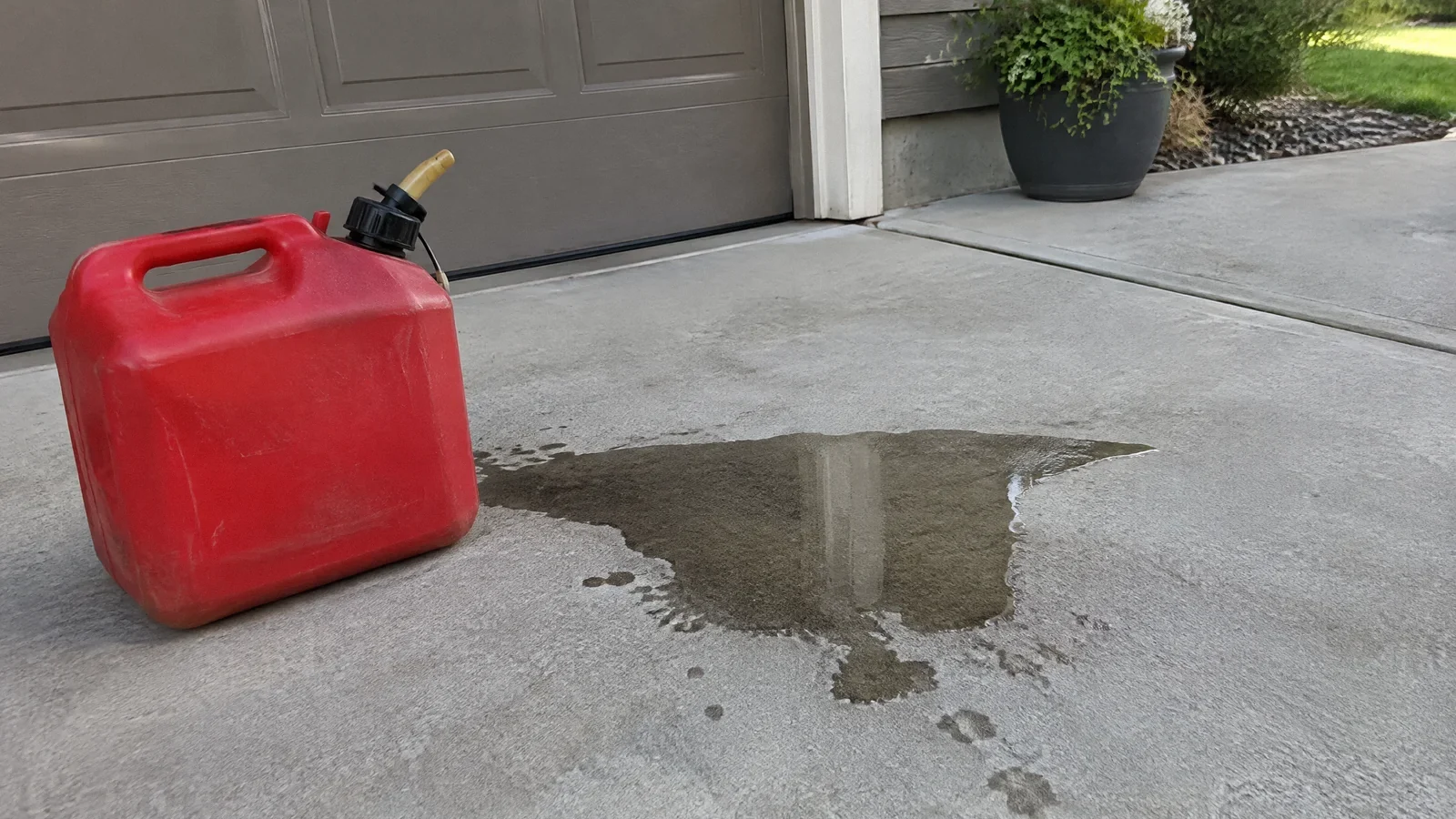
Move away from a large, indoor or uncontrolled spill and call the fire department. For a small outdoor spill that can be handled safely, keep people and ignition sources away, use an appropriate absorbent and follow local hazardous-waste disposal instructions.
Recognize when to leave
Gasoline is highly flammable, and its vapors can travel to an ignition source. A spill inside a house, basement, enclosed garage, vehicle or other confined space deserves particular caution. If there is a strong vapor buildup, a large or spreading spill, a fire, symptoms, or any doubt about safe control, leave the area and call the fire department from outside. Warn others and keep them away. Do not operate switches, appliances, vehicles or other potential ignition sources in the contaminated area.
Do not enter a hazardous space to retrieve a container or attempt ventilation. Open an outside door only if it can be done while leaving without approaching the spill or operating electrical equipment. Keep flames, smoking and sparks away. Gasoline vapor is a different hazard from natural gas; neither a fragrance nor a particle air cleaner makes the area safe.
Protect drains, water and soil
Do not wash gasoline into a street, storm drain, sink, toilet or onto the ground. A drain can carry fuel and vapors away from the visible spill. If fuel reaches a drain, waterway, well area or soil, keep people away and contact the local fire department or environmental agency for instructions. Reporting rules differ by jurisdiction and may depend on location and circumstances; do not assume a small quantity is exempt.
Only if it is safe, prevent a small outdoor spill from spreading by placing appropriate absorbent around its edge. Do not step into pooled fuel, touch an unstable container or use a device that could create sparks. If the flow cannot be stopped immediately and safely, withdraw and let responders manage it. Never attempt to contain a spill by making it someone else’s downstream problem.
Choose an absorbent for a small outdoor spill
Washington’s Department of Ecology lists absorbent pads and granular absorbents among materials for small fuel spills on pavement. Keep an appropriate commercial spill kit for fuel near outdoor fueling activities and follow its label. Ordinary towels or paper can become fuel-contaminated waste; they are not a reason to take on an unsafe spill. Use gloves and eye protection suitable for fuel exposure and avoid breathing vapors.
For a truly small spill on open pavement, apply absorbent from the outside edge toward the center to limit spreading, following the product instructions. Allow it to take up the liquid. If any pooling or strong vapor remains, stop and seek help. Do not use a household vacuum, wet/dry vacuum, leaf blower, pressure washer or hose to move the fuel; electrical equipment and vigorous air movement can create danger or spread contamination.
Collect and dispose of contaminated material
Once the visible liquid is absorbed and the area can be handled safely, collect the used material as directed by local fire and waste authorities. Use a compatible container and closure specified by those authorities; gasoline-soaked material can continue to release flammable vapor. Keep it away from occupants, ignition sources and drains while arranging prompt disposal. Do not bring it into living space or seal it in an unsuitable container.
Contact the local household hazardous-waste program before transport. Ask whether it accepts gasoline-contaminated absorbent, how it must be packaged and whether a collection appointment is required. Washington Ecology identifies household hazardous-waste facilities as a potential destination, but local rules and acceptance differ. Do not put soaked material in ordinary trash or leave it to evaporate simply because the puddle has disappeared.
Pavement, soil, vehicles and indoor surfaces
Concrete and asphalt can retain fuel below the surface. If odor persists after a small outdoor spill, or fuel entered cracks, a garage drain or soil, ask the local fire or environmental agency about assessment. Do not pour on bleach, ammonia, solvents or an unfamiliar cleaner. Soil or landscaping contaminated with gasoline may require a qualified contractor and approved disposal. A superficial rinse does not establish that the ground is clean.
A spill in a vehicle trunk, carpet or upholstery can soak into padding and create a confined vapor hazard. Move away and ask the fire department or a qualified hazardous-material professional for direction; do not run the vehicle or electrical fans in the affected space. Indoor spills and fuel near water heaters, furnaces or outlets should be treated as an urgent safety issue, not a routine stain-removal task.
Exposure and follow-up
If gasoline contacts skin, remove contaminated clothing and wash the skin with soap and water. For eye exposure, rinse with plenty of water for at least 15 minutes and seek medical advice. Move to fresh air after inhalation exposure and contact Poison Control or emergency services for symptoms or a significant exposure. Never induce vomiting or siphon fuel by mouth. Poison Control explains that aspiration into the lungs is a serious risk if gasoline is swallowed.
After the incident, replace used supplies and inspect containers for leaks in a safe outdoor location. Use an approved fuel container, close it securely, store it as required by local rules, and keep it out of living areas and away from heat. Record the location and estimated quantity for responders or an environmental agency. Do not resume normal use until the spill and vapor hazard have been addressed.
Your next-step checklist
- Keep people away and leave an enclosed or uncontrolled spill.
- Prevent fuel from entering drains only when it is safe.
- Use fuel-compatible absorbent for a small outdoor spill.
- Ask the local hazardous-waste program how to package and dispose of waste.
Related questions
Can I hose gasoline off a driveway?
No. Water can carry fuel into drains, soil or waterways. Use an appropriate absorbent for a small outdoor spill, or call for help.
Can I vacuum spilled gasoline?
Do not use a household or wet/dry vacuum; vapors and electrical equipment can create an ignition hazard.
What if gasoline enters a storm drain?
Keep people away and contact the fire department or local environmental agency promptly for instructions.
Sources & context
Public guidance supports the principles in this article. The practical questions and examples are editorial interpretation, not a site assessment or a coverage decision. State-specific rules apply only where identified.
- Small fuel and oil spill cleanupgovernment
- Gasoline and diesel fuel toxicitypoison center guidance
- Hazardous materialsgovernment