Stay away from the water and cord. Disconnect power only from a dry, safe location; if that is not possible, call an electrician or the utility. Do not retrieve or reuse a wet cord until it has been safely disconnected and assessed.
Treat the cord and water as energized
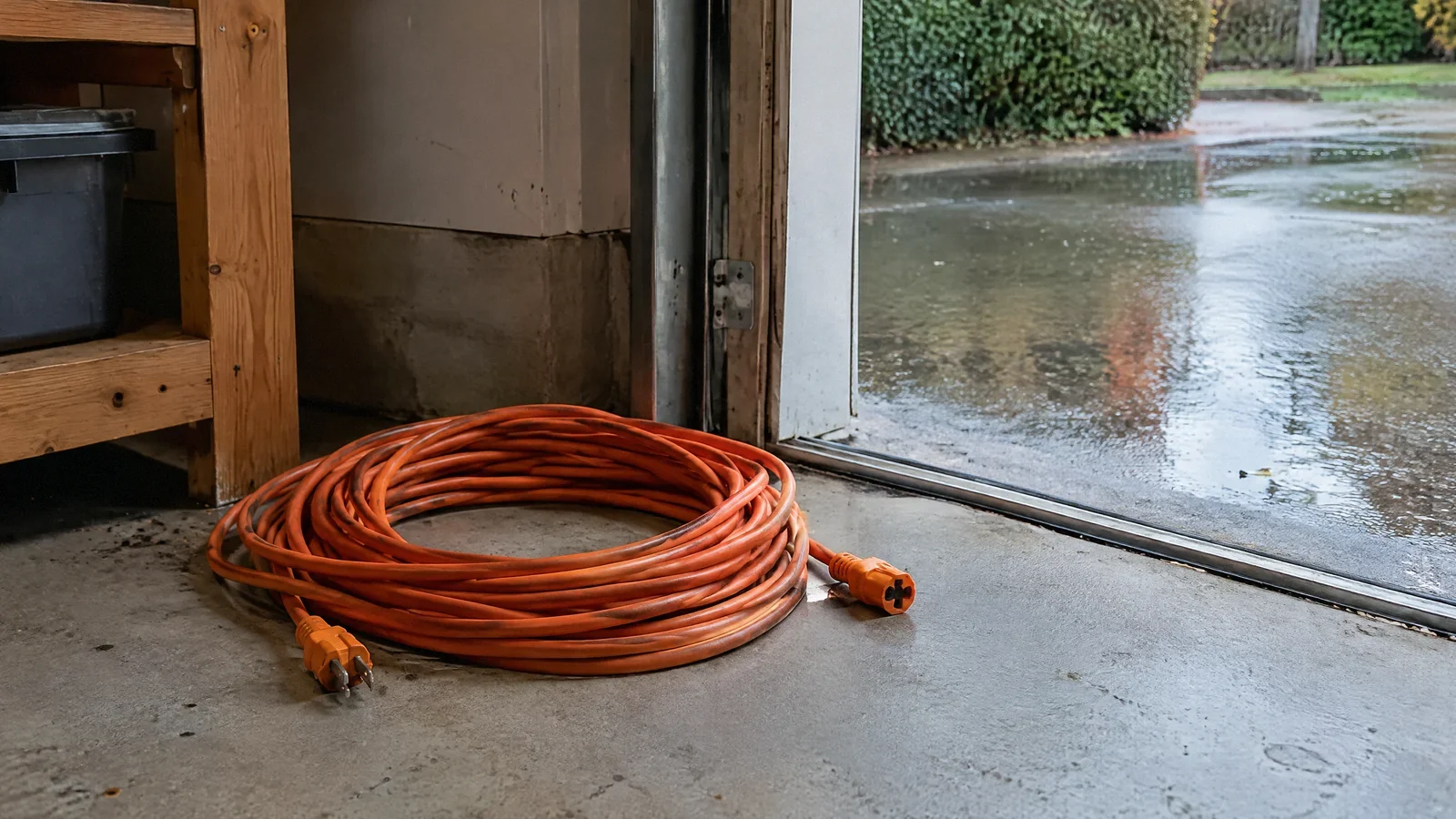
A cord, plug or connector in water can present a serious shock hazard. Do not reach into water to retrieve it, touch the cord or connected appliance, or ask someone else to hold it. Keep children and pets away. This applies to a puddle, flooded room, pool or wet outdoor area; the visible size of the puddle does not establish safety.
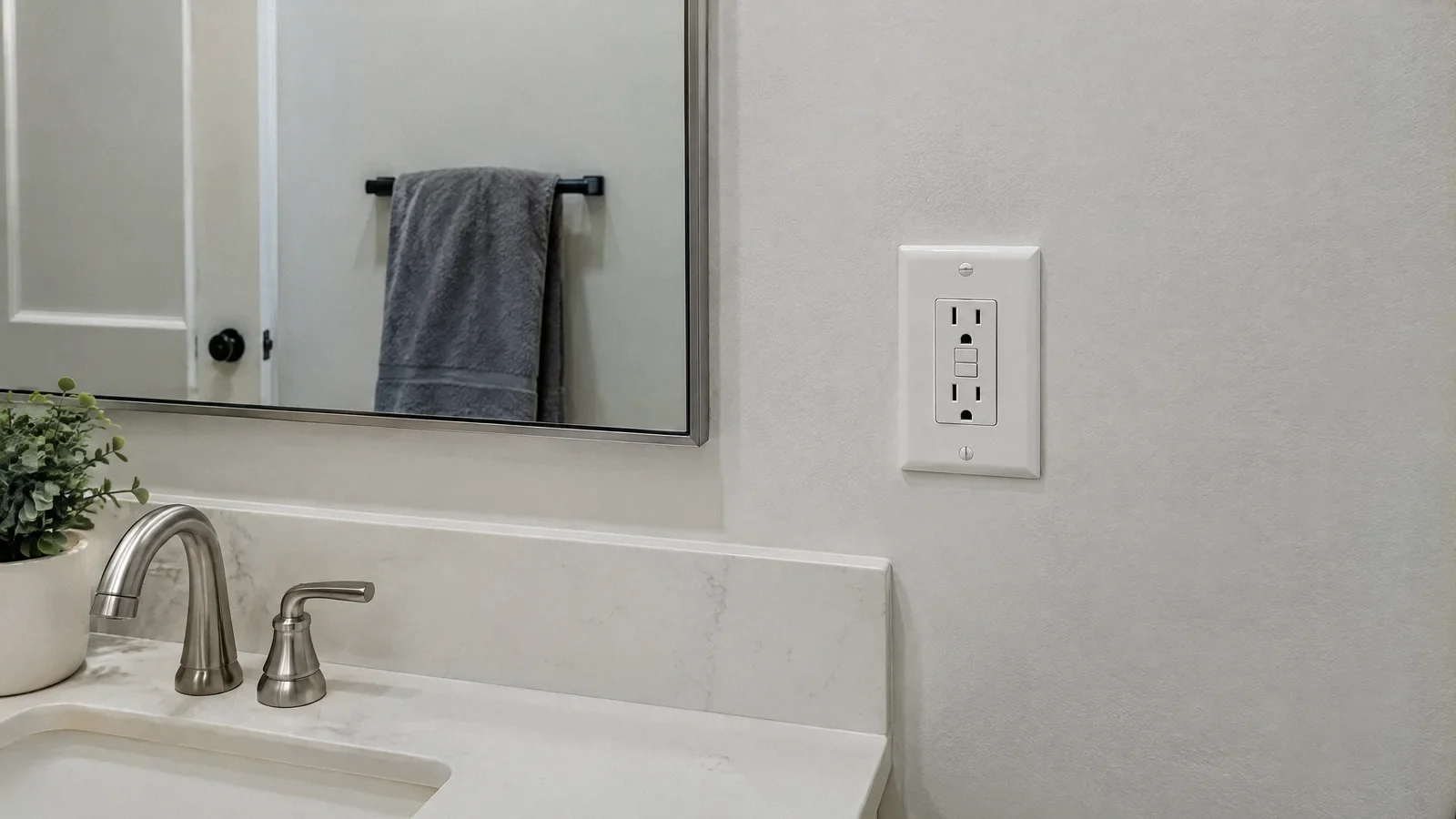
A GFCI may trip when a ground fault occurs, but do not rely on it as proof that the water is safe. It may not be present, may not function as expected or may not address every possible contact. CPSC advises unplugging an electrical product before touching it when it falls into water.
Disconnect only from a safe place
If the plug is completely dry and accessible from a dry location without touching water, the cord or a wet surface, disconnecting it at the plug may be possible. If you cannot do so safely, do not improvise with a stick, tool or another person. A breaker may be turned off only if the panel and route to it are dry and safe; otherwise contact a qualified electrician or utility.
Never step into standing water to reach the switch or breaker. If the panel is wet, damaged or surrounded by water, stay away. During a wider flood or disaster, follow local authorities and wait for the electrical system to be evaluated. Once power is disconnected, do not restore it merely because the visible water has receded.
After the cord is disconnected
Once the supply is confirmed disconnected and it is safe to approach, keep the cord out of service. Water may have entered a plug, receptacle end or damaged jacket even if the outside dries quickly. Look for the manufacturer’s instructions for the exact cord and the conditions of exposure; where the cord or connectors were submerged, contaminated, damaged or their condition is uncertain, replace the cord rather than guessing.
Do not repair damaged insulation with tape or attempt to open and rebuild a molded plug. CPSC advises against using a damaged or tape-repaired cord. A connected appliance and the outlet supplying the cord may also need assessment. Floodwater, sewage and chemicals can create additional contamination and corrosion concerns beyond ordinary rain.
What if only the jacket got wet?
An outdoor-rated cord may be designed for certain outdoor exposure, but the rating is not a blanket permission to immerse plugs or operate connections in standing water. Check its label and manufacturer’s instructions, and evaluate the whole assembly, including the plug, connector and any connected device. If the jacket is cut, abraded, overheated or its condition is doubtful, remove it from service.
Never test a questionable cord by plugging it in. A dry exterior is not proof that internal contacts are dry or undamaged. Consult the manufacturer or a qualified electrician when suitability is uncertain, and use a replacement if the cord cannot be verified as safe for its intended use.
Prevent the next exposure
Route temporary cords away from puddles, doors where rain enters, walkways and areas where they can be crushed. Select a cord rated for the environment and for the electrical load, and keep plugs and connections dry and clear of likely water paths. Use GFCI protection where appropriate and required, but keep the cord out of water regardless.
CPSC recommends outdoor-rated extension cords for outdoor tools and replacing worn or damaged cords. Do not join multiple cords, run cords under rugs, or use a temporary cord as a permanent wiring solution. If a device routinely needs power in a wet-prone location, ask an electrician about a properly located permanent receptacle and protective cover.
Record the incident when damage is wider
If the cord became wet because a pipe leaked or a room flooded, document the event from a safe location and address the water source once it is safe. Identify connected appliances and outlets for the electrician. Do not use a wet vacuum, fan or other powered device in standing water until the electrical supply and equipment have been cleared for use.
For rental property, notify the responsible manager promptly and retain the date and photographs. If a cord or appliance caused heat, smoke, a shock or repeated trips, leave the equipment disconnected and describe those observations to the electrician. Seek emergency assistance for an electrical injury; do not touch a person still in contact with an energized source.
Before using a replacement
Match the cord to the intended appliance and environment using the manufacturer’s ratings and instructions. Inspect it before use for damaged insulation, loose fittings and missing grounding pins. Choose a length that reaches without joining cords or creating a trip hazard, and keep the connection out of water.
A new cord does not resolve a wet outlet or an unsafe power supply. Before returning the setup to use, the water source, electrical equipment and location all need to be suitable. Arrange permanent changes if the same puddle or cord route repeatedly creates a hazard.
Your next-step checklist
- Keep everyone away from the water and cord.
- Disconnect from a dry safe location only, or call an electrician or utility.
- Keep the cord and connected equipment out of service pending assessment.
- Replace damaged or uncertain cords; never tape-repair a damaged jacket.
- Prevent future exposure and use appropriate GFCI protection.
Related questions
Can a GFCI make a submerged cord safe?
No. GFCI protection reduces certain shock risks but never makes it safe to reach into water for a connected cord.
Can I dry and reuse the cord?
Follow the manufacturer’s instructions. If water entered connectors, the cord was contaminated or its condition is uncertain, replacement is the safer course.
Can I use a wooden pole to pull it out?
Do not attempt to retrieve an energized or potentially energized cord with a tool. Disconnect power safely first.
Sources & context
Public guidance supports the principles in this article. The practical questions and examples are editorial interpretation, not a site assessment or a coverage decision. State-specific rules apply only where identified.
- CPSC: Ways to Protect Yourself from Shockfederal guidance
- CDC: Reentering Your Flooded Homefederal guidance
- CPSC: Plug Into Safetyfederal guidance