Noncombustible or ignition-resistant materials can reduce a building’s vulnerability, but no single product makes a home fireproof. Roof assemblies, siding, vents, windows and nearby combustible materials all matter. Verify product approvals, installation and local requirements for the specific property.
Fire resistance is not the same as fireproof
A material may be noncombustible, ignition resistant or part of a fire-rated assembly. These terms describe different characteristics and tests. A label on an individual component does not automatically establish the rating of the roof, wall or entire home.
California’s Ready for Wildfire guidance addresses the home as a system exposed to embers, radiant heat and direct flame. Product selection matters, as do the vulnerable joints, openings, installation details and nearby fuels. Even a well-prepared property can be damaged in severe conditions.
Start with the roof assembly
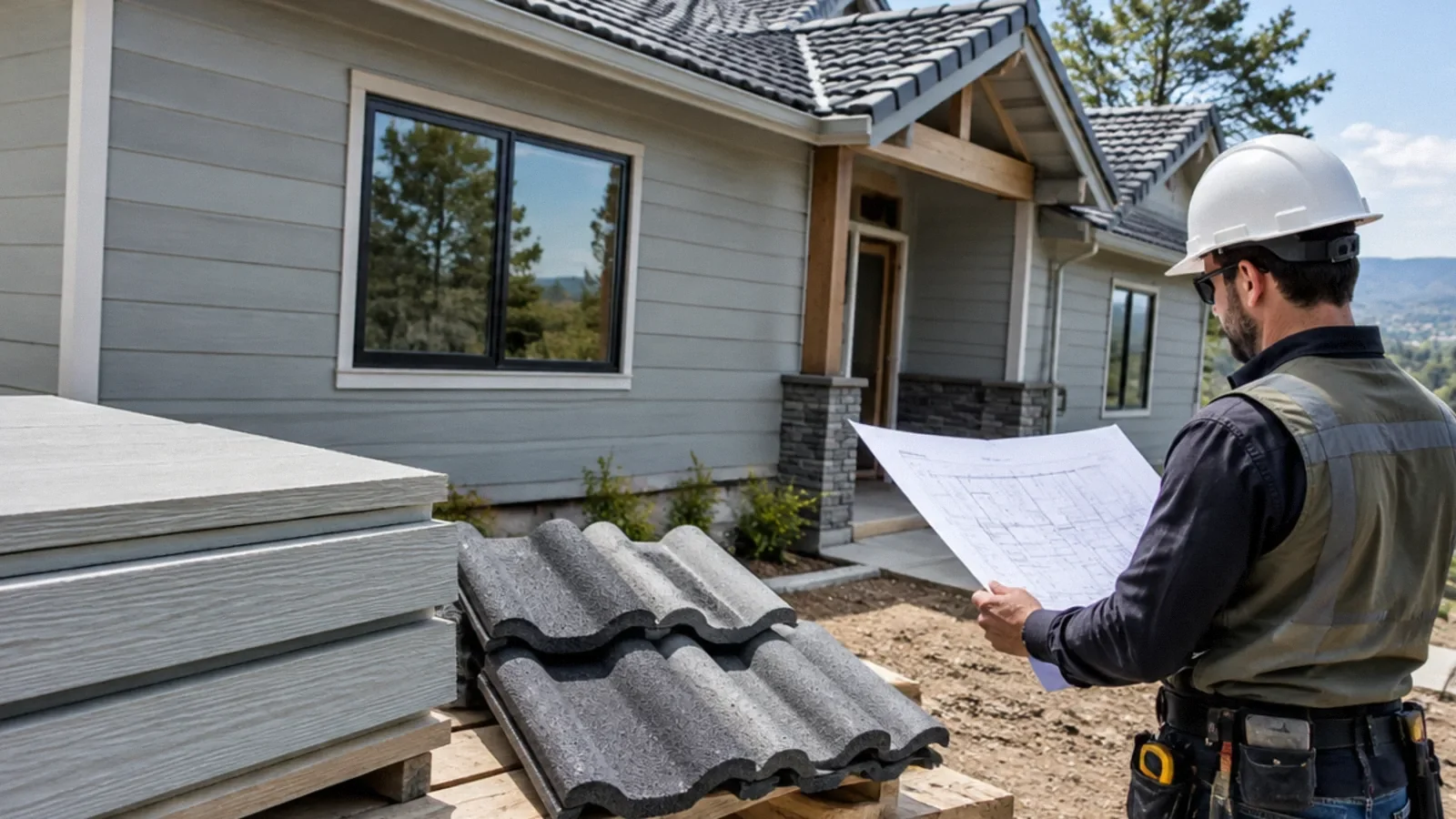
CAL FIRE recommends a Class A fire-rated roof and gives composition, metal and tile as examples of possible roofing materials. Whether a particular product achieves a rating depends on the complete tested assembly and installation, including underlying components where required.
Ask a qualified roofing professional to identify the existing covering, roof deck, underlayment and vulnerable roof-to-wall areas. Replace damaged components using a system suitable for the roof and local requirements. Do not climb onto a damaged roof to inspect it yourself.
Siding and wall details
Ready for Wildfire identifies stucco, metal and fiber cement among noncombustible siding options and also discusses ignition-resistant siding. Individual products, substrates, clearances and fastening details differ. Confirm that the proposed product is suitable for the wall and installed according to its listing.
Pay particular attention to roof-to-wall intersections, lower wall areas and gaps where embers or nearby burning material may expose the exterior. A noncombustible outer layer cannot compensate for every opening or for combustible storage immediately beside the wall.
Vents and ember entry
Embers can enter openings and ignite vulnerable material. CAL FIRE recommends considering vents listed for resistance to flame and embers. Vents also provide a building function, so do not simply seal openings or cover them with an arbitrary material.
A qualified contractor can identify the correct listed product, ventilation requirements and installation details. Check local building and fire rules, which can differ by property and work scope. Inspect existing vent openings for damage and debris using safe ground-level access.
Windows, doors and decks
Windows, doors and garage openings are part of the building envelope and need compatible protective details. CAL FIRE discusses tempered glass and measures that limit ember intrusion. Product choice should reflect the opening, applicable requirements and the manufacturer’s instructions.
Decks and attachments can expose the home to fire, particularly when combustible items accumulate beneath or beside them. Evaluate deck materials and the entire connection to the building. Remove stored combustible material where recommended and follow local defensible-space rules.
Understand ratings and approvals
Ask for documentation of the exact product and tested application, not just an advertising claim that something is fire resistant. Roofing classification, wall fire ratings and wildland-urban interface product listings address different purposes. A professional can explain which evidence applies.
California and local rules depend on the jurisdiction, property location and project. The State Fire Marshal’s listed wildland-urban interface products and the local building department can help identify applicable requirements. A general online article cannot approve a particular installation.
Plan a practical retrofit
Begin with a property-specific assessment of the roof, vents, openings, siding and the area close to the home. Prioritize unsafe conditions, required repairs and vulnerable locations. Obtain an itemized proposal that identifies materials, assembly, permit responsibility and installation details.
Avoid replacing an intact component solely on the basis of a generic list without considering condition and compatibility. Improvements may be phased, but the expected benefit and cost depend on the existing building. Ask how the contractor will address interfaces between new and old construction.
Maintenance and emergency planning
Keep roofs, gutters and the area around the home maintained in accordance with local guidance. Reduce combustible debris and address damaged or missing components. Site conditions, neighboring structures and weather can affect exposure beyond any one owner’s control.
Materials are only one part of preparedness. Maintain a household evacuation plan, follow local alerts and leave when directed. After a fire, wait for authorities to declare access safe and arrange qualified inspection before using damaged utilities or entering an unstable building.
Your next-step checklist
- Check the complete roof and wall assemblies.
- Review vents, openings and nearby combustibles.
- Ask for product listings and installation details.
- Confirm permits and local wildfire rules.
- Maintain an evacuation plan.
Related questions
What siding materials resist fire?
CAL FIRE names stucco, metal and fiber cement among noncombustible options, while suitability depends on the specific product and installation.
Is a metal or tile roof automatically fireproof?
No. The tested roof assembly and installation determine its rating, and no roof guarantees survival in every fire.
Should I block attic vents?
Do not indiscriminately block required ventilation. Ask a qualified professional about compliant ember- and flame-resistant vents.
Do these materials guarantee insurance coverage?
No. Coverage and underwriting depend on the policy and insurer; ask the insurer about the specific property.
Sources & context
Public guidance supports the principles in this article. The practical questions and examples are editorial interpretation, not a site assessment or a coverage decision. State-specific rules apply only where identified.
- CAL FIRE: Hardening your homeCalifornia wildfire guidance
- CAL FIRE: Wildfire action planCalifornia wildfire guidance
- CAL FIRE: Wildfire home retrofit guideCalifornia wildfire retrofit guidance