A fire-resistant safe or document box may protect its contents under a specified test, but no box guarantees survival in every fire. Check an independently verified rating for the intended contents and exposure time, consider water protection, and keep secure copies elsewhere.
What a fire rating means
A tested fire-resistance rating describes performance under a defined test, not an unlimited promise. UL Solutions explains that a certified safe label can identify a class and time rating associated with internal temperature during the test. Look for the exact certification and conditions for the specific model.
Real fires differ in temperature, duration, structural collapse and firefighting conditions. A product described only as fireproof without a verifiable test offers little information for comparison. Ask the maker for the listing, scope and conditions rather than relying on an advertisement.
Choose the rating for the contents
Paper documents, electronic media and other sensitive items may have different temperature and humidity tolerances. UL describes different test classifications for different contents; a rating suitable for paper does not automatically establish protection for a drive, film or valuables.
Identify what you need to store and check the manufacturer’s specific instructions and listing for those contents. Do not assume that a stated exterior temperature alone describes the temperature that the contents experienced during a test.
Consider water as well as fire
Firefighting, burst pipes or flooding can expose a container to water. Check whether the specific model has a tested water-resistance claim, what depth or exposure it covers and whether it applies when the box is closed and locked. Fire and water claims may be tested separately.
FEMA suggests storing critical papers in a fire- and water-protective container and keeping copies elsewhere. No water rating should be treated as a guarantee against every flood or period of submersion. Follow the product’s sealing and placement instructions.
What documents should go inside?
Consider passports, identity records, insurance information, property records, medical information, key contacts and other papers relevant to your household. Keep an inventory so that documents can be found and replaced if necessary. Do not store items whose contents are incompatible with the container’s rating.
Balance security with access. A heavy fixed safe may protect stored records but should not be a reason to delay evacuation. Keep essential contact information and copies accessible in an emergency kit where appropriate, without exposing sensitive personal information.
Keep a secure second copy
FEMA suggests electronic copies in a password-protected format on removable storage or a secure cloud service, as well as paper copies in another protected location. Use strong access controls, keep account recovery information available to an authorized person and review copies periodically.
A bank safe deposit box may have access limitations during closures, death or incapacity. Ask the bank and consider applicable state law before relying on it as the only location for a document needed urgently. Choose an arrangement that fits your household.
Installation and everyday use
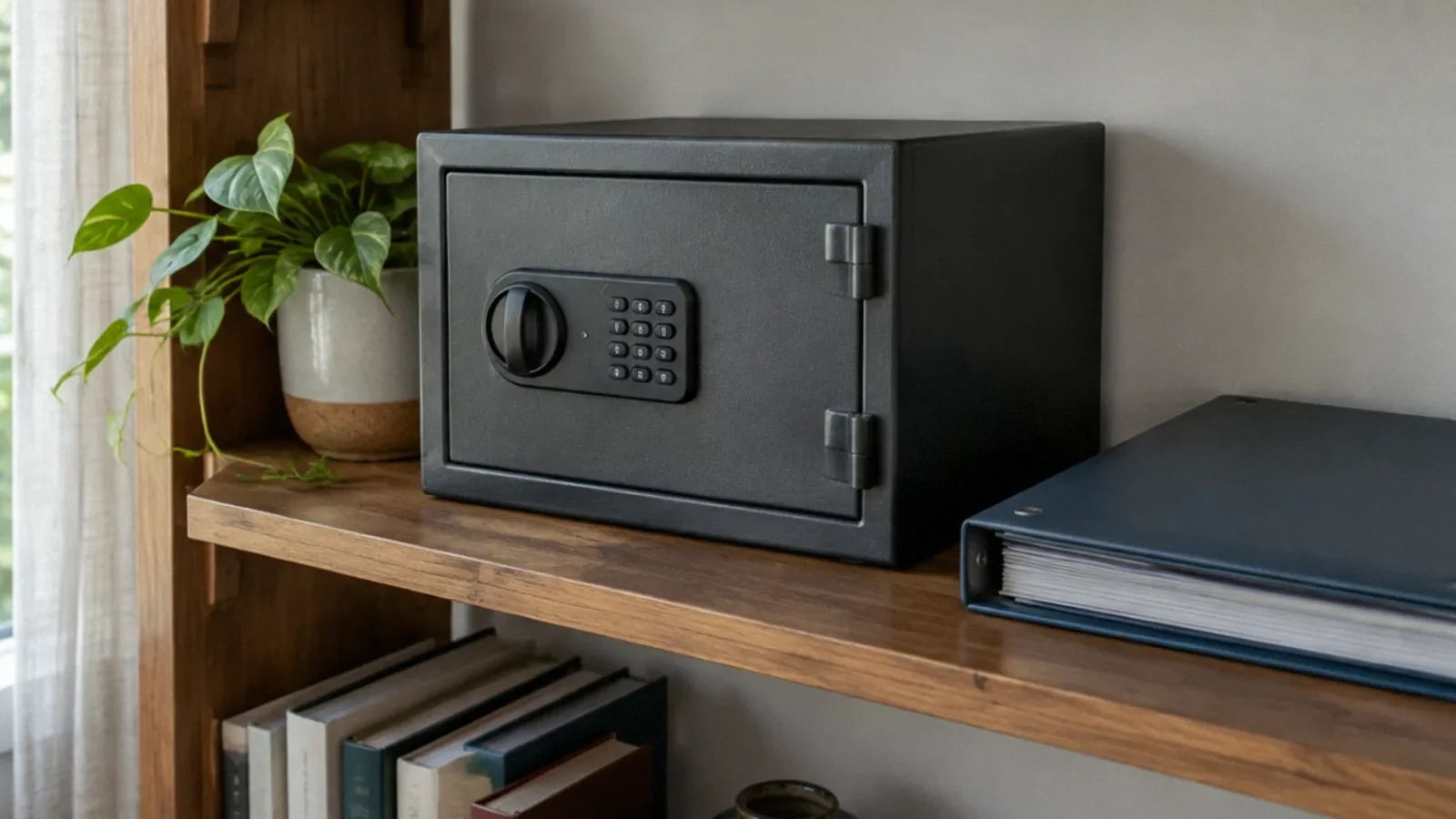
Follow the product instructions for installation, locking and maintenance. A listed safe may require a particular orientation or mounting arrangement to retain its tested performance. Fire protection, burglary resistance and water protection are separate considerations.
Place the container where authorized people can access it without blocking exits. Protect keys, combinations and recovery instructions from unauthorized access. If the product uses batteries or an electronic lock, follow its maintenance instructions and plan for a lockout.
Are fire-resistant safes worth it?
The value depends on the importance of the contents, the cost of the container, its tested protection and your other backups. A properly rated box can be one layer of protection; it cannot eliminate every fire, theft, flood or access risk.
Compare the exact model’s independent listing, contents class, duration, water claim, size, weight and warranty. A cheaper box without a clear rating may not provide the same tested protection. Do not infer the quality of a product from weight or appearance alone.
After a fire or flood
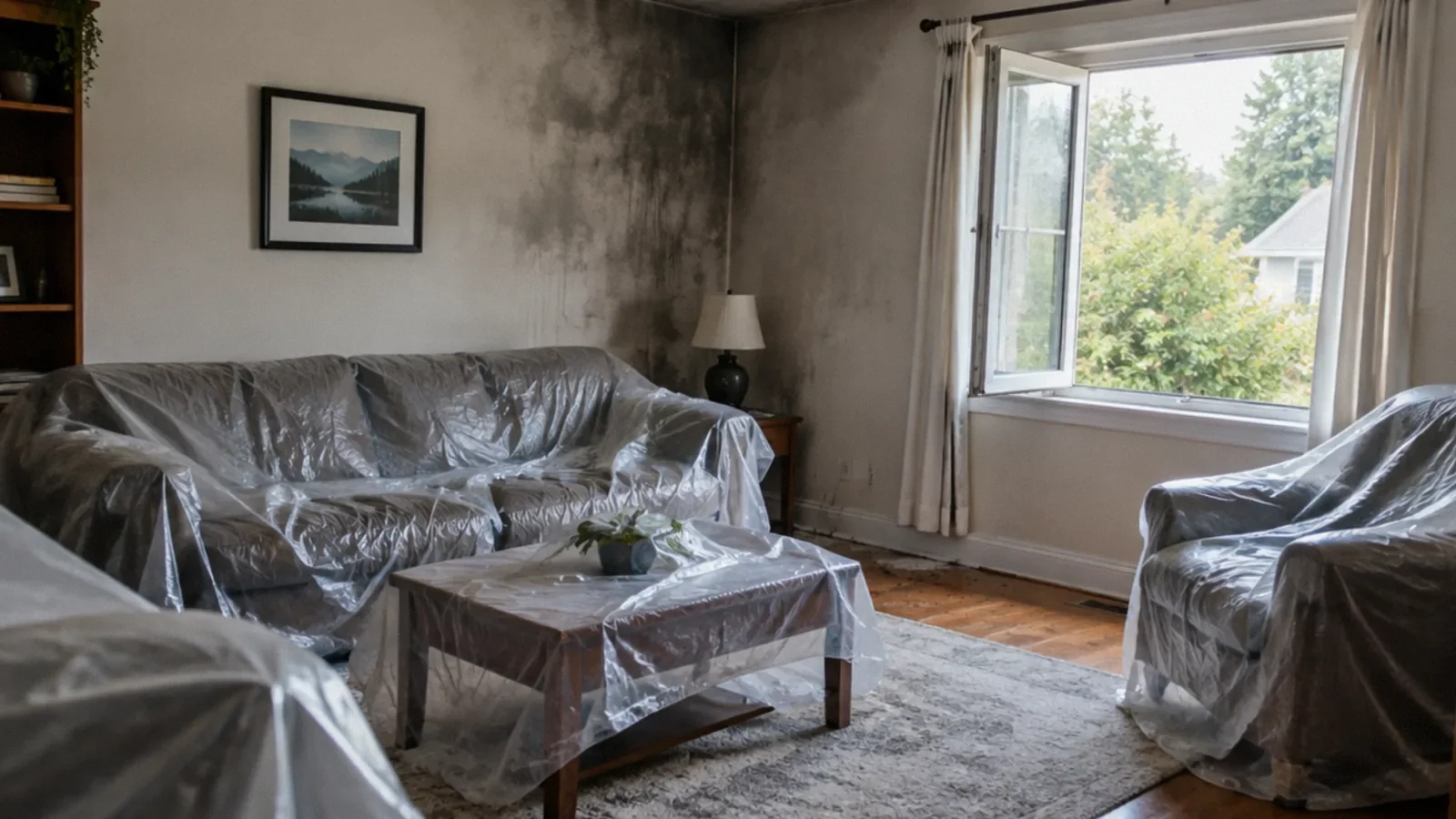
Return to the building only when officials say it is safe. Do not open or move a hot, damaged or electrically hazardous container without guidance from responders or qualified professionals. A safe may contain hot material or sharp damaged parts.
If records are wet or damaged, document the condition and consult qualified preservation guidance before aggressive cleaning or drying. Keep insurance and replacement records, and use your secure copies to help recover essential accounts and documents.
Use and review your document plan
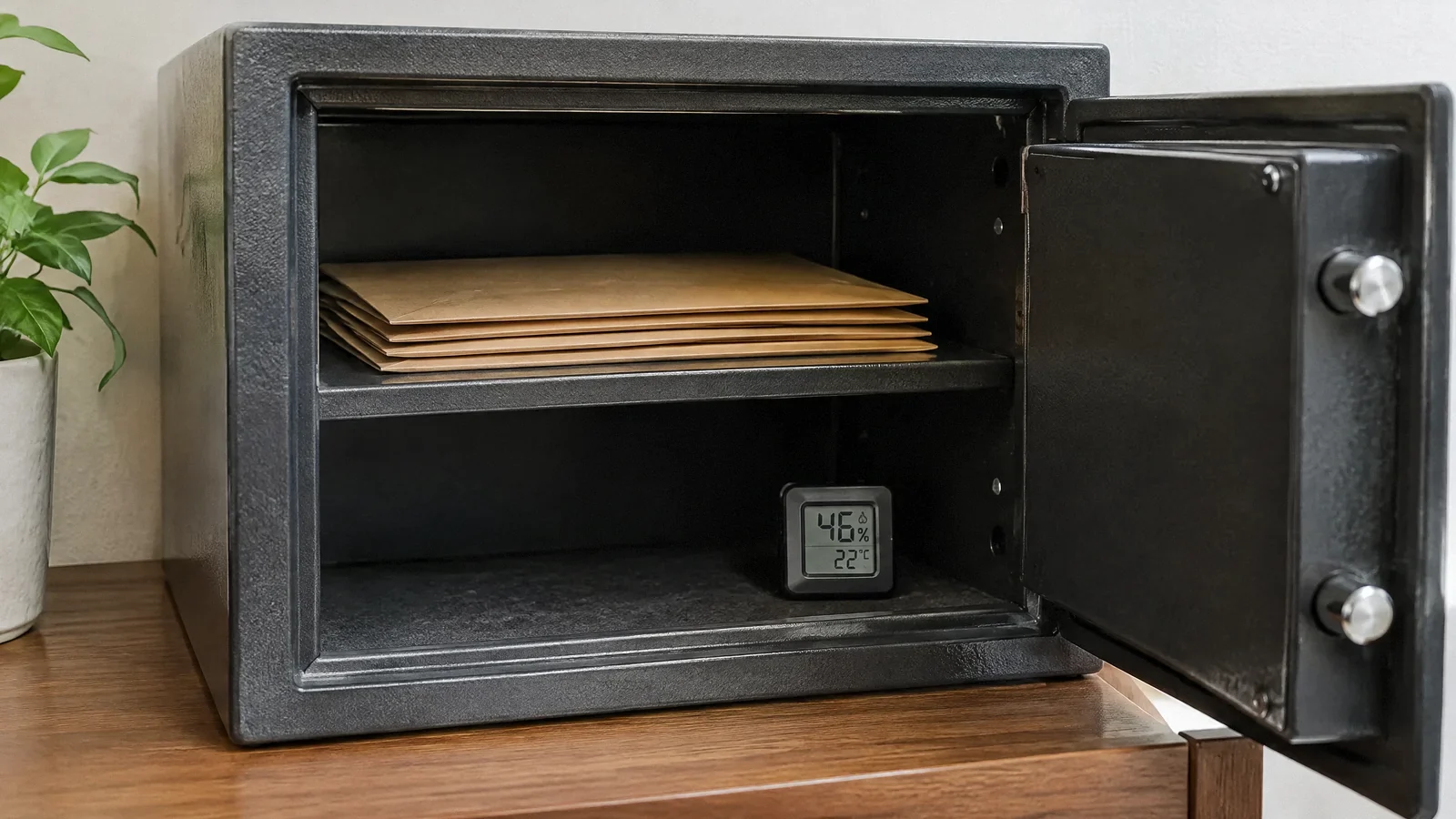
A container only helps if important papers are current and authorized household members can find them. Review the inventory after a move or major life change, check that copies remain readable, and store access instructions securely. Keep frequently needed information available without making the only original easy to lose. For moisture or suspected growth inside a container, see the separate mold in safe guide and consult a conservator about delicate papers.
When comparing products, obtain the exact model number and independent listing, the intended contents and test duration. Ask whether water protection is tested separately and whether closure or mounting conditions affect the claim. Compare these limits with your actual storage needs and do not rely on a marketing label alone.
Your next-step checklist
- Check the exact model’s independent fire rating.
- Match the rating to paper or other intended contents.
- Review water-resistance test conditions separately.
- Keep secure copies in a second location.
- Never delay evacuation to retrieve documents.
Related questions
Are fireproof safes completely fireproof?
No product can guarantee protection in every fire. A tested fire-resistance rating applies under specified test conditions.
Does a fire rating also mean waterproof?
Not necessarily. Review the model’s separate water-resistance claim and its test conditions.
Will a paper-rated safe protect a hard drive?
Do not assume so. Check the rating and manufacturer’s guidance for electronic media specifically.
Are fire-resistant boxes worth buying?
They can provide one layer of protection for important documents when the rating matches the risk and contents. Secure backups remain valuable.
Sources & context
Public guidance supports the principles in this article. The practical questions and examples are editorial interpretation, not a site assessment or a coverage decision. State-specific rules apply only where identified.
- UL Solutions: How safes are fire testedindependent testing guidance
- FEMA: Safeguard critical documents and valuablesfederal preparedness guidance
- FEMA: Saving documents after a disasterfederal recovery guidance