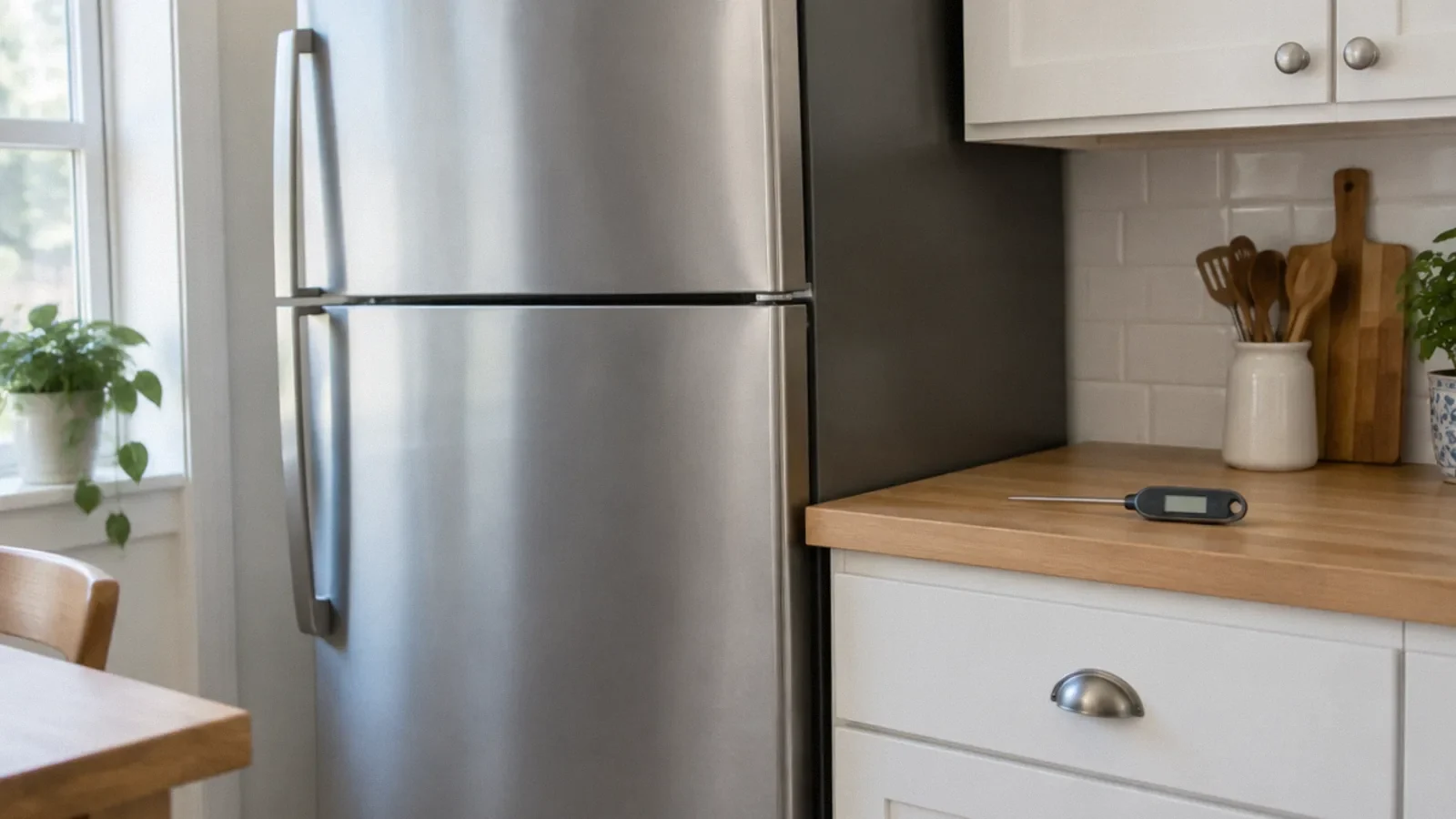
With the doors closed, CDC guidance says a refrigerator keeps food safe for up to about 4 hours without power; a full freezer for about 48 hours, or a half-full freezer for about 24 hours. These are general limits, not guarantees. Use a cold source and a thermometer when appropriate, and never taste food to test its safety.
Keep the doors closed
Opening the refrigerator or freezer lets cold air escape. Note when the power went out, keep both doors closed as much as possible and follow utility and local emergency updates. The commonly cited time limits assume the doors remain closed.
A refrigerator can keep food safe for up to about four hours under those conditions. A full freezer can generally hold its temperature for about 48 hours, and a half-full freezer for about 24 hours. Actual conditions vary with the appliance, room temperature and how often the door opens.
What to do after four hours
CDC advises discarding refrigerated perishable foods such as meat, poultry, fish, eggs, milk, cut produce and leftovers after four hours without power or another cold source. A food can be unsafe even when it looks and smells normal. Do not taste it to decide.
If a cooler and ice or frozen gel packs are available, transfer perishables to the cooler when needed and keep them at 40°F or below. Use a thermometer to check the temperature. If the temperature history is uncertain or a food may have been unsafe, discard it.
Frozen food and ice crystals
A full freezer usually retains cold longer than one that is only half full. After power returns, check items individually. FoodSafety.gov says some thawed food can be cooked or refrozen if it still contains ice crystals or is at 40°F or below, although quality may be affected.
Use the federal food-by-food chart because the right decision can vary by item and exposure. If a perishable food was exposed to 40°F or above for more than two hours, the chart calls for discarding many items. When the time or temperature is unknown, do not assume it was safe.
A thermometer is more useful than a guess
Before an outage, keep appliance thermometers in the refrigerator and freezer. CDC guidance recommends a refrigerator at 40°F or below and a freezer at 0°F or below during normal operation. A food thermometer and a cooler can help assess and maintain cold conditions during an extended outage.
A single reading after power returns may not show how warm the food became earlier or how long it stayed warm. Combine temperature information with the outage timeline and item-specific guidance. Do not rely on a refrigerator display that lost power or on a quick touch of a package.
Food that was exposed to floodwater
A power outage can occur alongside flooding. Food that contacted floodwater may be contaminated even if it stayed cold. Follow CDC and local public health guidance on food, water and containers exposed to flooding; discard food when its safety cannot be established.
Avoid using appliances or outlets that were wet until they have been assessed by qualified personnel. Do not enter standing water near electrical equipment to reach a refrigerator. Personal safety comes before saving food.
Medication and medical supplies
Some medicines require refrigeration and have product-specific storage limits. Contact a pharmacist, healthcare provider or the manufacturer for advice about a particular medication after an outage. Do not apply a food storage time limit to medication without checking.
Keep important medical supplies and contact information accessible as part of an emergency plan. If a person depends on electrically powered medical equipment, follow the provider’s backup plan and contact emergency services when an immediate health emergency occurs.
Generator and ice safety
Never run a generator inside a home, garage or other enclosed space. CDC advises placing a generator outdoors at least 20 feet from doors, windows and vents, with exhaust directed away from occupied areas. Carbon monoxide is odorless and can be deadly.
If using ice in a cooler, keep food at a safe temperature and prevent cross-contamination from raw meat or melting water. Follow handling instructions for any cooling product. Do not place dry ice in direct contact with food or touch it with bare hands.
Prepare for the next outage
Keep a cooler, appliance thermometers, frozen gel packs and shelf-stable supplies available. Write down when the outage begins, the status of the refrigerator and freezer and any food moved to a cooler. Use local guidance if an emergency also affects drinking water.
Once power returns, assess each item with the federal chart and discard anything uncertain. Clean the refrigerator as appropriate before restocking. The goal is to use time and temperature evidence rather than appearance or taste to make decisions.
Your next-step checklist
- Keep appliance doors closed during the outage.
- Record when the power went out.
- Use a cooler and cold source to keep perishables at 40°F or below.
- Check frozen food and use the federal item-by-item chart.
- Never taste food to determine safety.
Related questions
How long is a refrigerator safe without power?
CDC says up to about four hours if the door remains closed. Use a cold source and follow food-specific guidance for longer outages.
How long does a freezer stay cold without power?
Approximately 48 hours when full or 24 hours when half full, with the door closed, according to CDC guidance.
Can I refreeze thawed food?
Some food can be refrozen if it still has ice crystals or is at 40°F or below. Check the FoodSafety.gov chart for the particular item and its exposure.
Can I smell or taste food to check if it is safe?
No. Dangerous food can look and smell normal. Never taste it to decide whether to keep it.
Sources & context
Public guidance supports the principles in this article. The practical questions and examples are editorial interpretation, not a site assessment or a coverage decision. State-specific rules apply only where identified.
- CDC: Keep food safe after an emergencyfederal health guidance
- FoodSafety.gov: Food safety during a power outagefederal food safety guidance
- CDC: Avoiding carbon monoxide poisoningfederal health guidance