Identify the toilet type and symptom, stop use if water is overflowing or leaking, and notify building maintenance. Flushometers are pressurized and model-specific; qualified personnel should follow the correct manufacturer’s service instructions.
Identify the toilet and the symptom
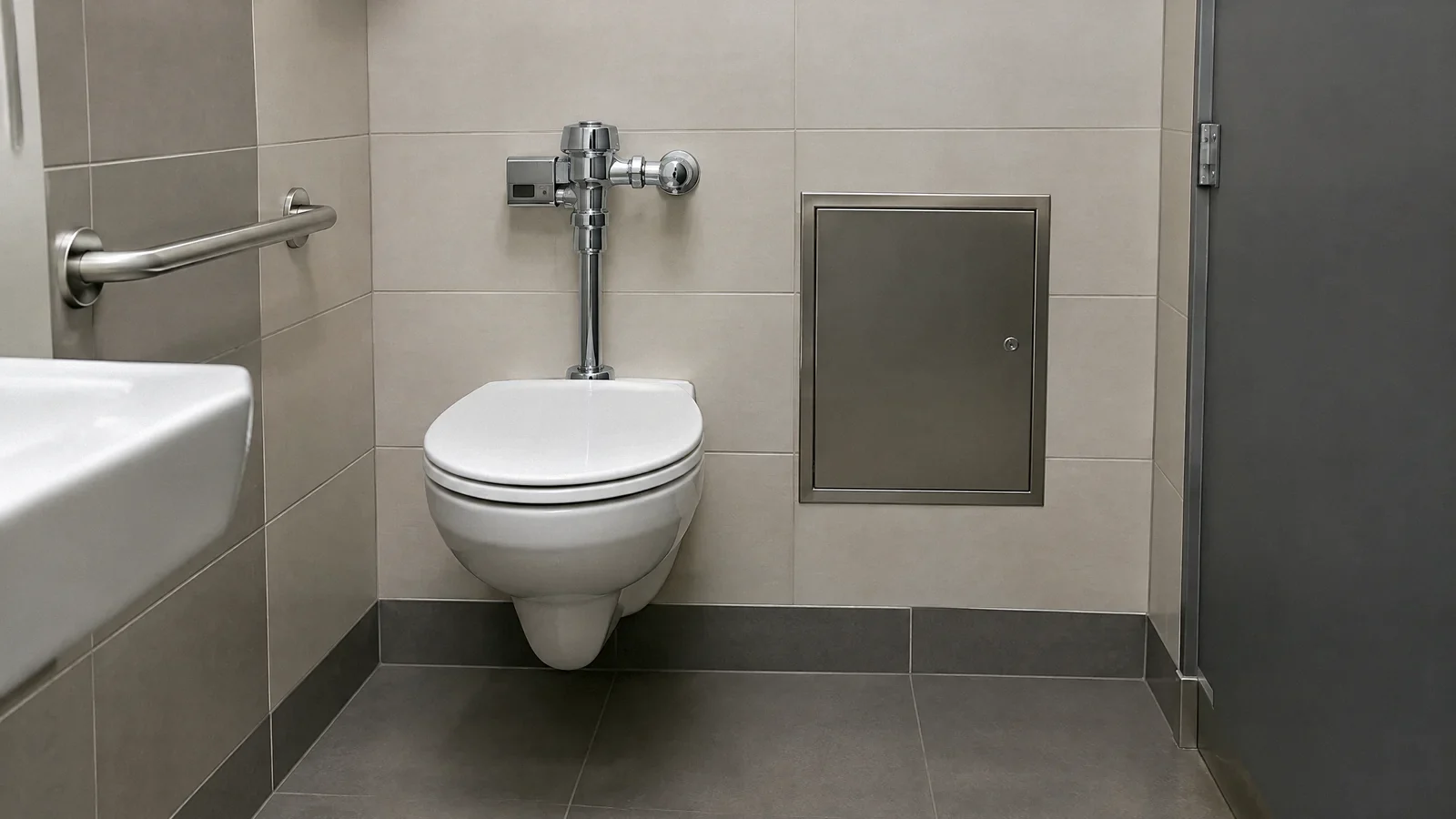
Commercial toilets may use an exposed flushometer, a concealed flush valve, a tank or a pressure-assisted mechanism. They do not all have the same parts or service procedure. Identify the brand and model, note the rated flush volume and obtain its installation and maintenance guide before ordering a repair part.
Describe whether the toilet will not flush, runs continuously, flushes weakly, leaks externally or overflows. A weak flush may reflect a supply, valve, fixture or drain issue. Do not assume the most visible part is the cause. In a shared building, notify maintenance and keep the fixture out of service until the cause is resolved.
Prevent an overflow or water damage
If the bowl is rising, stop flushing. Keep users away and contact building maintenance or a plumber. Where an accessible fixture isolation valve is known and can be operated safely, the authorized person can close it according to the manufacturer’s directions. Do not force a stuck stop or remove a pressurized valve cover.
Water on a restroom floor can create a slip hazard and may be contaminated. Mark the area and use the building’s cleanup procedure. An overflowing bowl or sewage backup requires a different response from clean supply water. Keep a record of the location, time and whether adjacent fixtures are affected.
When the flushometer will not operate
For a manual flushometer, note whether the handle moves and whether water enters the bowl. For a sensor-operated unit, report whether the sensor appears to respond and whether the issue affects one fixture or several. A closed supply stop, interrupted water supply, damaged handle or control problem are possible causes; the actual model guide provides the appropriate tests.
A Kohler flushometer guide lists a closed supply or control stop and a worn or damaged handle among possible causes of no water flow. Its troubleshooting list applies to the models covered by that guide, not every valve. If several fixtures fail at once, building-wide supply or maintenance work may be relevant. Do not bypass a sensor or make electrical repairs without authorized personnel.
Continuous running or a short flush
A flushometer that keeps running can waste substantial water and may overflow if the drain is obstructed. Isolate it using the approved procedure and arrange service. In its AquaSense ZER-SM guide, Zurn lists debris obstructing the diaphragm as one possible cause of continuous flow. Other models and failures can have different causes; the correct diagnosis depends on the valve and its history.
A very short or weak flush can also have several causes, including a damaged assembly, mismatched components, supply conditions or an obstruction. Replacing parts at random can leave the real issue unresolved. Do not install a higher-volume part simply to mask a problem: use the fixture’s specified compatible parts and applicable requirements.
Clogs, weak drainage and backups
If the bowl drains slowly or backs up, stop repeated flushing and report whether other fixtures also drain poorly. A local obstruction may require a suitable toilet plunger or professional auger, while a shared line backup requires a plumber. A building’s maintenance policy may restrict who performs this work.
Do not pour chemical drain opener into a commercial toilet. A chemical can splash during later work and complicate safe handling. Tell the person responding if any cleaner has already been used, including its name if known. Avoid forcing tools through porcelain or into an unfamiliar fixture, which can damage the bowl or push an obstruction farther into the line.
External leaks and pressure components
Water around a coupling, stop, vacuum breaker or bowl connection requires the source to be located before repair. Wipe the accessible exterior dry only if safe, then observe without putting hands near a damaged component. Water can travel down the fixture before reaching the floor, so a wet base does not prove the seal beneath the bowl is the sole cause.
A flushometer is connected to a pressurized water supply. Only an authorized, qualified person should isolate pressure and open the valve according to the exact model’s guide. Parts, seals and flush volumes must match. If the stop cannot be operated or water reaches electrical equipment, leave the area and get building and trade assistance.
Restore service and document the result
After an authorized repair, test the fixture using the manufacturer’s procedure and observe a complete flush and shutoff. Check external joints and the floor for leaks, verify the fixture clears normally, and make sure any access cover is properly reinstalled. A fixture that initially works but continues to run or leaks later needs further attention.
Record the model, symptoms, parts used and results for the building. Restore the restroom to service only when the issue and cleanup are complete. Where accessibility or occupancy is affected, provide an appropriate alternative through the building manager. Preventive checks should include looking for running valves and leaks, not changing settings without a documented reason.
Your next-step checklist
- Identify the fixture and model.
- Stop use and isolate water only using the approved procedure.
- Record whether the problem affects other fixtures.
- Have qualified personnel diagnose pressure components or backups.
- Test the complete flush and check for leaks after repair.
Related questions
Why does a commercial toilet run continuously?
The cause can vary by valve. A worn, damaged or incorrectly fitted component is one possibility; consult the exact model’s troubleshooting guide and have the valve serviced safely.
Can I use any replacement flushometer diaphragm?
No. Compatibility and rated flush volume depend on the valve and fixture. Use the manufacturer’s specified part and follow its instructions.
Sources & context
Public guidance supports the principles in this article. The practical questions and examples are editorial interpretation, not a site assessment or a coverage decision. State-specific rules apply only where identified.
- Home Maintenancegovernment
- How to Care for Your Septic Systemgovernment
- Kohler: Flushometer installation and troubleshootingmanufacturer
- Zurn: AquaSense ZER-SM flush valve manualmanufacturer