Identify where the leak occurs and the faucet model. Shut off and verify both water supplies before opening the valve, then follow the manufacturer’s instructions for compatible parts. Call a plumber for hidden leaks, stuck parts or unreliable shutoffs.
Identify where the water appears
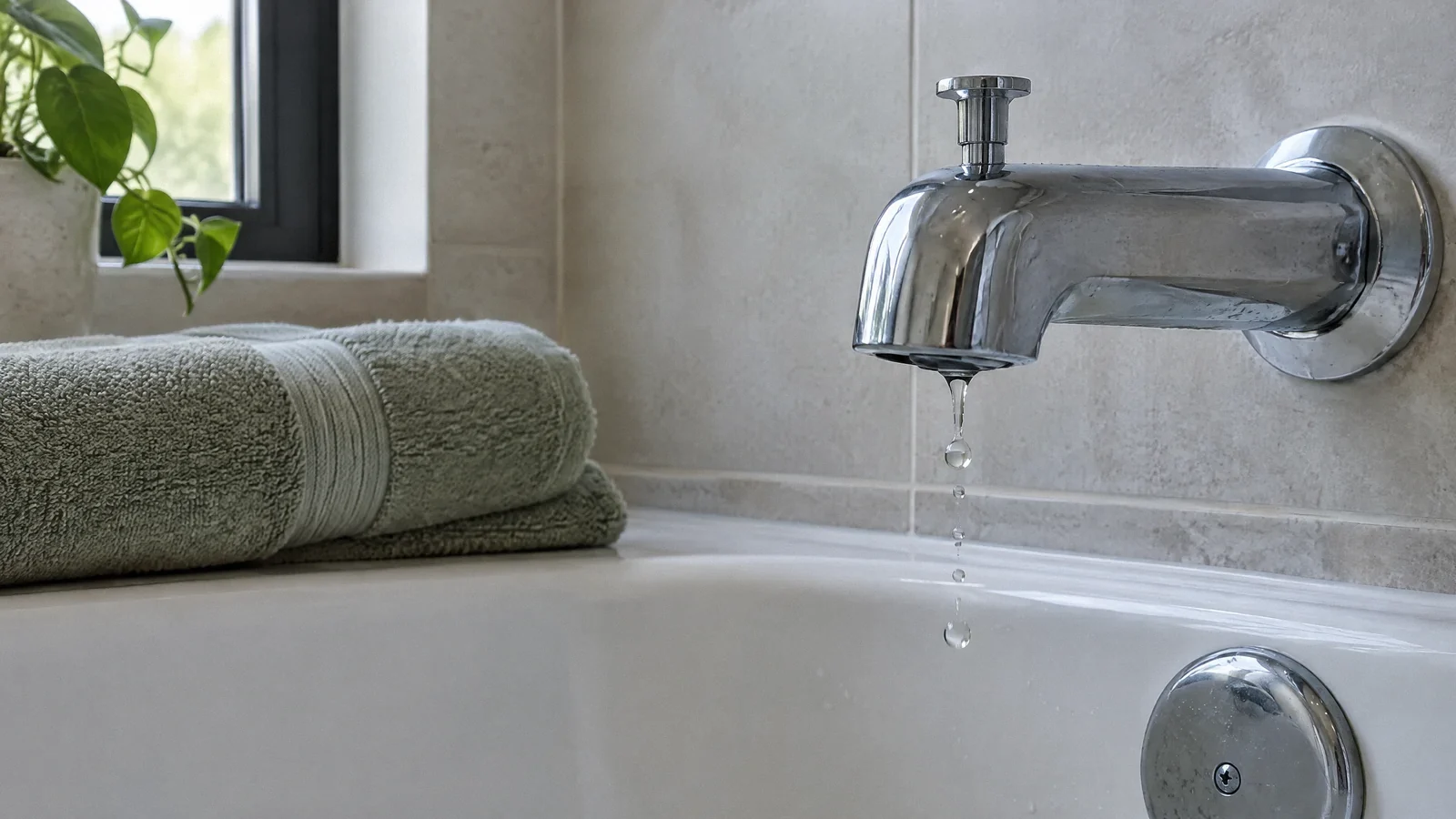
A drip from the tub spout after the handle is fully closed can point to a worn cartridge, stem, seal or seat inside the valve. Water around a handle, behind the trim or on the wall may have a different source. A short period of water draining from a showerhead after use can also be residual water rather than continuous leakage. Observe the timing before buying parts.
If water is entering a wall, ceiling or floor, stop using the fixture and isolate the supply if you can do so safely. Keep away from wet electrical equipment. A bulging ceiling, active hidden leak or inability to reach a shutoff warrants a plumber. Photograph damage and notify the property owner or insurer where appropriate.
Identify the valve before buying parts
Find the faucet manufacturer, series and model on the trim, paperwork or manufacturer’s support site. Photograph the handle and trim from several angles. One-handle, two-handle, thermostatic and pressure-balancing valves can use different internal parts even when their outward appearance is similar. A tub spout is not necessarily the part that controls the flow.
Use the manufacturer’s illustrated parts list and installation instructions to choose the correct replacement. Some cartridges require a particular orientation or a model-specific removal tool. If the brand or valve body is unknown, a plumber can identify it without guessing from the shape of the handle alone. Retain the old part for comparison only after it has been safely removed.
Shut off and verify the water
Before opening a valve, shut off both hot and cold supplies using the fixture stops if present and accessible or the appropriate main supply. Moen’s installation guidance explicitly calls for turning off both supplies before service. Open the faucet as directed to relieve remaining pressure and confirm that flow stops. A valve that continues to flow may not be isolated.
Make sure everyone in the household knows the water is off, and protect the tub drain so small screws cannot fall into it. Use a soft cloth to protect the finish. If the shutoff is seized, inaccessible or does not stop water, do not proceed with disassembly; call a plumber. In a shared building, coordinate any common water shutoff with management.
Follow the model-specific repair guide
For a cartridge-style faucet, the manufacturer’s instructions normally describe removing the handle and retaining hardware, extracting the cartridge and installing the compatible replacement in the correct orientation. A two-handle compression valve can use stems, washers and seats instead. These are different designs, so do not force a generic procedure onto an unknown valve.
Arrange the removed parts in order and check the instructions before using a tool or lubricant. Avoid scratching the valve body or finish. If a cartridge will not release without force, the retaining part is corroded, or the valve body is damaged, stop and have a plumber assess it. Pulling aggressively can damage concealed plumbing and turn a small drip into a larger leak.
Restore supply and check the result
Reassemble the trim as specified. Restore the water gradually according to the product instructions and check around the handle and accessible connections before using the tub normally. Test hot and cold operation and confirm that the spout stops dripping after any residual water has drained. Observe the wall and accessible space below for signs of leakage.
A persistent drip after the correct part is installed can indicate another damaged component, debris, an incorrect part or valve-body damage. A leak behind the wall is not solved by tightening the decorative trim. Stop using the fixture and seek help if water continues to appear outside the intended path.
Consider temperature and safety
A shower or tub valve may include a temperature limit stop or pressure-balancing feature. Record its original setting, follow the exact manufacturer’s instructions and check the delivered water temperature safely after service. Incorrect assembly or adjustment can create a scalding risk. Do not alter a limit setting without understanding the device and local requirements.
Keep children away during testing and avoid placing a hand immediately under potentially hot water. If hot and cold operation is reversed or temperature control is erratic after service, stop and consult the manufacturer or a qualified plumber. The valve’s instructions take precedence over a generic online repair sequence.
When replacement or a plumber makes sense
Call a plumber for concealed leaks, damaged valve bodies, stuck components, unreliable shutoffs, missing instructions or a repair that requires opening the wall. Replacement may involve compatibility with existing piping and trim, access from behind the wall and local permit requirements. The right decision depends on the fixture and conditions found.
Prevent future damage by checking the fixture after service and addressing renewed drips promptly. A small drip can waste water, while moisture behind a wall can affect materials that are not visible. Keep the model information and part number with your maintenance records for the next service.
Your next-step checklist
- Locate the drip and identify the faucet model.
- Shut off and verify hot and cold water before valve service.
- Use the correct manufacturer’s instructions and parts.
- Restore water and check temperature, spout and accessible connections.
- Call a plumber if the leak persists or the shutoff does not work.
Related questions
Does a dripping tub spout always mean the spout needs replacement?
No. A drip after the handle is closed can originate in the valve or its internal seal. Identify the faucet and diagnose the source before replacing a part.
Can I repair a faucet without shutting off water?
Do not open a pressurized valve. Shut off and verify both hot and cold supplies first; if isolation is uncertain, have a plumber handle the repair.
Sources & context
Public guidance supports the principles in this article. The practical questions and examples are editorial interpretation, not a site assessment or a coverage decision. State-specific rules apply only where identified.
- Moen Faucet Installation Instructionsmanufacturer
- Moen Installation and Care Instructionsmanufacturer
- Home Maintenancegovernment