First determine whether the change is a removable stain, moisture-related damage, wear or lost dye. Blot fresh spills and follow the carpet maker’s care instructions; permanent color loss may require professional dyeing, patching or replacement.
Determine what changed
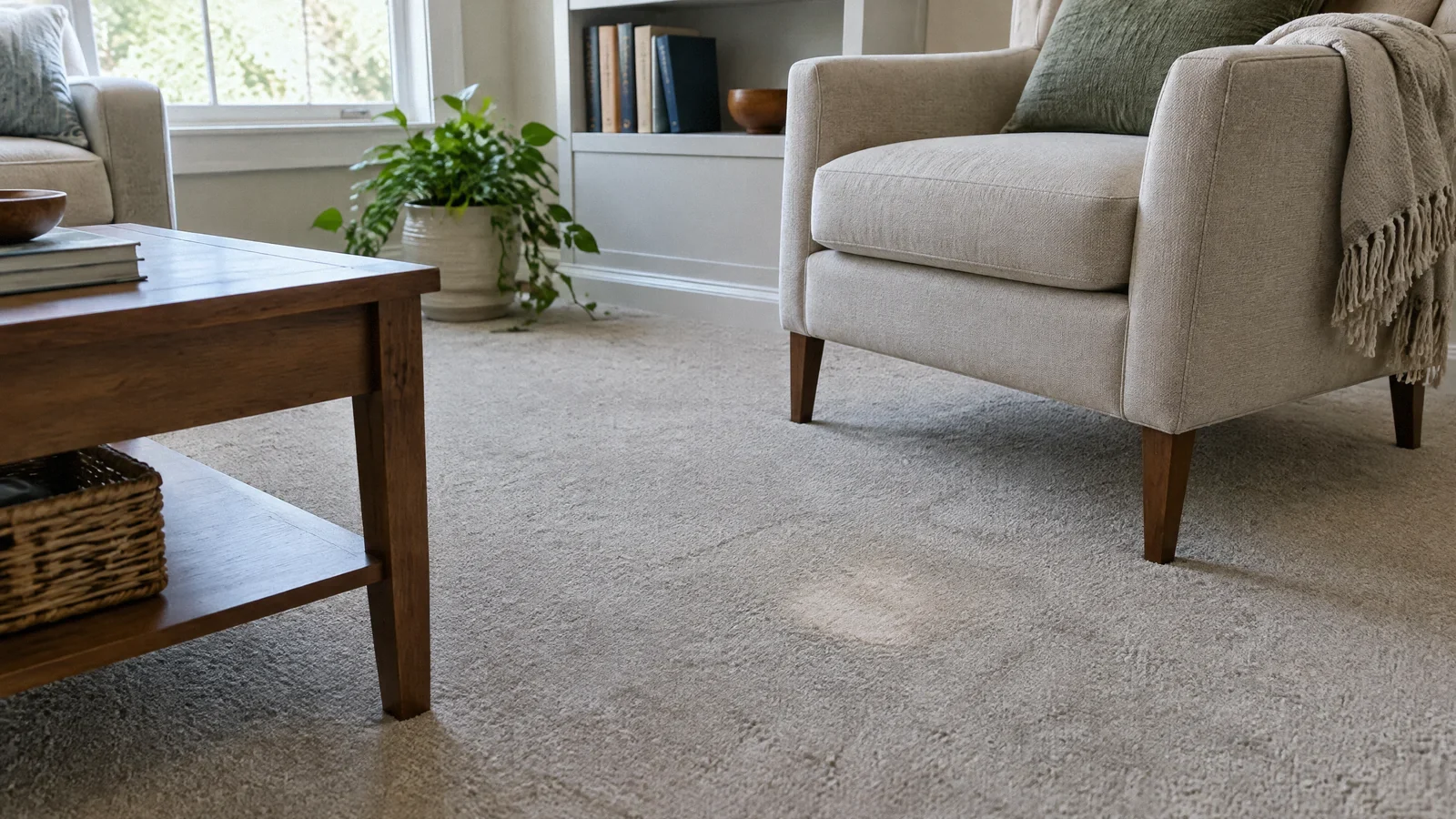
Carpet discoloration can be removable soil or a stain, but it can also be a permanent change in the fiber or dye. Bleach, sunlight, spills, cleaning residue, moisture and wear can produce different-looking patches. Look at the area in daylight from several angles and compare it with a protected area, such as under furniture. Appearance alone cannot establish the cause.
Ask what happened before the change: a recent spill, a cleaning product, a leak, moved furniture or long sun exposure. Photograph the area before treatment. If a chemical has removed color, further cleaning will not put the original dye back; a carpet repair specialist may be able to recolor or patch the area, subject to material and matching limitations.
Address moisture and safety first
If the patch is damp, find and correct the water source before treating its appearance. Water can travel through the carpet into padding and subfloor, and a surface that feels dry may conceal moisture. Sewage, floodwater, widespread wetness or visible mold requires qualified assessment rather than ordinary spot cleaning.
Do not saturate carpet to remove discoloration. Padding and backing can retain water and be difficult to dry. If a leak is near electrical equipment, stay clear and seek qualified help. Document damage before moving or discarding material when an insurance claim may be involved.
Check the carpet and product instructions
Find the carpet manufacturer’s care guide and warranty information, including the fiber and approved cleaning products. Different fibers, dyes and backings react differently. A treatment suitable for one carpet may damage another. If the carpet is wool, a valuable rug or an unidentified delicate material, consult its manufacturer or a qualified cleaner.
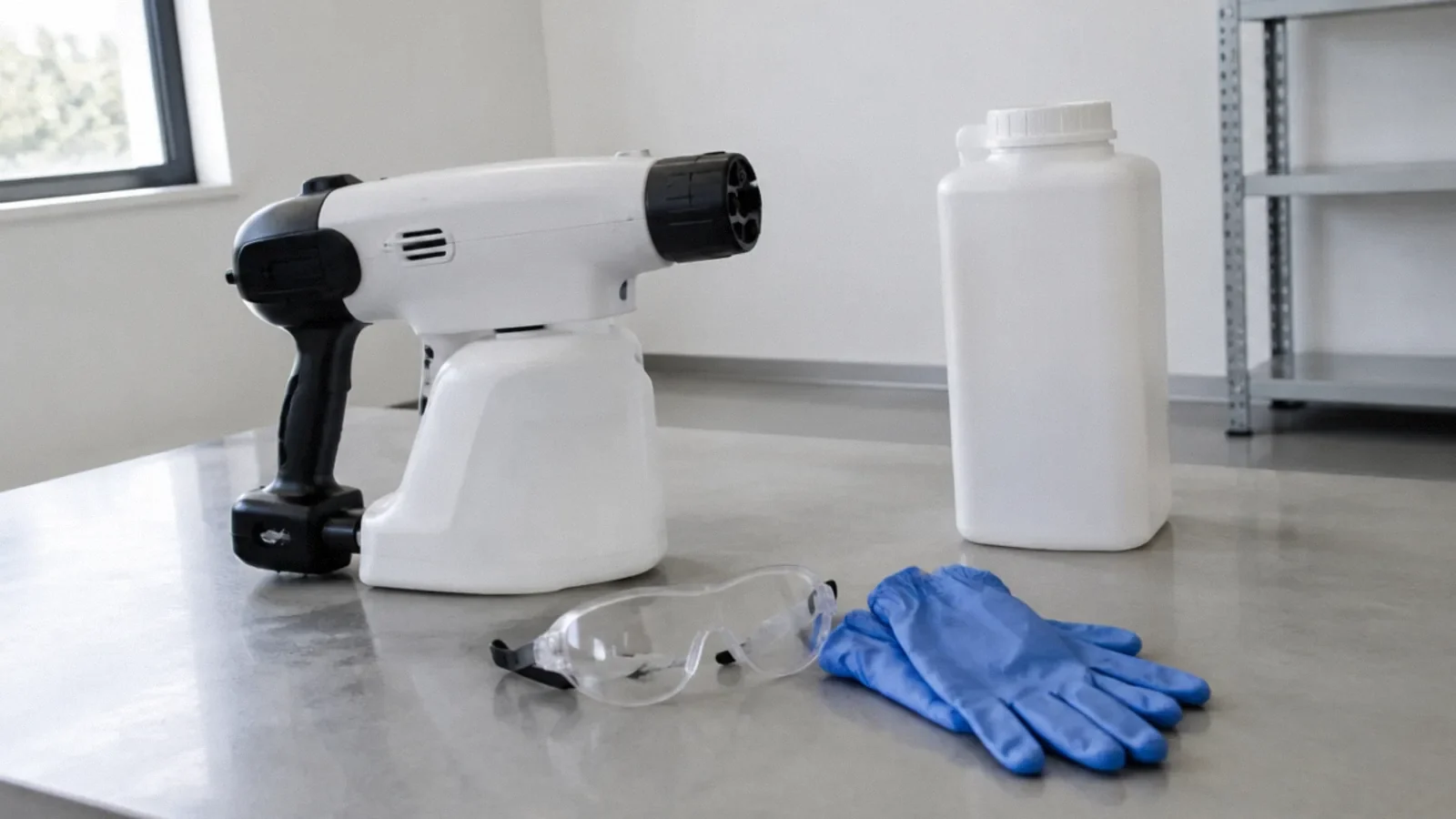
Test an approved cleaner on a carpet scrap or an inconspicuous area first, following the directions and allowing it to dry before judging the result. The Carpet and Rug Institute recommends pretesting even suitable spot-cleaning products. Do not combine products or use bleach, peroxide or dye removers unless the carpet maker explicitly permits the exact use.
Treat a fresh spill without spreading it
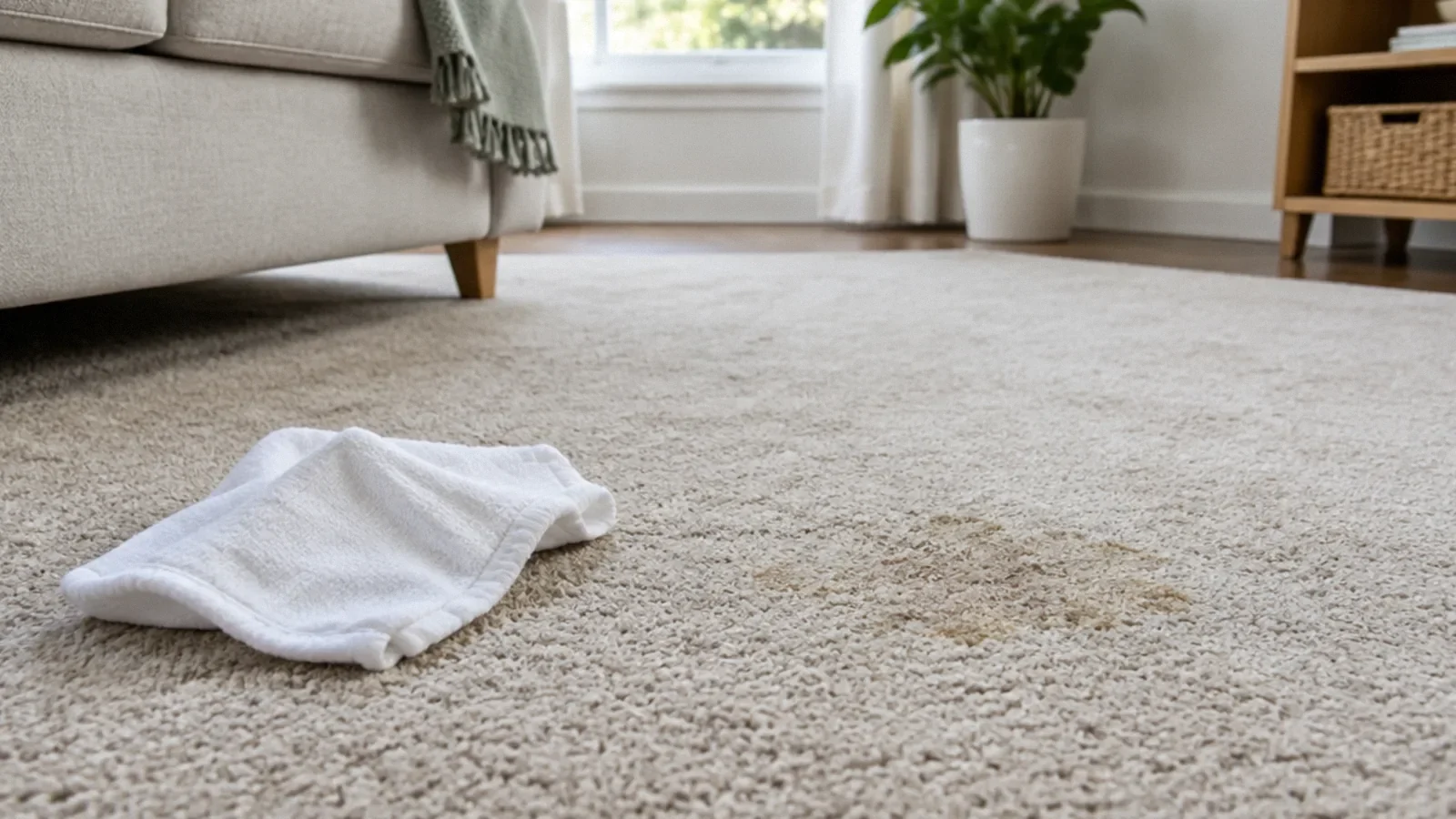
For a fresh liquid spill on a carpet that can be cleaned safely, blot with a dry white absorbent cloth or plain white paper towel. Work gently and change to a clean section as it absorbs liquid. A colored or printed cloth may transfer dye. Lift semi-solid material carefully with a spoon, and vacuum dry solids if appropriate.
Do not scrub with a stiff brush: the Carpet and Rug Institute warns that scrubbing can fray or change the pile texture. Apply only a product approved for the carpet, using its label directions and the smallest effective amount. Blot as directed, avoid soaking the backing and allow the area to dry fully before replacing furniture.
Distinguish residue, staining and color loss
Sticky or darkened traffic areas can involve tracked soil or cleaning residue. If the appearance changes with pile direction, flattening or wear may also be contributing. A professional can inspect the fibers and choose a cleaning method; repeated household applications without diagnosis may spread residue or damage the pile.
A pale spot after a bleach spill or prolonged sun exposure may represent dye loss. Cleaning can remove soil around it but cannot restore missing color. A yellow or brown mark after a water event can reflect several causes, including material beneath the surface, so investigate moisture and ask a cleaner to assess it rather than assuming a particular chemical reaction.
Compare professional repair options
A qualified carpet cleaner may be able to remove some remaining soil or staining. A repair specialist may propose spot dyeing, a bonded insert from a matching remnant, or replacement of a section. The feasibility depends on fiber, construction, condition and availability of matching material. A repair can remain visible as surrounding carpet has aged or faded.
Ask for an inspection and a written explanation of what the treatment is expected to improve, potential limitations and how the area will be dried. If the carpet is under warranty, check the care and repair conditions before authorizing a process. Do not accept a guarantee of an exact color match without a realistic assessment.
Prevent another patch
Blot spills promptly, follow the manufacturer’s routine cleaning schedule and use appropriate entry mats. Control direct sunlight where practical and move furnishings occasionally if the floor maker permits. Preventive measures can reduce uneven exposure, though they cannot reverse existing dye loss or guarantee that all fibers fade uniformly.
Keep a labeled remnant of the installed carpet if available for future matching or testing. After cleaning or repair, inspect the dry area in normal light and compare it with your photographs. If dampness or discoloration returns, revisit the moisture source before applying another cleaner.
Your next-step checklist
- Photograph the area and note any spill, cleaner, sunlight or leak.
- Fix moisture before cleaning or covering the patch.
- Pretest a manufacturer-approved product.
- Blot rather than scrub and avoid soaking the backing.
- Get professional advice for dye loss, valuable carpet or recurring damage.
Related questions
Can cleaning restore a bleach spot?
Cleaning cannot replace dye removed by bleach. A specialist may be able to recolor or patch the area, but a perfect match is not guaranteed.
Should I soak a brown water stain?
No. Additional water can wet the backing or subfloor. Address the source and have the material assessed if moisture or contamination is present.
Sources & context
Public guidance supports the principles in this article. The practical questions and examples are editorial interpretation, not a site assessment or a coverage decision. State-specific rules apply only where identified.
- Carpet Cleaning and Maintenanceindustry
- Simple Stain Removal Tipsindustry
- Mold Cleanup in Your Homegovernment