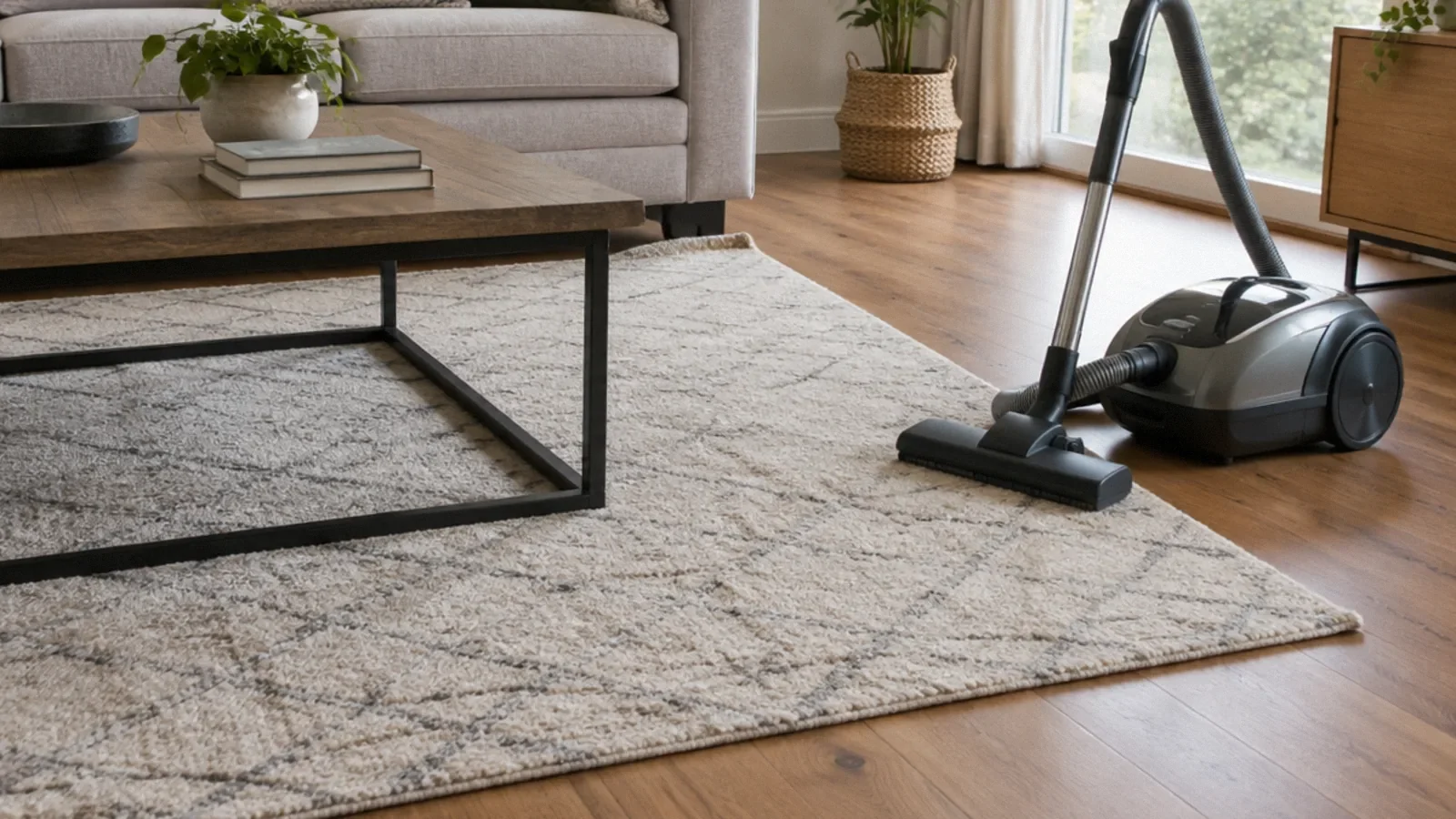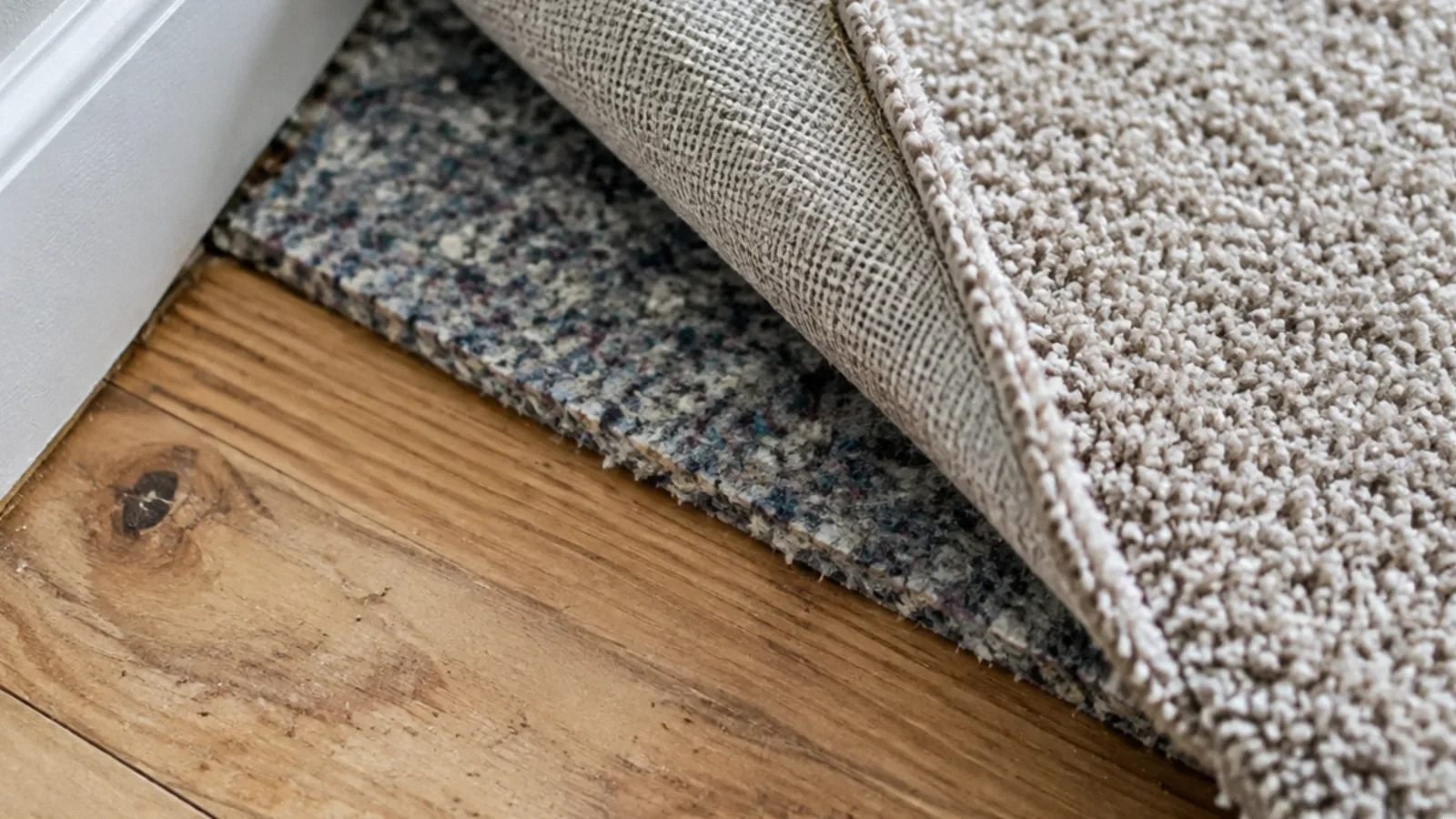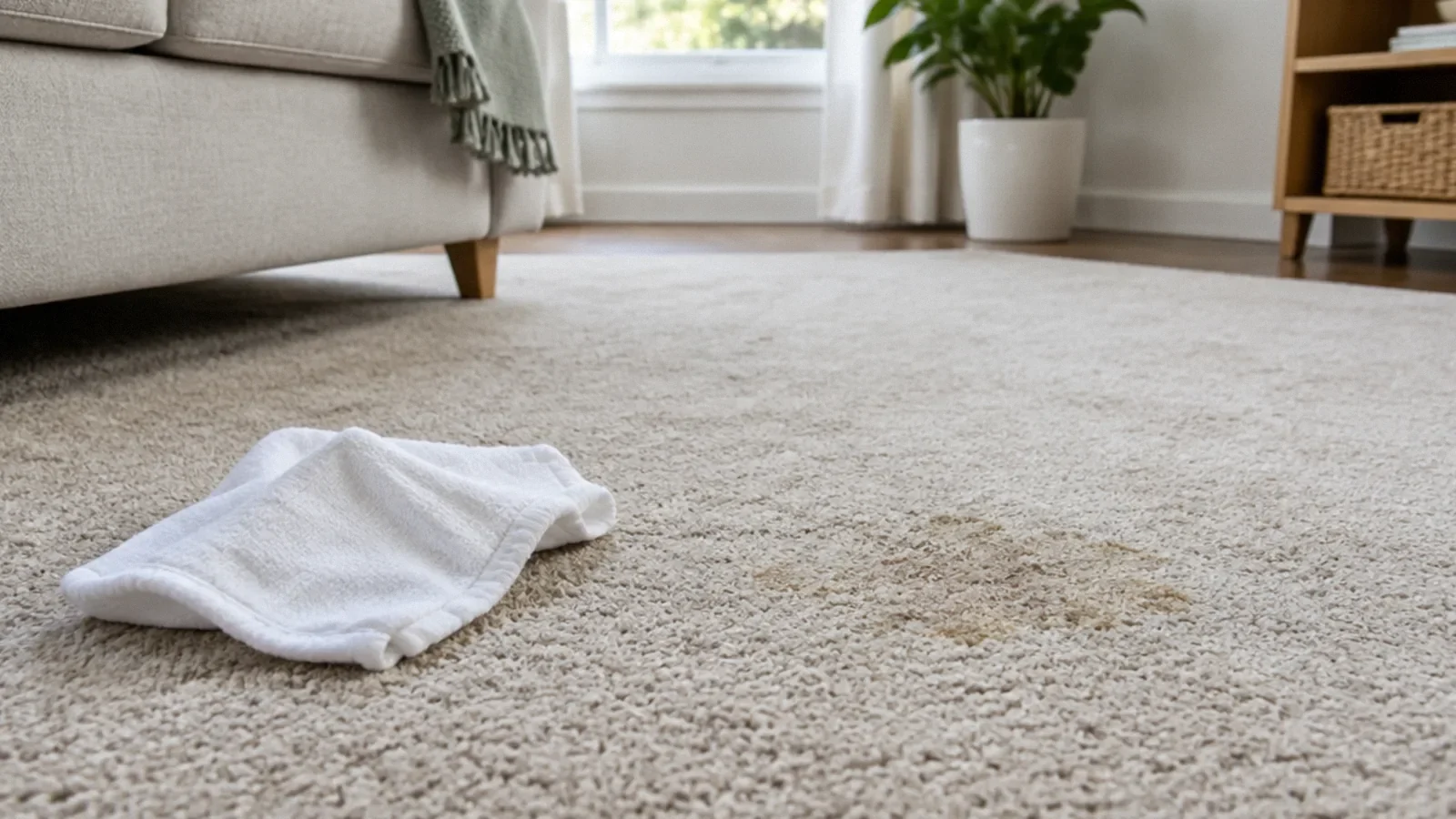
Blot a fresh spill with a clean white absorbent cloth, check the carpet care instructions and test any compatible cleaner in a hidden area. Avoid scrubbing or soaking the backing. A stain that returns, spreads or follows a leak may involve residue or moisture below the surface and deserves further investigation.
Identify the substance and the carpet
A food spill, soil, detergent residue and water damage may leave similar-looking marks but need different responses. Consider when the spot appeared, what was spilled and whether the area has been wet. If an unknown substance could be hazardous, keep people and pets away and seek appropriate professional advice.
Check the carpet manufacturer’s care instructions and warranty. Fiber, dye and backing can react differently to cleaners. For delicate rugs or an unknown material, contact the manufacturer or a qualified cleaner before applying a chemical or using a machine.
Blot a fresh spill
Remove loose solids gently with a rounded utensil where appropriate. Blot liquid with a clean white cloth or plain white paper towel, changing to a clean area as it absorbs the spill. Work carefully from the outer edge toward the center to limit spreading.
The Carpet and Rug Institute warns that scrubbing and stiff brushing can damage fibers and change the carpet’s texture. Do not grind material into the pile. A dry household vacuum is not a water extractor and should not be used to pick up liquid.
Choose and test a cleaning product
Select a product explicitly suitable for the carpet and stain, and follow its directions. Test a hidden area first and allow it to dry to check for dye transfer, discoloration or texture change. Use a small amount as instructed; adding more product does not necessarily improve the result.
Never mix bleach, ammonia, vinegar or other household chemicals. Some high-pH cleaners, brighteners and oxidizers can affect dye or void a warranty. A recipe that worked on a different carpet is not proof of compatibility with yours. Keep children and pets away as the label directs.
Colored drinks and food
A bright drink such as grape, cranberry, orange or tomato juice can stain permanently, particularly if allowed to dry or treated with an incompatible product. Blot promptly and use the carpet maker’s instructions or a suitable spot-removal guide for the substance. Do not promise complete removal from white or light-colored carpet.
If you do not know whether a product is safe, stop after gentle blotting and consult a professional. Repeated experiments can spread the dye or make the stain harder to remove. Record the substance and any products already applied so the cleaner can choose a method.
Kool-Aid, including cherry flavor, and egg dye can leave persistent color. Blot fresh liquid; for a dried mark, remove loose residue gently and use only a tested product permitted for the carpet, following its instructions for residue removal and drying. Cranberry juice can also stain upholstery and other textiles; these instructions are for carpet only. Apple juice may leave sugar even after its color fades. Liquid chlorophyll and dried plant pigments can also persist: test compatibility and stop if the fiber or dye changes.
Blood spots on carpet
Address any injury first, keep others away and wear suitable gloves to avoid direct contact with blood. Blot a small spot without rubbing and follow the carpet care instructions. University of Georgia Extension notes that heat can make blood stains harder to remove; use a cool-water method only if the material’s care instructions permit it.
Hydrogen peroxide and vinegar can alter some dyes or finishes and are not universal disinfectants for a porous carpet. Do not mix chemicals or claim a stain-free appearance proves disinfection. Large spills, unknown sources, sharps or infection concerns require trained help and appropriate health guidance.
Tomato sauce, ketchup and chocolate
For a fresh semisolid food spill such as ketchup, pasta sauce or melted chocolate, gently lift loose material with a rounded spoon without grinding it into the pile. Blot any remaining liquid with a white absorbent cloth. The Carpet and Rug Institute advises gentle removal of semisolids and cautions against scrubbing.
Tomato sauce and chocolate can contain oils, dyes or other ingredients. Check the carpet care guide, pretest a compatible spot cleaner and follow its label rather than adding an unapproved solvent. Older or heavily colored stains may be permanent; a specialist can assess them.
For dried chocolate or sauce, gently lift loose dry residue first without pulling fibers. Sauces can contain oil and strong spice pigments; the right product depends on the carpet and substance, not one universal solvent. Test a compatible treatment, remove residue as directed and dry thoroughly. White carpet may retain discoloration even after careful treatment.
Lipstick, makeup and crayon
For a lipstick or liquid-makeup spill, gently lift loose material without smearing it, then blot with a white absorbent cloth. Dry powder may need careful removal without pushing pigment into the pile; follow the carpet maker’s guidance. Test only a compatible product on a hidden area, since pigments and oily ingredients differ.
For crayon, University of Georgia Extension recommends gently removing excess material from the surface. Avoid cutting fibers or using aggressive scraping. Crayon can leave both wax and dye, and solvents can damage carpet backing or be flammable. Do not use gasoline, mix cleaners or apply an unapproved solvent; ask a professional about a valuable rug or persistent mark.
Remove loose dry makeup powder without grinding it in; oily lipstick or liquid bronzer should be lifted and blotted separately. For hardened candle wax, gently lift loose pieces without pulling fibers; for smeared wax, avoid spreading it and seek the carpet maker’s method. Heat or solvents can damage some fibers or backing, so use them only if the manufacturer explicitly permits them. Stop and consult a specialist for delicate or valuable carpet.
Dirt, detergent and brown spots
Allow dry soil to dry if necessary, then remove loose particles with a vacuum suited to the carpet before treating a remaining mark. A sticky or returning area after cleaning may involve remaining detergent or another source of soil. Follow the product and carpet instructions for removing residue without overwetting.
Brown or yellow marks can have several causes, including transferred dirt, a spill, moisture or carpet-related color change. Color alone cannot diagnose the cause. If spots appear after a leak, spread or keep returning, inspect for an ongoing moisture source and request a professional assessment.
For dried, embedded dirt or red clay, let ordinary soil dry, vacuum loose particles using the recommended setting and treat the remaining spot with a tested compatible product. Work each mark separately without spreading wet soil. Red clay pigment may remain. Small soap spills should be blotted up and residual soap removed only as the carpet maker permits, without soaking; a large spill or deep contamination calls for professional extraction.
Why stains can reappear
A stain may appear to return when material left deeper in the carpet or backing moves toward the surface during drying, or when residual cleaning product attracts soil. Other explanations are possible. Repeatedly wetting the same area without identifying the source can make the problem worse.
Explain the timing and earlier treatment to a carpet professional. Ask whether the backing, padding and subfloor need inspection, especially after a leak. A visible surface result is only one part of the assessment; all affected layers must be appropriately dry.
Record when the mark appeared, whether it is damp, and any earlier treatment. Residual detergent, moisture, wicking or altered dye are possible explanations; color alone cannot diagnose the cause. Cellulosic browning is one possible effect of wetting certain materials. Avoid repeatedly applying chemicals to an unexplained color change and ask a specialist to assess the backing and fiber.
Water stains, dampness and mold concerns
A water mark can reflect material carried by the water or a change in the carpet, but it does not establish that the source was clean. Stop an active leak when safe and determine where water traveled. Keep away from electrical hazards and do not walk into contaminated water.
EPA’s clean-water drying guidance also addresses the floor beneath carpet. Do not use fans before the water is known to be clean, or blow air across visible mold. Sewage, floodwater, a persistent damp odor or extensive wetness warrants an experienced restoration assessment.
When to call a specialist
Seek help for extensive staining, a valuable or delicate rug, unknown chemicals, repeated discoloration or liquid that may have reached the pad. Ask the provider to identify the fiber, explain the planned test and give a written scope, total price and expected drying conditions.
Some stains are permanent color changes, not removable soil. Avoid a guarantee that every mark can be removed. For a recurring leak or moisture issue, fix the source alongside the cleaning; otherwise a surface treatment may need to be repeated.
Mud, soil and dried dirt
For an ordinary small mud spot, lift loose clumps gently without grinding them into the fibers. If the soil is wet, let it dry before vacuuming the loose particles, provided there is no broader water-damage issue. Use the vacuum setting recommended for the carpet or rug and make several gentle passes; do not put a standard dry vacuum on wet mud.
If color remains, use a carpet-compatible product according to its label after a hidden-area test. Apply sparingly, blot with a clean white cloth and remove residue as directed. Avoid scrubbing, soaking the backing or transferring mud to the floor beneath an area rug. Call a rug specialist for delicate fibers or persistent staining.
Soft drinks and colored soda
Blot a fresh soda spill immediately with a white absorbent cloth, moving from the edge toward the center. Red or other strongly colored drinks can leave dye behind, while sugar residue attracts soil. Use a carpet-approved spot treatment after testing it in a concealed area; follow the maker’s instructions for removing the treatment and drying.
A soft drink is different from baking soda powder. Avoid rubbing either substance deeper into the pile or using an untested bleach product. If the color persists, stop repeated treatments and consult a qualified carpet cleaner; permanent dye transfer is possible.
Rust marks on carpet
Remove the source of rust, such as a damp metal furniture leg, without dragging it over the pile. Identify and correct any moisture that caused the corrosion. A rust-colored mark can have another cause, so avoid applying a harsh chemical when the substance is unknown.
The Carpet and Rug Institute recommends using an appropriate rust spot remover and testing it first in an inconspicuous area. Select a product expressly approved for the carpet and follow all label directions. Do not use chlorine bleach or mix products; rust removers can be hazardous. For delicate rugs, a stubborn mark or an uncertain material, consult a qualified cleaner.
Beer or root beer spilled on carpet
Blot the liquid promptly with a clean white cloth, working from the edge inward. Beer and root beer are different drinks, but both can leave residue; root beer can also leave a dark color. Avoid rubbing the fibers or soaking the backing.
After a hidden-area test, follow the carpet maker’s instructions for a compatible spot cleaner and residue removal. Dry thoroughly. If an odor persists, moisture or residue may have reached the pad; a carpet professional can assess it instead of covering it with fragrance.
Beer can leave both a stain and a sticky residue. After drying, check for tackiness and renewed soil; follow the carpet maker’s permitted residue-removal method.
Nail polish on carpet
Lift excess wet polish gently with a spoon or white absorbent cloth without smearing it. Do not cut the pile or scrape aggressively at dried polish. Identify the fiber and check the manufacturer’s instructions before introducing any solvent.
Some polish removers can affect carpet dye, backing or adhesives. Do not pour remover directly onto carpet or assume acetone is safe. A professional can select a compatible method, particularly for a delicate rug, gel polish or a large spill. If the carpet maker permits a specific product, test it in a hidden area and follow its label.
Never pour acetone onto carpet. Follow the carpet manufacturer’s instructions and stop if a product changes the color, texture or backing.
Sticky candy and tea stains
Lift loose candy gently with a spoon without grinding it into the carpet. If it is soft, a sealed bag of ice can help firm the material without soaking the pile. Sticky residue may also come from leftover cleaning product; identify the cause before adding more solution.
Blot a fresh tea spill promptly with a white cloth. For either residue, check the carpet maker’s instructions and test a compatible spot treatment in a hidden area. Avoid scrubbing and remove cleaner residue as directed. Dyes or older stains may require a professional and may not be fully removable.
For dried candy or tea, gently lift loose residue and test a carpet-approved product. Tea with sugar or milk can leave sticky or organic residue: remove cleaner and residue as directed, let dry and check for stickiness or renewed soil. Do not assume the color will disappear completely.
Vomit on carpet
Keep people and pets away, wear disposable gloves and lift visible material gently with disposable towels without rubbing or using an ordinary vacuum. Bag the waste and wash hands with soap and water after removing gloves. Check the carpet maker’s instructions before applying a compatible cleaner; do not soak the backing.
If an infectious illness such as norovirus is suspected, the affected area can extend beyond the visible mark. CDC notes that carpet and upholstery are difficult to disinfect completely. Follow current public-health guidance and seek professional advice when the contamination reaches the pad or cannot be adequately cleaned. Never mix cleaning chemicals.
Human feces on carpet: cleaning and infection precautions
Keep children and pets away from the affected area. Put on disposable gloves and carefully pick up solid material with disposable towels, avoiding splashing or spreading it. Place waste and used towels in a plastic bag. CDC recommends washing hands thoroughly with soap and water after handling fecal contamination; hand sanitizer alone is not a substitute for handwashing when norovirus is a concern.
Clean the carpet according to its care instructions using a compatible product. When disinfection is appropriate, choose a disinfectant whose label permits the specific soft surface and names the target germ, and follow its cleaning, contact-time and other directions. A product for hard surfaces may damage carpet or may not be suitable for porous backing. Never mix cleaning products or saturate the padding.
If diarrhea, suspected infectious illness, a large spill or sewage is involved, contact a qualified cleanup professional or public health authority for advice. Contaminated carpet and padding can be difficult to clean thoroughly; removal may be necessary depending on the material and extent. A clean appearance or pleasant smell does not prove disinfection.
Tar on carpet
Lift excess tar gently with a dull edge without rubbing it farther into the pile. Test a carpet-safe spot remover in an inconspicuous area and follow the product and carpet care instructions. Do not pour solvent onto the carpet or allow it to soak into the backing.
Tar and adhesive residues can be difficult to remove without spreading. Use a professional carpet cleaner for a large mark, delicate fiber or persistent residue. Keep solvent-containing products away from flames, ventilate as labeled and never mix cleaners.
Bronzer or makeup on carpet
Lift loose powder carefully without grinding it into the fibers, then check the carpet maker’s care instructions. Test an appropriate carpet-cleaning product on an inconspicuous spot and blot from the outside inward with a clean cloth. Do not soak the backing.
Makeup can contain oils and pigments, so one treatment may not remove every stain. Avoid mixing chemicals or using bleach on colored carpet. If the mark persists or the carpet is delicate, ask a professional cleaner.
Smoothie stains on carpet
Remove solids carefully with a spoon without rubbing them deeper, then blot liquid with a clean cloth. Check the carpet care label and test an appropriate cleaner in an inconspicuous area. Fruit pigments, dairy and other ingredients may require different treatment.
Avoid soaking the backing or mixing chemicals. Rinse only as the carpet and product instructions allow, dry thoroughly and seek professional help for a persistent mark or odor.
After cleaning, check dryness and any remaining odor; dairy can leave residue beneath the surface. Persistent odor or dampness may indicate material in the backing or pad and merits professional assessment. Fragrance or vinegar does not remove a hidden source.
Baking soda, oils and lingering odors
For dry baking soda residue, follow both carpet and vacuum manufacturers’ instructions before vacuuming; do not use an ordinary dry vacuum on wet residue. Blot a wet spill and follow approved drying and residue-removal directions without saturating the backing.
Do not add essential oil to a carpet cleaning machine unless both the machine and carpet manufacturers explicitly permit it. Oils can leave residue and affect pets. A scent does not remove an odor source. If odor remains after a small spill is cleaned and dried, have the backing and pad assessed, especially after deep contamination.
Your next-step checklist
- Identify the spill and read the carpet care instructions.
- Blot promptly with a clean white cloth; do not scrub.
- Test a compatible cleaner in an inconspicuous area.
- Avoid mixed chemicals and excess moisture.
- Investigate recurring stains or water damage beneath the carpet.
Related questions
How do I remove an old carpet stain?
Identify the substance if possible, check the carpet instructions and test a compatible product. Older stains can be permanent; a professional can assess options.
Why does a carpet stain keep coming back?
Material left deeper in the assembly or remaining cleaning residue can contribute, but the cause must be assessed for the specific spot.
Can water leave a carpet stain?
Yes. Water can carry soil or other material and affect carpet; investigate the source and dry the affected layers.
Can I mix household cleaners for a stronger stain remover?
No. Mixing cleaners can produce hazardous reactions and may damage the carpet.
How do I remove blood from carpet?
Attend to the person first, wear suitable gloves and blot without rubbing. Follow the carpet’s care instructions; seek trained help for significant or uncertain contamination.
How do I get tomato sauce or chocolate out of carpet?
Lift loose semisolids gently with a rounded spoon, blot without rubbing, then follow the carpet care guide for a compatible tested spot treatment. Do not soak the backing.
How do I handle red juice on carpet?
Blot promptly with a white absorbent cloth, test a carpet-compatible treatment and follow its label. Strong dyes may leave a permanent mark.
How do I remove lipstick or crayon from carpet?
Gently lift loose material and avoid rubbing pigment into the pile. Follow the carpet care instructions and test a compatible treatment; persistent wax or dye may need professional help.
Should I clean mud while it is still wet?
Lift excess without spreading it, then let an ordinary small mud spot dry so loose soil can be vacuumed. Address wider water damage separately.
How do I remove a red drink stain from carpet?
Blot promptly, then use a carpet-compatible spot product after a hidden-area test. Strong dyes can leave permanent color; avoid scrubbing or soaking the backing.
How do I clean human feces from carpet?
Keep others away, wear disposable gloves, remove solids carefully and clean the carpet according to its care instructions. Use a disinfectant only if its label allows the carpet and target germ; larger or infectious contamination may need professional help.
Should I put baking soda on a red-wine carpet stain?
First blot a fresh spill without rubbing and check the carpet maker’s spot-cleaning instructions. Baking soda is not guaranteed to remove dye and residue can be difficult to remove; test any permitted product and consult a specialist for a persistent stain.
Why did baking soda leave a brown mark on carpet?
A brown mark may involve residue, existing soil, moisture or a color change; appearance alone cannot establish the cause. Stop adding products, follow the carpet instructions and seek help if it persists.
How can I fix discolored carpet?
First distinguish a removable stain from fading, bleach damage or fiber wear. Test a manufacturer-approved cleaner in a hidden spot; lost dye may require professional repair or replacement rather than stronger cleaning.
Does vinegar eliminate odors in carpet?
Vinegar is not a universal odor treatment and may damage some fibers or finishes. Follow the carpet maker’s care instructions, test any approved product in a hidden area, and address the source and any wet padding rather than masking the smell.
Can dish soap clean a carpet stain?
A carpet manufacturer may permit a mild detergent for some fibers, but concentrated soap can leave residue and attract soil. Follow the care instructions, test an approved solution in a hidden area and avoid soaking the backing.
Are essential oils or acetone safe on carpet?
Do not assume either is safe for a carpet, its backing or household occupants. Acetone is flammable and can damage some materials; oils can leave stains and may pose risks to pets. Follow the manufacturer’s instructions and test only an approved product.
How can I remove makeup foundation from carpet?
Lift excess gently without grinding it into the fibers, then follow the carpet’s care instructions and test an approved cleaner in a hidden spot. Avoid soaking the backing; a persistent oil-based stain may need professional cleaning.
How do I handle a colored drink or red dirt on carpet?
Blot liquid or gently remove loose dry soil without grinding it into the fibers. Follow the carpet maker’s instructions and test an approved cleaner; dyes and red soil can be difficult to remove and may need professional treatment.
How do I treat a plant or chlorophyll stain on carpet?
Lift loose material without rubbing, then follow the carpet’s care instructions and test an approved cleaner in a hidden area. Plant pigments can be difficult to remove; avoid soaking the backing and seek professional help for a persistent stain.
Does cranberry juice stain carpet?
Cranberry juice can leave a colored stain. Blot a fresh spill without rubbing, check the carpet’s care instructions and test an approved cleaner; avoid soaking the backing. A persistent stain may need professional care.
Sources & context
Public guidance supports the principles in this article. The practical questions and examples are editorial interpretation, not a site assessment or a coverage decision. State-specific rules apply only where identified.
- Carpet and Rug Institute: Cleaning spots and spillsindustry guidance
- Carpet and Rug Institute: Care guideindustry guidance
- U.S. EPA: Water damage and cleanupfederal guidance
- University of Georgia Extension: Blood stain removaluniversity guidance
- University of Georgia Extension: Makeup stainsuniversity guidance
- University of Georgia Extension: Crayon stainsuniversity guidance
- Carpet and Rug Institute: Rust spot removalindustry guidance
- Carpet and Rug Institute: Stain removal tipsindustry care guidance
- CDC: Norovirus infection-control recommendationsfederal public health guidance
- CDC: Preventing norovirus and cleaning after diarrheafederal public health guidance
- CDC: Cleaning and disinfecting soft surfacesfederal guidance
- Carpet and Rug Institute: Carpet maintenance and solvent precautionsindustry guidance
- Source guidance: carpet-rug.orgverified guidance
- Source guidance: carpet-rug.orgverified guidance