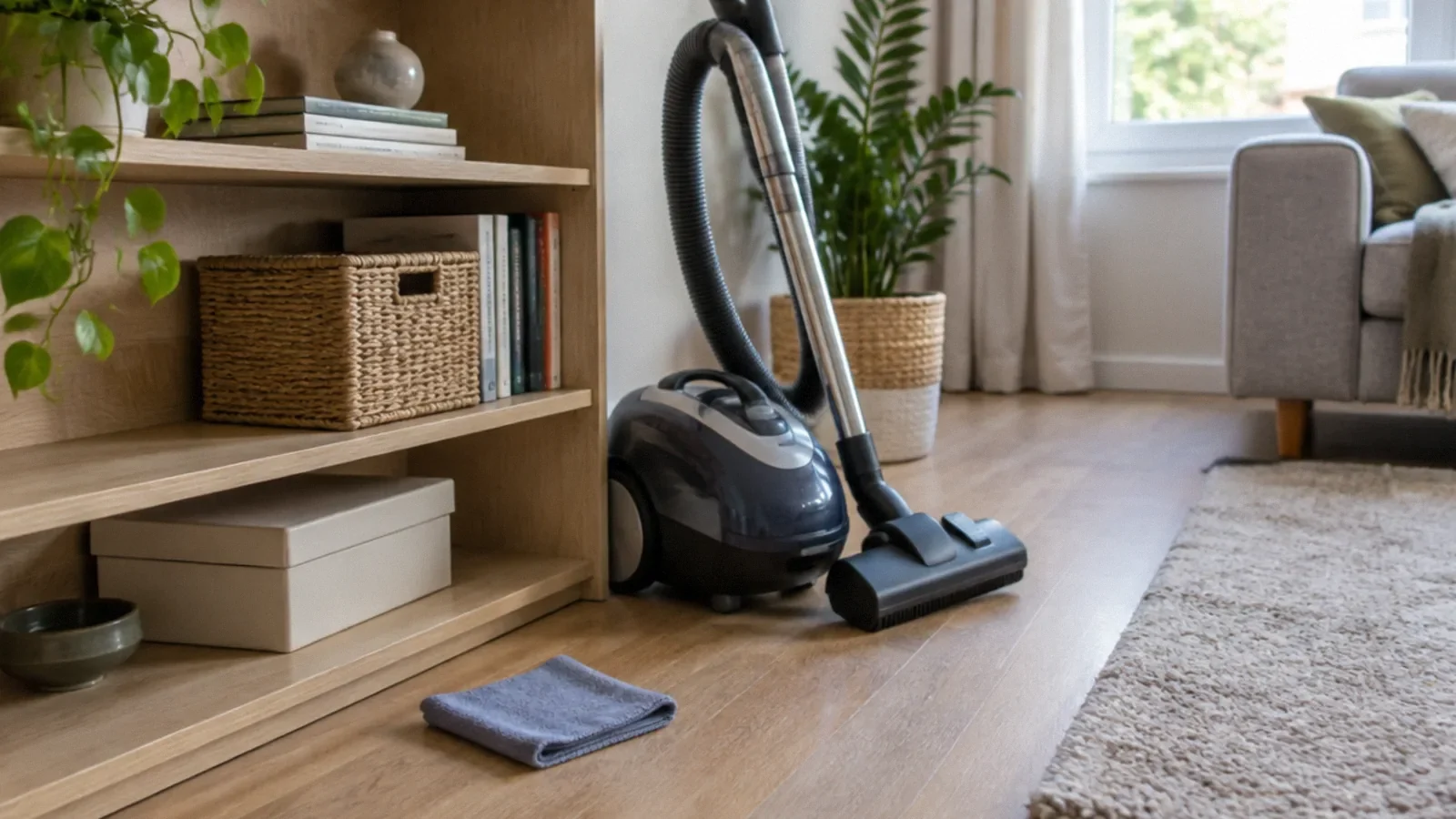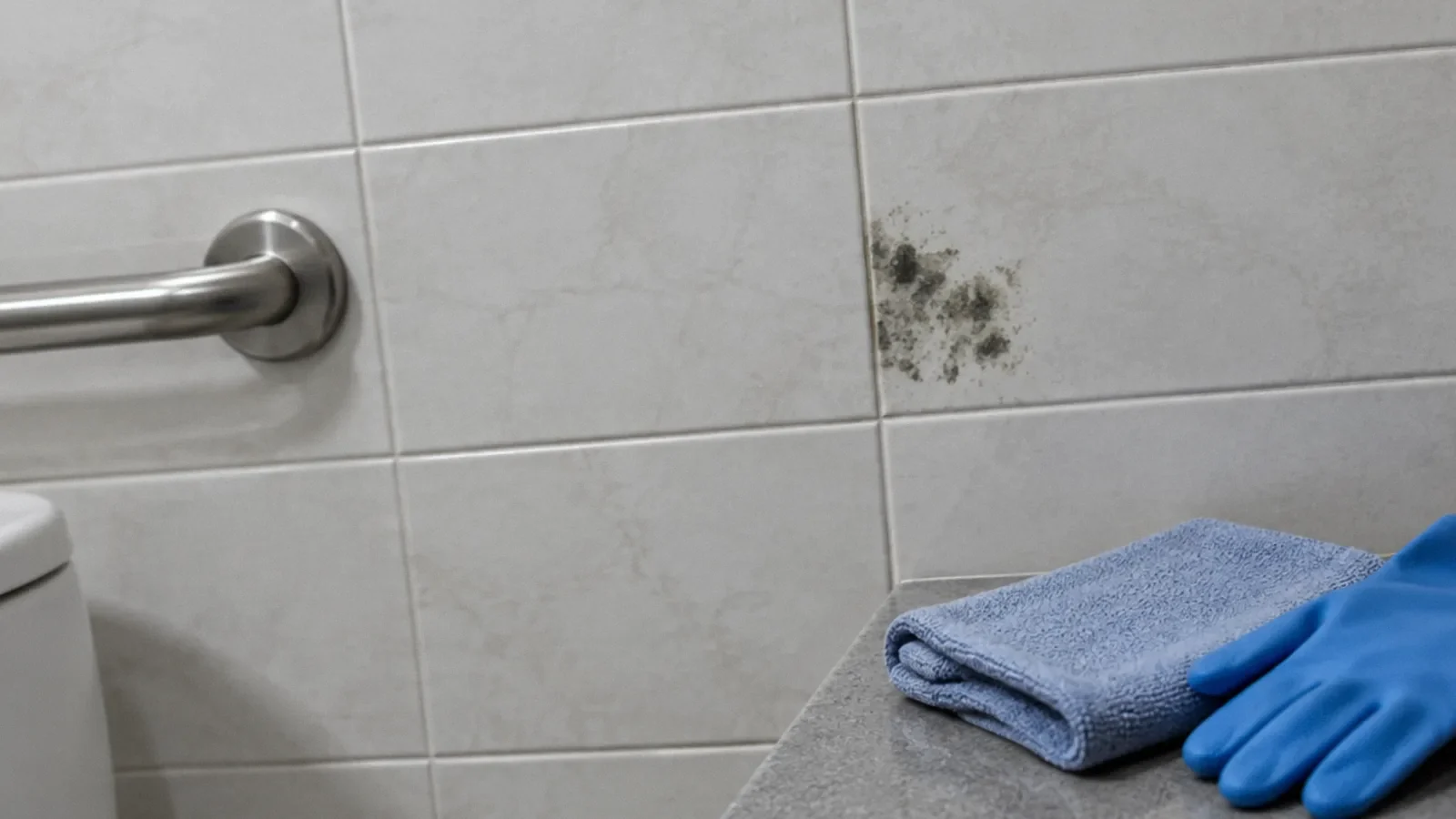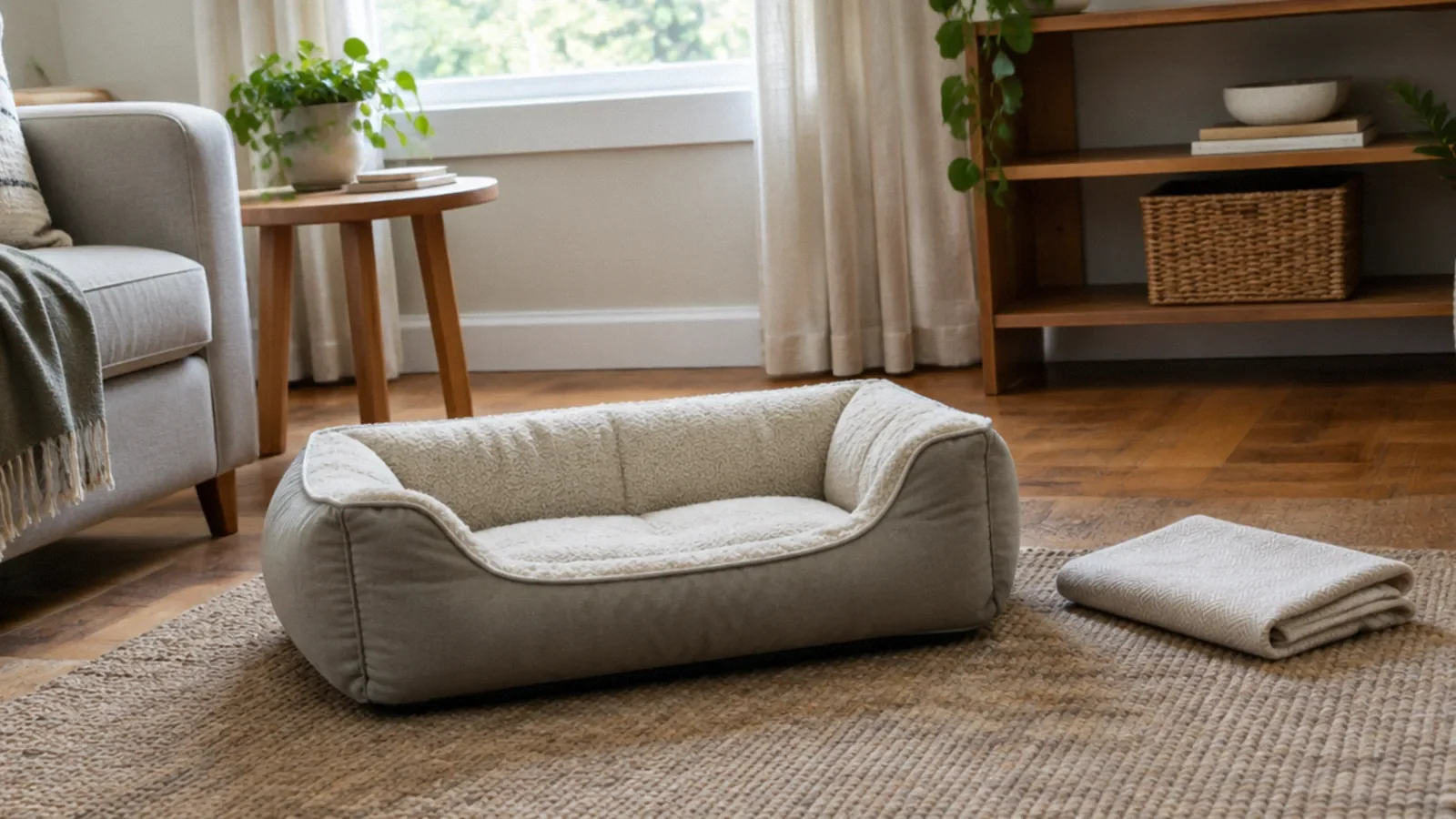
Find the source before using an odor product: pet bedding, litter, an accident in carpet or a medical issue can each need a different response. Clean washable items and surfaces according to their instructions, keep animals away while cleaners are wet and dry materials thoroughly. Persistent accidents or a sudden change in an animal’s odor warrant a conversation with a veterinarian.
Locate the odor before treating it
Check the pet bed, blankets, litter area, favorite resting places and any recent accident. A smell that seems to fill a room can come from a small spot in a rug or from a washable item. If the smell persists after cleaning, inspect adjacent surfaces and the underside of a removable rug when safe.
Do not assume every odor is urine. Food spills, damp fabric, litter, skin conditions or moisture damage can smell similar. Note when the smell is strongest and which materials are affected. A fragrance can cover a smell without removing the source.
Wash bedding and everyday supplies
Follow care labels when washing pet bedding and blankets, and dry them fully before returning them. CDC suggests cleaning pet beds, blankets and habitats weekly and more often if they look dirty or smell. Clean bowls regularly and handle food and waste according to household hygiene guidance.
CDC distinguishes cleaning, which physically removes dirt and germs, from disinfecting, which kills germs on surfaces. Many pet items only need cleaning, while items in contact with urine or feces and certain illness situations call for additional disinfection. Follow the product label and veterinary advice.
Handle a fresh accident
Keep children and pets away and wear suitable gloves. Pick up solid waste safely, then blot liquid with disposable absorbent material rather than rubbing it deeper into a carpet or cushion. Wash hands after handling waste or contaminated items. The surface and the animal’s health determine what additional cleaning is appropriate.
Use a cleaner intended for the material and the type of stain, test a hidden area and follow the label. A pet odor neutralizer may help after cleaning, but no product works equally on every material. Avoid mixing products and avoid soaking carpet, padding or subfloor.
When odor is trapped in carpet or padding
A spot on the carpet surface may not show how far liquid traveled. Repeated wetting can damage backing or leave padding damp. Let the area dry thoroughly, and consider a professional evaluation if the smell returns or extends under the carpet. In some cases affected padding or another material may need replacement.
The Humane Society advises against steam cleaning urine odors from carpet because heat can set the stain and odor. Follow the carpet manufacturer’s directions and ask a cleaner what method and drying plan they propose. Do not apply a product intended for a hard surface to carpet without label support.
Dog or cat urine in carpet
Blot a fresh accident with a dry white absorbent cloth and check the carpet’s care instructions before applying an appropriate pet-spot product. Follow the label, keep the animal away during treatment and dry the area fully. The Carpet and Rug Institute advises against steam on urine spots because heat can set the odor or stain.
Baking soda or another household powder is not a universal solution for every fiber or a substitute for removing urine from a pad. Check the manufacturer’s guidance before using any product and avoid inhalation or pet contact. If odor returns, ask a professional to inspect the carpet, backing and padding.
Litter boxes and hard surfaces
Change litter and clean the box on a regular schedule. CDC recommends extra caution with cat litter for pregnant people and those with weakened immune systems; ask a healthcare professional about individual precautions. Clean and disinfect pet items that contact urine or feces using suitable products and label instructions.
Keep pets away during cleaning and allow disinfected items to dry completely before use. CDC advises against disinfectants containing phenols around cats. Never mix bleach with ammonia or another cleaner, and do not use a disinfectant on an animal’s skin or fur.
Ventilation without masking
When outdoor conditions permit, clean outdoor air can help dilute odors while the source is addressed. An HVAC filter or portable air cleaner can reduce some airborne particles, but it does not remove urine from padding or replace cleaning. Maintain equipment according to its instructions.
Do not rely on scented sprays, essential oils or ozone to make the home smell different. Pets can be sensitive to products; consult a veterinarian before introducing anything around them. EPA cautions that ozone is a lung irritant and is not a reliable household solution for indoor contaminants.
Consider the pet’s health and routine
A sudden stronger body odor, repeated accidents or a change in litter habits can have many causes. Consult a veterinarian rather than treating the odor as a cleaning problem alone. Do not punish an animal for a new symptom; note the timing and any other changes for the veterinary appointment.
Regular grooming appropriate to the animal, clean washable sleeping areas and prompt attention to accidents can help prevent recurrence. Choose grooming products intended for pets and follow veterinary advice. Strong chemicals intended for household surfaces are not bathing products.
When to request professional help
A large affected area, repeated accidents, a persistent odor after cleaning or damage to carpet and subfloor may require more than household cleaning. Ask a qualified cleaner to inspect the material and provide a written scope, estimated drying time, products and any limitations before work begins.
In a rental, notify the property manager about damage or odors that may involve building materials. Keep a record of what was cleaned and when. If a separate water leak or mold concern is present, address the moisture source instead of applying an odor treatment over it.
Fresh and older urine on carpet and textiles
For fresh cat or dog urine on carpet, blot promptly with disposable towels rather than rubbing. Choose a pet-urine cleaner compatible with the carpet and follow its label, including any test and dwell time; avoid soaking the backing. Let the area dry fully before judging the result. Urine can leave a stain, especially as it dries. Repeated accidents warrant a veterinary discussion.
For an older spot, inspect the affected carpet and, where accessible, padding. Cat odor may also come from litter, bedding or another source, so do not assume every smell is urine. Baking soda may affect some odors but cannot reliably reach contaminated padding. Professional cleaning can help; its outcome depends on the material and depth of penetration, and replacement of affected padding may be needed. Avoid steam on urine-contaminated carpet.
For washable clothing or bedding, blot first and follow the care label and a suitable laundry product’s instructions. Repeat washing when appropriate if odor remains, and do not use heated drying while odor persists. For hard finishes and upholstery, use only compatible products, test as directed, and avoid excess water.
Your next-step checklist
- Locate the source before applying an odor product.
- Wash and fully dry bedding according to care labels.
- Blot accidents and avoid soaking porous materials.
- Keep pets away from cleaning chemicals until safe to return.
- Consult a veterinarian for sudden changes or repeated accidents.
Related questions
How do I get dog smell out of a room?
Find and clean the source, such as washable bedding or an affected floor, and dry the area. Persistent or sudden changes may need veterinary advice.
Can I use vinegar to disinfect pet supplies?
CDC says there is not enough evidence to rely on vinegar for cleaning or disinfection. Use soap or detergent for cleaning and an appropriate disinfectant when needed.
Should I steam clean a urine stain?
The Humane Society advises against steam cleaning urine odors from carpet because heat can set the stain and odor.
Can air freshener eliminate pet odor?
It may mask a smell but does not remove the source. Address the soiled item or material first.
How do I remove cat or dog urine from carpet?
Blot promptly, use only a compatible pet-spot treatment according to the carpet and product instructions, and dry the area. Persistent odor can require assessment of the pad.
How do I remove dog urine odor from a blanket?
Follow the blanket’s care label, address the spot promptly and use a compatible laundry method. Dry it thoroughly before storage; delicate, heavily contaminated or persistently odorous items may need specialist care or replacement.
Sources & context
Public guidance supports the principles in this article. The practical questions and examples are editorial interpretation, not a site assessment or a coverage decision. State-specific rules apply only where identified.
- CDC: Cleaning and disinfecting pet suppliesfederal guidance
- Humane Society: Pet care tips and stain removalanimal welfare guidance
- U.S. EPA: Air cleaners and filtersfederal guidance
- Carpet and Rug Institute: Pet spots and carpet careindustry guidance