Attend to the injury first and wear gloves. For a small spot, blot gently and use cool water or a tested carpet-approved product only if the carpet maker permits it. Visible stain removal does not establish disinfection.
Take care of the person first
Address bleeding and any injury before treating the carpet. Seek emergency assistance for severe bleeding or another urgent problem. Keep children and pets away from the spot and avoid direct contact with blood. If another person’s blood reaches broken skin, eyes, mouth or another mucous membrane, seek prompt medical advice about the exposure. A stain guide cannot assess infection risk. A large spill, unknown source, sharps or significant contamination is a reason to stop and contact a trained cleanup provider or public health authority.
Check the carpet and gather supplies
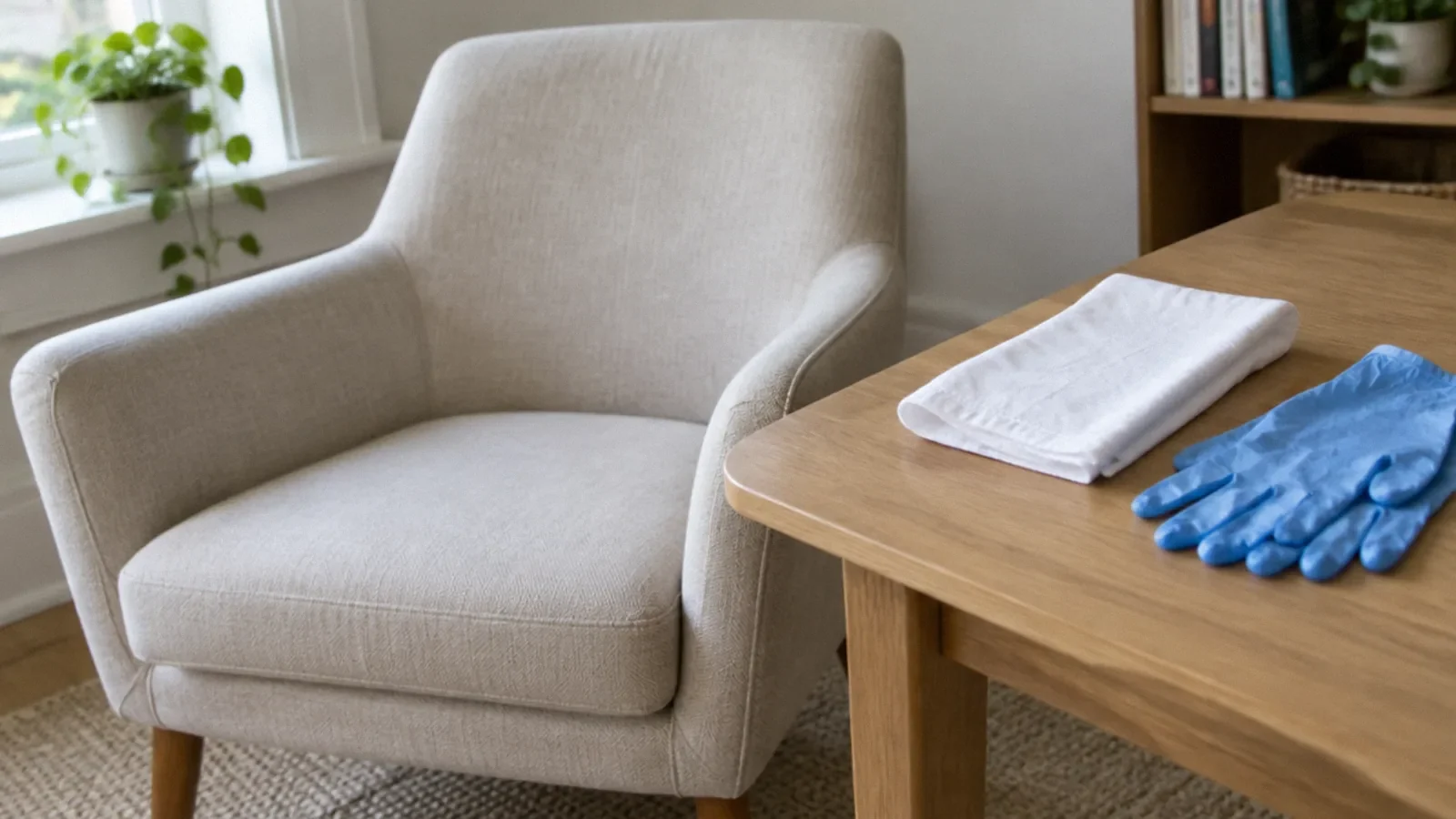
For a small household spot, wear suitable disposable gloves and use white absorbent towels or cloths. Identify the carpet fiber and read its care instructions before adding water or a product. A valuable rug, unknown fiber, unstable dye or sensitive backing calls for a specialist. Use only a cleaner approved for the carpet and the particular task. The Carpet and Rug Institute recommends testing a spot solution in an inconspicuous area and checking for dye transfer or damage. Allow the test to dry; a successful test cannot guarantee every area will respond identically.
Blot a fresh spot
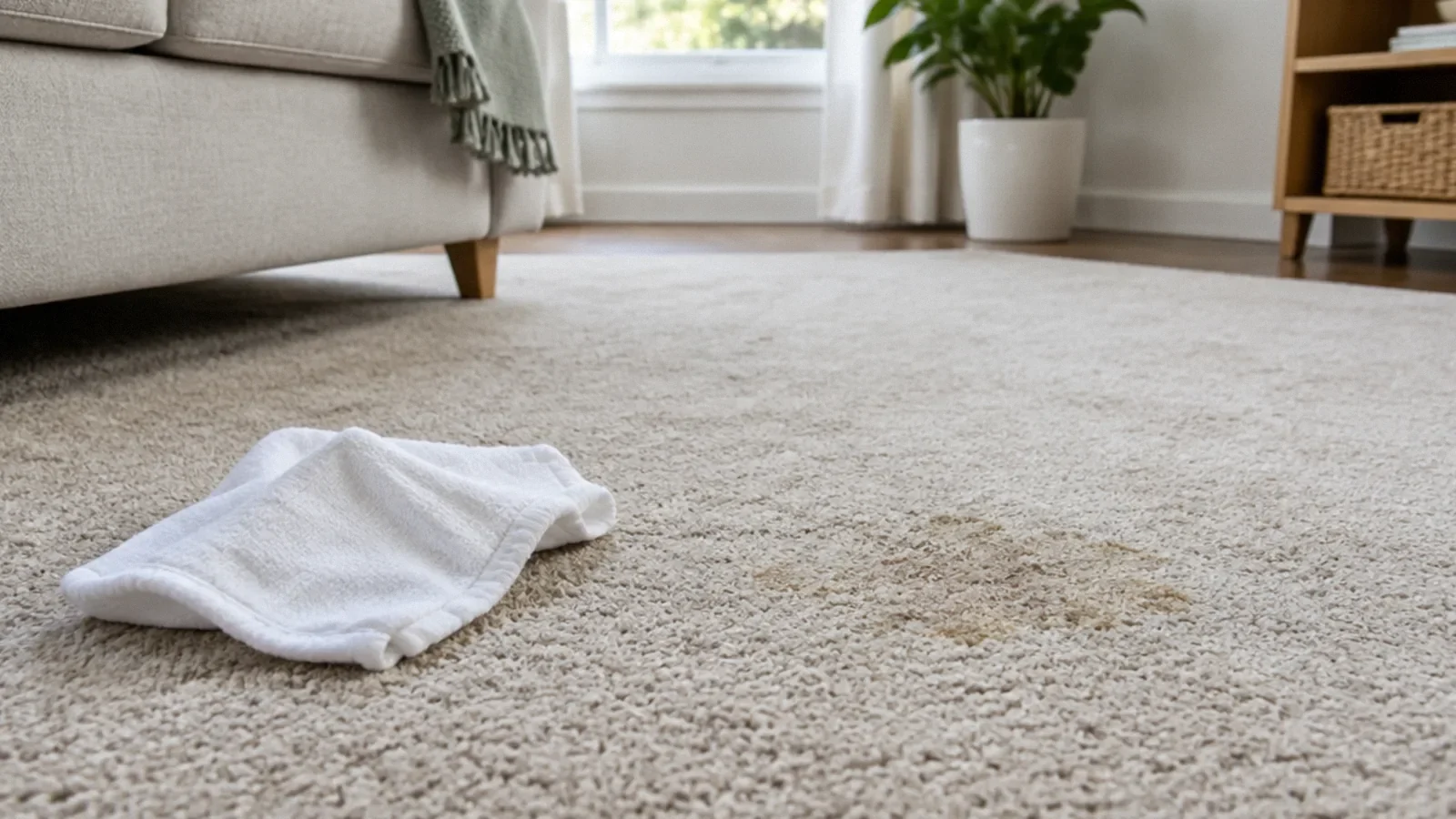
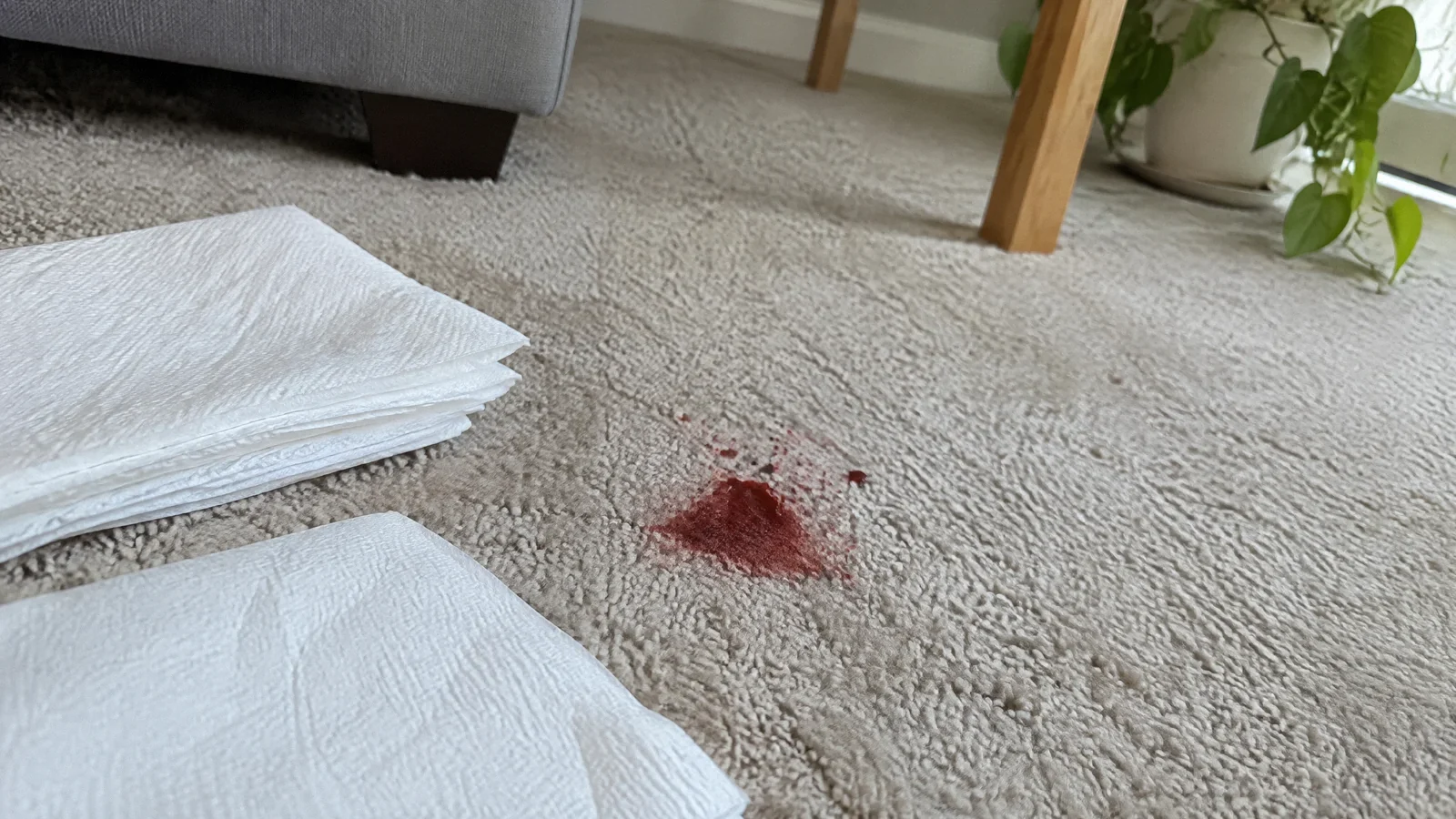
Gently blot excess liquid with a clean white absorbent cloth or disposable towel, working from the outside toward the center. Change to a clean part as material transfers. Do not scrub, brush hard or pour liquid onto the pile. For a carpet that permits water, the Carpet and Rug Institute recommends cool-water rinsing in its blood spot guidance. Apply a small amount to a cloth rather than flooding the spot, and follow the carpet maker’s instructions. Excess moisture can carry blood into the backing or pad and leave a larger problem.
Use a compatible treatment only if needed
If a mark remains, select a product intended for the carpet and blood stains, pretest it and apply according to both labels. The Carpet and Rug Institute advises applying a small amount to a white cloth, working gently from the edge inward and blotting. Stop if the dye transfers, the texture changes or the spot spreads. Do not mix products or increase the concentration in an attempt to speed the process. Follow the product’s instructions for removing residue and use only the moisture the carpet maker permits.
Older or dried blood
A dried mark may be more difficult to remove, and complete removal cannot be promised. Avoid aggressive scraping, sanding or brushing, which can damage fibers and disperse material. Check the care instructions before applying moisture; a professional can assess an old or deeply absorbed spot and select a method appropriate for the carpet. Tell the cleaner what caused the mark, how long it has been there and what has already been applied. Do not repeatedly wet an area whose backing or pad may already contain blood.
Hydrogen peroxide and vinegar
Hydrogen peroxide is an oxidizer and can change some carpet dyes or finishes. Vinegar is acidic and is not a universal carpet cleaner. Neither is automatically suitable for a particular carpet, and mixing household chemicals can create hazards. Use either only if the carpet maker and specific product instructions allow it, after a hidden-area test; otherwise choose an approved product or consult a professional. Do not treat either ingredient as a reliable way to disinfect porous carpet. A white carpet can still contain dyes, treatments or backing materials that react.
Cleaning and disinfection are different
A spot that no longer looks red has been visually cleaned; that appearance does not establish that the carpet or pad has been disinfected. CDC notes that blood spills on carpeting are more difficult to manage than spills on nonporous surfaces. Healthcare facilities use specific procedures and products, and those protocols are not a blanket household carpet recipe. If disinfection is required, seek appropriate guidance and use only a product whose label permits the specific soft surface and purpose. Never pour bleach or a hard-surface disinfectant onto carpet without confirming compatibility and directions.
Rinse, dry and check the backing
If the carpet and cleaning-product directions call for rinsing, use a small amount of cool water and blot with a dry cloth until moisture is removed as far as practical. Allow the area to dry fully before replacing furniture or permitting normal traffic. Do not use a household dry vacuum on wet material. If a large quantity reached the backing or padding, an odor persists, or the area remains wet, a trained professional should assess the layers. Repeated surface treatment does not necessarily reach or remove contamination below.
Dispose of supplies and know when to stop
Remove gloves carefully and wash hands with soap and water. Dispose of used materials according to local requirements and the circumstances; workplaces and healthcare facilities may have specific regulated procedures. If there are sharps, an unknown source, a large spill or an infectious exposure concern, do not treat the situation as an ordinary stain. Contact a trained cleanup provider and seek medical or public-health advice as appropriate. The related guides address blood on washable fabric and upholstery, where care labels and padding differ from installed carpet.
Your next-step checklist
- Attend to the injury and keep others away.
- Wear gloves and blot without rubbing.
- Check the carpet instructions and test any product.
- Avoid soaking the backing and never mix cleaners.
- Seek trained help for large or uncertain contamination.
Related questions
Is hot water best for a blood stain?
The Carpet and Rug Institute recommends cool-water rinsing in its blood spot guidance. Follow your carpet manufacturer’s instructions.
Can peroxide or vinegar disinfect carpet?
Do not assume either disinfects porous carpet. They can also affect dyes or finishes; use only if the product and carpet maker permit it.
What if blood has reached the pad?
A professional should assess the extent and appropriate treatment or replacement. Surface cleaning may not address the padding.
Does a clean-looking carpet prove disinfection?
No. Visual stain removal and disinfection are different outcomes.
Sources & context
Public guidance supports the principles in this article. The practical questions and examples are editorial interpretation, not a site assessment or a coverage decision. State-specific rules apply only where identified.