Attend to the injured person first. For a small household stain, use protective gloves, follow the fabric care label and blot rather than rub. Cleaning a visible stain is different from disinfecting a contaminated surface; larger or potentially infectious spills may need specialized cleanup.
Address the injury first
If someone is bleeding, attend to their immediate needs before cleaning the fabric. Call emergency services for severe bleeding, signs of shock or another urgent medical concern. Keep other people and pets away from the affected area while arranging help.
Do not allow stain treatment to delay first aid. If you may have been exposed to another person’s blood through broken skin or a mucous membrane, seek prompt medical advice about the specific exposure. A cleaning guide cannot assess infection risk.
Use appropriate protection
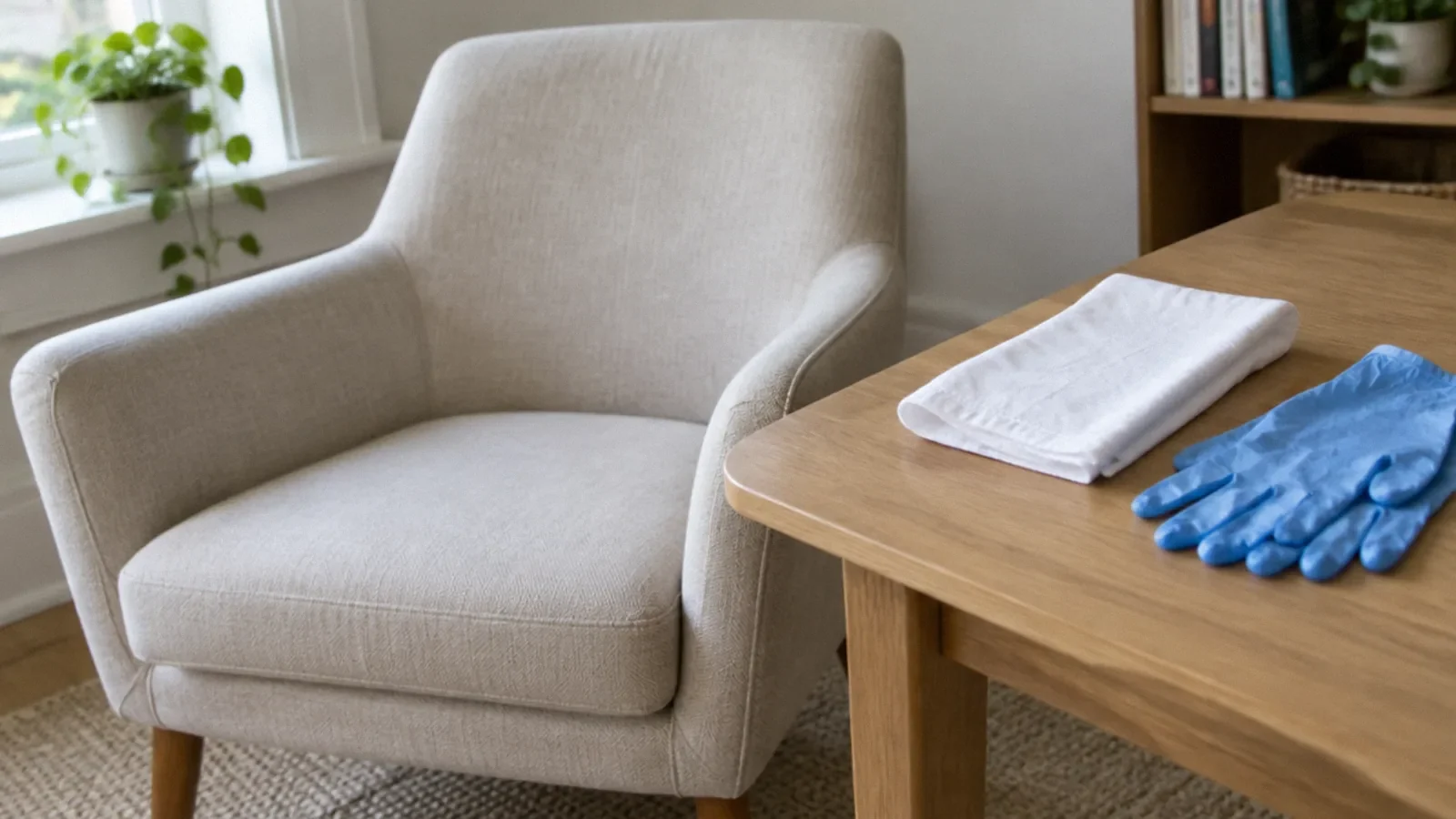
Wear disposable protective gloves when handling blood or contaminated fabric. Avoid splashing and keep the material away from your face and clothing. If the spill is large, involves an unknown source or may contain sharps, do not handle it as an ordinary laundry spot; contact an appropriate cleanup professional.
Afterward remove gloves carefully and wash your hands with soap and water. Follow local disposal requirements for contaminated materials. A healthcare facility, workplace or commercial property may have additional rules and trained personnel; follow its established procedures.
Read the fabric label
Check whether the item is washable and whether the maker permits water-based treatment. Silk, wool, leather, upholstery and delicate or colored fabrics can react differently from washable cotton. Test a compatible treatment on a concealed area before applying it to the mark.
For dry-clean-only clothing or a valuable item, contact a professional cleaner and explain the contamination. Keep the item separate from clean laundry. Do not saturate upholstery or carpet padding while treating a visible surface spot.
Blot a fresh stain
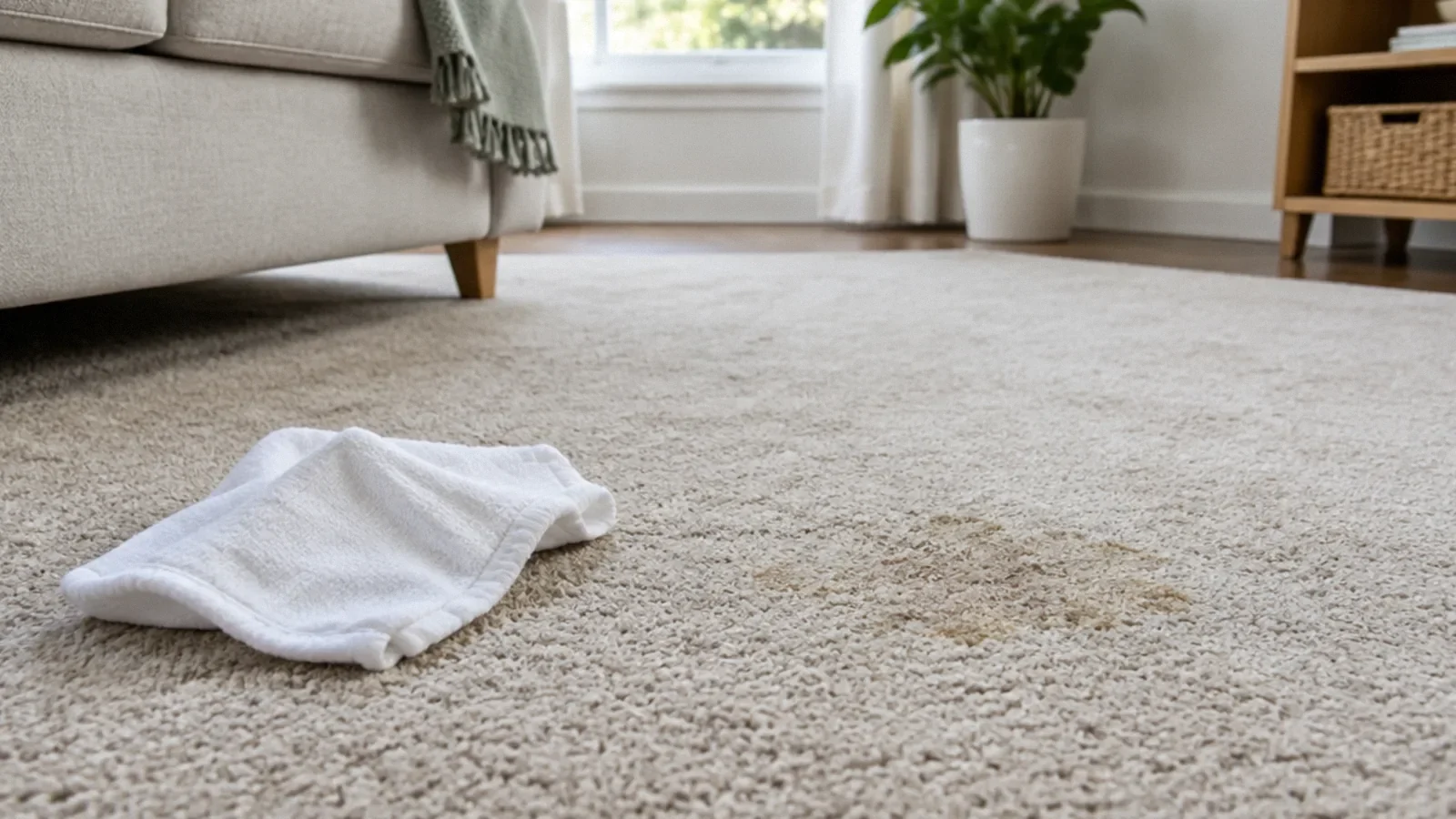
For a small fresh spot on an appropriate washable fabric, gently blot with a clean white absorbent cloth rather than rubbing the blood deeper into the fibers. Work from the outside inward, changing to a clean portion of cloth as it absorbs material.
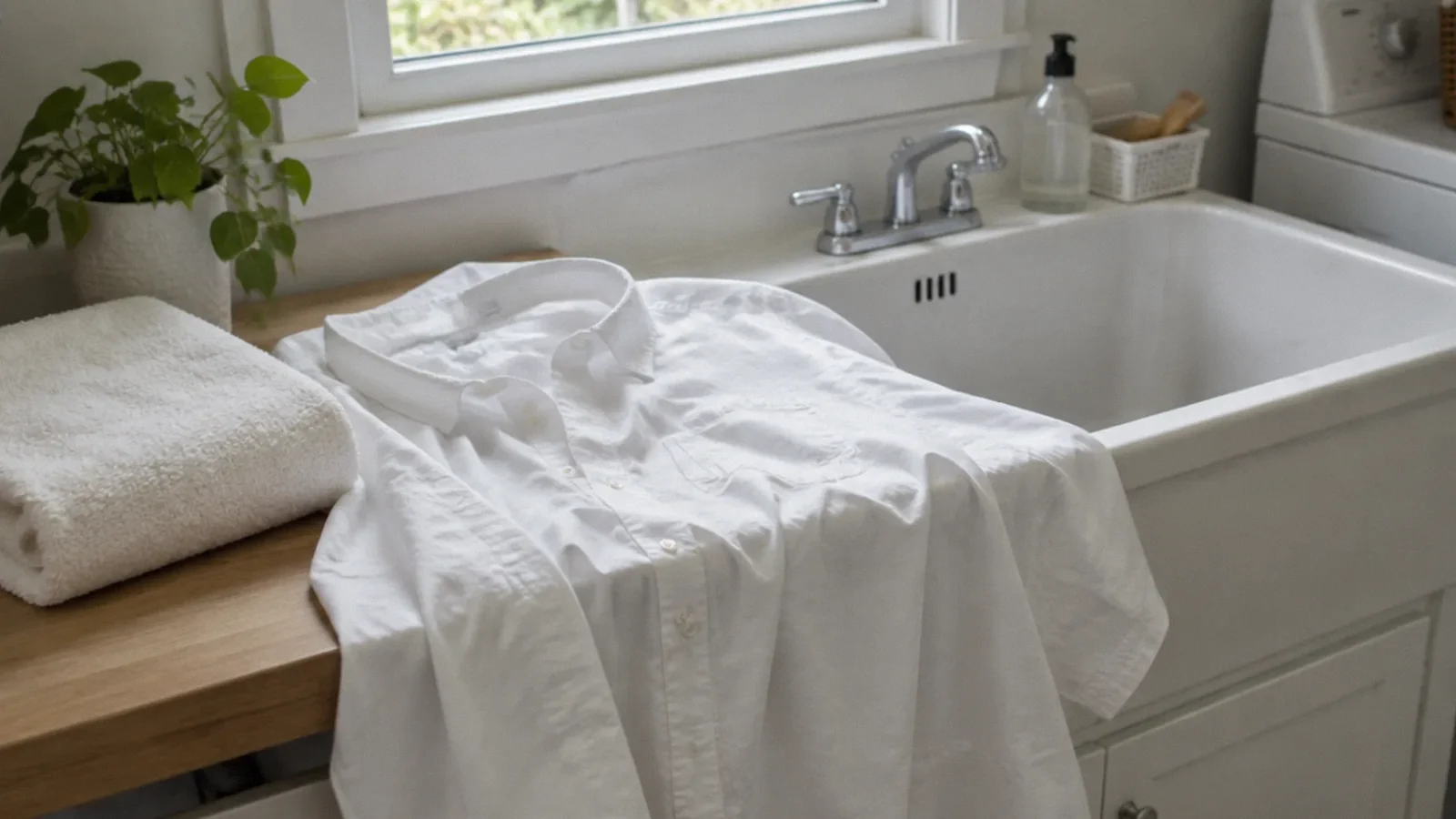
Use cool water and a fabric-compatible detergent or stain product if the garment manufacturer permits it. Follow the product label and avoid soaking a material that cannot be washed. Do not use a hot dryer until you have assessed the result; heat can make a stain harder to remove.
Treat a dried mark cautiously
A dried stain may take longer and may not come out completely. If the fabric is washable, follow its care instructions for a cool-water soak or a compatible stain treatment. Do not scrape aggressively, which can damage the fibers or scatter dried material.
A product marketed for stains is not necessarily a disinfectant. Avoid mixing products or improvising chemical combinations. If a treatment changes the fabric color or texture, stop and ask a cleaner about the next step.
Cleaning is not the same as disinfection
Removing visible blood does not by itself establish that a surface has been disinfected. For a hard, nonporous surface where disinfection is needed, use a disinfectant labeled for the surface and situation, following cleaning, contact-time and safety instructions. CDC guidance for healthcare settings distinguishes removal of soil from disinfection.
Soft furnishings and carpet are harder to disinfect completely. Consult the item maker and appropriate public-health or professional guidance; do not pour bleach or another disinfectant onto a fabric unless its label and the fabric maker both permit it. Never mix bleach with ammonia or acids.
Laundry, couch and carpet need different methods
A washable garment can often be laundered according to its label after pretreatment. A couch cushion or installed carpet may contain padding that cannot be washed in a machine, so the extent and type of contamination matter. Dedicated upholstery and carpet guidance can help identify those limits.
Club soda is not required, and no household ingredient guarantees removal. Avoid relying on odor or appearance alone to judge contamination. For an unknown, extensive or potentially infectious spill, use an appropriately equipped professional rather than spreading the material.
Prevent damage and keep a record
Keep cleaning products in their original containers and follow label directions for storage and ventilation. Never mix stain removers. Dispose of or launder used materials as appropriate, and clean the surrounding hard surface if it was also affected.
If a professional is needed, describe the item, when the incident occurred and which products were already applied. This helps them select a compatible method and protection. A permanent stain or a damaged fabric may require repair or replacement rather than more chemicals.
Old menstrual blood on washable fabric
For an old period stain on a washable garment, check the care label first. If water and soaking are permitted, soak in cool water, apply a fabric-compatible stain treatment as directed, then launder according to the label. Inspect before using a hot dryer. A hidden-area color test is prudent for dyed fabric; stop if color transfers. An old stain may remain even after careful treatment.
Your next-step checklist
- Help the injured person first.
- Wear gloves and avoid spreading the material.
- Follow the item’s care label and use a compatible method.
- Seek specialized help for large, unknown or potentially infectious spills.
Related questions
Is cold or hot water better for a fresh blood stain?
For a washable fabric, cool water is commonly used first. Follow the care label and do not use a hot dryer until you have assessed the stain.
Can dried blood be removed from fabric?
Sometimes. A compatible pretreatment and laundering may help, but an older stain can remain or the fabric may be too delicate for home treatment.
Does removing the stain disinfect the fabric?
Not necessarily. Visual cleaning and disinfection are different; soft materials can be difficult to disinfect completely.
Do I need club soda to remove blood?
No. Follow the fabric maker’s instructions and a compatible stain-treatment product; club soda is not required.
Sources & context
Public guidance supports the principles in this article. The practical questions and examples are editorial interpretation, not a site assessment or a coverage decision. State-specific rules apply only where identified.
- CDC: Environmental cleaning procedures for blood spillsfederal infection-control guidance
- CDC: Cleaning and disinfecting at homefederal public health guidance
- Poison Control: Cleaning safetypoison center guidance