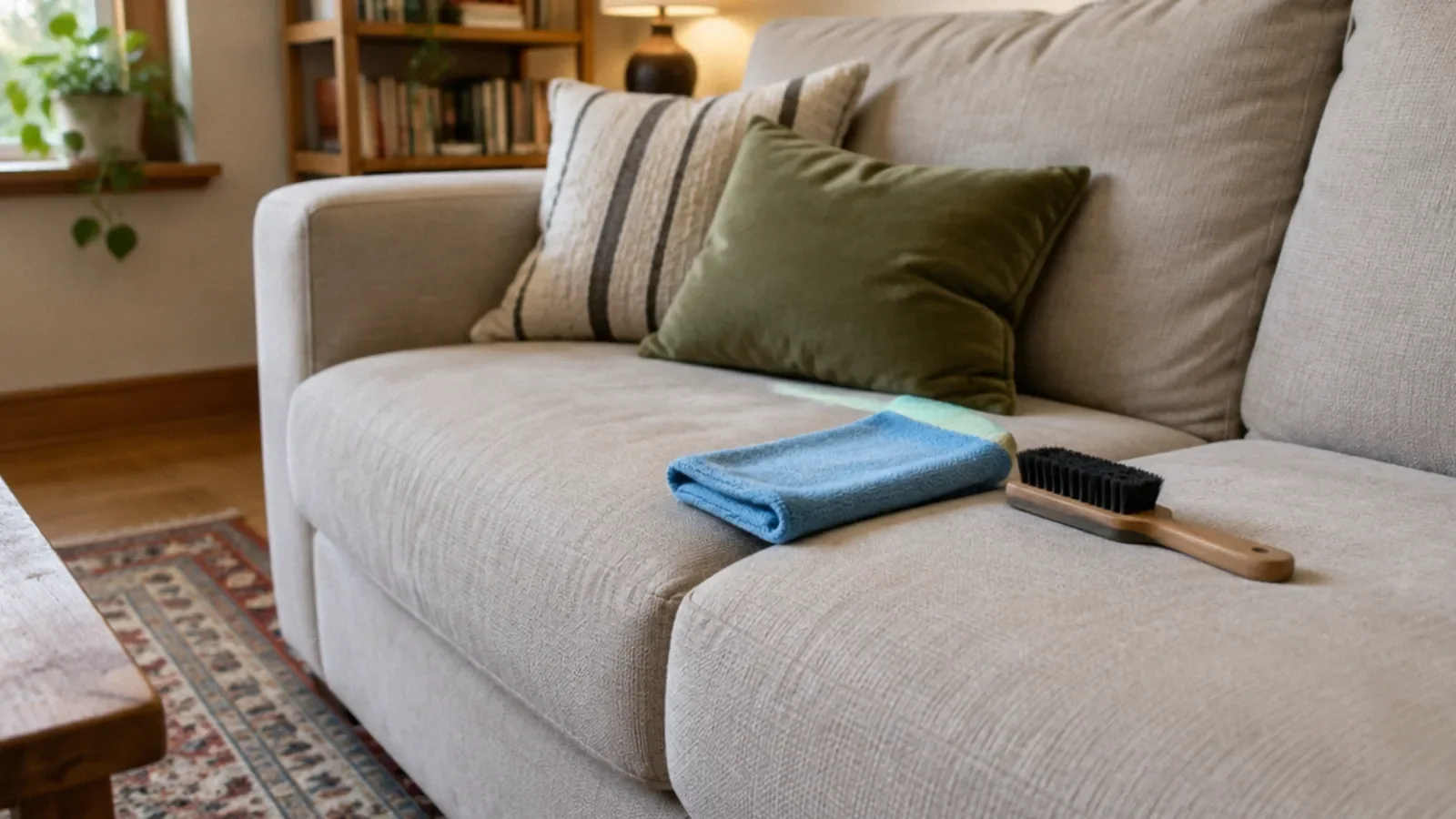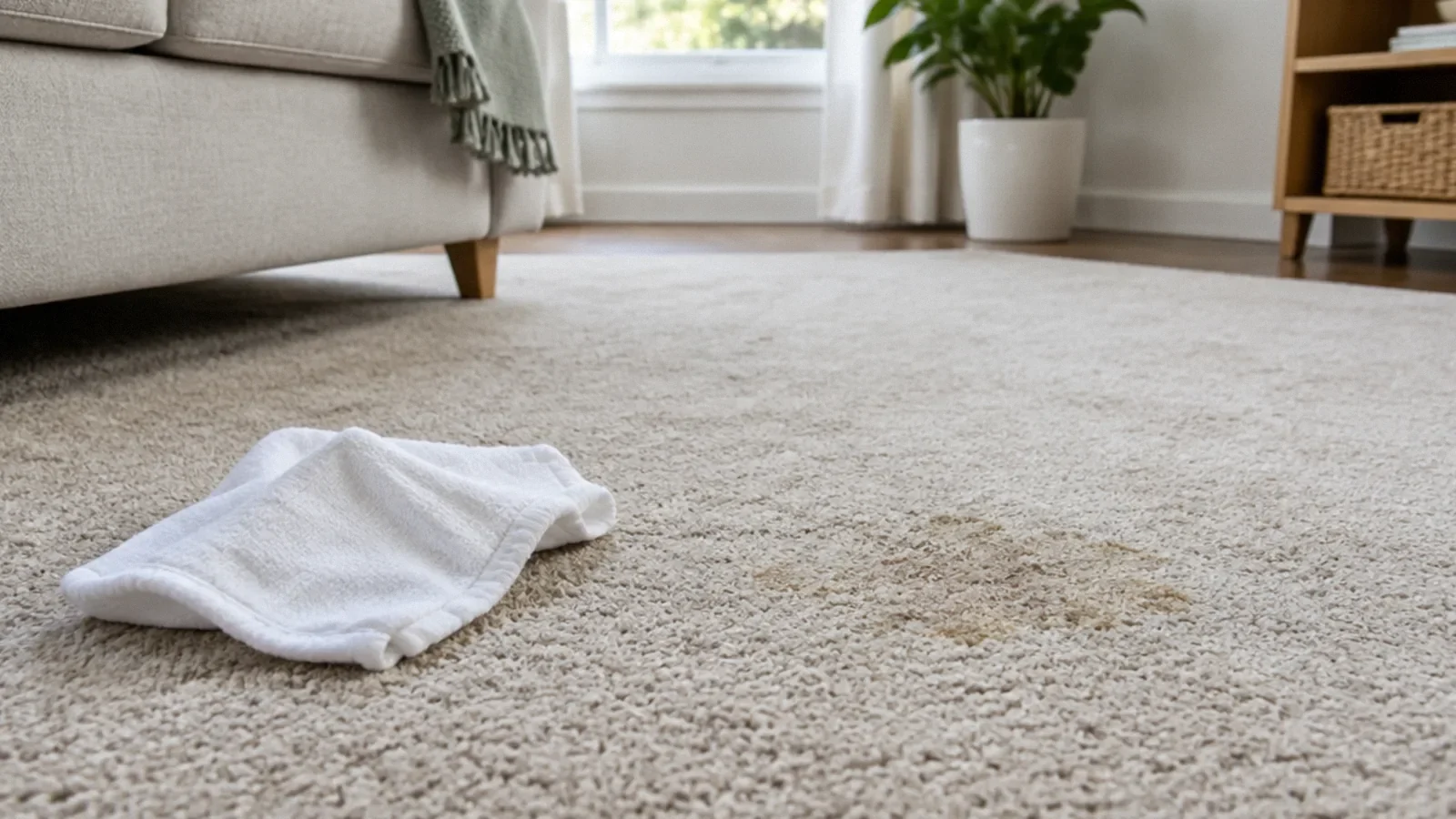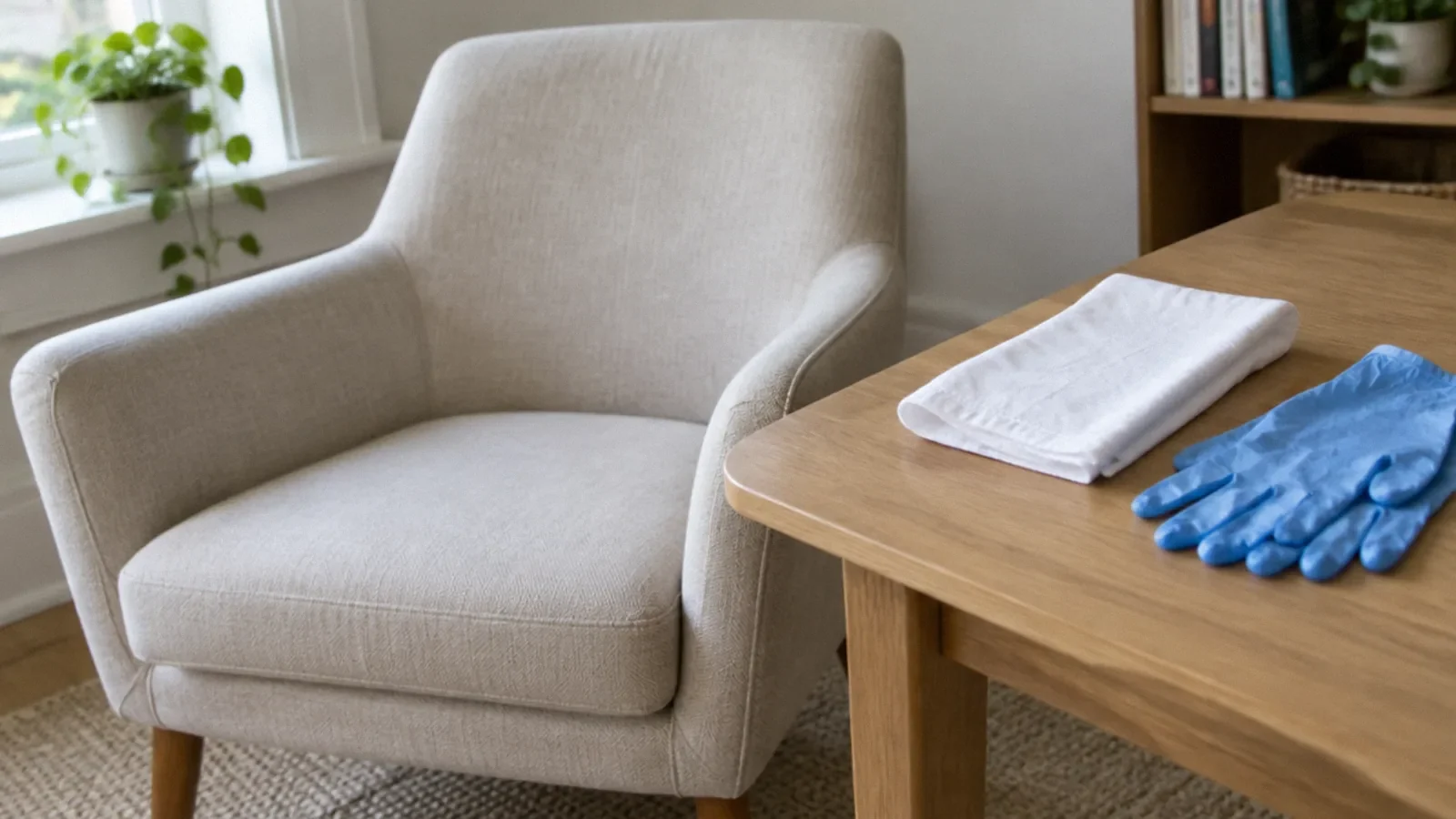
Attend to the injured person first. For a small household spot, avoid direct contact with blood, wear appropriate disposable gloves and check the furniture’s care label. If water is permitted, blot gently with a cloth lightly dampened with cool water, without soaking the cushion. Removing a visible stain does not establish that porous upholstery has been disinfected.
Take care of the person first
If someone is injured, address the injury and seek medical help when needed before considering the furniture. Keep children and pets away from the affected area. Avoid touching blood directly; wear suitable disposable gloves and wash hands after removing them.
For a large amount of blood, an unknown source, needles or other sharps, or a situation involving known infection risk, do not attempt ordinary upholstery cleaning. Contact an appropriate trained cleanup provider or health authority. Workplace and healthcare spills can be subject to separate procedures.
Check the upholstery label
Find the manufacturer’s cleaning instructions under a cushion, under the furniture or in its documentation. A common W code permits suitable water-based cleaning; S indicates solvent-based cleaning, and X generally permits vacuuming or light brushing only. The specific maker’s instructions control the method.
If the label is missing, the fabric is delicate or the cushion is valuable, ask the manufacturer or an upholstery professional. Do not assume that a removable cover can be laundered. Using water on an S-only fabric can damage it even if the stain is small.
Blot a fresh spot when water is permitted
Use a disposable absorbent cloth to lift excess material without rubbing it into the fabric. University of Georgia Extension advises cool water for fresh blood stains and warns that overwetting upholstery can leave a ring. Lightly dampen a clean white cloth rather than pouring liquid onto the cushion.
Blot gently from the edge toward the center, changing to a clean area of the cloth. Stop if color transfers from the upholstery, the mark spreads or the fabric changes. Dispose of contaminated supplies according to local guidance and wash your hands after removing gloves.
Choose products carefully
Test any cleaning product in a hidden place and follow both the product label and the furniture manufacturer’s instructions. Avoid hot water or heat on a blood stain: the university notes that heat can make a set stain difficult to remove. Do not use an unapproved bleach solution on upholstery.
Never mix bleach with ammonia or other cleaners. Solvents can introduce fire or exposure hazards and are best handled by an appropriately trained cleaner. Household recipes and peroxide can change dyes; do not treat a white couch as proof that any bleaching product is safe.
Dried or older stains
An older blood stain can be harder to remove and repeated aggressive treatment may damage the pile or backing. Check the care code and consider a professional assessment before adding moisture or chemicals. Explain how long the mark has been present and which products, if any, were used.
Do not scrape hard, use a stiff brush or saturate a cushion to force a result. Stain removal is not guaranteed, and some discoloration may be permanent. If blood has penetrated padding, the internal material may be difficult to clean and may require replacement.
A chair, cushion or removable cover
The same care-label rule applies to a fabric chair or sofa cushion, but different components can have different instructions. Avoid transferring contamination to a clean surface while handling the cushion. Do not place a wet cushion against a wall or reinstall it before it is dry.
If a cover is explicitly machine washable, follow the maker’s temperature and laundering directions. A zipper is not permission to wash it. A professional can advise whether the cushion filling or backing is accessible and whether treatment is appropriate.
Cleaning versus disinfection
Cleaning a visible mark and disinfecting are different tasks. Porous fabric and padding may not be suitable for the disinfectants used on nonporous surfaces, and a stain-free appearance does not prove removal of infectious material. Do not claim that a homemade treatment sterilizes a couch.
CDC guidance for healthcare settings emphasizes appropriate protective equipment and procedures for blood spills; those institutional protocols are not a blanket recipe for a household sofa. For uncertain exposure, significant contamination or a health concern, contact a health professional or trained cleanup provider.
When pets are involved
If a pet is bleeding, contact a veterinarian for care and keep the animal away from cleaning products. Use gloves when handling contaminated materials, and select only products suitable for the furniture. Do not apply a household surface disinfectant to the animal.
A heavily contaminated or deeply soaked item may not be safely recoverable with routine spot cleaning. Ask a professional to assess the material and explain whether cleaning, replacing a cushion or replacing the item is appropriate.
Your next-step checklist
- Attend to the injured person or animal first.
- Wear suitable gloves and avoid direct contact.
- Read the upholstery care label before adding water.
- Blot gently with cool water only when the fabric allows it.
- Seek trained help for significant or uncertain contamination.
Related questions
Can I use hot water on a blood stain?
Avoid heat. University of Georgia Extension notes that heat can make blood stains harder to remove.
Will a clean-looking couch be disinfected?
Not necessarily. Removing visible staining does not prove that porous fabric and padding are disinfected.
Can I clean an S-code couch with water?
Do not assume so. Follow the manufacturer’s solvent-care instructions and consider professional service.
What if blood reached the cushion filling?
The filling may be difficult to clean fully. Ask a qualified provider whether replacement is needed.
Sources & context
Public guidance supports the principles in this article. The practical questions and examples are editorial interpretation, not a site assessment or a coverage decision. State-specific rules apply only where identified.
- University of Georgia Extension: Blood stain removaluniversity guidance
- CDC: Environmental cleaning and body-fluid spillshealthcare guidance
- Industry upholstery care guideindustry guidance