Let the candy cool and lift loose material gently. Follow the surface maker’s care instructions, use minimal moisture where permitted and dry thoroughly. Sticky sugar can be removed while colored dye remains.
Separate the sticky sugar from the color
Melted hard candy such as a Jolly Rancher can leave a hardened sugary mass, sticky residue and a colored mark. The sugar and the dye may respond differently: removing the lump does not guarantee that the color will disappear. The right method depends on the surface beneath it. A finished wooden drawer, carpet and upholstery tolerate moisture differently. Begin by checking the manufacturer’s care instructions and the condition of the surface. If the item is valuable, fragile or has an unknown finish, ask a specialist before adding water or scraping.
Lift what comes away easily
Allow a hot spill to cool before touching it. Use a rounded plastic utensil or the edge of a piece of cardboard to lift loose candy gently, without digging into the surface. Do not use a sharp knife, cut carpet fibers or pull on fabric. If a piece is firmly bonded, stop rather than forcing it off. A sealed bag of ice may help firm soft candy on a compatible surface, but prevent condensation from wetting wood or fabric and follow the item maker’s directions. Collect loose pieces without spreading colored residue.
A wooden drawer or dresser
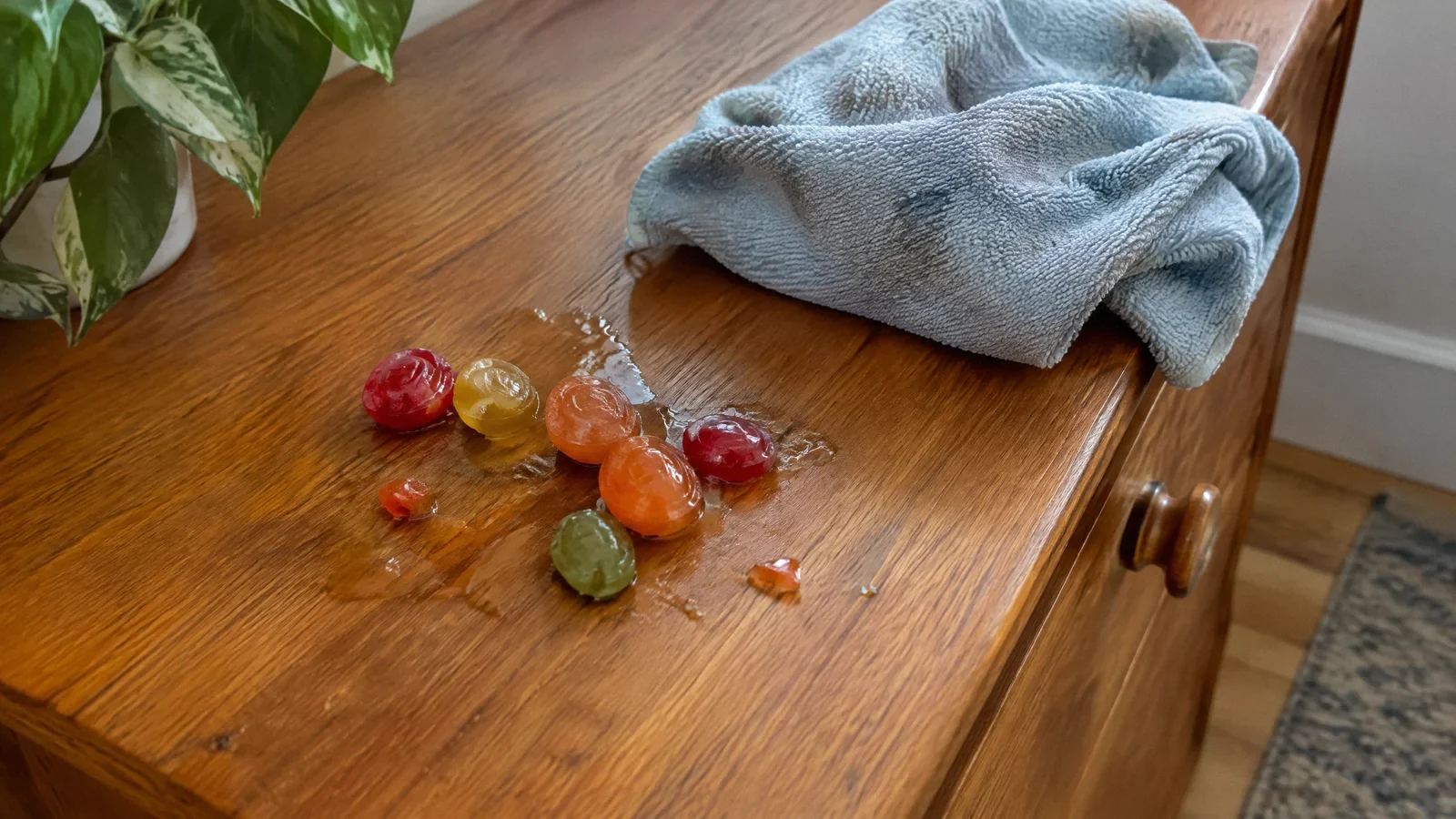
For a sound finished wood surface, University of Georgia Extension describes wiping candy residue with a cloth dipped in mild sudsy water and wrung nearly dry, followed by a clean damp cloth and drying. Test in a hidden spot first and follow the furniture maker’s instructions. Work in small sections, keeping liquid out of seams, drawer joints and unfinished edges. Do not flood the drawer or leave a wet towel on it. If the finish becomes cloudy, soft or colored, stop. Bare, antique or damaged wood may absorb moisture and needs a more cautious assessment.
Carpet and rugs
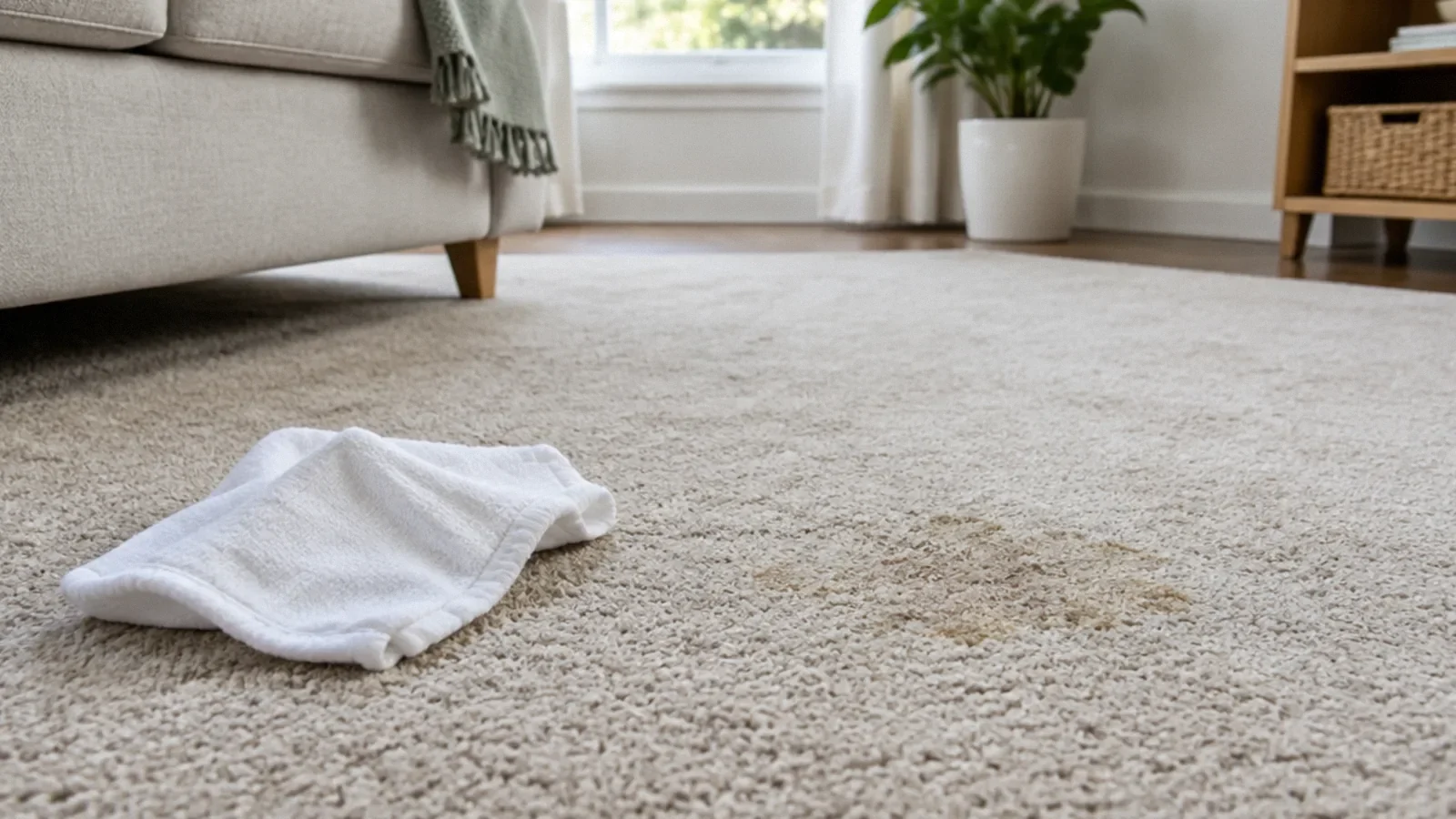
Lift the bulk without pulling fibers. For a dry crumb, follow the carpet maker’s vacuum instructions before introducing liquid. For remaining sugar, the Carpet and Rug Institute recommends testing a spot solution in a hidden area and working gently with a white cloth from the outside inward. Use only a treatment permitted for the fiber and backing, and blot rather than rub. Apply small amounts to the cloth, not a stream to the carpet. Rinse and dry only as the carpet and product instructions permit. A delicate or handwoven rug may need a specialist.
Upholstery and cushions
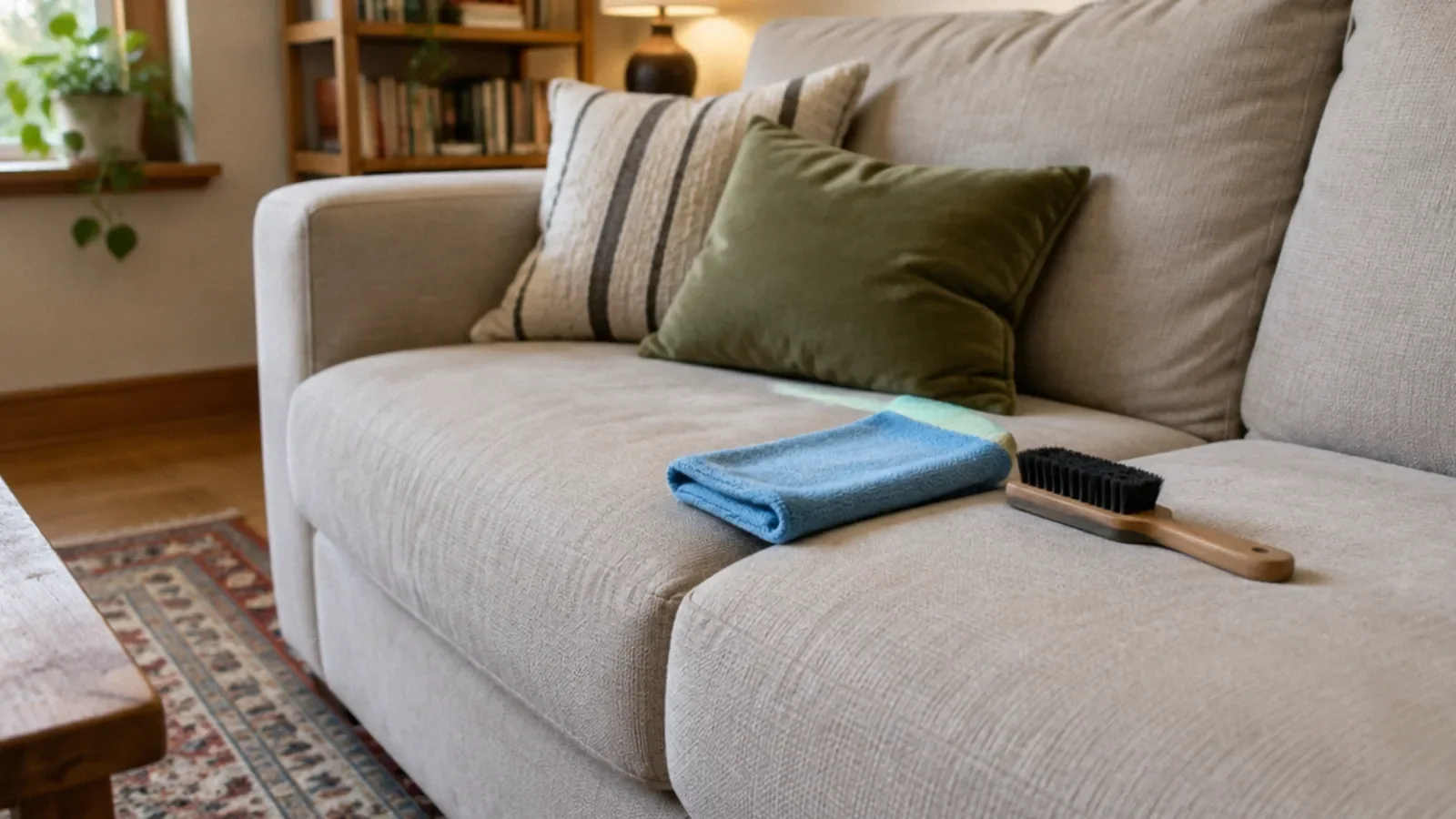
Find the furniture maker’s cleaning label and follow it. Water may be unsuitable for some upholstery, and a removable cover is not necessarily washable. If water-based spot cleaning is permitted, test the method in a hidden area, lightly dampen a white cloth and blot the sticky area without soaking the cushion. University of Georgia Extension cautions that overwetting upholstery can leave a ring. Stop if color transfers, the fabric texture changes or the stain spreads. A professional can assess sensitive fabric or candy that has reached padding.
What to do about the dye
Once the sticky residue is removed and the material is dry, inspect the remaining color. A red or blue mark may be dye, a change in the finish or another residue; appearance alone does not prove which. Do not use bleach, peroxide, alcohol or a stronger solvent unless the item maker and product label specifically permit it. These can alter dye, finish or backing. Never mix cleaners. Persistent color on a valuable rug, fabric or wood finish is a reason to seek specialist advice, not to repeat increasingly aggressive treatments.
Remove residue and dry
Sugar and excess cleaning solution can leave a tacky area that attracts soil. Follow the material maker’s directions for removing the approved cleaner, using as little moisture as the task allows. Blot carpet or upholstery with a clean dry white cloth and allow it to dry completely before replacing a cushion or furniture. Wipe wood dry promptly. Check the surface again after drying for stickiness or color transfer. Do not use a household dry vacuum to remove wet material, and do not leave liquid trapped beneath an area rug.
Avoid heat and force
A hot iron, hair dryer or steam can affect a finish, adhesive, dye or synthetic fiber and may spread softened candy. Do not use heat unless the item manufacturer expressly permits the method. Likewise, a metal scraper can gouge wood or tear fibers. The desire to remove every trace should not outweigh the risk of damaging the item. If the candy is bonded to a delicate finish or has penetrated fabric or padding, stop and describe the material and earlier treatments to a qualified cleaner or furniture conservator.
Prevent another spill
Keep candy away from warm surfaces and store it in a closed wrapper or container. Check drawers and fabric pockets before laundering or placing them near heat. If a spill occurs, note the type of candy and surface before choosing a treatment. Some dyes remain despite careful cleaning; a professional may be able to improve the mark but should not promise complete removal. The general carpet-stain guide covers other food and drink spills, while this guide distinguishes sugar residue and dye on several different surfaces.
Your next-step checklist
- Identify the surface and let hot candy cool.
- Lift loose pieces without cutting or gouging.
- Test any permitted cleaner in a hidden area.
- Avoid soaking wood, carpet backing or upholstery.
- Dry completely and check for sticky residue.
Related questions
Can water remove the sticky sugar?
A lightly damp cloth may help on a surface that permits water, but follow its care instructions and avoid soaking.
Why is a colored spot left after the candy is gone?
Dye or a change to the surface may remain after sugar is removed. The color alone does not establish the cause.
Should I scrape candy out of wood with a knife?
Avoid sharp metal tools that can gouge the finish. Gently lift loose material with a rounded plastic edge and stop if it is bonded.
Can I heat candy on upholstery to remove it?
Heat can damage or spread material. Use it only if the furniture maker explicitly permits the method.
Sources & context
Public guidance supports the principles in this article. The practical questions and examples are editorial interpretation, not a site assessment or a coverage decision. State-specific rules apply only where identified.