Remove loose powder gently or lift and blot oily makeup. Check the material’s care label, test an approved treatment and avoid soaking carpet backing or upholstery cushions. Launder clothing only as its label permits.
Match the method to the makeup and surface
Makeup can be dry powder, an oily cream, liquid foundation, lipstick or a long-wearing product with a mixture of pigment and other ingredients. The same spill behaves differently on washable clothing, carpet and upholstered furniture. Start by identifying both the product and the material. Read the item’s care label and any cleaning-product instructions before applying liquid. A treatment that can be rinsed from a garment may soak a cushion or carpet backing. If the fabric is delicate, valuable or unlabelled, contact its maker or a qualified cleaner.
Remove loose powder first
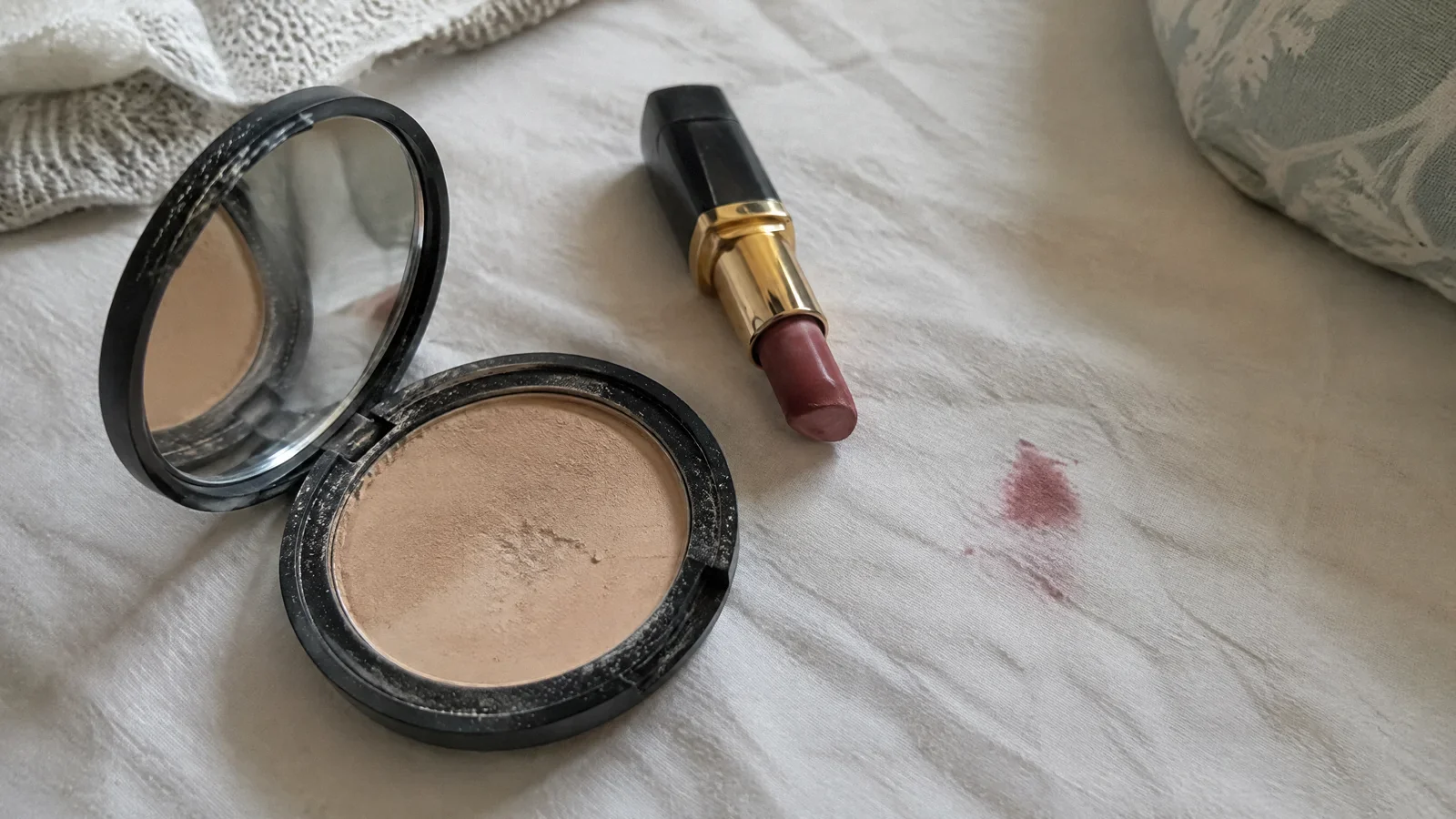
For dry eyeshadow, blush or face powder, avoid rubbing the pigment into the fabric. Gently lift loose material with a clean dry utensil or, where the carpet or upholstery maker permits it, a suitable vacuum attachment. Bissell describes removing loose powder before adding moisture to carpet or upholstery. Use gentle suction and avoid pressing the nozzle into the pile. Do not use a standard dry vacuum on a wet spill. Once loose material is removed, inspect the remaining mark before selecting a tested treatment. Powder may still leave pigment in the fibers.
Lift oily or liquid makeup
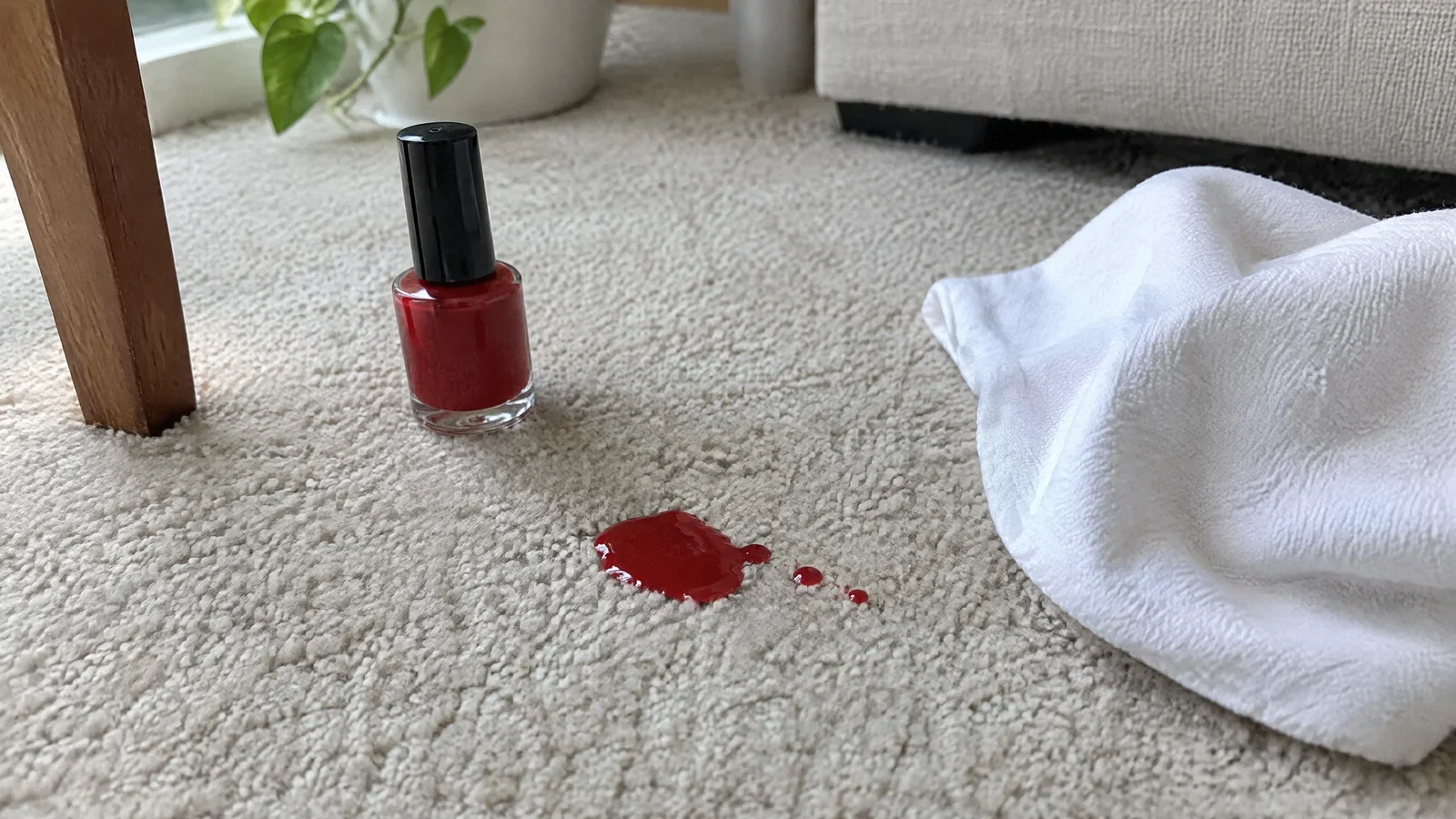
For lipstick, cream foundation or other wet makeup, lift excess gently with a rounded spoon or blot with a white absorbent cloth. Work from the outside inward and change to a clean portion of the cloth as product transfers. Do not rub, which can spread both oil and color. Avoid adding heat or applying a solvent by assumption. University of Georgia Extension notes that solvent-based cleaners can damage carpet backing and upholstery foam if used improperly. If a product requires a specialist solvent or the material is unknown, seek professional care.
Washable clothing
Check the garment’s care label and the stain remover’s label. The American Cleaning Institute describes prewash stain treatment followed by laundering at a temperature safe for the fabric for makeup and lipstick. Test an approved treatment on a hidden seam when appropriate, apply it as directed and wash according to the garment instructions. Inspect the stain before putting the item in a hot dryer; if color remains, follow the garment and product directions for the next step or consult a cleaner. A removable garment can be rinsed and laundered in a way that fixed furniture cannot.
Carpet and area rugs
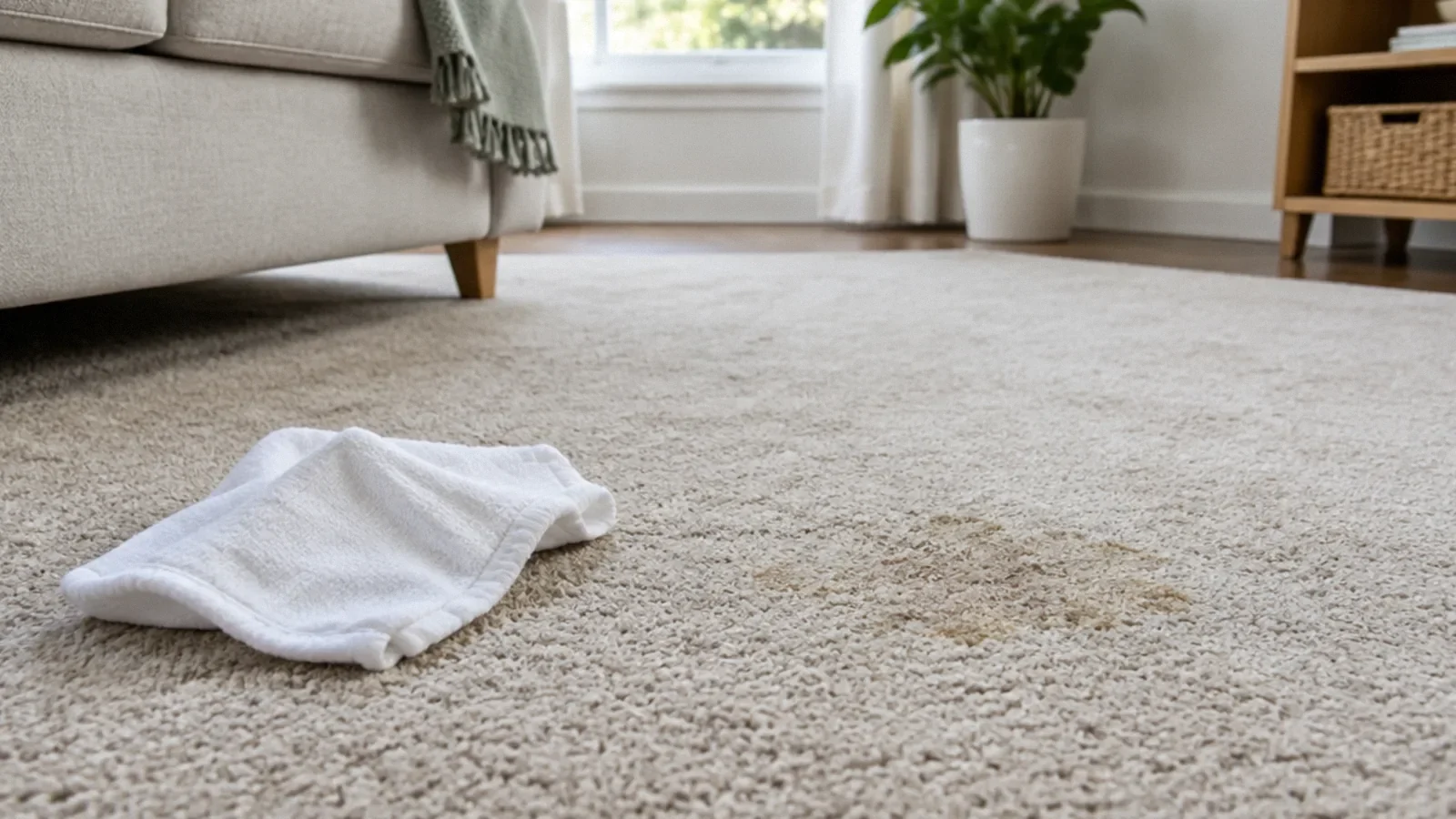
Check the carpet fiber, dye and backing and select a product explicitly intended for that material and stain. The Carpet and Rug Institute recommends testing a spot remover in an inconspicuous area for dye or fiber damage. Apply a small amount as directed to a clean white cloth, blot gently and avoid saturating the backing or the floor beneath a rug. Remove cleaner residue only as the product and carpet instructions allow, then dry thoroughly. A fine, handwoven or unknown rug should be assessed by a rug specialist before chemical treatment.
Upholstery and cushions
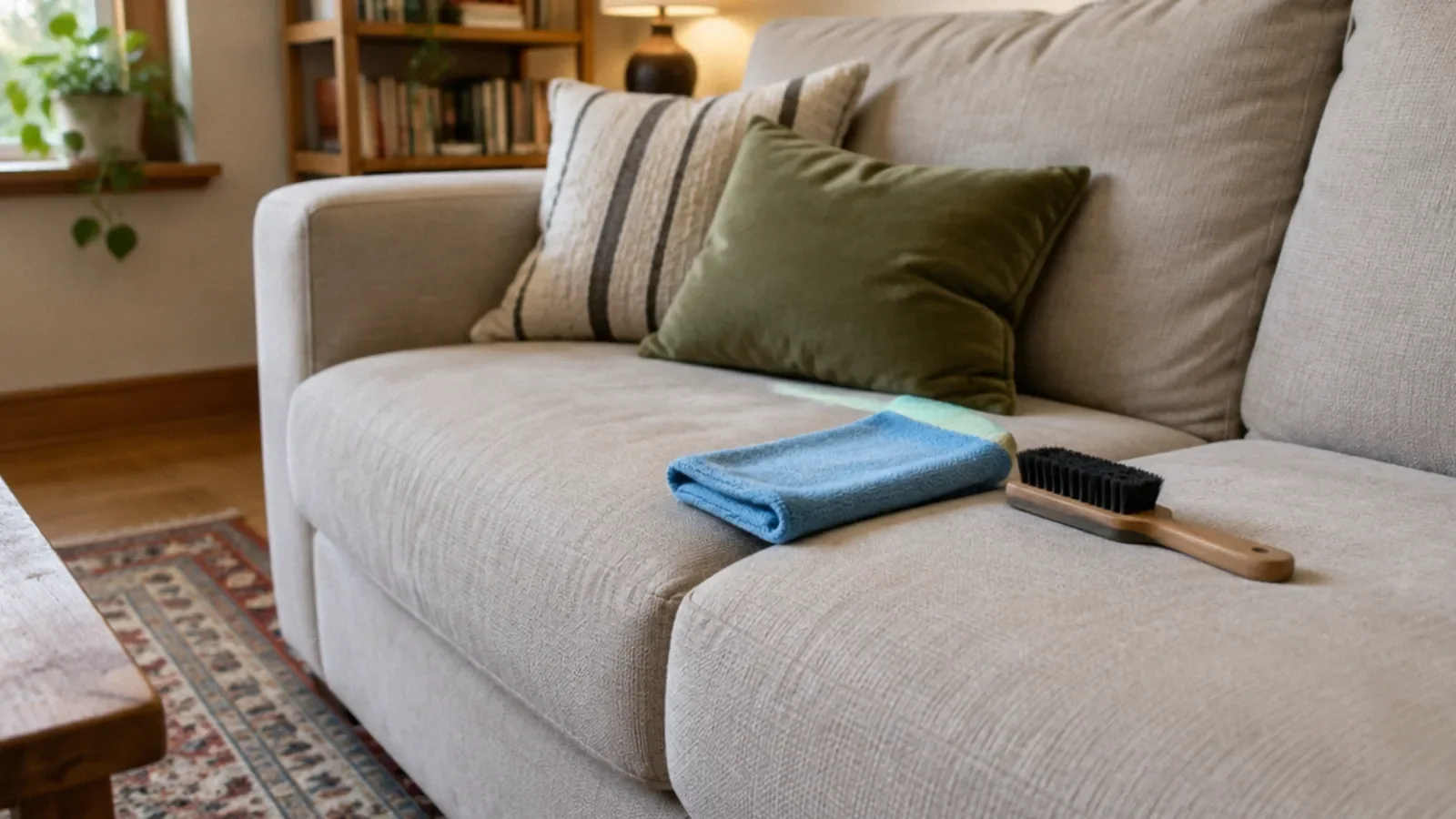
Locate the furniture maker’s cleaning code and instructions. A water-based product is not suitable for every fabric, and even a fabric that permits it should not be soaked. Test an approved product in a hidden area and let it dry before treating the visible mark. Blot rather than scrub and stop if color transfers, a ring appears or the texture changes. University of Georgia Extension cautions that excess moisture can leave a ring on upholstery. A zipper does not establish that a cushion cover is machine washable.
Solvents, wipes and bleach
Makeup remover, micellar water, rubbing alcohol and cleaning wipes are formulated for particular uses; do not assume they are safe for a sofa or carpet. Ingredients can affect dyes, finishes, backing or foam. Solvents may also be flammable or irritating. Use only a product permitted by both the item maker and its own label, with ventilation and other precautions as directed. Never mix cleaners, bleach or ammonia. For solvent-only or unknown upholstery, a trained cleaner can choose a compatible method and manage exposure and drying.
Persistent color or an old stain
Old mascara, long-wearing lipstick and foundation can be difficult to remove, and a mark may contain more than one component. A clean-looking surface is not proof that every oily residue is gone, while a remaining pale mark may be a permanent color change. Repeated chemical experiments can spread pigment or damage the material. Stop if progress ends or the material changes. Give a professional the makeup product, fabric care information and list of previous treatments so they can select an appropriate test.
Dry and check the result
Follow the approved cleaner’s directions for residue removal, then allow the material and any backing or filling to dry fully. Do not replace a damp cushion against a wall or cover a wet carpet with furniture. After drying, check for remaining color, tackiness or a ring. If moisture or product penetrated deeply, a professional can assess the pad or cushion. Keep cosmetics closed and away from upholstered surfaces to prevent a repeat spill. For broader carpet or sofa care, use the related guides; this article compares makeup across those surfaces and washable clothing.
Your next-step checklist
- Identify the makeup and affected material.
- Remove loose powder before adding moisture.
- Blot liquid or oily makeup without rubbing.
- Test a compatible product and follow both labels.
- Dry carpet backing or upholstery fully.
Related questions
Should I wet loose makeup powder immediately?
First gently remove loose powder where the item’s care instructions permit it; rubbing or wetting can drive pigment into the material.
Can I use the same stain remover on clothes and a couch?
Not automatically. The product and item labels must both permit the surface, and upholstery padding must not be soaked.
Will makeup remover damage fabric?
It can affect some dyes, finishes or backing. Do not assume a skin product is suitable for upholstery or carpet.
What if lipstick color remains after cleaning?
Stop if the material changes or treatment no longer helps. A professional can assess remaining pigment and the possibility of permanent color change.
Sources & context
Public guidance supports the principles in this article. The practical questions and examples are editorial interpretation, not a site assessment or a coverage decision. State-specific rules apply only where identified.