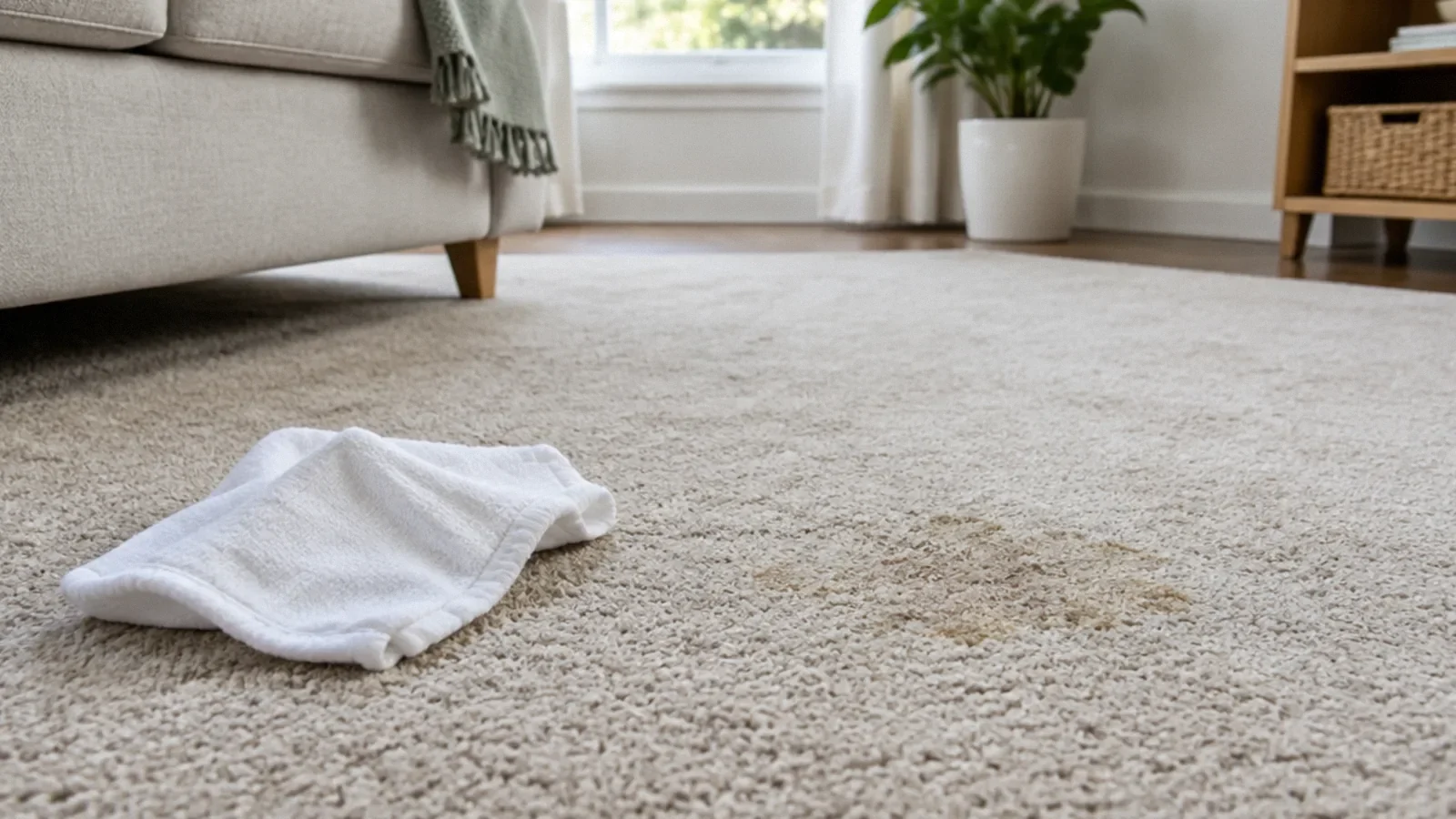
Lift or blot excess polish without rubbing. Check the carpet maker’s instructions before using a remover, test any permitted product and avoid soaking the backing. Dried gel, delicate rugs and large spills may need a specialist.
Act before the spill spreads
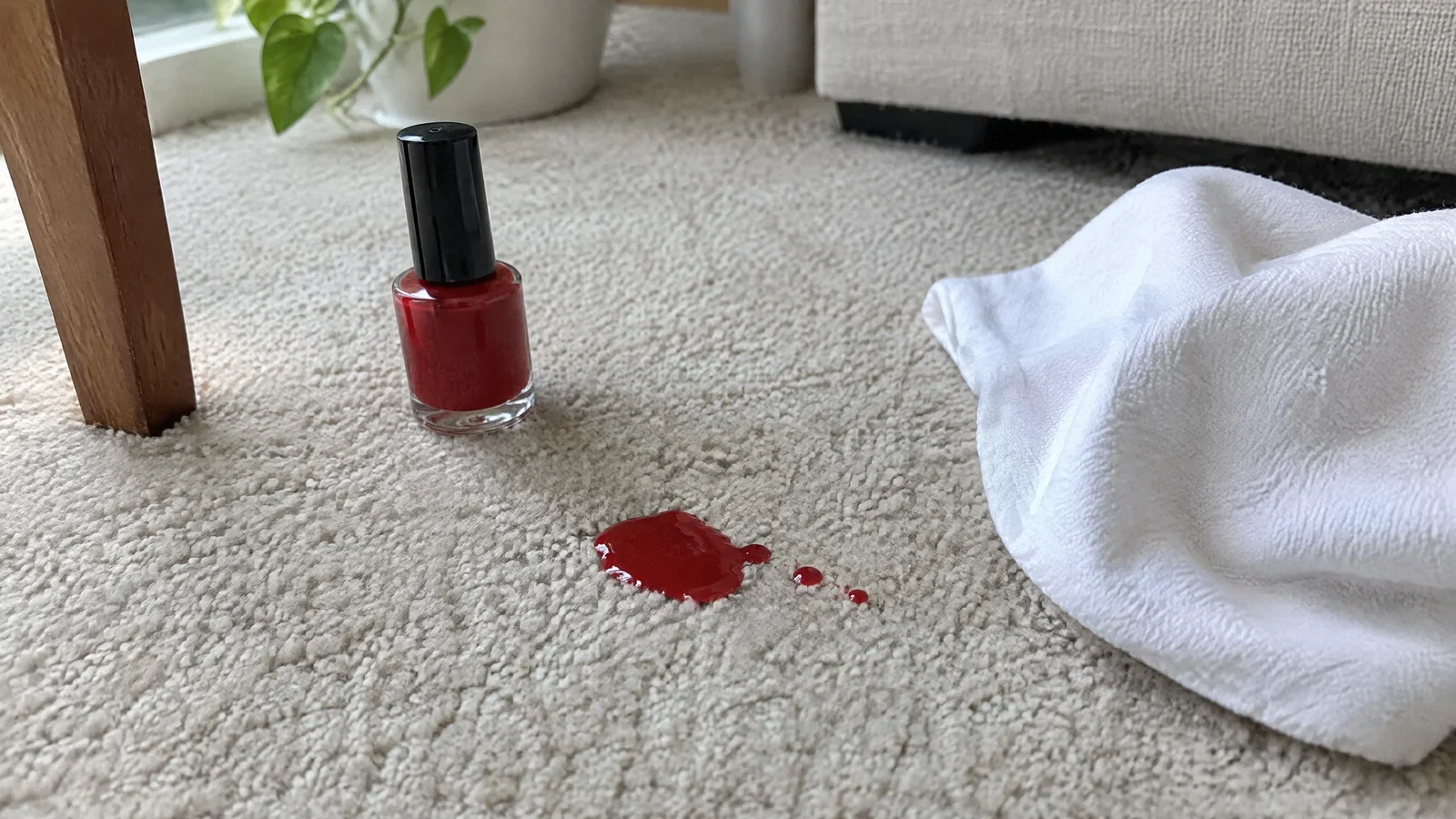
A fresh nail polish spill can spread quickly through carpet fibers. Move the bottle away and keep people and pets clear. Gently lift excess liquid with the edge of a spoon or blot it with a clean white absorbent cloth, changing to a clean area as polish transfers. Work from the outside toward the center; rubbing can spread pigment and damage the pile. Do not pour water or remover onto the spot in an attempt to dilute it. The immediate goal is to contain the spill while you identify the carpet and the polish.
Identify the carpet and the product
Check the carpet or rug maker’s care instructions and warranty. Fiber, dye, backing and adhesive all matter. A handwoven, wool, silk, antique or unknown rug deserves particular caution, as does a carpet with a delicate backing. Find the polish bottle and note whether it is ordinary lacquer or a gel product. If you cannot identify the materials, a qualified rug or carpet cleaner can assess them before solvents are introduced. Tell the cleaner what spilled and whether any product has already been applied.
Fresh polish on carpet
After lifting the excess, avoid grinding remaining polish into the fibers. The Carpet and Rug Institute suggests non-acetone nail polish remover for fingernail polish, while University of Georgia Extension describes acetone in its stain guidance. These general recommendations do not establish that either solvent is safe for your particular carpet. Follow the carpet maker’s instructions first and use only a product expressly permitted for that material. Apply a small amount to a white cloth rather than pouring it onto the carpet. Blot gently and stop if the color or texture changes.
Test before using a remover
Pretest the exact product on an inconspicuous area as the carpet manufacturer directs, and allow the test area to dry. Look for dye transfer, a sticky or hardened pile, color change and damage to the backing where it is visible. A test reduces uncertainty but cannot guarantee uniform results. Non-acetone does not mean solvent-free: formulations differ and can contain other solvents, fragrance or conditioners. A remover intended for nails is not automatically approved for a carpet. If the label or carpet maker does not support its use, stop and obtain professional advice.
Dried polish and gel polish
Dried polish may adhere firmly to individual fibers. Gently lift only loose flakes with a rounded utensil; do not pull, cut the pile or scrape aggressively. Gel polish products vary, and a cured gel coating may behave differently from liquid lacquer. Do not assume that a nail-removal technique or a strong solvent is safe on the carpet. Identify the product, protect the backing and consult a qualified cleaner, especially for a large or hardened patch. A professional may be able to improve the mark, but pigment or damaged fibers can remain.
Red polish and light-colored rugs
Strong red pigment can remain visible even after some polish has transferred to the cloth. Avoid repeated rubbing or applying stronger chemicals merely because the carpet is pale. Light carpet can still have dyes, stain treatments and adhesives that are sensitive to solvents. On an area rug, protect the floor beneath and avoid allowing liquid to pass through the backing. If dye spreads, the pile changes or the spill reaches a large area, stop and ask a rug specialist. A permanent color change is possible even after careful treatment.
If remover spills on the carpet
Keep people and pets away, eliminate ignition sources and ventilate as the product label directs when it is safe to do so. Blot a small spill with a white absorbent cloth; do not add another solvent or cleaner to counteract it. Nail polish removers differ in composition, and some are flammable or irritating. Poison Control recommends ventilation and keeping remover away from flames and heat. For a significant spill, strong symptoms, ingestion or an uncertain exposure, move away and contact poison control or emergency services as appropriate. Ask the carpet maker or a professional about any residue and discoloration.
Finish and dry without soaking
If the carpet maker and spot product call for a rinse, use only the specified method and a small amount of liquid, then blot dry. Do not use a household dry vacuum to pick up wet material. Let the carpet and any backing dry completely before replacing furniture or letting pets return, following product directions. If the area remains damp, develops an odor or the floor beneath a rug is wet, arrange an assessment. A clean-looking pile does not prove the backing has escaped damage.
When to seek help
Call a specialist for valuable or fragile rugs, an unknown fiber, a large spill, cured gel, dye transfer or a stain that spreads despite gentle blotting. Provide the product name, photographs and a list of anything already applied. Ask how the cleaner will test the fiber and protect the backing and floor. Removal is not guaranteed, and replacement or a repair may be necessary where the pile or dye has changed permanently. The broader carpet-stain guide covers other spills; this guide focuses on the solvent and material limits specific to nail polish.
Your next-step checklist
- Blot or lift excess without rubbing.
- Identify carpet fiber, backing and polish type.
- Use only a maker-approved product after a hidden-area test.
- Keep solvents away from flames and ventilate as directed.
- Seek specialist help for delicate rugs or cured gel.
Related questions
Can I pour acetone onto carpet?
Do not pour it onto carpet. A solvent can affect dyes, backing and adhesive; follow the exact carpet maker’s instructions.
Is non-acetone remover safe for every rug?
No. Formulations differ and can contain other solvents. Check compatibility and test a permitted product.
How is cured gel different from fresh polish?
Cured gel can adhere firmly and may respond differently. Avoid pulling fibers or assuming a nail technique is safe for carpet.
Will red polish always come out?
No. Pigment or a permanent color change may remain even after careful treatment.
Sources & context
Public guidance supports the principles in this article. The practical questions and examples are editorial interpretation, not a site assessment or a coverage decision. State-specific rules apply only where identified.