Remove the textile from further smoke exposure, check its care label, and air or launder it using permitted methods. Take delicate or dry-clean-only pieces to a suitable cleaner, and address smoky storage areas to prevent the odor returning.
Start by separating the fabric
Cigarette smoke can leave an odor in clothing, curtains, upholstery and other textiles. Remove the item from ongoing smoke exposure and sort it by care label, color and fabric type. An item that smells again after cleaning may have been returned to a smoky room, closet or vehicle. Clean the surrounding space and stop further smoke exposure as part of the plan.
This guide addresses tobacco odor in ordinary textiles. Fabric affected by a building fire, soot, chemicals or water damage may need specialist assessment. Do not shake heavily contaminated material indoors or assume a normal household wash is adequate for fire debris.
Read the care label first
Find the washing, bleaching, drying and dry-cleaning instructions. The FTC care-symbol chart explains common symbols, including do-not-wash and do-not-tumble-dry marks. A garment may include different materials, linings, trims or dyes with different sensitivities, so use the care instruction for the complete item rather than guessing from the outer fabric.
Separate washable cotton and similar items from silk, wool, leather, structured garments and dry-clean-only pieces. If the label is missing, the item is valuable or the dye might bleed, consult a textile specialist. Test an approved product in an inconspicuous area according to its instructions before treating a larger area.
Air out lightly affected items
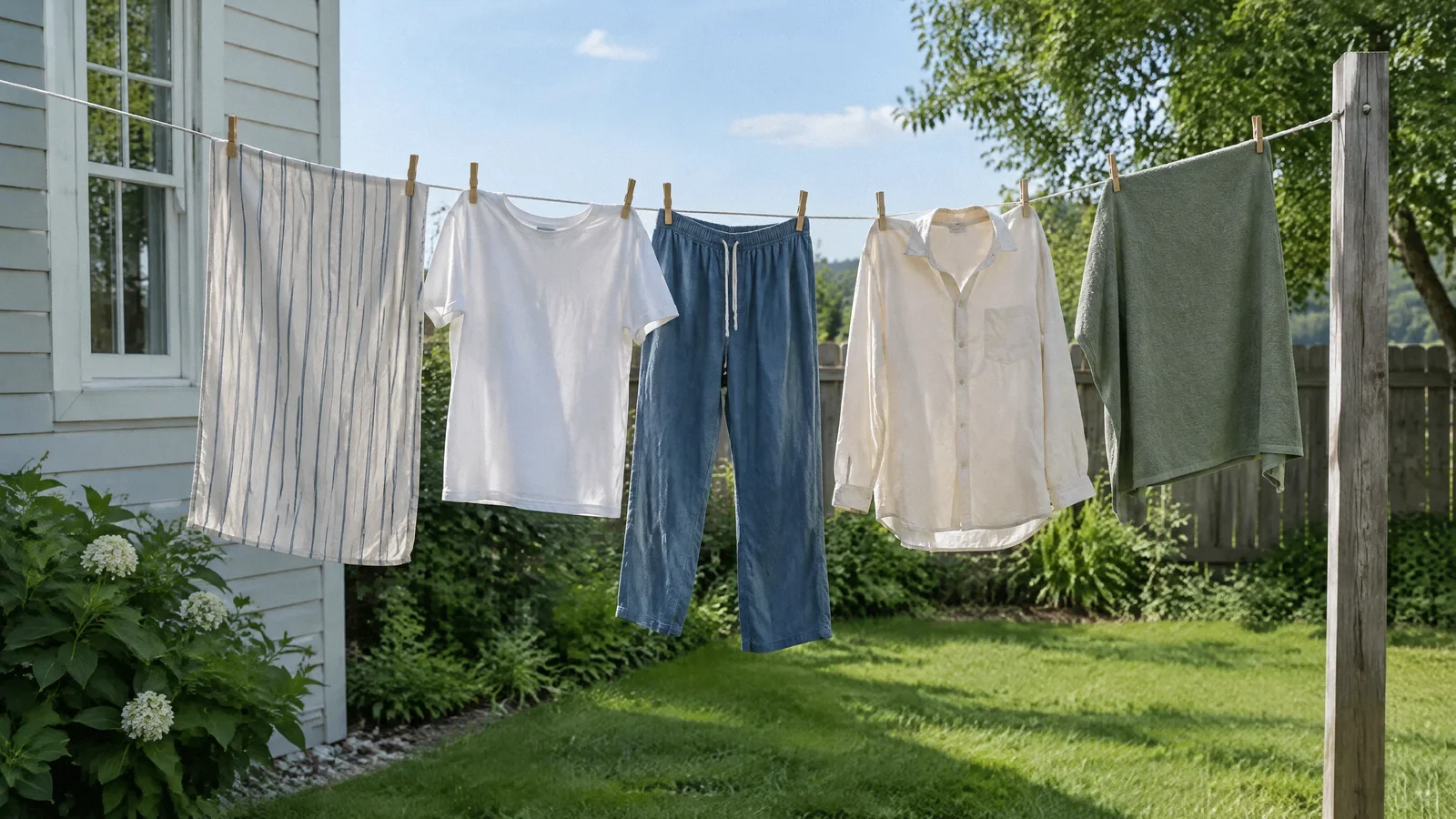
If the fabric and weather permit, hang washable items in fresh air in a clean, sheltered location. Avoid prolonged direct sun on colors or delicate fibers when fading is a concern. Airing can reduce a light smell but does not guarantee removal of residues from the fibers. Keep items away from smoke sources and bring them in before they become damp.
Do not place a damp item straight into a closed closet or bag. Moisture trapped in a textile can create another odor problem. If a garment remains smoky after airing, check its label and use an appropriate wash or professional cleaning rather than adding increasing amounts of fragrance.
Wash items that can be laundered
For washable fabric, use the cycle, water temperature and detergent allowed by the label. Avoid overfilling the machine so water can circulate through the items. Whirlpool recommends checking the garment’s care label when treating cigarette odor. Wash similar colors together, and avoid adding products that the fabric or machine manufacturer does not permit.
After washing, check the item before drying. If a smell remains, another label-safe wash may help. Follow the prescribed drying method and dry completely before storage. A dryer sheet or scented product may mask an odor without removing its source; avoid treating scent as proof that residue has been removed.
Handle delicate and dry-clean-only pieces
For silk, wool, tailored clothing or items labeled dry-clean only, tell the cleaner that the issue is cigarette smoke and identify any previous treatment. Ask whether the fabric, lining and trims can tolerate the proposed process and whether another treatment may be necessary. Results vary with the age and intensity of exposure; a cleaner cannot guarantee that every odor will disappear.
Leather, suede and vintage textiles often require specialist handling rather than ordinary laundering. Keep documentation for valuable or sentimental items and request an assessment before treatment. Do not saturate a structured garment at home: padding and lining may dry slowly or distort even if the outer fabric looks intact.
Curtains, upholstery and fixed fabric
Check care tags on removable curtains and cushion covers before washing. Do not assume that every cover is washable merely because it has a zipper. Measure and photograph the item before professional service if shrinkage, fit or color matching matters. Dry it fully before rehanging or replacing it.
For fixed upholstery, consult the manufacturer’s cleaning code and a qualified upholstery cleaner. Test only products approved for that fabric and avoid soaking cushions or backing. A deep odor may remain in foam, dust or surrounding surfaces after the outer fabric is cleaned. Discuss the likely limits and replacement options before authorizing extensive work.
Avoid risky shortcuts and prevent return
Do not mix bleach with vinegar, ammonia or other cleaners. Avoid applying unidentified chemicals or large quantities of liquid to fabric. EPA describes ozone as a lung irritant and advises against ozone generators in occupied spaces. An ozone device is not a routine substitute for cleaning the textile and removing the smoke source.
When the item is clean and dry, store it in a clean, dry, smoke-free location. If the smell returns, inspect the closet, vehicle or room and separate the item from other affected belongings. Reassess after normal storage rather than repeatedly washing a fragile textile without a clear plan.
Your next-step checklist
- Separate items by care label and remove ongoing smoke exposure.
- Air fabric in a clean location when appropriate.
- Wash only as directed and dry completely.
- Ask a specialist about delicate or fixed fabric.
- Store clean items away from smoky surroundings.
Related questions
Will airing clothing remove all smoke residue?
Airing may reduce a light odor but does not guarantee residue removal. Follow the care label and use suitable laundering or professional cleaning if needed.
Can I use an ozone generator around the fabric?
EPA advises against using ozone generators in occupied spaces because ozone irritates the airways. Focus on source control and fabric-appropriate cleaning.
Sources & context
Public guidance supports the principles in this article. The practical questions and examples are editorial interpretation, not a site assessment or a coverage decision. State-specific rules apply only where identified.
- Care Labels: ASTM Guide to Care Symbolsgovernment
- How to Get Cigarette Smell Out of Clothesmanufacturer
- Ozone Generators Sold as Air Cleanersgovernment