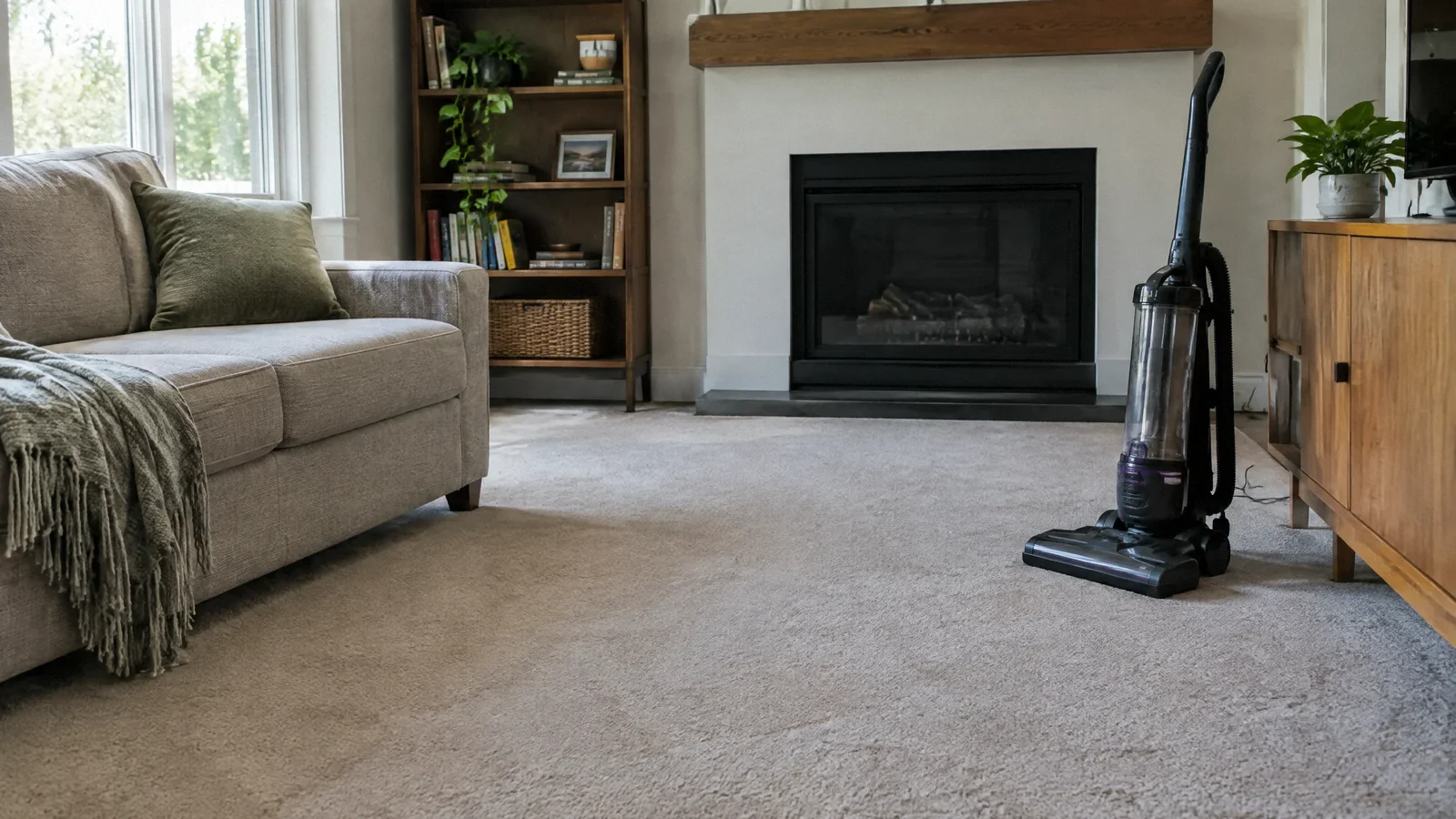
Confirm the scope with your cleaner, clear small objects, secure pets and identify stains or moisture problems. Ask whether vacuuming and furniture moving are included; requirements differ by company.
Confirm the service before the visit
Ask the company which rooms and areas are included, what cleaning method it plans to use, and whether the estimate includes stairs, closets, moving furniture, spot treatment and any protective products. Explain the carpet fiber and any manufacturer care restrictions if known. Ask how the final price is determined and approve additional services before work begins.
Each cleaner has its own preparation rules. For example, Stanley Steemer describes light vacuuming as recommended but not required for its carpet service, while other providers may ask for it. Ask your actual company instead of assuming you must perform work already included in its service. If the instructions conflict with this checklist, follow the company’s directions and the carpet maker’s care guide.
Clear small items and decide what happens to furniture
Pick up toys, shoes, papers, floor lamps, loose cords and other small objects from the areas to be cleaned. Remove fragile or valuable objects from tables and shelves that may need to move. Put breakables, important documents and electronics somewhere safe. This gives the crew access and reduces the chance that something is accidentally displaced.
Ask exactly which furniture the company will move and return. Large, heavy, fragile or connected items may be excluded. Do not strain yourself moving a full bookcase or piano. If a piece stays in place, confirm whether its footprint will remain uncleaned. Photograph the arrangement if you want help putting a room back afterward.
Tell the crew about loose carpet edges, delicate transitions, damaged furniture legs, or cords that cannot be moved. A cleaner can then plan a route and discuss limitations before starting. Do not disconnect complex equipment unless you are comfortable doing so and have agreed on the work.
Point out stains and unusual conditions
Walk through the rooms with the technician. Identify spots, traffic lanes, pet accidents, previous treatments, color changes and areas that have been wet. If you know what caused a stain and approximately when, share that information. Explain any product sensitivities and ask what products will be used and when the area can be occupied again.
Do not apply another stain remover just before the appointment unless the company tells you to. Residue from different products can complicate treatment, and mixing chemicals is unsafe. Some stains, wear, fading and permanent dye changes may not come out. Ask the cleaner to assess them before promising a particular result.
Ordinary maintenance cleaning is not automatically a solution for sewage, floodwater or mold. Tell the company if the carpet has been contaminated or remained wet after a leak. EPA notes that wet carpets and building materials can harbor biological contaminants. A water-damage or remediation assessment may be appropriate before routine cleaning.
Make access practical
Confirm the arrival window, entry instructions and a phone number for changes. Ask whether the crew needs nearby parking for a vehicle, access to water or electricity, or a place for hoses. Keep the path from the entrance to the rooms clear, and discuss stairs, gates, elevators or building rules in advance.
Arrange a secure room or another location for pets, and keep children away from equipment and hoses. Ask how long doors may need to remain open and plan around weather, security and indoor temperature. If you rent or live in a managed building, coordinate any access or parking requirements with the property manager.
Plan for drying and re-entry
Ask for an estimated drying time and the conditions that affect it, including carpet type, cleaning method, humidity and airflow. The estimate is not a guarantee. Ask whether windows, ventilation or a dehumidifier should be used and when children and pets can return. Avoid walking from damp carpet onto a hard floor without care: the transition may be slippery.
Follow the company’s instructions about protective tabs under furniture legs and when furniture can be moved back. Do not remove protection early if it is intended to prevent marks or staining. If the carpet remains unusually wet, develops an odor or shows a new concern, contact the cleaner promptly rather than covering it with furniture.
Review the finished work
Before the crew leaves, inspect accessible areas together and compare the work with the agreed scope. Ask about any remaining spots and the expected appearance after drying. Obtain the invoice and care instructions, including any product-specific waiting period. Keep the company’s contact details in case a concern appears after the carpet dries.
Once dry, return small items and resume normal use according to the instructions. If an underlying leak or moisture source caused the original problem, have that source repaired. Cleaning a carpet without correcting recurring moisture does not prevent future damage.
Your next-step checklist
- Confirm rooms, price and included services.
- Clear small items and protect fragile belongings.
- Secure pets and arrange access.
- Point out stains, prior treatments and water damage.
- Ask for drying and furniture instructions.
Related questions
Do I have to vacuum first?
Ask your provider. Some recommend light vacuuming without requiring it; others include it or give different instructions.
Will the cleaners move every piece of furniture?
Not necessarily. Heavy, fragile and connected items may be excluded, so agree on the items and accessible areas beforehand.
Can cleaning fix moldy carpet?
Routine cleaning is not a substitute for assessing mold or contaminated water. Discuss the condition with a qualified remediation professional.
Sources & context
Public guidance supports the principles in this article. The practical questions and examples are editorial interpretation, not a site assessment or a coverage decision. State-specific rules apply only where identified.
- Frequently Asked Questionsprimary
- The Inside Story: A Guide to Indoor Air Qualitygovernment
- Control Moisture in Your Homegovernment