Turn off the faucet immediately when an earring falls into a sink drain. Ask others not to use that sink or connected appliances. A small item may remain in the stopper assembly or the curved drain trap below the basin, but additional water can carry it farther. If you can see and reach the earring safely, lift it out with a suitable tool. Otherwise, a plumber can inspect the trap and recover it without unnecessary damage to the plumbing.
Stop the water
Turn off the faucet immediately when an earring falls into a sink drain. Ask others not to use that sink or connected appliances. A small item may remain in the stopper assembly or the curved drain trap below the basin, but additional water can carry it farther. If you can see and reach the earring safely, lift it out with a suitable tool. Otherwise, a plumber can inspect the trap and recover it without unnecessary damage to the plumbing.
Avoid moving the earring
Do not run water to test the drain, use a plunger, or pour in a drain cleaner. These actions can move the item, expose you to chemicals or make recovery harder. If drain cleaner was recently used, do not open or plunge the drain yourself. Tell the plumber exactly what product was used and when. Some drain cleaners are corrosive and can burn skin and eyes. Keep children and pets away from the area and avoid mixing products.
Check the opening
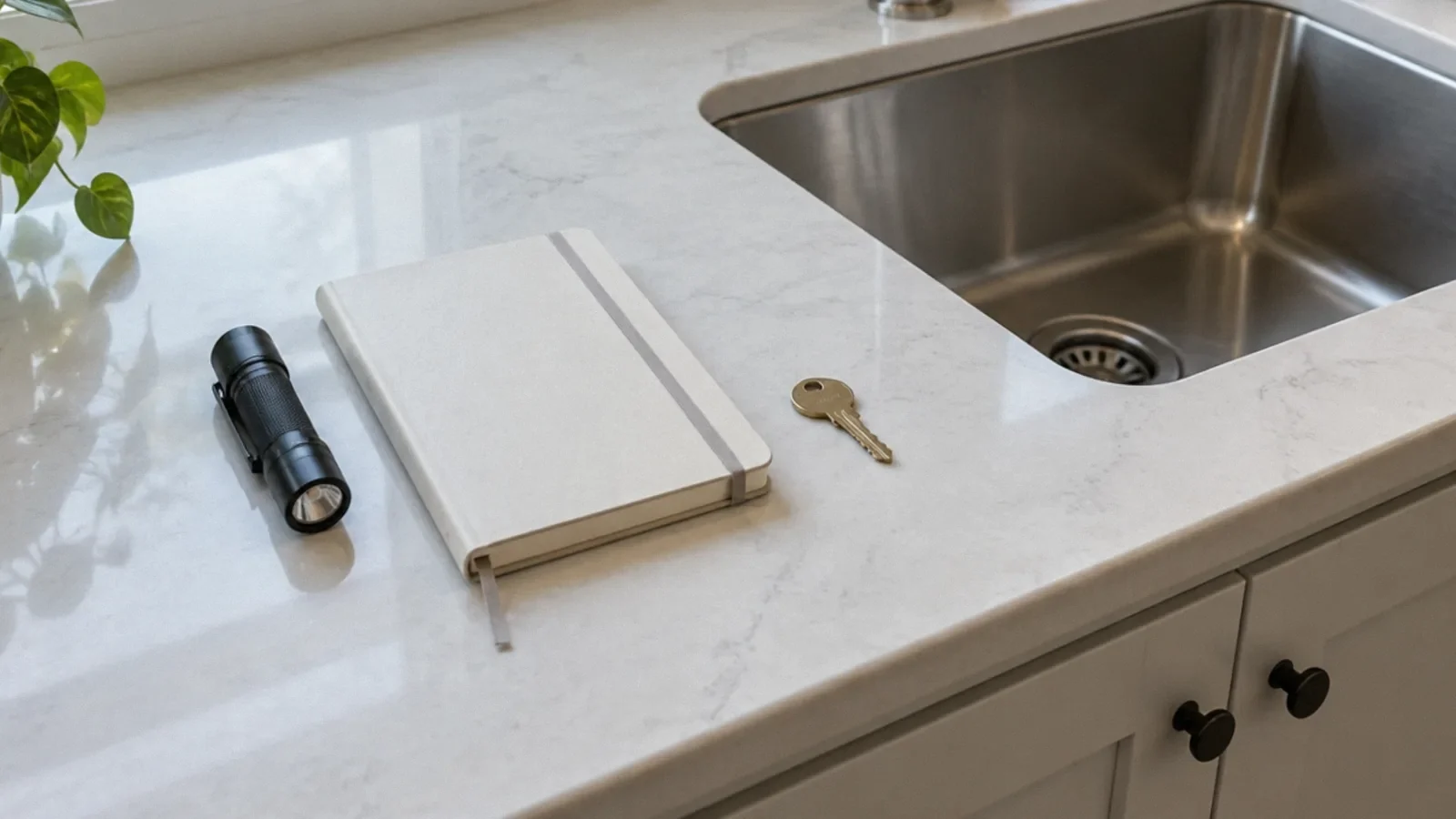
Look at the drain opening with a flashlight. If the earring rests on a removable strainer or is clearly visible at the opening, use tweezers or a retrieval tool gently. Avoid pushing the item farther down. A magnetic pickup tool may work for a magnetic metal component, but many jewelry metals and stones are not magnetic. Failure to attract the item says nothing definitive about where it is. Do not scrape the finish or force a tool past a stopper.
Inspect the stopper
A bathroom sink may have a pop-up stopper connected to a rod under the basin. Stopper designs vary. Consult the fixture manufacturer's instructions before attempting removal; some lift out while others have a retaining connection. Put a towel in the basin and a container below the work area to catch loose parts. If the mechanism is corroded, inaccessible or unfamiliar, stop rather than forcing it. An experienced plumber can remove it without damaging the linkage and can check whether the earring is caught on it.
Understand the trap
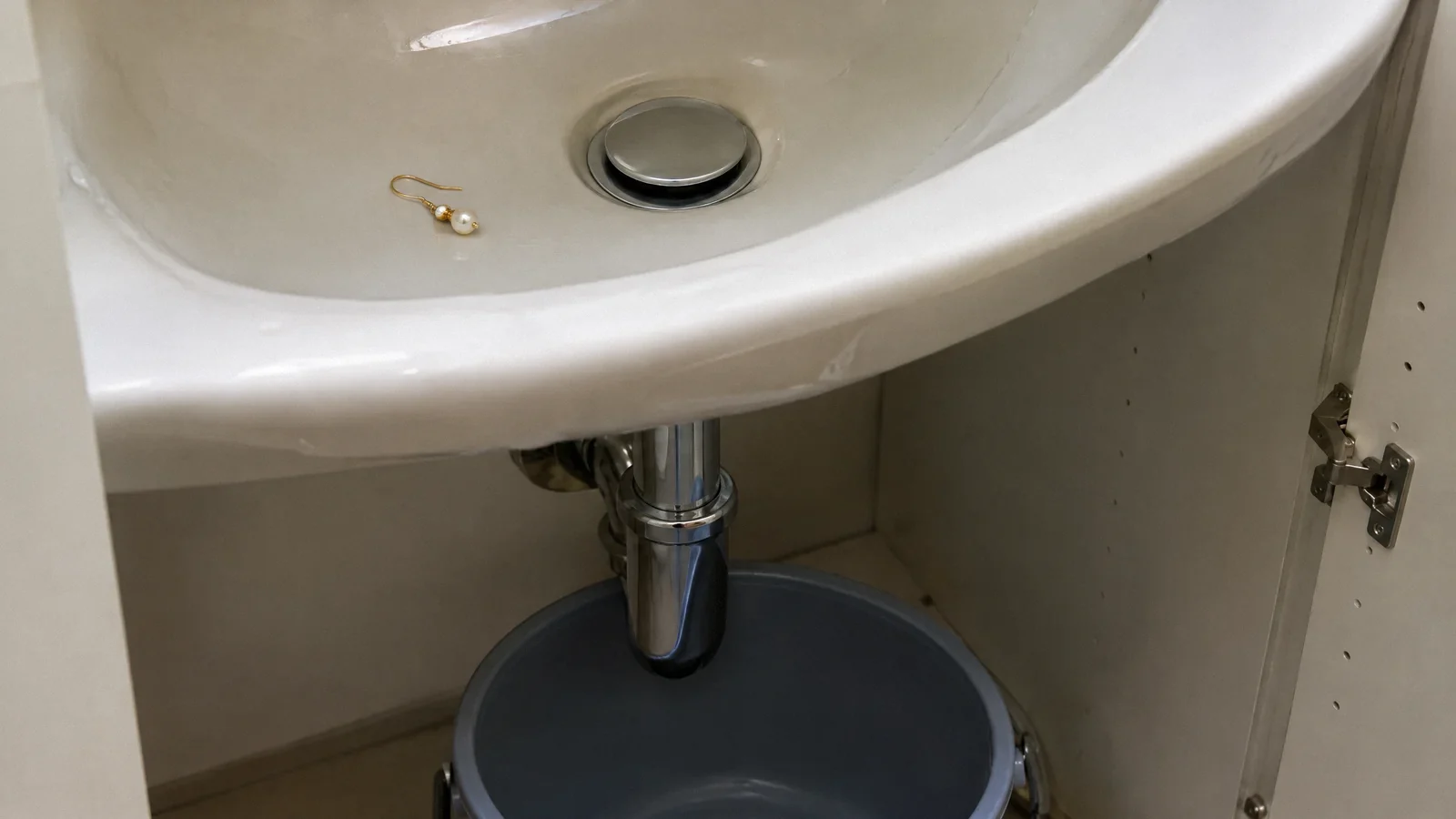
The curved section of pipe under a conventional sink is commonly called a P-trap. It normally holds water as a barrier against sewer gas and can also retain a heavy object. It does not guarantee that a dropped item remains there: water flow, the item's shape and the plumbing layout all matter. In a double sink, disposal-equipped kitchen or unusual installation, the path may differ. Photograph the arrangement before touching any fittings and avoid disturbing unsupported, brittle or leaking pipes.
Opening an accessible trap
If the trap has accessible slip-joint connections and you are comfortable working on them, place a bucket directly underneath and protect the cabinet with towels. Wear gloves and eye protection against dirty water. Loosen the accessible connections carefully according to the fixture design, keeping the bucket in position, and lower the trap without pulling on the pipes in the wall. Empty its contents into the bucket and inspect them. Do not remove a glued, damaged or seized connection by force. Stop and call a plumber if the assembly moves, leaks unexpectedly or has been exposed to drain cleaner.
Search the contents
Recover the earring from the bucket with a strainer or gloved hand. Check the stopper and trap carefully for a small backing or stone as well as the main piece. Avoid pouring the contents into another drain before checking them. If the item is missing, it may be farther along the line or still in the fixture. A plumber can decide whether additional inspection is worthwhile. Do not keep running water through the sink in the hope that the item will return.
Reassemble and test
Reassemble the trap in its original configuration, including its washers in their original positions, and follow the manufacturer's instructions. Do not overtighten plastic fittings or force mismatched threads. Restore the water seal by running a small amount of water only after the item has been recovered or you have decided to stop searching. Check each joint with a dry paper towel while water flows and again after the basin drains. If any joint leaks or will not seat properly, stop using the sink and call a plumber.
Disposal and dishwasher
A garbage disposal is a separate hazard. Turn it off and disconnect power according to its instructions before any inspection; never put a hand inside. Do not turn it on to move the earring. If the item may be in the disposal or its plumbing, a plumber is the safest choice, particularly for valuable jewelry or an inaccessible object. A dishwasher may share the drain, so keep it off too until the search is complete.
Care for the jewelry
After retrieval, rinse jewelry only if its material and setting can tolerate water. Fragile stones, glued settings or damaged pieces may need a jeweler's care; dry and inspect them before wearing. A drain strainer and a habit of placing jewelry away from the basin can reduce the chance of another loss. If the trap is leaking or the item cannot be found, document the steps taken and arrange professional help rather than disassembling more plumbing at random.
Your next-step checklist
- Stop using the sink immediately.
- Check the opening without pushing the item down.
- Avoid opening a drain containing chemicals.
- Check connections for leaks after reassembly.
Related questions
Will the earring always be in the trap?
No. The item may be in the stopper, the trap or farther along the drain.
Should I use a plunger?
No. A plunger can move the item farther along and make recovery harder.
Sources & context
Public guidance supports the principles in this article. The practical questions and examples are editorial interpretation, not a site assessment or a coverage decision. State-specific rules apply only where identified.
- Moen pop-up assembly instructionsprimary
- EPA household hazardsprimary