A kitchen sink that drains slowly or holds standing water may have a blockage in the strainer, trap or branch drain. Stop running the faucet and dishwasher, remove standing water with a cup if it is safe, and inspect the accessible opening. For a simple clog without chemical cleaner in the drain, a sink plunger or cleaning an accessible trap may help. Call a plumber if several fixtures back up, the drain leaks, or the blockage persists.
Start with standing water
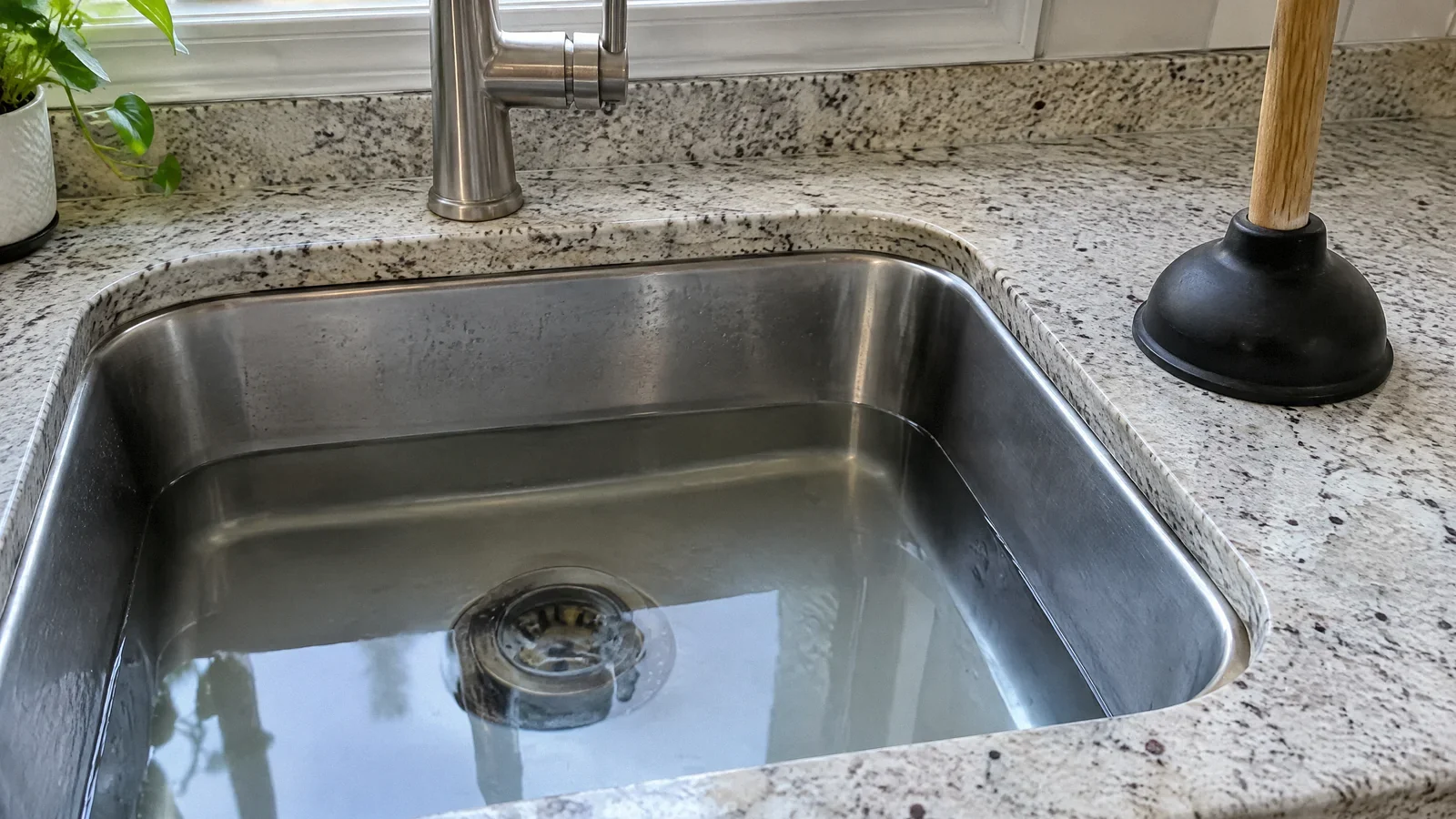
A kitchen sink that drains slowly or holds standing water may have a blockage in the strainer, trap or branch drain. Stop running the faucet and dishwasher, remove standing water with a cup if it is safe, and inspect the accessible opening. For a simple clog without chemical cleaner in the drain, a sink plunger or cleaning an accessible trap may help. Call a plumber if several fixtures back up, the drain leaks, or the blockage persists.
Prevent overflow
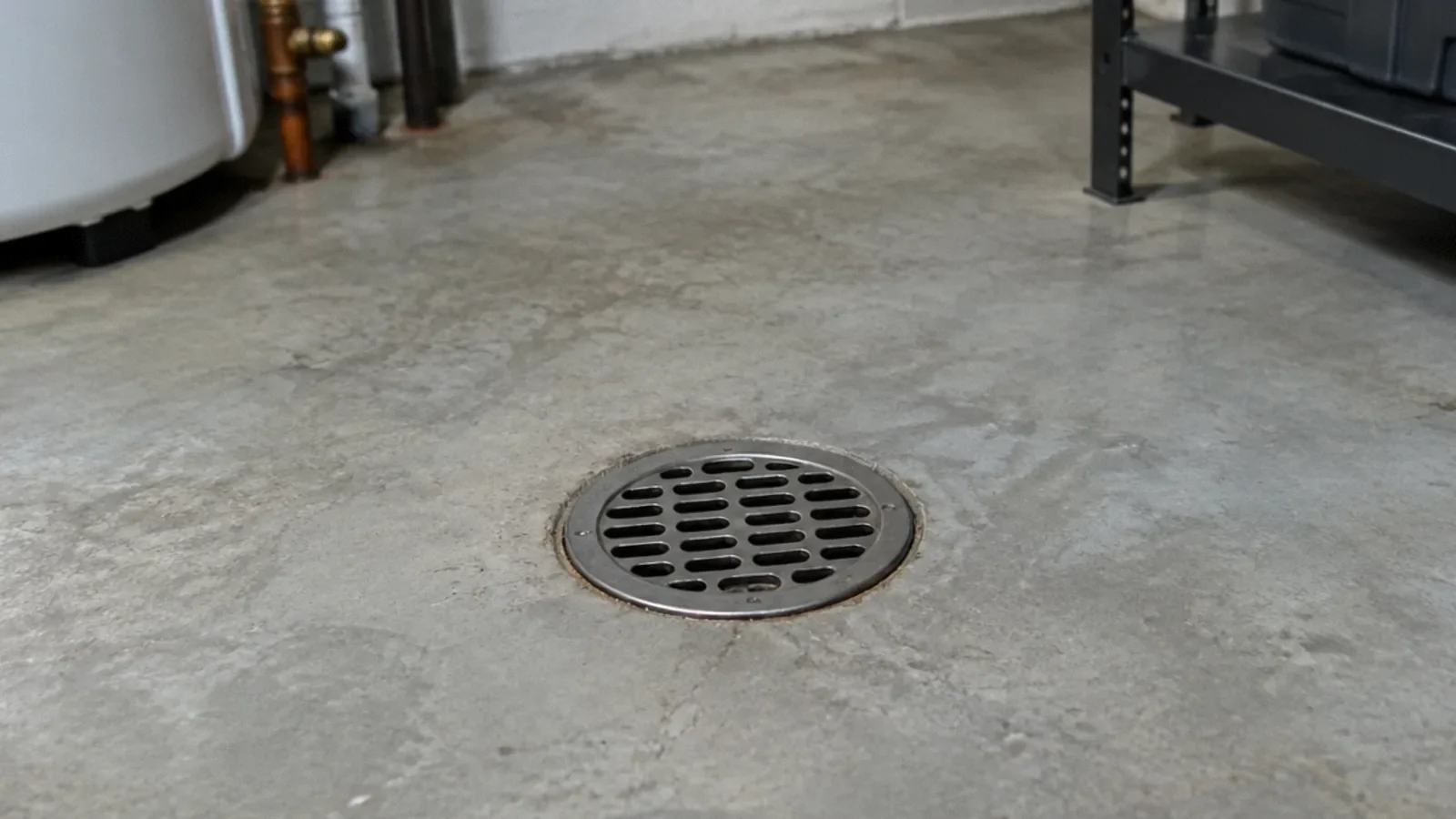
First keep the sink from overflowing. Stop all fixtures and appliances that discharge into that drain, including a connected dishwasher. If water is rising at another fixture or a floor drain, or wastewater appears contaminated with sewage, keep people away and call a plumber. A local kitchen clog and a larger sewer backup can look similar at first. Avoid contact with wastewater and clean any affected surfaces using appropriate guidance for the water source.
Check for drain cleaner
Ask whether a chemical drain opener has been added recently. If so, do not plunge, open the trap or add another product. A blocked line can retain corrosive liquid that may splash when disturbed. Some drain cleaners can burn skin and eyes, and mixing products can create hazardous reactions. Tell the plumber the product name and when it was used. Do not add boiling water or an improvised chemical mixture to a drain containing a cleaner.
Remove water and debris
If no chemical is present, remove standing water with a cup into a bucket, leaving enough water to cover a plunger cup if you intend to use one. Wear gloves and protect the cabinet and floor from spills. Lift the sink strainer and remove visible food debris without pushing it farther down. If a disposal is installed, switch it off and disconnect power before inspecting its chamber; never put a hand inside. A visible object may be removed with long tongs if it can be reached safely, following the disposal manufacturer's instructions.
Use a sink plunger
A cup plunger can help with a simple local clog. Position it over the drain opening so the rim seals against the sink, and use controlled strokes without splashing. On a double sink, the second opening may need to be sealed for effective pressure. A dishwasher connection can complicate the process, so follow the fixture instructions or call a plumber if you are unsure. Stop if connections leak, wastewater appears elsewhere, or the water does not respond after a reasonable attempt. Do not plunge after chemical cleaner has been used.
Inspect an accessible trap
If the sink still drains slowly, the curved trap below it may contain accumulated debris. A removable slip-joint trap can sometimes be checked by a person comfortable with the plumbing. Place a bucket and towels underneath, photograph the original arrangement, and loosen accessible joints carefully. Empty the trap into the bucket and clean the removable section without forcing tools into the wall pipe. Do not force corroded, brittle, glued or damaged connections. A plumber can handle an inaccessible trap or a line containing chemicals.
Reassemble and test
Return the trap and washers to their original positions, following the fitting instructions and avoiding overtightening. Run a small amount of water only after the connections are assembled, and check each joint for leaks with a dry paper towel. If the trap is clear but drainage remains slow, the restriction may be farther along the branch, or another system issue may be present. An apparently clear trap does not prove the rest of the drain is open. Stop if water returns to the basin or a connection leaks.
Consider a drain snake
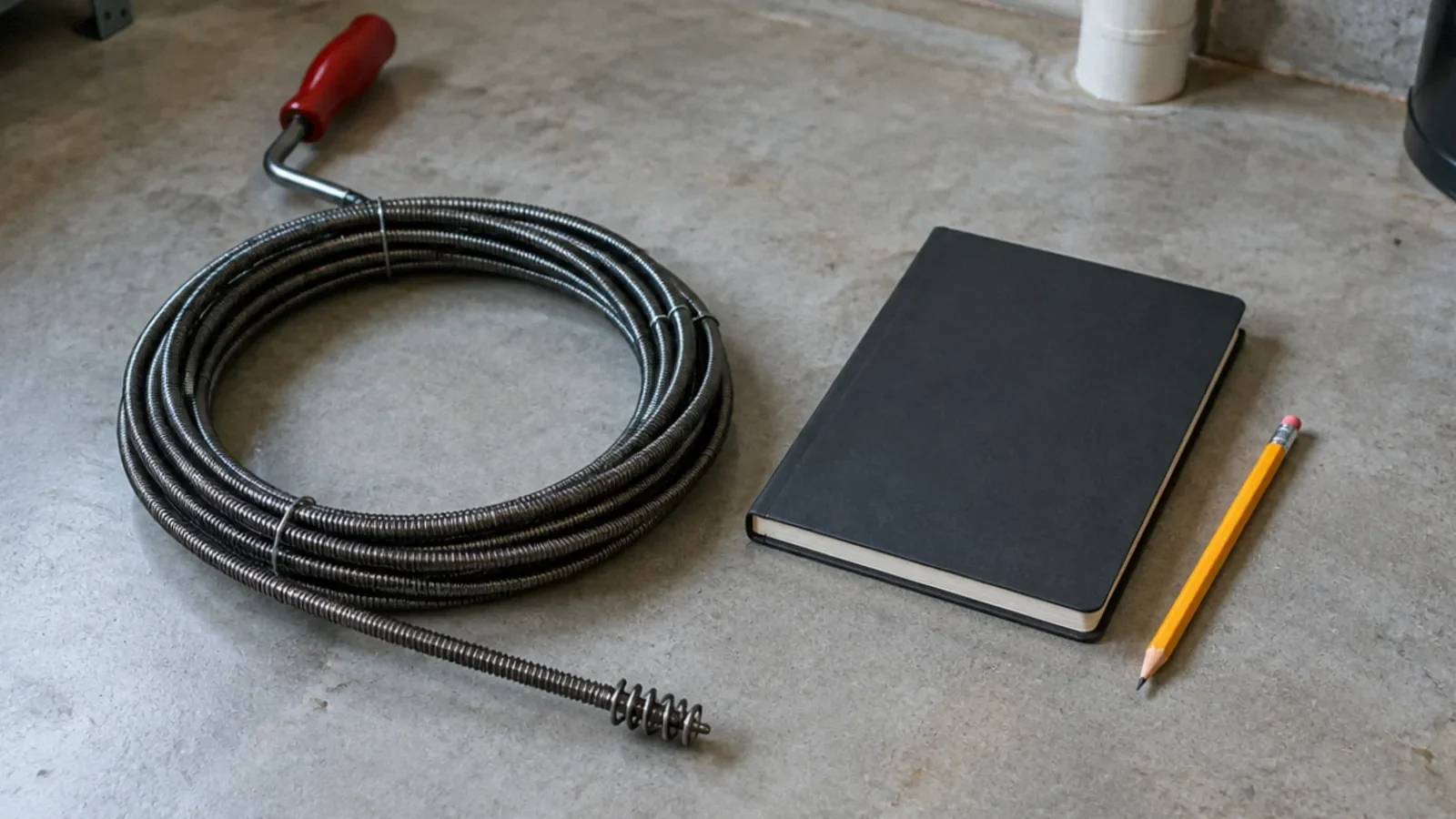
A hand drain snake may reach some obstructions beyond the trap, but it can scratch fixtures, damage unsuitable piping or become stuck if forced. Follow the tool instructions and the pipe manufacturer's limits. Avoid powered equipment unless trained to use it. If resistance is unusual, the pipe is old or damaged, or repeated attempts fail, a plumber can select a suitable tool and inspect the line. Never use a snake in a drain containing caustic cleaner.
When no blockage is visible
A sink that drains slowly with no visible blockage may have buildup beyond the opening, a problem in a connected drain or another cause. Note whether both basins are affected, whether the dishwasher backs up, whether other fixtures drain normally and when the problem started. Share those observations with the plumber. Gurgling or a recurring slow drain can suggest a broader issue but does not by itself identify the exact defect. Avoid relying on repeated chemical treatments as a diagnosis.
Prevent recurrence
After flow is restored, test with a modest amount of water and inspect the cabinet again. Follow the disposal and plumbing manufacturers' instructions for normal use. Put grease, coffee grounds and food scraps in the appropriate waste rather than washing them into the drain; EPA warns that these materials can contribute to plumbing and septic problems. A removable strainer can catch debris. If the sink slows again or another fixture backs up, arrange a professional investigation rather than repeating the same unsuccessful steps.
Your next-step checklist
- Stop the faucet and connected dishwasher.
- Avoid plunging or opening a drain containing chemicals.
- Inspect the strainer and accessible trap.
- Call a plumber for persistent or multiple-fixture backups.
Related questions
Why is my sink slow if the trap is clear?
The restriction may be farther along the branch or have another cause. A clear trap does not prove the entire drain is open.
Can I plunge after using drain cleaner?
No. Corrosive liquid can splash; tell a plumber which product was used.
Sources & context
Public guidance supports the principles in this article. The practical questions and examples are editorial interpretation, not a site assessment or a coverage decision. State-specific rules apply only where identified.
- EPA household hazardous wasteprimary
- EPA septic careprimary
- Moen disposal safetyprimary