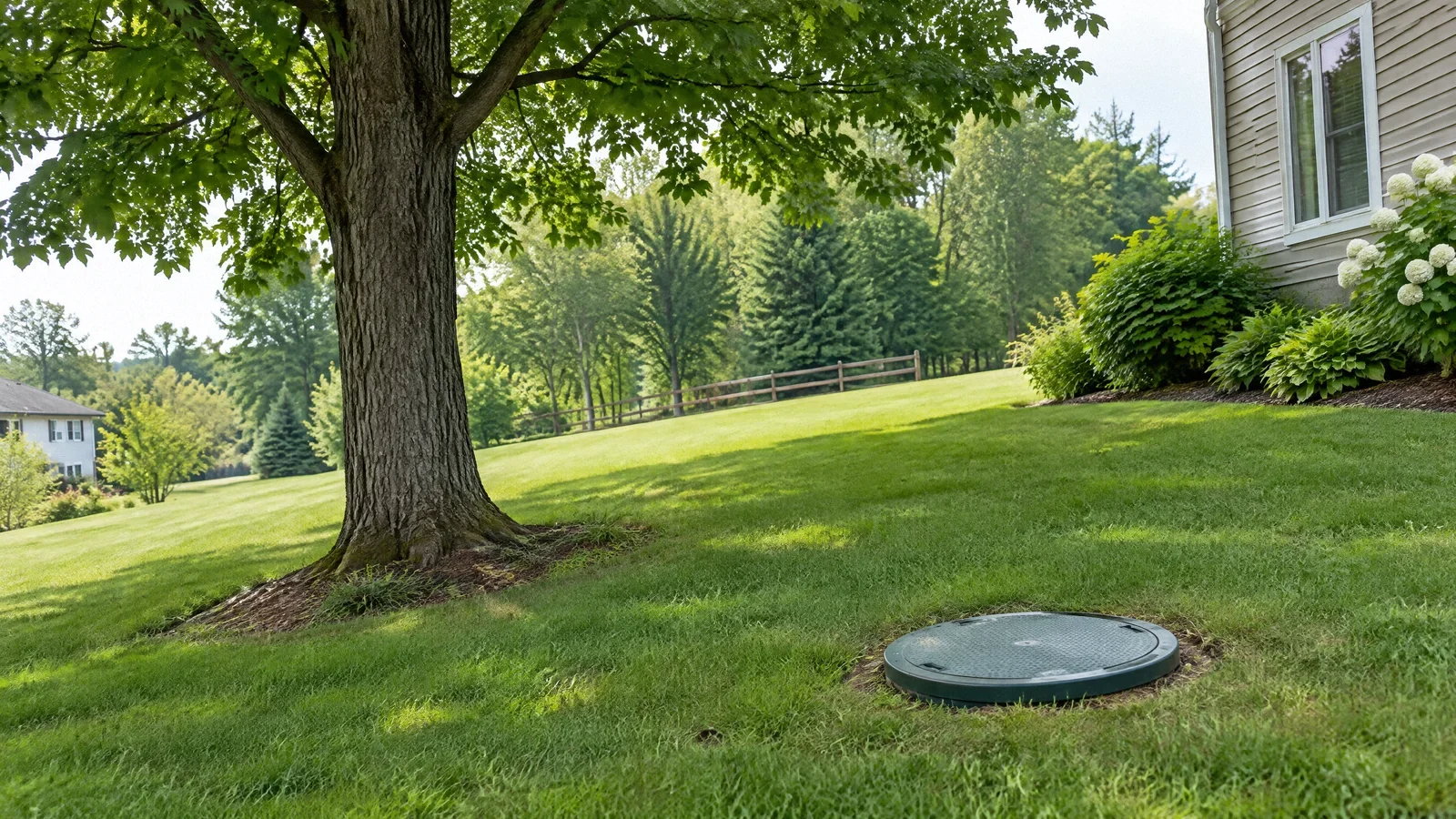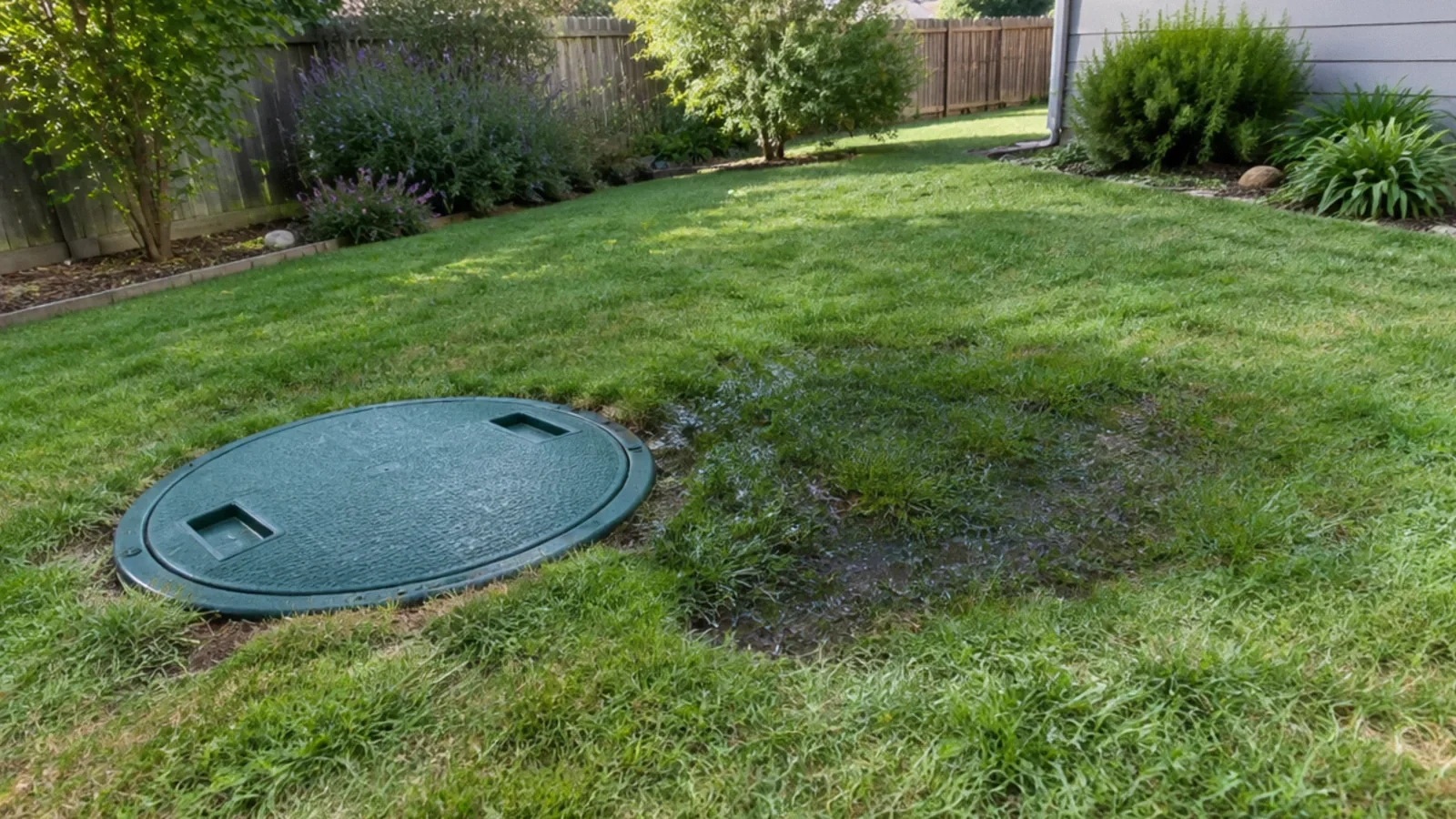
A leaking septic tank or outlet connection can release wastewater into soil or allow groundwater into the system. Keep people and pets away, reduce water use, and arrange a qualified septic inspection. Never open or enter a septic tank yourself.
Signs that warrant an inspection
Persistent wet ground, sewage odors, unusually lush vegetation or wastewater surfacing near a tank or drainfield can signal a problem. Slow drains or backups may occur for different reasons. None of these signs alone proves that the tank itself is leaking.
Note where and when the symptoms appear, whether there has been heavy rain, and which fixtures are affected. Contact a qualified septic professional and your local environmental health agency for guidance relevant to the property.
Tank leak versus a blocked outlet
A septic tank retains wastewater while solids settle and floating material separates. An outlet carries partially treated liquid toward the drainfield. Damage at the tank wall, a pipe connection, an outlet component or another part of the system can produce different symptoms.
EPA guidance explains that the liquid level in relation to the outlet can help an inspector evaluate a possible leak or downstream problem. The level is only one observation; it is not a diagnosis a homeowner should make by opening the tank.
What to do immediately
Keep children, pets and others away from wet or suspect ground and any sewage. Avoid touching wastewater, and keep it away from wells, surface water and storm drains. Reduce household water use while arranging assessment, especially if drains are backing up.
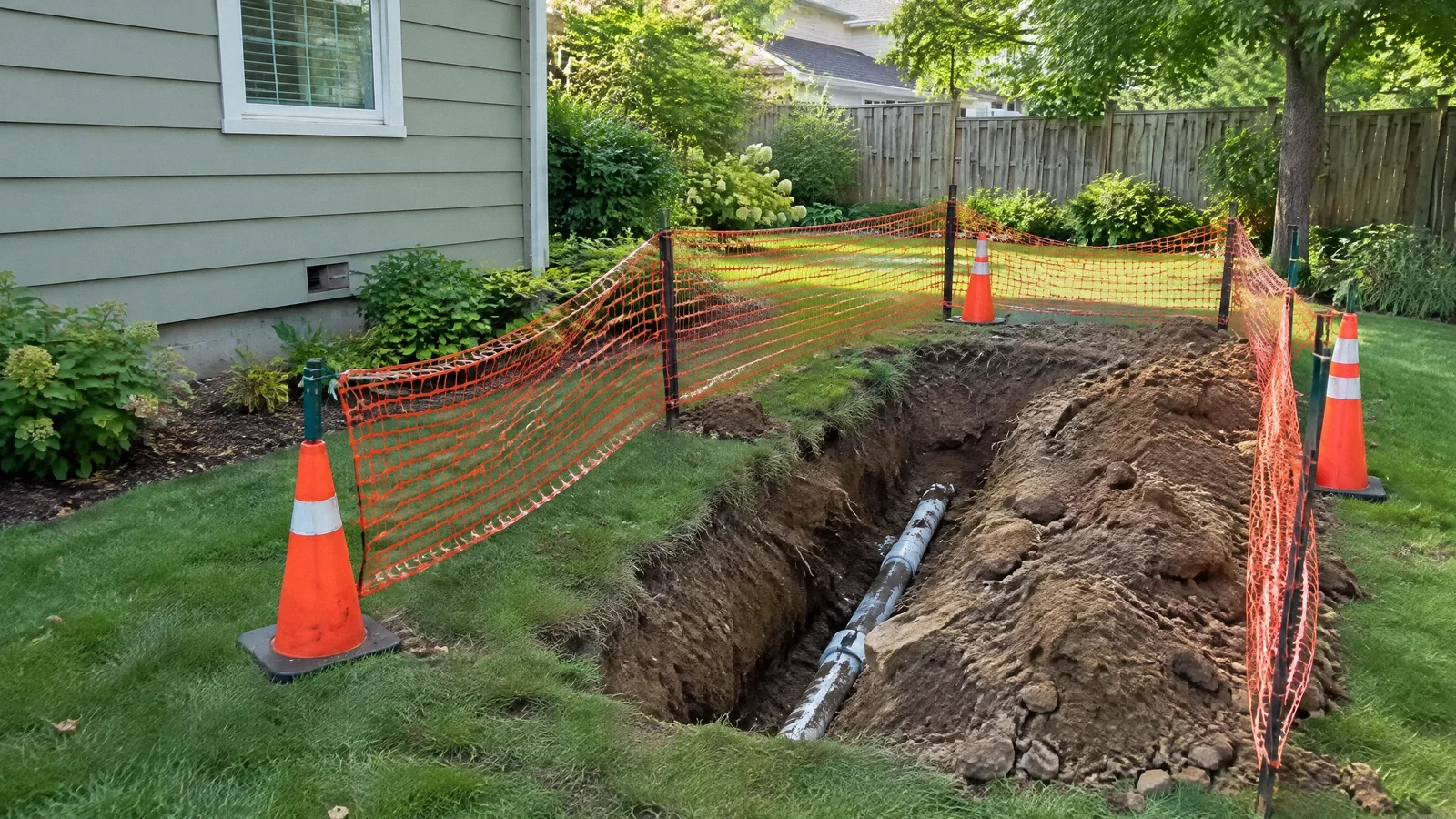
Do not dig around the tank or operate heavy equipment over it. If sewage has entered the building, avoid contact and electrical hazards; arrange qualified cleanup. Follow the local health department’s directions if an overflow may affect nearby property or water.
Never enter or open a septic tank
A septic tank is a confined space with potentially lethal gases and a risk of collapse or drowning. Do not enter it or lean into an opening for an inspection or rescue. If a person is down in a tank, call 911 and do not enter; emergency responders need appropriate equipment and training.
A damaged or unsecured cover is a separate immediate hazard. Keep everyone away and notify emergency services or a qualified septic provider as appropriate. Inspection, pumping and repairs belong to professionals with the necessary equipment.
How the outlet is assessed
A qualified inspector can examine the tank, inlet and outlet connections, baffles or tees, and downstream components as appropriate. A failed seal or pipe, blocked outlet, saturated drainfield or another defect may require different work. Ask which observations support the proposed repair.
The provider should explain whether pumping is needed for inspection, what excavation is planned, how the system will be protected and whether local permits or inspections apply. Do not assume that a quick sealant or pumping alone fixes the cause.
Rain and saturated ground
After flooding or during saturated conditions, the drainfield may not absorb wastewater normally. EPA advises against pumping a tank while the drainfield is flooded or saturated because an emptied tank may float and damage connections. Get site-specific advice from the local health department and septic professional.
Limit water use until the system can be assessed. If the property uses a private well and contamination is possible, ask local health officials about safe water and testing rather than relying on taste or appearance.
Document repairs and prevent recurrence
Keep an inspection report, photographs taken from a safe location, pump-out record and any permit or repair documents. Ask the provider to identify the failed component, repair materials and recommended follow-up. Insurer coverage depends on the cause and policy language.
After repair, follow an appropriate inspection and pumping schedule, protect the drainfield from vehicles and excess water, and avoid flushing materials that the system is not designed to handle. Return of wet ground or odors needs renewed assessment.
Outlet flow, overflow and the repair decision
In a conventional system, the outlet normally carries clarified effluent from the tank toward the drainfield; liquid reaching the ground surface or backing up is not normal outlet operation. Excess household flow, a blocked outlet, a damaged component or a saturated or failing drainfield can be involved. A recurrence after pumping warrants inspection of the entire system: pumping alone does not establish or fix the cause.
Keep children and pets away from the wet area, prevent contact and restrict water use while arranging a septic professional and contacting the local health authority if sewage surfaces. Do not dig, enter the tank or attempt to disinfect contaminated soil yourself. A qualified cleanup provider can assess affected soil and disposal; the local authority can explain any required controls. Depending on the inspection, a contractor may repair an outlet component, replace damaged pipe or tank, or design drainfield work. Obtain the local permit and approval requirements before work; the appropriate choice depends on the defect and site.
Request the inspection findings in writing, including the observed failure location, proposed repair and any remaining uncertainty. Ask who will secure permits, restore the disturbed area and verify proper operation afterward. Keep pumping and repair records together so a future service provider can distinguish maintenance from an unresolved recurring failure.
Your next-step checklist
- Keep people and pets away from suspected sewage.
- Reduce water use and arrange qualified inspection.
- Do not open or enter a tank.
- Ask local health officials about a spill, well exposure or flooding.
- Keep written inspection and repair records.
Related questions
Can a septic tank leak at its outlet pipe?
Yes. A tank wall, outlet connection, pipe or related component can fail; a qualified inspection is needed to locate the source.
Should I pump a tank in a flooded drainfield?
EPA advises against pumping during flooded or saturated drainfield conditions because an emptied tank can float and damage connections.
Does a wet patch prove the tank is cracked?
No. A wet area can have several causes, including drainage or another septic-system problem.
Can I inspect the inside myself?
Do not open or enter a septic tank. Confined-space hazards can be fatal.
What if a septic tank overflows into the yard?
Keep people and pets away from wastewater, reduce water use and contact a qualified septic professional and local health agency. The cause could involve the tank, outlet, drainfield or another component; never open or enter the tank.
What if the line between the house and septic tank is blocked?
Reduce water use and arrange qualified inspection. See the separate guide to a clog between the house and tank.
Can I repair a septic tank myself?
A septic system can contain lethal gases, unstable covers and sewage. Do not open or enter the tank. A qualified professional and local health agency can determine the fault, required repair and applicable permits.
Can roots affect a septic tank or line?
Roots can affect vulnerable components. See the separate guide to roots in septic systems; do not open or enter the tank.
Sources & context
Public guidance supports the principles in this article. The practical questions and examples are editorial interpretation, not a site assessment or a coverage decision. State-specific rules apply only where identified.
- U.S. EPA: How septic systems workfederal guidance
- U.S. EPA: Septic systems after a floodfederal guidance
- EPA: Septic tank pump-out checklistfederal technical guidance
- Official guidanceofficial