Multiple slow drains or sewage backing up can point to a blockage in a shared drain, but they can also indicate a tank, pump, or drainfield problem. Stop using water, keep people away from sewage, and call a qualified septic service or plumber to locate the obstruction.
Recognize the pattern, not a diagnosis
A single slow sink may have a local blockage in its branch drain. When several fixtures are slow, toilets gurgle as another fixture drains, or wastewater appears at a low drain, the problem may involve a shared line or another part of the septic system. These observations help a technician choose where to investigate; they do not establish which component failed.
A clog between the building and the septic tank can restrict flow before wastewater reaches the tank. A full or malfunctioning tank, a blocked outlet, a failed pump where one is installed, or a saturated drainfield can produce similar symptoms. Outdoor sewage odors or wet ground may provide additional clues, but their absence does not rule out a problem.
Limit water use and protect the area
Stop flushing toilets and using showers, laundry, dishwashers, and other water-consuming fixtures until a professional advises that the system can accept water. Continuing to add water can worsen an indoor backup. Tell everyone in the building why the fixtures are out of service and arrange an alternative bathroom if needed.
Keep children and pets away from wastewater and wet areas. Sewage can contain harmful organisms, and floodwater may also contain chemicals. Do not walk through standing wastewater to reach an electrical panel or appliance. If electrical equipment is wet or threatened, keep away and contact the utility or a qualified electrician.
Where a professional looks
A service provider starts with the history: which fixtures are affected, when symptoms began, whether there has been heavy rain, and whether the tank has recently been inspected or pumped. A site plan and maintenance records can help locate the tank and describe whether the property has a pump or other equipment. Give the contractor access information without removing covers yourself.
The technician may inspect accessible drains and the tank, compare conditions at the inlet and outlet, and use a camera on suitable piping when appropriate. A blockage in the building sewer, a damaged or collapsed pipe, and a downstream restriction require different remedies. The professional should explain the evidence for the location before recommending excavation or replacement.
A tank normally contains wastewater; the fact that liquid is present does not by itself prove that pumping will cure a blockage. Pumping may be necessary for maintenance or diagnosis, but ask how the contractor will determine whether flow is restored and whether the drainfield or pump also needs attention.
Do not open or enter the tank
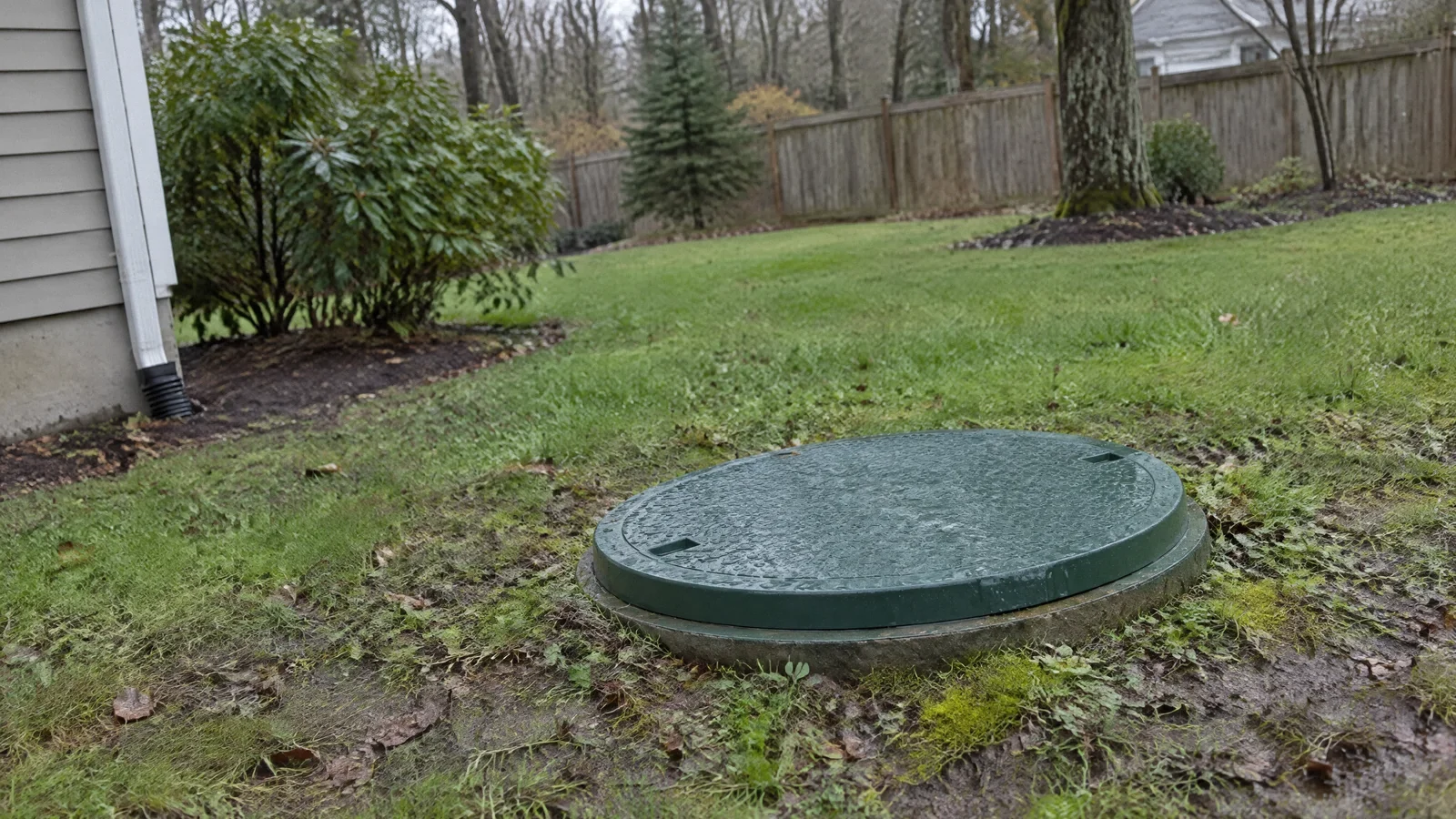
Septic tanks can contain dangerous gases and present a confined-space hazard. Never enter a tank or lean into an opening, and do not attempt to rescue a person by entering. Keep lids secure and have trained specialists inspect and service the system. Call emergency services if someone is overcome.
Avoid chemical drain openers as a shortcut for an unknown system-wide problem. They can expose anyone working on the line to chemicals and may not address the actual obstruction. Tell the technician about any product already used and follow its label; never mix cleaning products.
After the blockage is located
Depending on the finding, a qualified provider may clear an obstruction, repair a damaged pipe, service a tank component, or recommend further drainfield evaluation. Request a written explanation of the affected component, proposed work, access and restoration responsibilities, and any permit requirements. Local rules vary; the local health department can explain applicable septic requirements.
Before returning to normal use, ask how the repair was checked under appropriate flow and what warning signs should prompt a callback. If wastewater entered living space, arrange suitable sewage cleanup and drying. Contaminated porous materials may need removal; do not treat paint or fragrance as proof that the area is clean and dry.
Reduce future trouble
Keep inspection and pumping records and follow a maintenance schedule suited to the household and system. EPA advises flushing only human waste and toilet paper; wipes, grease, and other materials can contribute to blockages. Spread high-volume water use over time and fix plumbing leaks to reduce unnecessary loading.
Protect the drainfield from vehicle traffic and avoid directing excess surface water toward it. A service provider can explain system-specific precautions. If symptoms return, document the date, affected fixtures, recent weather, and prior work rather than repeatedly treating the same symptom without finding its cause.
Your next-step checklist
- Stop adding water and keep people away from sewage.
- Record affected fixtures, recent rain, and maintenance history.
- Contact a qualified septic professional or plumber.
- Request the diagnosis, repair scope, and verification in writing.
- Arrange appropriate cleanup if sewage entered the building.
Related questions
Can a clogged house-to-tank line look like a full septic tank?
Yes. Backups and slow drains can occur with a line blockage or a downstream septic malfunction. A professional inspection is needed to distinguish them.
Should I pump the tank immediately?
A service provider should assess the system and maintenance history. Pumping can be appropriate, but it does not automatically repair a blocked or broken pipe or a failing drainfield.
Can I open the septic tank to check the level?
Leave tank access to trained specialists. Septic tanks are hazardous confined spaces and can contain dangerous gases.
Sources & context
Public guidance supports the principles in this article. The practical questions and examples are editorial interpretation, not a site assessment or a coverage decision. State-specific rules apply only where identified.