Non-invasive detection uses observations and instruments to narrow a suspected leak without initially opening building materials. It can reduce exploratory damage, but a repair or confirmation may still require access.
Start with the evidence and the system
Non-invasive leak detection describes an investigation that begins without cutting a wall or floor. It is an approach rather than a single device or a promise that nothing will ever be opened. A technician combines the history, visible signs and measurements to narrow the likely source. The objective is to choose a sensible location for confirmation and repair, not to claim that a sensor sees through every material.
Record when the problem appears: continuously, only while a fixture drains, during rain, or when heating or cooling operates. Note a rising bill, a damp patch, sounds, odors and earlier repairs. A supply leak, shower drain leak, roof entry and condensation can all leave a similar stain but require different tests. Tell the professional about known pipe routes, recent work and inaccessible spaces.
If water threatens an electrical device or a ceiling is bulging, keep clear and arrange urgent qualified help. Shut off water only if the appropriate valve is safely accessible and you know what it controls. Non-invasive testing is not a reason to wait while active flooding continues.
What the tools can and cannot establish
A meter or flow monitor can indicate unexpected water use. EPA describes whole-house flow monitoring and point-of-use moisture sensors as different tools: the former tracks water flow or pressure patterns, while the latter senses water at a particular location. A sensor can miss a leak outside its detection area, and a flow anomaly does not by itself identify the exact pipe or room.
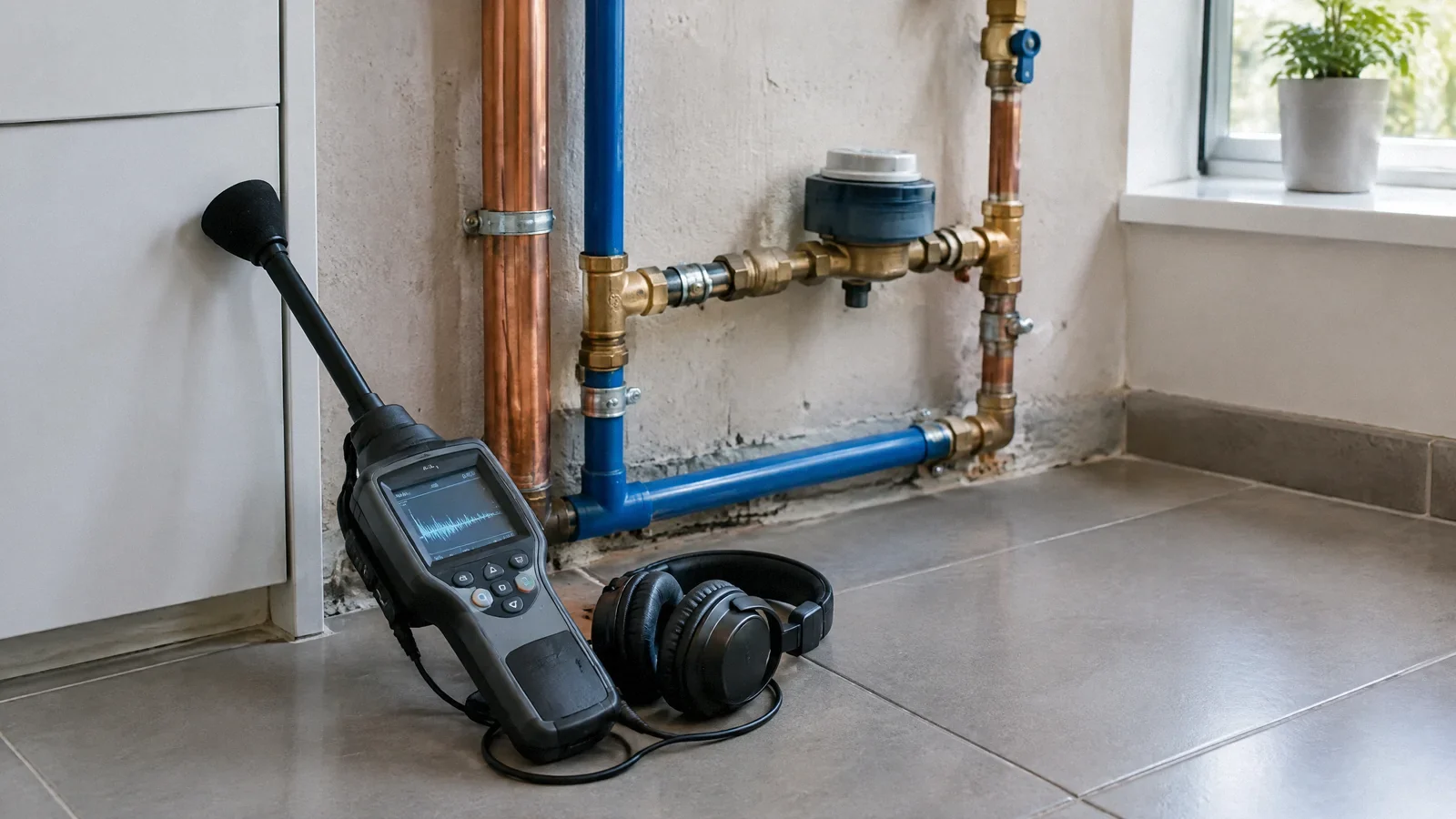
Acoustic equipment can help a trained operator listen for a pressurized leak. Background noise, pipe material, leak size and access affect interpretation. A pressure test can help determine whether an isolated section holds pressure, but an occupied building may have fixtures or equipment that affect the test. Ask what is isolated, what the readings mean and whether service interruption is required.
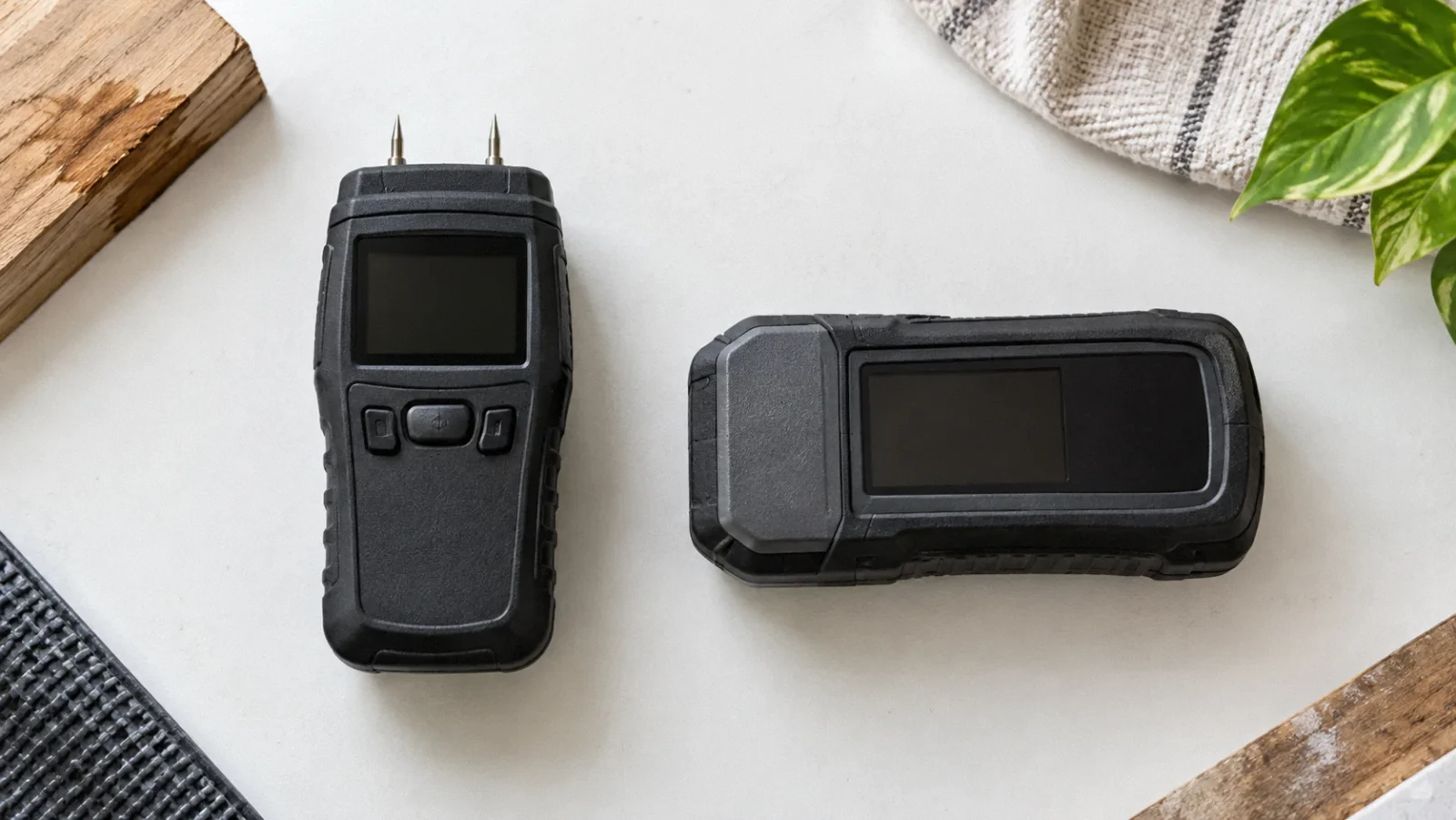
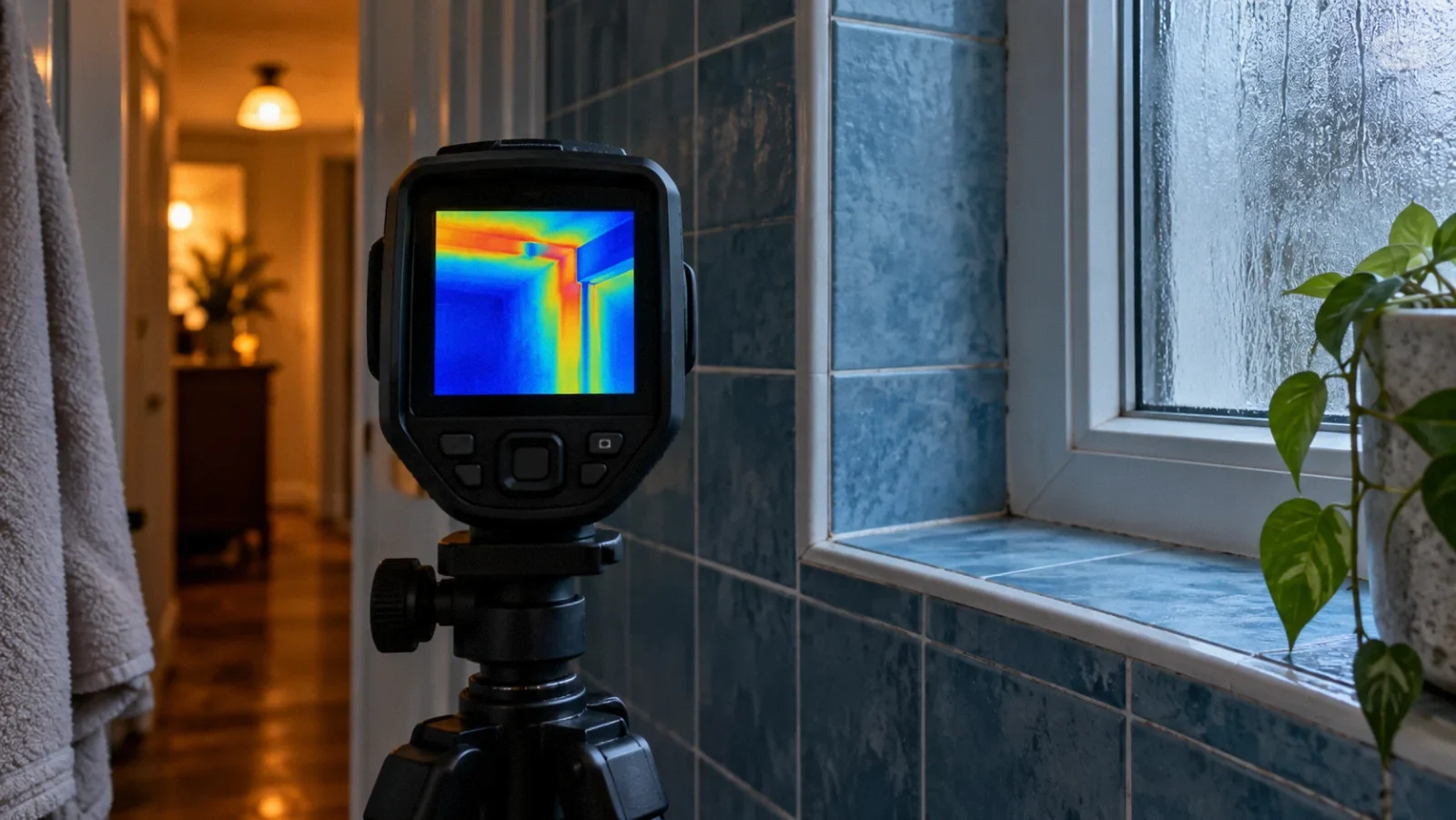
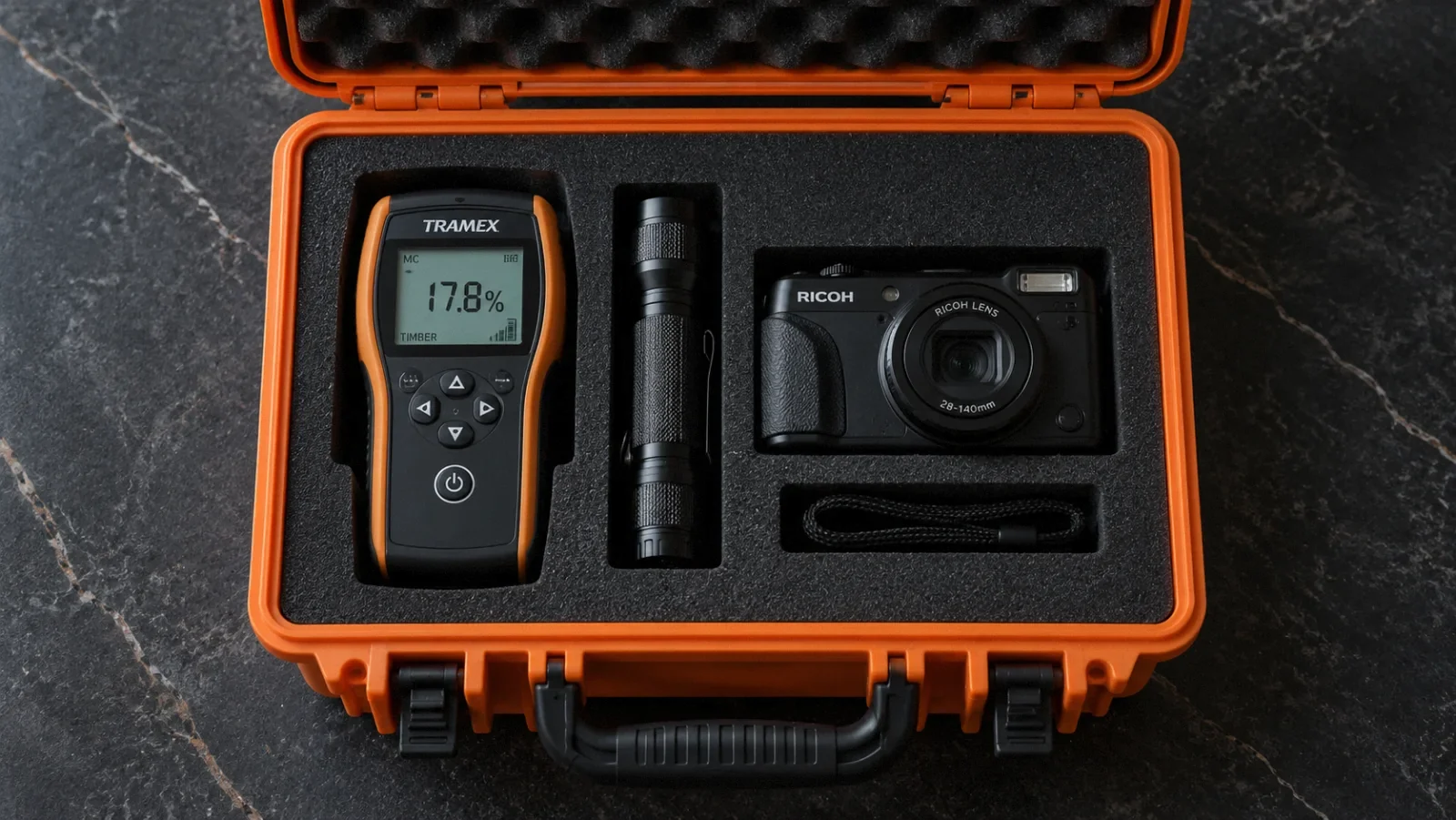
A moisture meter helps compare accessible materials and monitor drying. Infrared imaging identifies surface temperature differences that may suggest a damp area, but it does not directly see water behind every wall or identify mold. The operator should corroborate a temperature pattern with other evidence. A cool area can have several causes, including insulation and airflow, so a thermal image alone is not proof of a leak.
Confirmation, repair and written findings
Ask the provider to explain the likely source, alternatives that remain possible, and the confidence and limits of each finding. An estimate should state whether it includes only detection, an opening, repair, drying and restoration. A targeted opening can still be needed to inspect a joint or repair a pipe. No professional can guarantee a hidden repair without adequate access.
After the source is corrected, document moisture readings and drying rather than immediately covering wet materials. If there is suspected hidden mold, sewage contamination or structural damage, request appropriate specialist assessment. EPA notes that hidden mold investigation may require caution because disturbing a concealed area can release particles.
Obtain a written report with test methods, observed locations and photographs where available. Ask who will return if symptoms persist, and keep the report with the repair invoice. Leak alarms and flow monitors can provide continuing notice, but check their power supply, placement and maintenance instructions. They complement periodic inspection and timely repair rather than replacing them.
When comparing detection services, ask whether the visit includes locating supply, drain or building-envelope sources, and whether an estimated opening location will be marked. Give each provider the same symptoms and photographs. A low flat fee may cover only a preliminary visit, while pressure testing, a written report or access through a finished surface may cost extra. Ask for a decision point if the initial methods are inconclusive. If a leak is intermittent, the technician may need to reproduce normal operating conditions safely before drawing a conclusion.
A suspected drain leak is often intermittent because wastewater flows only during use. A professional can inspect accessible connections and, where appropriate, conduct a controlled fixture test while observing the affected area. This differs from checking a pressurized supply line. Rain-related entry may require a building-envelope specialist instead of a plumber. Keep the timing and test conditions in the report so a later repair contractor understands what has and has not been ruled out.
Your next-step checklist
- Record when and where symptoms occur.
- Ask what the proposed tests can and cannot establish.
- Get a report and a separate repair scope if access is needed.
Related questions
Does infrared locate a leak exactly?
It shows surface temperature patterns, which need interpretation and confirmation. It does not directly identify the precise source.
Will detection avoid all opening?
Not always. A limited opening may be required to confirm and repair the identified area.
Sources & context
Public guidance supports the principles in this article. The practical questions and examples are editorial interpretation, not a site assessment or a coverage decision. State-specific rules apply only where identified.