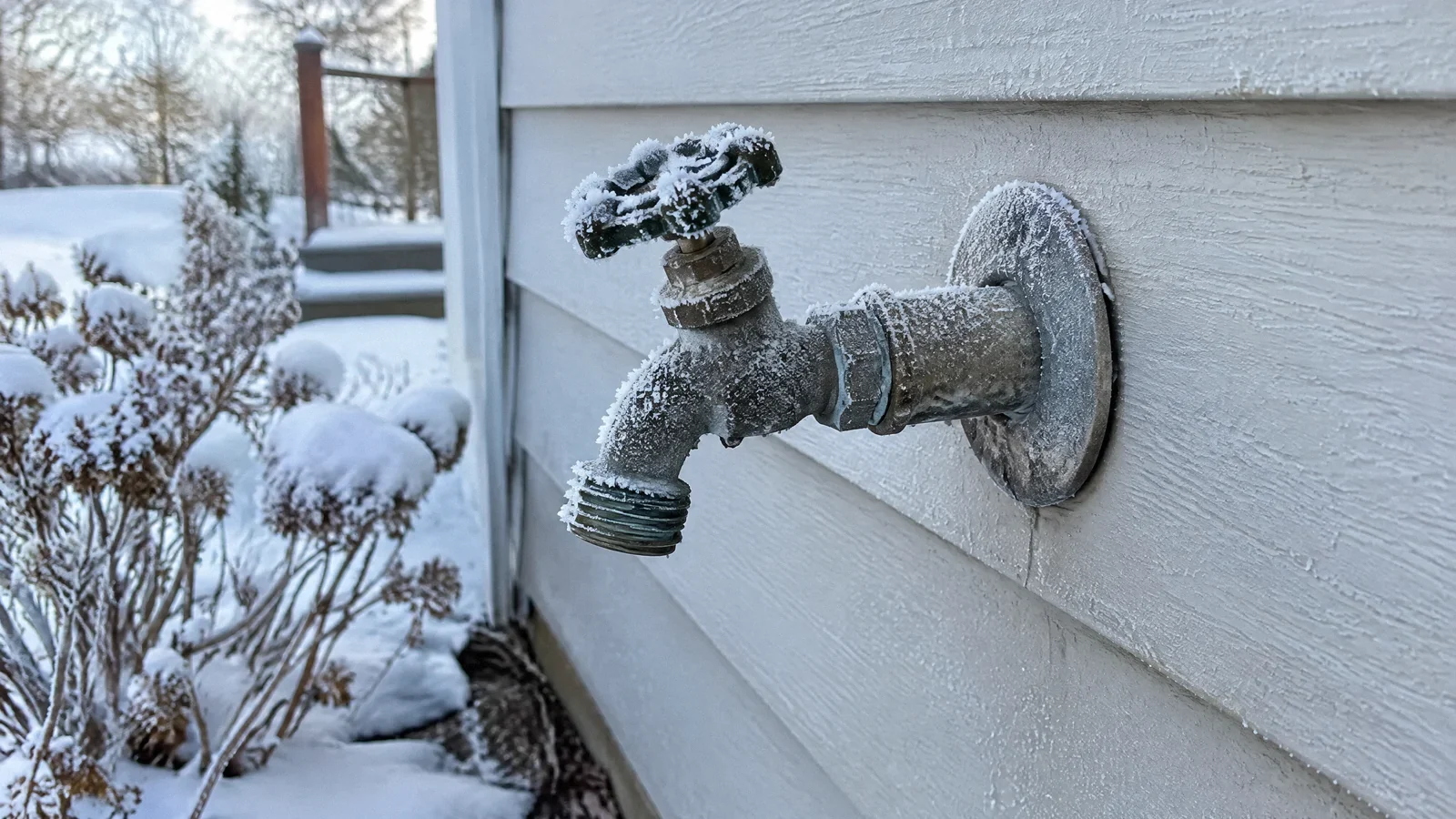
Do not force a stuck handle. A frozen handle and a frozen supply pipe are different problems; if water only trickles or the freeze is inaccessible, protect the home and call a plumber.
Distinguish a stuck handle from no water flow
If an outdoor faucet will not turn during freezing weather, the handle or valve mechanism may be frozen or mechanically stuck. Forcing it with a tool can damage the fixture. Leave it alone and call a plumber if it does not move normally. If the handle opens but little or no water comes out, a frozen supply pipe is one possibility, though a closed interior shutoff or another restriction can also explain no flow.
Check other fixtures without forcing them. If several have little or no water, the problem may extend beyond the outdoor branch. The American Red Cross notes that a trickle during freezing weather can indicate a frozen pipe, especially along an exterior wall. Do not assume the absence of visible leakage means the pipe is intact: a crack may become apparent as ice thaws and water pressure returns.
If you see active flooding, close the appropriate accessible shutoff if you can do so safely and call a plumber. Keep clear of wet electrical equipment and unstable areas. Locate the main shutoff before an emergency, but do not operate a valve that is inaccessible or unsafe to reach.
Safe next steps and when to call
If the suspected frozen section is hidden in a wall, under a slab or otherwise inaccessible, call a licensed plumber. The Red Cross recommends professional help when you cannot locate or safely thaw the frozen area. Never use a blowtorch, propane heater, charcoal stove or other open flame. Do not apply excessive heat to a fixture or pipe, and do not use an electrical appliance in a wet or unsafe location.
For an accessible exposed pipe, the Red Cross describes gentle warming methods such as towels soaked in hot water. Its guidance also says to keep the affected faucet open during thawing so water can flow as ice melts. This assumes a faucet that can be opened normally and a pipe that is not visibly broken. Do not force the handle to follow that advice; a stuck handle or suspected damage is a reason for professional help.
Watch the area as it warms. If water begins leaking, stop and shut off the supply where safely possible. Check the interior side of the exterior wall and nearby ceilings or cabinets, because a failed section may be inside the home. A plumber can determine whether the faucet, supply line or shutoff valve needs repair. Do not leave the property unattended while a suspected frozen line thaws.
After thawing and before the next freeze
Once normal flow returns, inspect the visible area and have a professional assess any suspected leak. Operate the faucet briefly and watch both inside and outside where accessible; some damage shows up only under pressure or while a hose bib is in use. Check other faucets as well, since more than one pipe can freeze. If water pressure remains abnormal or dampness returns, request further diagnosis.
Before cold weather, disconnect hoses and follow the faucet manufacturer's winterizing instructions. A frost-resistant faucet still depends on correct installation and drainage; an attached hose can interfere with draining. Where there is a dedicated interior shutoff, ask a plumber how to close and drain the branch properly for your installation. Insulate exposed piping as appropriate and protect vulnerable spaces from freezing temperatures.
Document any damage and repairs. If you plan to contact an insurer, ask what evidence and mitigation steps the policy requires; coverage depends on policy language and circumstances. Repairs and drying should be arranged promptly to reduce further damage. A sensor near a vulnerable area can alert you to water at that location, but it cannot prevent freezing by itself.
A frost-free fixture has a valve seat located farther inside the building, but its performance still depends on the actual installation and conditions. If a hose remained connected during a freeze, tell the plumber; trapped water may have contributed to damage. After a repair, ask where the branch shutoff is, whether the fixture drains as intended and what seasonal steps apply to that model. Keep the plumber’s instructions near your household shutoff information so another occupant can find them during cold weather.
Your next-step checklist
- Avoid forcing a stuck faucet handle.
- Check other fixtures and call a plumber for inaccessible freezing or damage.
- Watch for leakage as the line thaws and pressure returns.
Related questions
Can I force the frozen handle open?
No. Forcing a stuck handle can damage the fixture. Ask a plumber to assess it.
Does thawing mean the pipe is undamaged?
No. A leak may appear as water pressure returns. Inspect accessible areas and get help if leakage is suspected.
Sources & context
Public guidance supports the principles in this article. The practical questions and examples are editorial interpretation, not a site assessment or a coverage decision. State-specific rules apply only where identified.