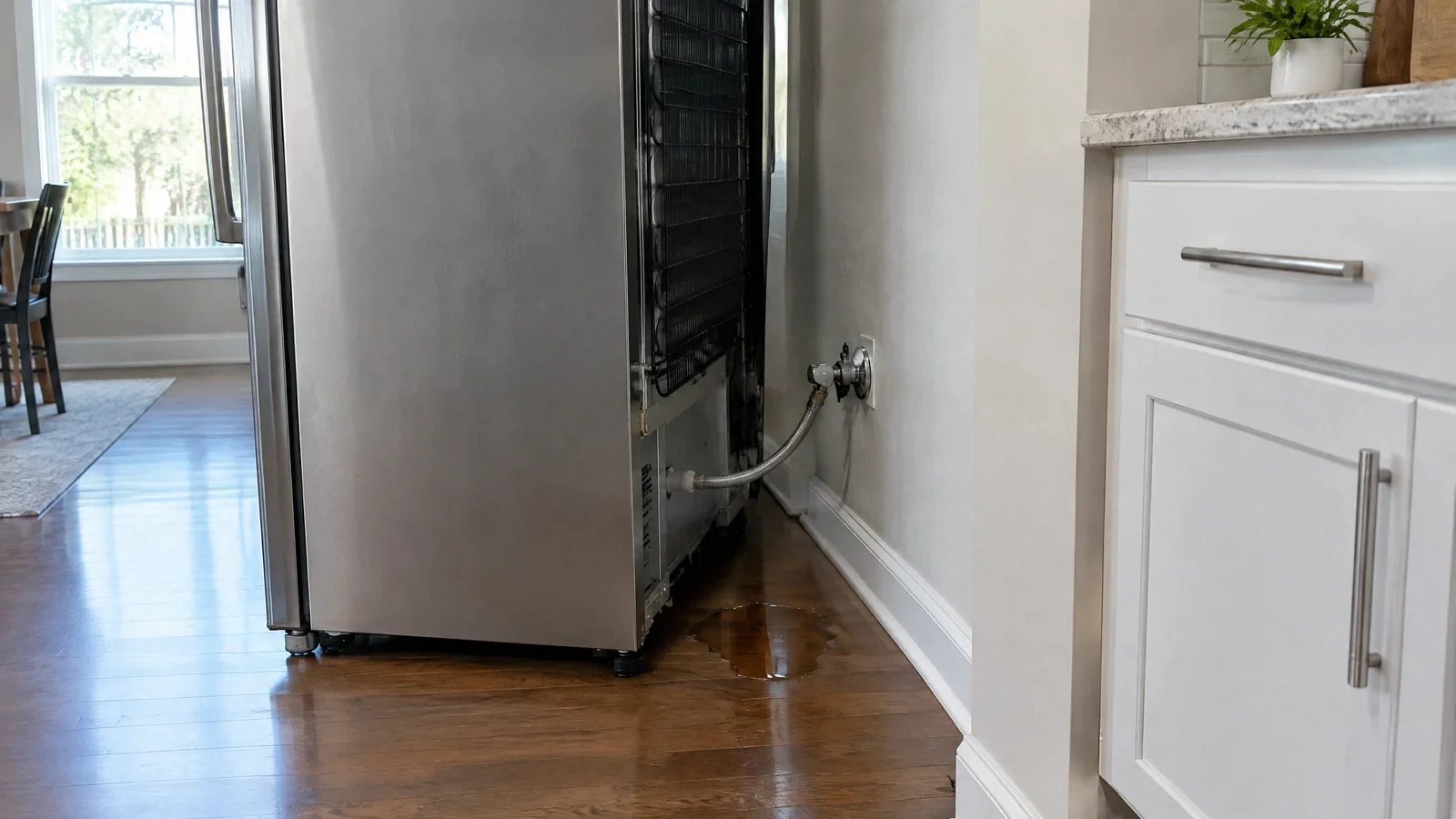
Close the accessible refrigerator supply valve if safe, avoid wet electrical connections, and arrange repair of the damaged line or fitting. Dry and inspect the floor and cabinet edges after the leak stops.
Separate the supply line from other causes
A refrigerator water supply line normally runs from a household shutoff valve to a fitting at the back of the appliance. A wet line, a crack, or a drip at either connection points toward the supply. Water can also come from a dispenser, filter housing, condensation, or a blocked defrost drain, so a puddle under the refrigerator alone does not identify the source. Note whether water appears while the ice maker fills or whether it continues with no one using the dispenser. If the leak continues after the refrigerator supply valve is closed, another source or a valve that does not fully close may be involved. Do not move a heavy refrigerator alone or drag it across a wet floor. Pulling it too far can strain the tubing or damage the floor.
Stop the water and choose a repair
If you can reach the dedicated valve without crossing water near an energized appliance, turn it off. If the valve will not close or water continues, use the home’s main shutoff where accessible and call a plumber. Avoid touching the plug or outlet while standing on a wet floor. Ask an electrician for help if safe electrical isolation is uncertain. With water off and the area safe, a technician can inspect the line for kinks, splits, abrasion and damaged fittings. Follow the appliance manual and local plumbing requirements when selecting replacement tubing and connectors. Overtightening a fitting may damage it; a visibly split or crushed line should not be treated as fixed simply by tightening. A plumber can replace a failed valve or connection and check for leaks under normal pressure.
Your next-step checklist
- Keep people away from immediate hazards and avoid disturbing damaged or contaminated materials.
- Record when the problem began, where it appeared, and any change after rain or water use.
- Arrange an assessment by a qualified professional when the cause or extent is uncertain.
- Keep photographs, inspection findings, repair details and receipts together.
- Confirm the cause has been corrected and follow up if the same signs return.
Related questions
Can the visible signs identify the exact cause?
No. The location and timing are useful clues, but similar symptoms can arise from different causes. An inspection and, when appropriate, testing are needed before selecting a repair.
When should I call a professional?
Call promptly when there is sewage, an electrical hazard, significant water intrusion, recurring symptoms, a damaged structure, or work that requires access to a roof, septic tank, excavation or electrical equipment.
What information should I keep after the repair?
Retain the written scope, observations, photographs, test or moisture findings where applicable, dates, invoices and any inspection or permit records. These details help identify a recurrence and support a claim if you decide to make one.
Sources & context
Public guidance supports the principles in this article. The practical questions and examples are editorial interpretation, not a site assessment or a coverage decision. State-specific rules apply only where identified.