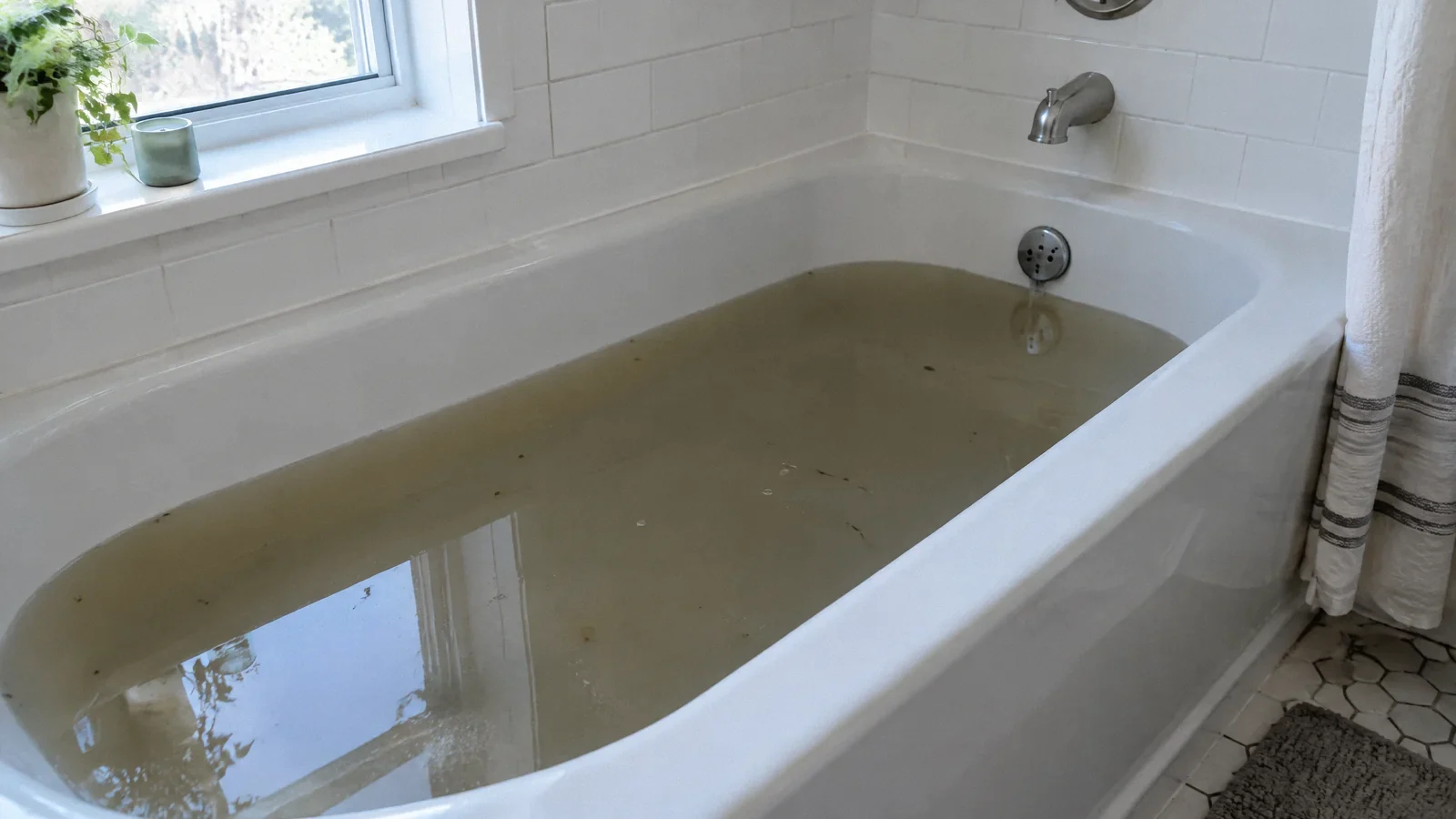
Stop using water immediately, keep people and pets away from the contaminated area, and call a septic professional or plumber. A tub backup can come from a blockage or a malfunction elsewhere in the septic system.
Stop adding wastewater and prevent exposure
A bathtub may be a low opening where wastewater appears when flow cannot leave the building normally. Stop flushing toilets, running laundry, bathing and using sinks. Warn everyone in the home and keep children and pets out of the bathroom. Do not use a chemical drain opener, repeatedly flush to test the line, or plunge the tub: additional flow can spread contamination and chemicals can complicate the work. If sewage reaches outlets or electrical equipment, stay out and ask the utility or an electrician to isolate power safely. Avoid contact with the water and do not attempt to open or enter a septic tank. Sewage and septic gases create serious hazards, including in spaces that appear empty.
Find the restriction without guessing
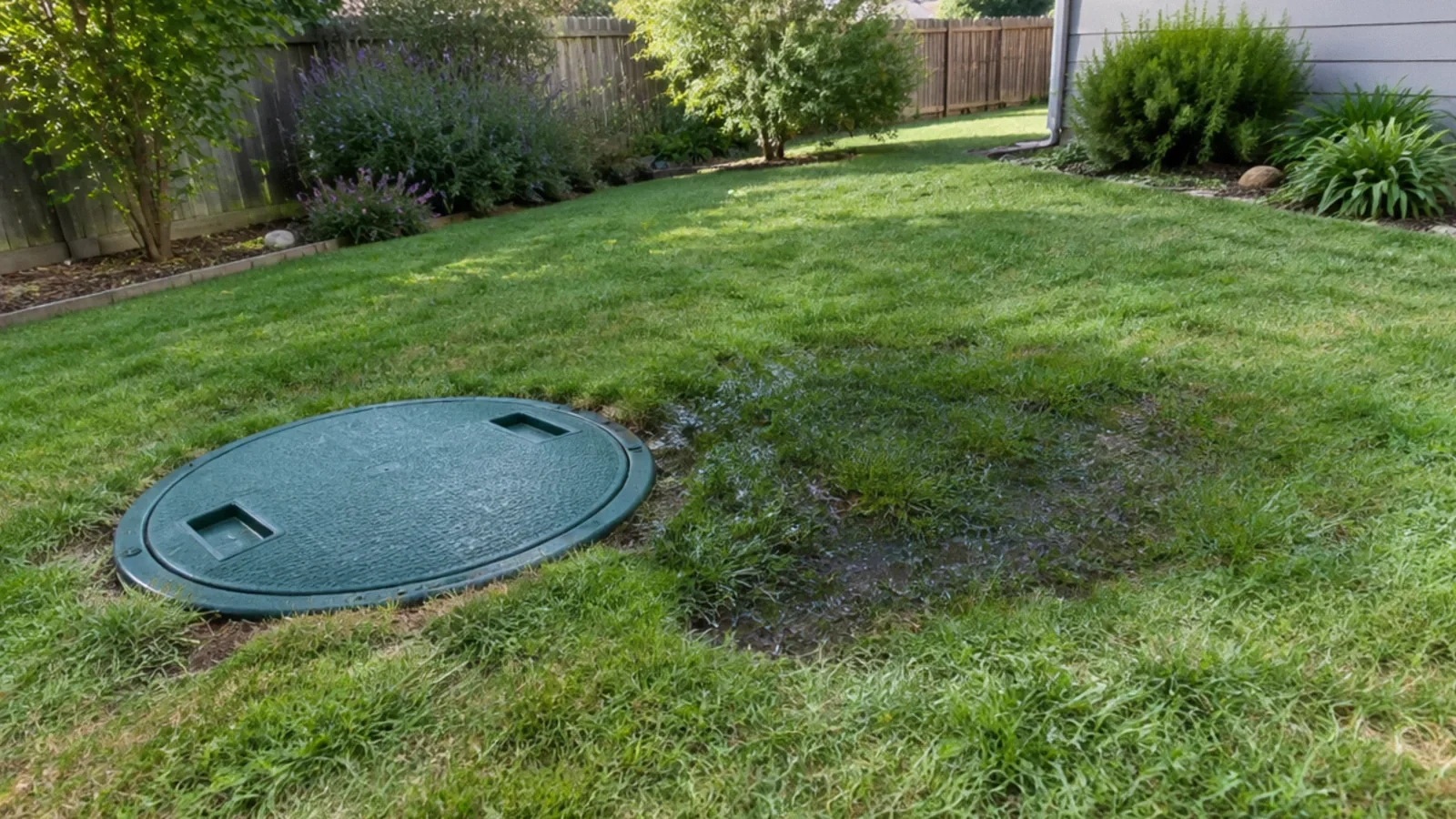
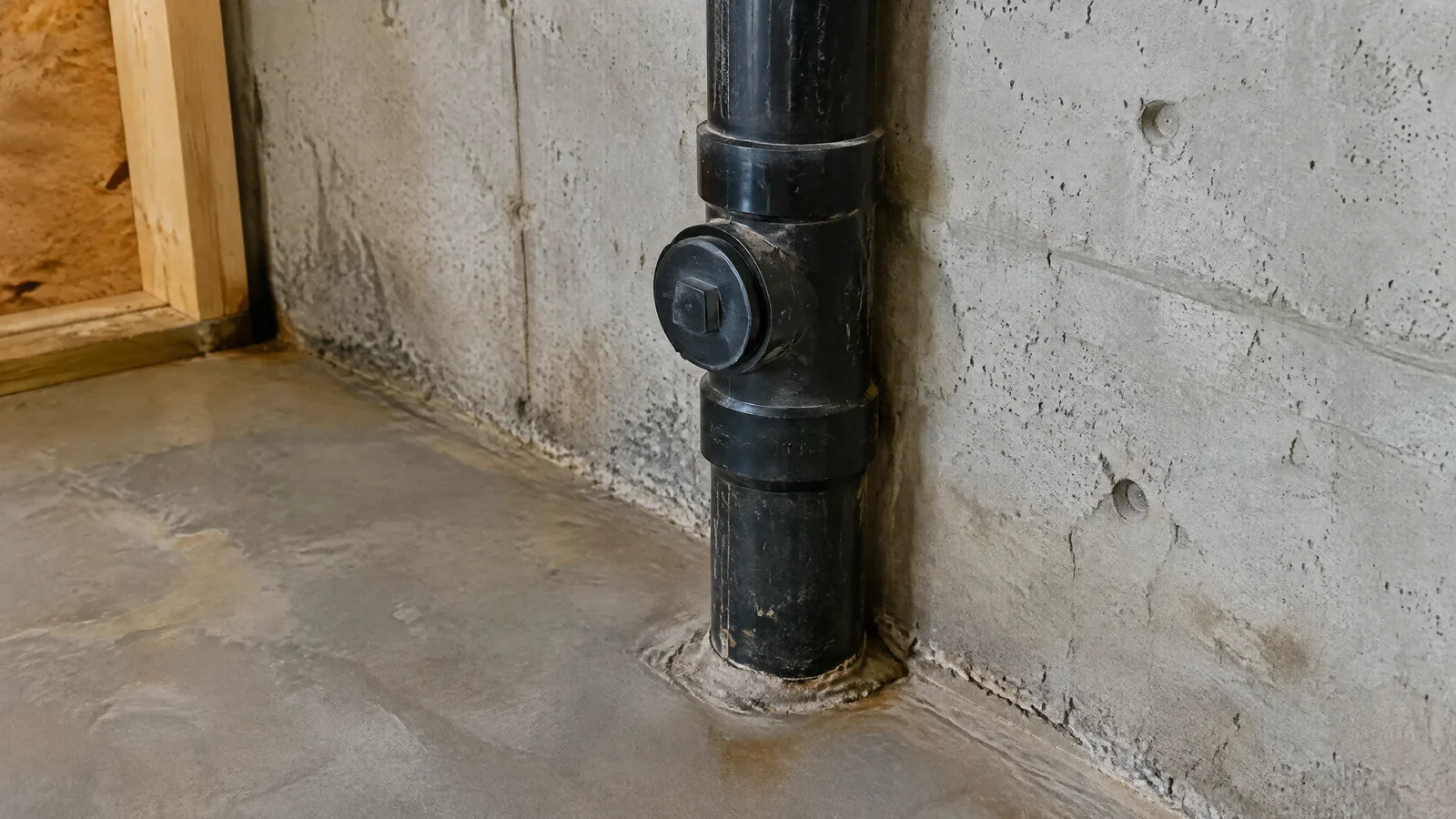
A blocked building drain, a damaged pipe between the home and tank, a full or obstructed tank outlet, a pump or control failure, or a saturated drainfield can produce similar symptoms. Slow drainage in several fixtures, gurgling, an alarm or wet ground near the system are useful clues but do not prove which component failed. Call a septic service provider familiar with the system; a plumber may be needed to inspect the building drain. Provide the age of the system, last service date, alarm status, recent rainfall and whether multiple fixtures are affected. The provider can review records, inspect components safely and use a camera where appropriate. Pumping may be necessary for a high tank, but pumping alone will not repair a broken pipe or failed drainfield.
Clean up and verify the repair
Treat the tub and any affected floor as sewage contaminated. Avoid tracking water into clean rooms. For a substantial spill or porous surfaces such as carpet, drywall or insulation, use a restoration firm experienced in sewage cleanup. The contractor should explain which materials require removal, how the area will be cleaned and dried, and how contamination will be contained. Follow local disposal rules and document damage when safe. If flooding has saturated the ground, the system may remain unable to accept normal use even after indoor water recedes; follow the septic professional’s instructions and conserve water. Before resuming ordinary use, ask what caused the backup, what was repaired, and how the system was checked under normal flow. Contact your insurer about the loss because sewer backup coverage depends on policy terms and endorsements.
Prepare for the inspection: Tell the dispatcher whether wastewater is actively rising, whether the home has a septic pump alarm, and whether the problem followed heavy rain or a power outage. Ask whether a plumber and septic provider are both needed. Provide a system diagram or the location of known access covers if available, but leave the covers in place. Note the date of the last inspection and pumping and whether previous backups occurred. If no safe toilet is available, ask the local health department about temporary sanitation options. Do not allow a contractor to enter a tank; confined-space work requires specialized procedures and equipment.
Prepare for the inspection: The cleanup and plumbing scopes should be coordinated. Ask which surfaces were contacted, whether water traveled beneath flooring, and how affected materials will be contained during removal. Photograph the affected area without entering contaminated water. Save receipts and write down when normal use stopped and resumed. If the backup returns after a repair, stop use again and report precisely which fixtures are affected. A repeat backup is evidence that the underlying problem or another restriction needs further investigation, not a reason to apply stronger drain chemicals.
Your next-step checklist
- Keep people away from immediate hazards and avoid disturbing damaged or contaminated materials.
- Record when the problem began, where it appeared, and any change after rain or water use.
- Arrange an assessment by a qualified professional when the cause or extent is uncertain.
- Keep photographs, inspection findings, repair details and receipts together.
- Confirm the cause has been corrected and follow up if the same signs return.
Related questions
Can the visible signs identify the exact cause?
No. The location and timing are useful clues, but similar symptoms can arise from different causes. An inspection and, when appropriate, testing are needed before selecting a repair.
When should I call a professional?
Call promptly when there is sewage, an electrical hazard, significant water intrusion, recurring symptoms, a damaged structure, or work that requires access to a roof, septic tank, excavation or electrical equipment.
What information should I keep after the repair?
Retain the written scope, observations, photographs, test or moisture findings where applicable, dates, invoices and any inspection or permit records. These details help identify a recurrence and support a claim if you decide to make one.
Sources & context
Public guidance supports the principles in this article. The practical questions and examples are editorial interpretation, not a site assessment or a coverage decision. State-specific rules apply only where identified.