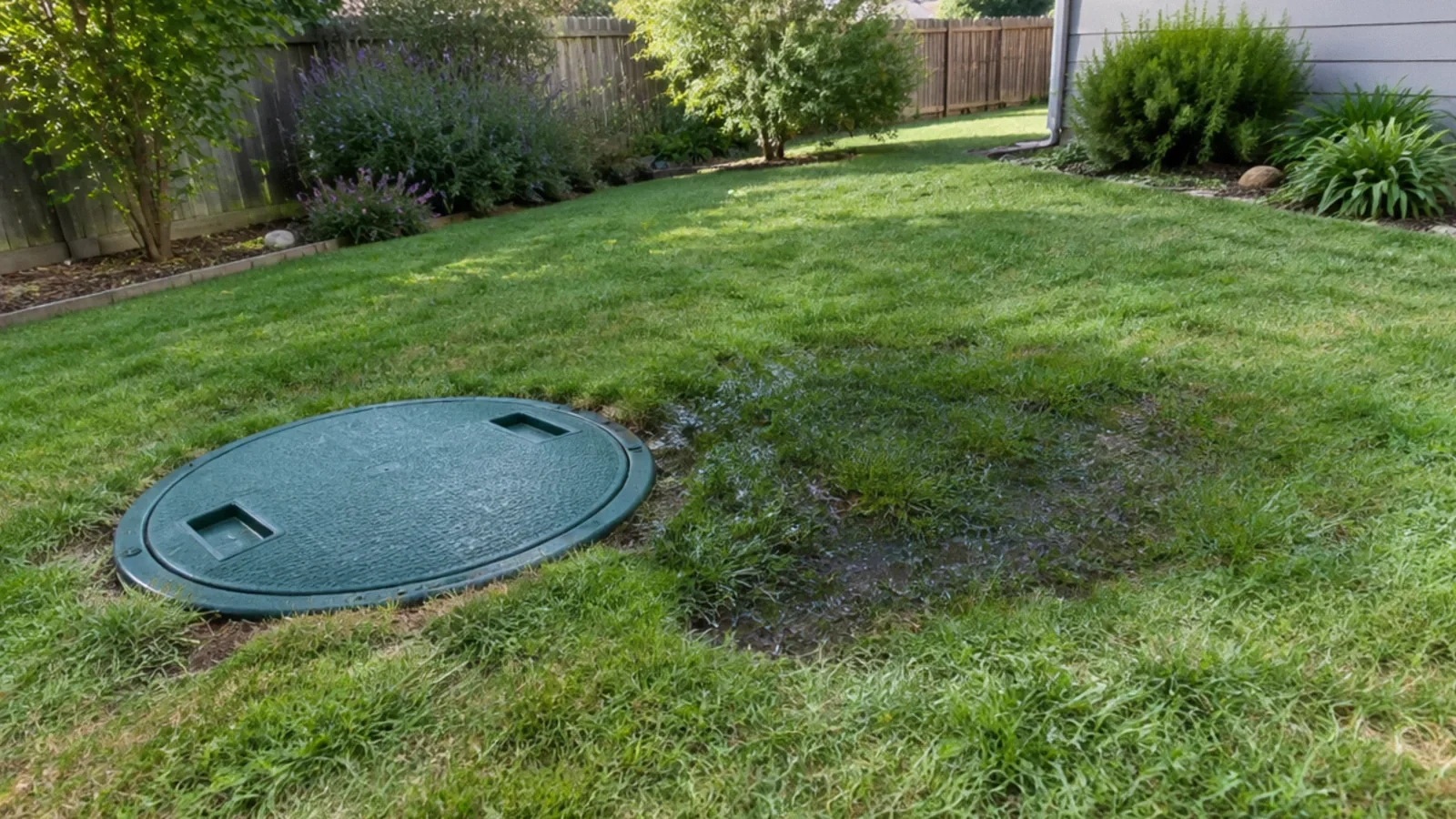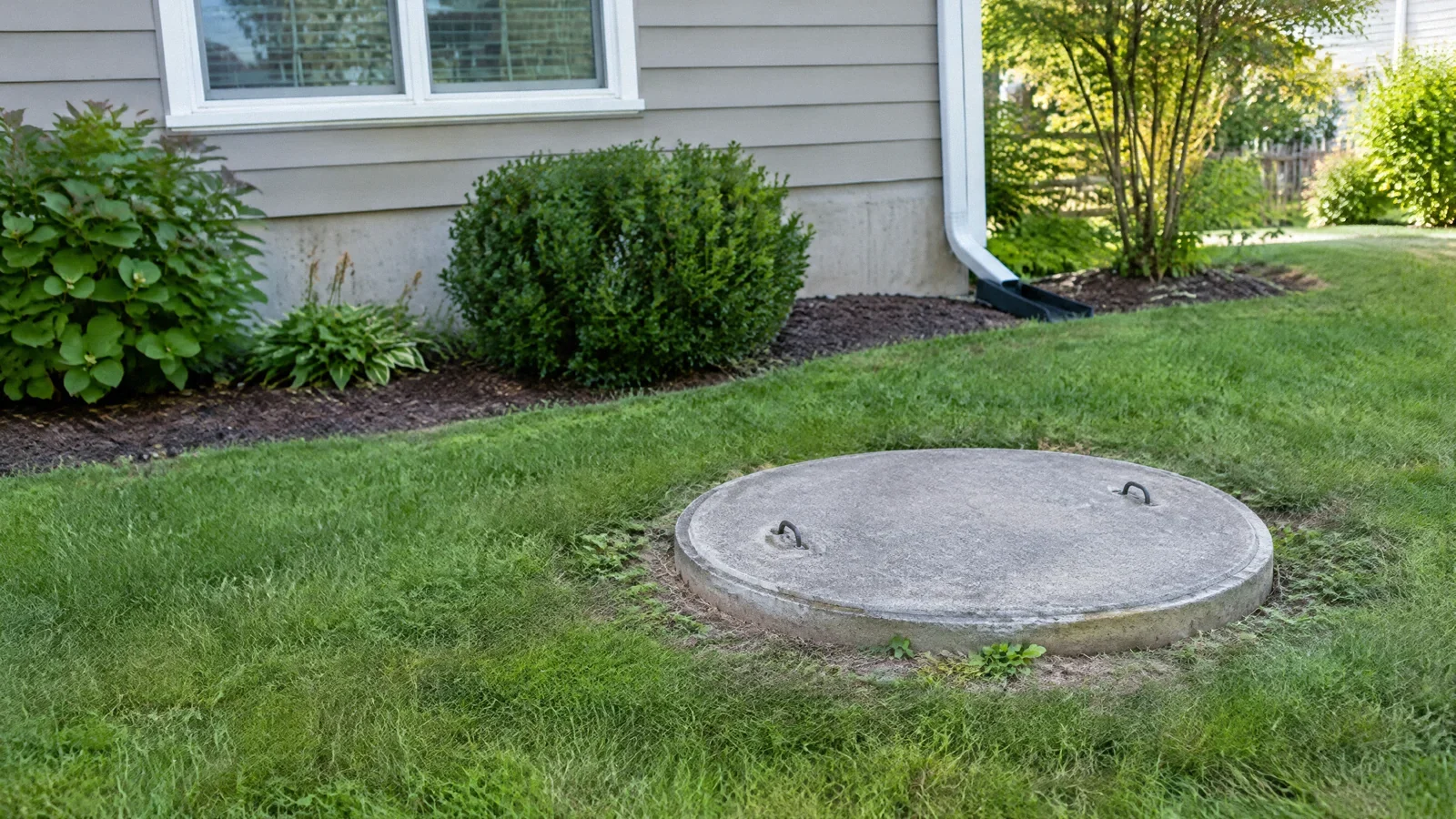
A recurring sewage odor near a septic tank or drainfield warrants inspection, especially with wet ground, slow drains or a backup. Keep away from the area, reduce water use if other symptoms appear, and never open or enter the tank.
Locate the odor safely
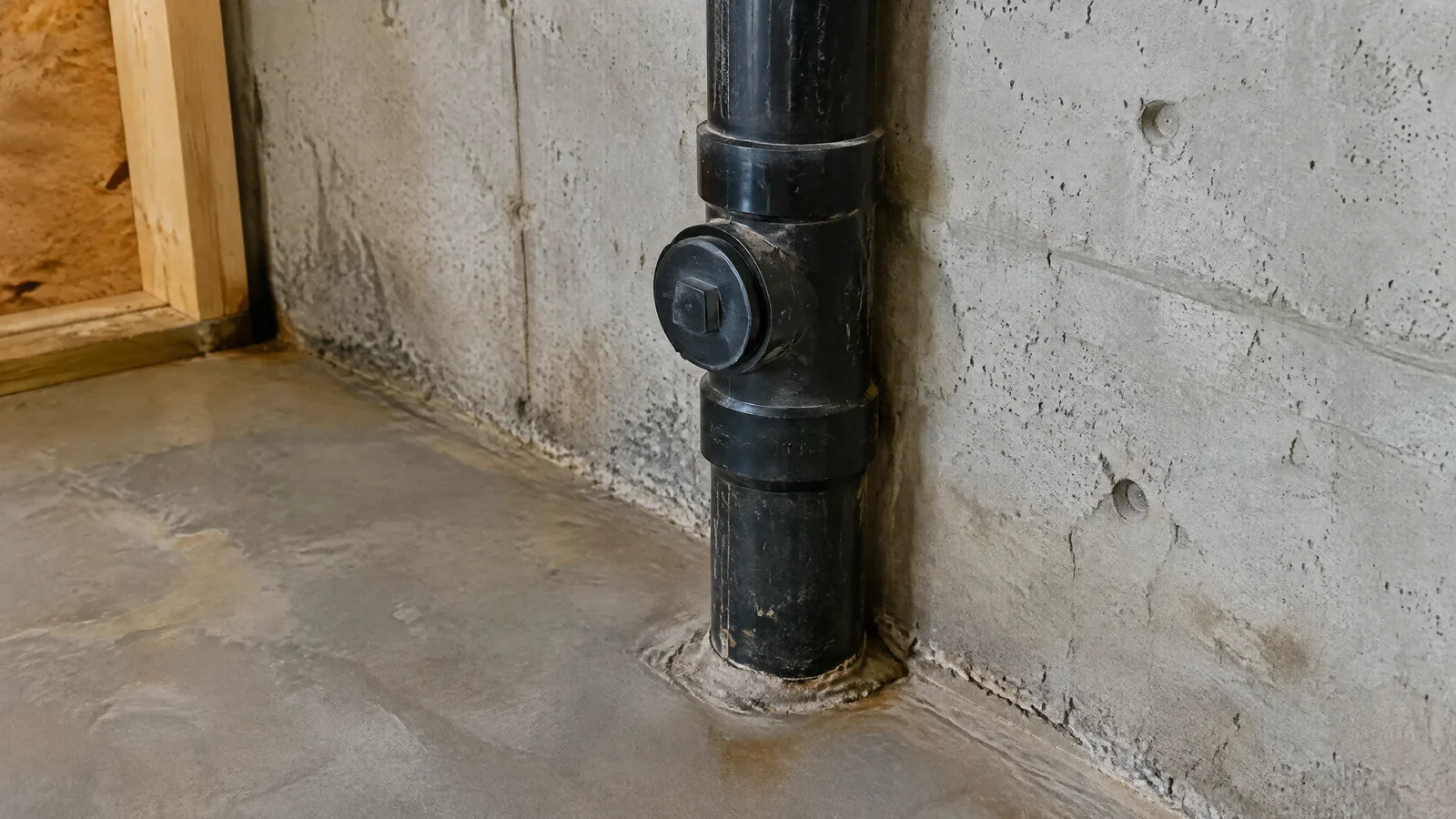
Notice whether the smell is outdoors near an access cover, near the drainfield, or inside at a particular fixture. Record the time, wind, rainfall and whether the odor follows a large water-use event. A smell near the tank can be associated with a leaking or damaged component, a system that is not draining properly, or another problem; the location of an odor alone does not establish the cause. Indoor odors can also arise in building plumbing, so tell the provider where the smell is strongest rather than assuming the tank itself is defective. Keep children and pets away from wet ground and any damaged or unsecured cover. Never lean into an opening or enter a septic tank: hazardous gases can overwhelm a person rapidly.
Look for accompanying signs and arrange inspection
Slow drains, gurgling, wastewater surfacing, a high-water alarm or sewage backing into the home make prompt service particularly important. Reduce nonessential water use and call a septic professional. If wastewater is entering the house, stop using fixtures and prevent contact with the affected area. The technician can review maintenance records and examine the system for leakage, backup, damaged inlet or outlet components and drainfield conditions. Heavy rain may saturate a field and affect performance, while an obstruction or damaged cover requires a different repair. Request a clear explanation of the observed fault. Pumping may be part of service, but it does not automatically fix a leaking pipe, damaged seal or saturated field.
Resolve the cause and follow up
Do not mask a persistent odor with fragrances, additives or repeated chemical treatments. Ask the contractor what was repaired, how the area was made safe, and whether further inspection is needed. If sewage has surfaced, avoid walking through it and follow local health department advice on cleanup and protecting nearby wells. If the odor is indoors and the septic system checks out, a plumber can inspect building drains, traps and vents without entering the septic tank. Keep records of pumping, repairs and the location of the system. Protect the drainfield from vehicles and excess surface water, and use water efficiently. If the odor returns, report the pattern and any other symptoms rather than assuming the previous repair could not have failed.
What to tell the service provider: Describe whether the odor is constant or intermittent, whether it is stronger after rain or water use, and whether you have seen wet ground or an alarm. Provide the last service date, known tank location and any relevant repair history. Do not remove the cover to check a level; the contractor can inspect safely. An unusually strong odor inside a building, especially with symptoms such as dizziness, calls for leaving the area and contacting the appropriate emergency service or utility from outside. Do not attempt to identify an unknown gas by smell or operate equipment in a potentially hazardous space.
What to tell the service provider: If the provider finds no tank defect, ask what was inspected and whether plumbing vents, fixture traps or other sources need separate evaluation. A dry trap may be associated with indoor odor, but it should not be assumed to explain an outdoor wet patch. When repairs are complete, observe from a safe distance whether the odor and other symptoms resolve during ordinary use. Recurrent smell, new standing water or slow drains are reasons to call back. Keep children and pets away from any area where sewage may have surfaced until the health authority or cleanup professional says it is safe.
Your next-step checklist
- Keep people away from immediate hazards and avoid disturbing damaged or contaminated materials.
- Record when the problem began, where it appeared, and any change after rain or water use.
- Arrange an assessment by a qualified professional when the cause or extent is uncertain.
- Keep photographs, inspection findings, repair details and receipts together.
- Confirm the cause has been corrected and follow up if the same signs return.
Related questions
Can the visible signs identify the exact cause?
No. The location and timing are useful clues, but similar symptoms can arise from different causes. An inspection and, when appropriate, testing are needed before selecting a repair.
When should I call a professional?
Call promptly when there is sewage, an electrical hazard, significant water intrusion, recurring symptoms, a damaged structure, or work that requires access to a roof, septic tank, excavation or electrical equipment.
What information should I keep after the repair?
Retain the written scope, observations, photographs, test or moisture findings where applicable, dates, invoices and any inspection or permit records. These details help identify a recurrence and support a claim if you decide to make one.
Sources & context
Public guidance supports the principles in this article. The practical questions and examples are editorial interpretation, not a site assessment or a coverage decision. State-specific rules apply only where identified.