Heavy or uneven snow can overload a roof. If you notice signs such as new sagging, cracking noises or doors suddenly sticking, leave promptly and contact the local building authority or a qualified structural professional. Do not climb onto the roof.
Why snow can overload a roof
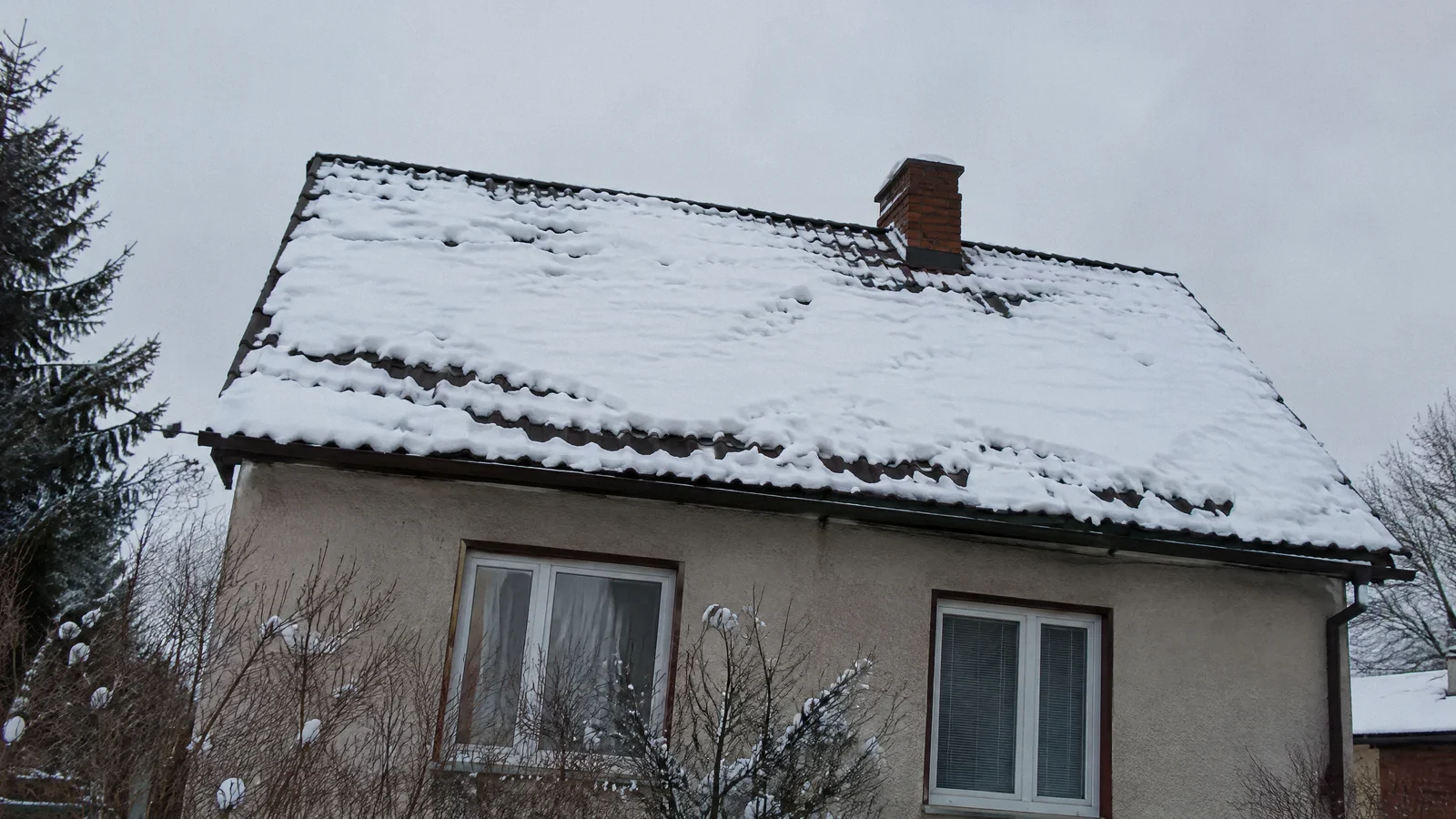
Snow adds weight to a building, and a roof can fail when the load exceeds what its structure can support. The risk is not determined by depth alone: snow with more water content weighs more than dry, fluffy snow of the same depth. Ice and rain absorbed by existing snow can add weight. The roof’s construction, condition and previous alterations matter too.
FEMA explains that uneven accumulations can develop where wind drifts snow or where snow slides from a higher roof onto a lower one. Valleys, parapets and roof projections can concentrate loads. A porch or addition may have a different structural system from the main building. An apparently modest depth on the ground does not prove that every part of the roof is safe.
Warning signs that require a prompt response
FEMA lists new sagging ceilings or roof members, popping or cracking sounds, bowed framing, cracked walls, and doors or windows that suddenly become difficult to open or close among possible signs of overstress. Severe leaks and excessive water collecting away from drainage points on a low-slope roof also warrant attention. These observations are warnings, not a diagnosis of the exact cause.
If you observe such signs during a snow event, promptly evacuate the building and contact the local building authority or a qualified design professional for a detailed structural inspection, as FEMA advises. Call emergency services if collapse appears imminent or someone is in immediate danger. Move away from the building and falling snow or debris. Do not return until the responsible authority or qualified professional says it is safe.
A roof may not provide a clear warning
Some overstressed structures show visible or audible changes before failure, but a lack of obvious sagging is not a guarantee of safety. Snow can conceal a damaged surface, skylight or opening. Conditions may change quickly as wind redistributes snow or rain adds weight. Never enter or stay in a building you believe may be failing simply to look for another sign.
Tell the responding authority what you observed, when the changes began and whether anyone remains inside. Share the location of affected areas and any known history of leaks or structural repair. This information helps responders plan their assessment; only a site-specific inspection can determine the building’s condition.
Why a single safe snow depth is misleading
A safe-looking number copied from another building cannot establish the capacity of yours. Roof geometry, design loads, deterioration, framing connections and uneven accumulation all influence performance. OSHA notes that ground snow can give only a rough indication of roof loading because melting, refreezing, drifting, slope and roof features affect the accumulation above.
A structural engineer can evaluate the building and available records, identify areas of concern and advise on the appropriate response. Do not calculate safety by multiplying an estimated depth by a generic weight and assume the resulting number resolves uncertainty. If a problem is urgent, leave first and seek professional help from a safe location.
Why snow removal is hazardous
Roof snow removal exposes people to falls, hidden roof openings, falling material, electrical hazards and possible structural collapse. OSHA cautions that the added weight of workers and equipment must be considered and that poorly planned removal can create an uneven load. Working from a ladder or reaching near power lines introduces additional dangers.
Do not climb onto a snow-covered or suspect roof, and do not try to clear it from below while standing under the eaves. Hire qualified professionals who can assess the structure and plan a safe method. When contacting them, describe any warning signs so they do not treat a potentially unstable building as a routine clearing job.
Flat roofs, ponding and melting
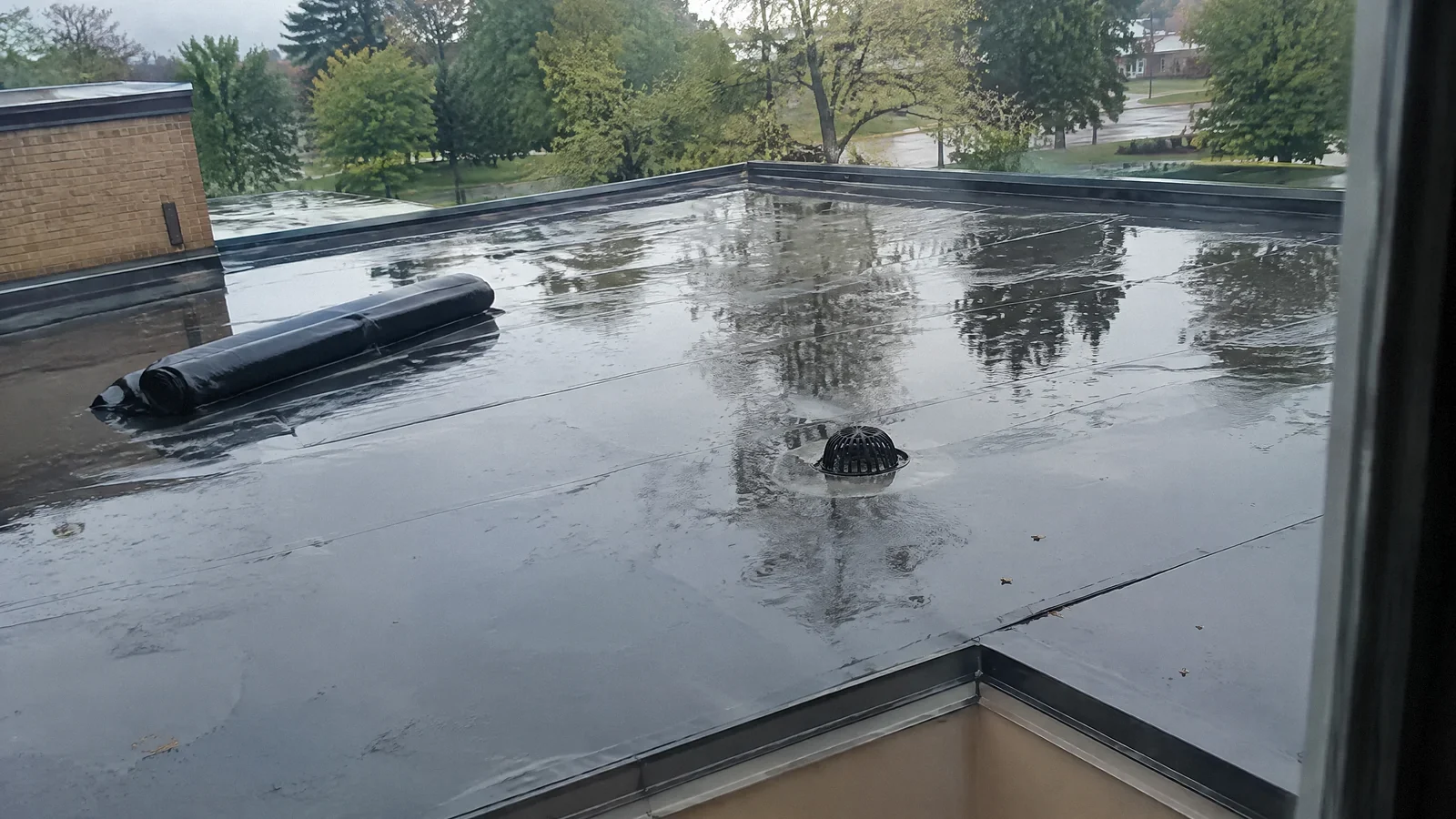
A low-slope roof relies on its drainage system to carry water away. If drains are blocked or water collects in a low spot, ponding can add a concentrated load. Melting snow does not necessarily make an overloaded roof immediately safe: water may remain trapped, and freezing conditions can obstruct drainage. FEMA identifies excessive ponding away from drainage locations as a potential warning sign.
Do not go onto the roof to clear an obstructed drain when the structure or conditions may be unsafe. A qualified professional can assess both the drainage path and structural condition. Keep people away from areas below falling ice and contact the property manager promptly in a shared building.
Before the next winter storm
Arrange a professional inspection if you know of damaged framing, recurring leaks, past structural changes or persistent drainage problems. Resolve identified defects before snow arrives. Keep building plans and contact information accessible, and ask the building owner or manager who is responsible for monitoring and emergency decisions.
Follow local forecasts and winter alerts, and identify a safe place to go if occupants must leave. For commercial sites, a written plan can identify who contacts the building authority, accounts for occupants and engages qualified snow-removal help. A plan is useful only if it is adapted to the building and practiced before an emergency.
After a collapse or suspected failure
Stay outside and keep others away. Do not enter to retrieve belongings, turn off equipment or photograph damage. Responders must assess hazards such as unstable debris, damaged utilities and falling material. If people may be trapped, call emergency services and communicate their last known location without attempting an unsafe rescue.
Once officials permit access, record damage from safe locations and ask your insurer about documentation and next steps under the actual policy. Repairs should be based on a structural assessment, including the cause of the failure and any drainage or design issues identified. A cosmetic ceiling repair alone does not establish that the roof is safe.
Your next-step checklist
- Leave promptly if new signs of structural distress appear.
- Call emergency services for an immediate danger.
- Contact the local building authority or qualified structural professional.
- Keep away from falling snow, ice, wires and damaged areas.
- Arrange qualified assessment and snow removal; do not climb onto the roof.
Related questions
Can snow collapse a roof?
Yes. Snow accumulation that exceeds the roof structure’s capacity can cause failure, particularly when loads are uneven or the structure is weakened.
What are warning signs of excessive snow load?
Possible signs include new sagging, cracking sounds, bowed members, cracked walls, suddenly sticking doors or windows, severe leaks and unusual ponding.
How many inches of snow are safe on a roof?
There is no universal depth. Snow weight, distribution, roof design and structural condition vary. A qualified professional must evaluate the specific building.
Should I remove the snow myself?
Snow-covered roofs and ladders present serious fall and collapse hazards. Keep away from a suspect roof and contact qualified professionals who can assess the structure and plan the work.
Sources & context
Public guidance supports the principles in this article. The practical questions and examples are editorial interpretation, not a site assessment or a coverage decision. State-specific rules apply only where identified.
- FEMA: Snow Load Safety Guidancefederal building safety guidance
- OSHA: Snow Removal from Roofsfederal worker safety guidance
- FEMA: Snow Load Safety Guidefederal building guidance