Keep people away from a potentially unstable roof and contact a qualified roofer. A temporary cover must account for roof condition, drainage, the existing membrane and wind; a tarp is not a permanent repair. Never install one during wind or rain.
A flat roof needs a site-specific plan
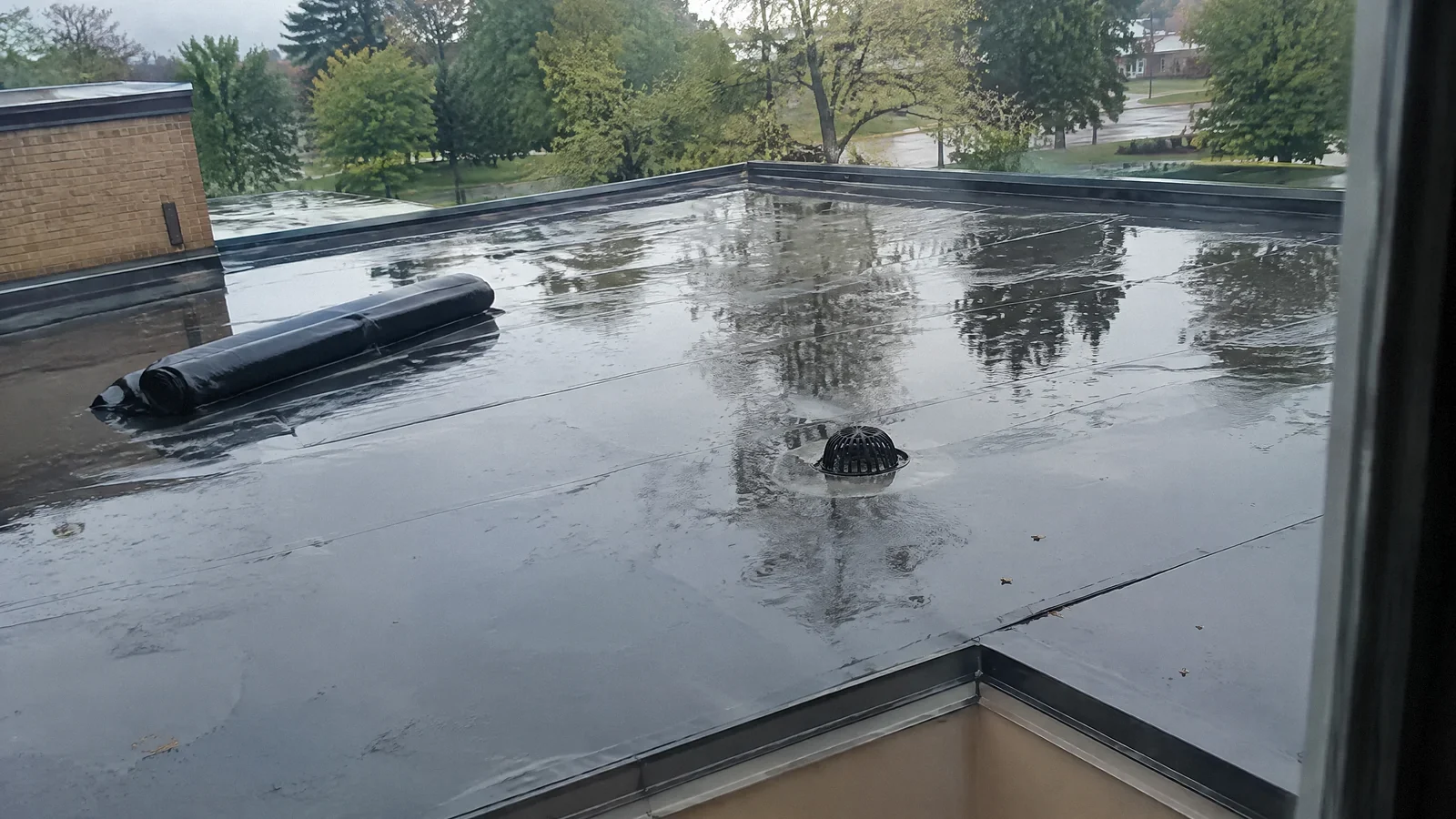
A tarp can provide temporary protection after roof damage, but a flat or low-slope roof is not simply a level version of a shingle roof. It may have drains, scuppers, parapets, equipment and a continuous waterproofing membrane. Water may travel across the roof or within its layers before appearing on a ceiling, so the indoor leak does not always identify the opening above.
The appropriate temporary measure depends on the condition of the deck, roof system, weather and available safe access. A qualified roofer can assess whether a temporary cover is suitable or whether another emergency repair is needed. Ask how the work will protect drainage and when the permanent repair can be assessed.
Stay off a damaged or wet roof
Do not climb onto the roof to inspect or cover it during a storm, while it is raining, or when wind makes handling a sheet dangerous. OSHA warns that roof tarping exposes workers to falls, electrical hazards and unstable structures; a damaged roof must be assessed for strength before workers go onto it. A surface that looks flat may be slippery or conceal openings.
Keep away from downed wires and treat them as energized. If the ceiling is sagging, water is accumulating rapidly, structural members are damaged, or the building seems unsafe, leave the affected area and contact emergency services or the building authority as appropriate. Do not stand beneath a bulging ceiling or attempt to drain it yourself.
Why ponding and drainage matter
Many roofs called flat have a slight slope toward drains or scuppers. FEMA notes that blocked or inadequate drainage can allow water to pond on low-slope roofs, adding a load to the structure. A tarp or its attachment must not create a basin, obstruct a drain or divert water toward a vulnerable opening.
Water is heavy and the roof may already be weakened. Do not add loose ballast, containers or other weight on your own to hold down a sheet. A professional can consider load, the drainage path and the condition of the deck together. If ponding or deflection suggests an urgent structural problem, an engineer may need to assess the roof before any roof work.
Protect the membrane and roof details
Low-slope roofs use different systems, including single-ply membrane, modified bitumen and built-up roofing. The existing material, its condition and any manufacturer requirements affect which temporary materials and attachment methods are appropriate. Incompatible adhesive or careless fasteners may create additional openings or complicate a later repair.
A roofer should assess seams, penetrations, flashings, parapet edges and drains as well as the obvious damage. Avoid assuming that simply placing plastic directly over an indoor stain will stop the leak. Ask the contractor how the temporary system will connect to sound surrounding material and how existing roof warranties or the building manager’s requirements will be handled.
Wind can turn a cover into a hazard
A loose sheet can lift, tear or move in wind, exposing the opening again and potentially becoming debris. Wind forces vary with exposure, roof height and edge details, so there is no universally safe spacing or quantity of weights for every roof. Professional temporary protection needs a plan for securing the cover without compromising the building or its drainage.
OSHA specifically says never to install a roof tarp during wind or rain. Wait until conditions permit safe assessment and work. Even after installation, ask who will inspect the temporary protection following another storm and whom to call if it loosens. Do not go up to adjust it during hazardous weather.
Limit water damage from inside safely
Move people and movable belongings away from the affected area if you can do so without entering a hazardous space. A container may catch a small drip, but it does not repair the roof or make a wet ceiling safe. Keep clear of water near electrical equipment; contact the utility or a qualified electrician if power presents a hazard.
Photograph visible damage from a safe location and note when leaks appeared. Notify the owner or property manager promptly, especially in a multi-tenant building where access and roof responsibility may be shared. Contact the insurer as applicable and ask what documentation and temporary measures are required by the actual policy.
From temporary cover to permanent repair
A temporary tarp is an interim measure, not proof that the roof is watertight. Ask for the intended duration, the limits of the cover, the follow-up inspection and a written description of the proposed permanent repair. Repeated leaks, wet insulation or hidden damage may require a broader assessment than replacing a small visible patch.
The permanent solution should address the leak source and any drainage or structural issue identified by the professionals. FEMA recommends that damaged low-slope systems be evaluated in the context of wind resistance and ponding. Drying inside the building also matters: replacing a stained finish without resolving trapped moisture can leave the underlying problem in place.
Questions to ask before work begins
Ask who will assess structural safety, how fall protection and electrical hazards will be managed, whether the proposed cover preserves the drain path, and how it will be secured for the expected exposure. Confirm the roofer is qualified for the existing roof system and has appropriate credentials and insurance for the jurisdiction.
Request photographs from the contractor rather than going onto the roof yourself. Keep the assessment, temporary-work record and repair estimate together. If conditions change or water continues to enter, contact the contractor promptly and keep people out of unsafe areas while waiting for further advice.
Your next-step checklist
- Stay off wet, windy or damaged roofs.
- Keep people away from sagging ceilings and electrical hazards.
- Contact a qualified roofer and request a safe assessment.
- Discuss drains, membrane compatibility, wind and added weight.
- Document damage safely and arrange permanent repair.
Related questions
Can a flat roof be tarped?
Sometimes, but the roof condition, drainage, membrane and wind exposure determine whether a temporary tarp is appropriate. A qualified roofer should assess the site.
Can I install a tarp while it is raining?
No. OSHA says never to install a roof tarp during wind or rain. Wait for safe conditions and qualified help.
Should a tarp cover the roof drain?
A temporary cover should not obstruct the drainage path or create ponding. A roofer should design the arrangement for the specific roof.
Is a tarp a permanent roof repair?
No. It is temporary protection while the damage and a permanent repair are evaluated.
Sources & context
Public guidance supports the principles in this article. The practical questions and examples are editorial interpretation, not a site assessment or a coverage decision. State-specific rules apply only where identified.
- OSHA: Roof Tarping Safetyfederal worker safety guidance
- FEMA: Roof Systems—Low-Slope Roofsfederal building guidance
- FEMA: Snow Load Safety Guidefederal building guidance