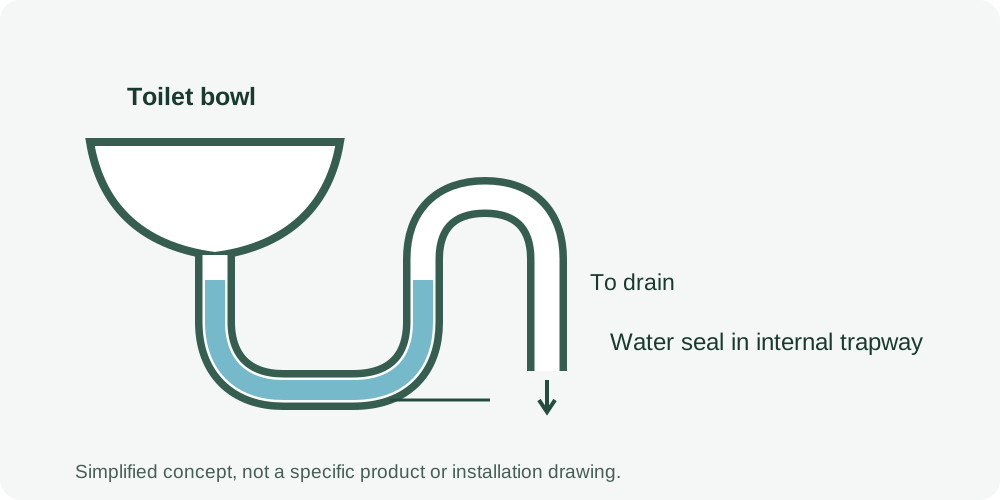
The toilet trapway is the curved passage built into most toilet bowls between the bowl and outlet. Water retained in the bend forms a seal against sewer gas; a blockage or poor flush may occur there or elsewhere in the drain.
Where the toilet trap is located
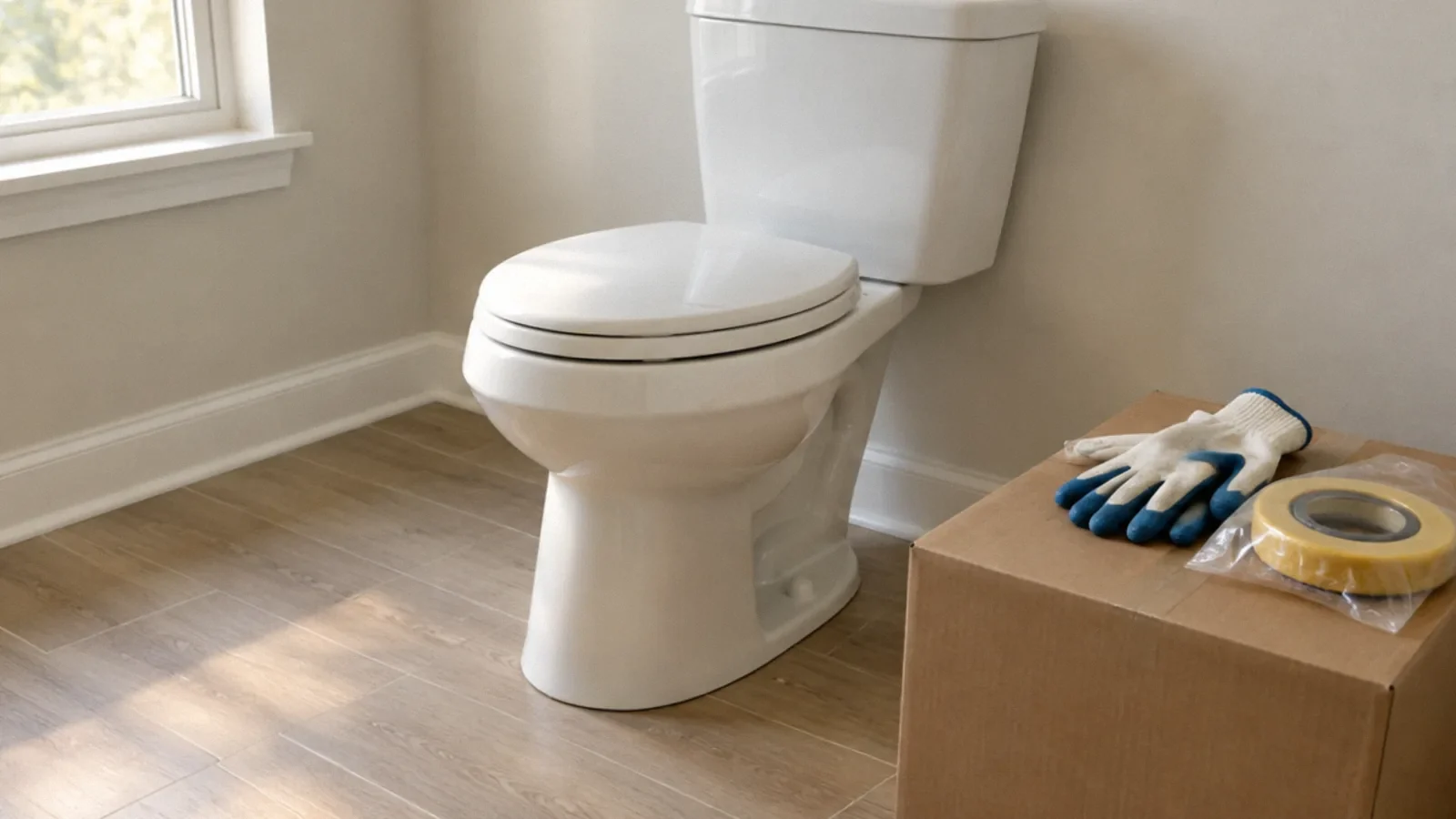
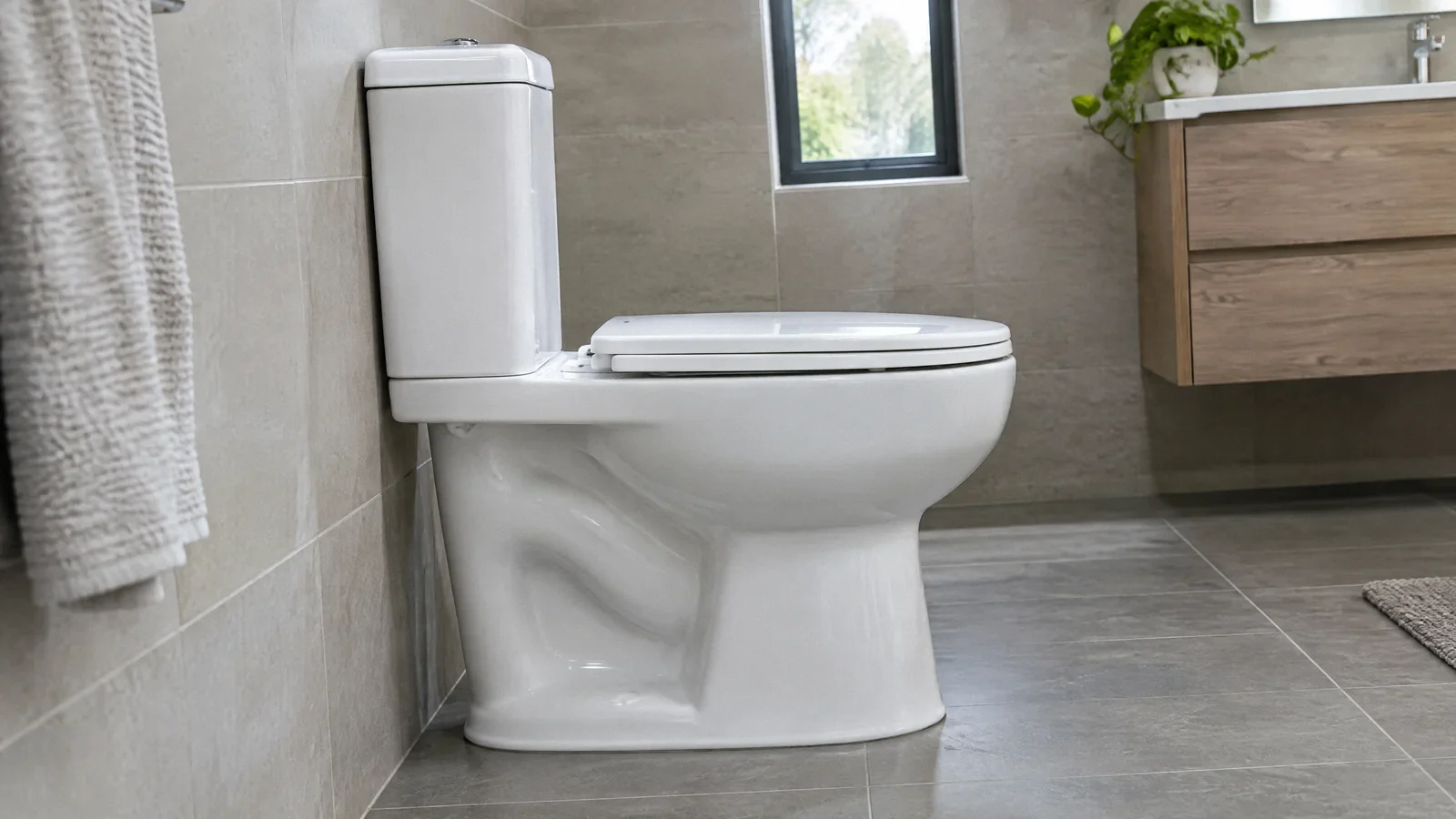
On a conventional toilet the trapway is molded into the fixture, behind and below the bowl. Some toilets show its curved outline on the side; a skirted design conceals it. The visible water in the bowl is connected to water held in this passage. The exact shape and route depend on the model, so the outside outline is not a precise picture of its interior.
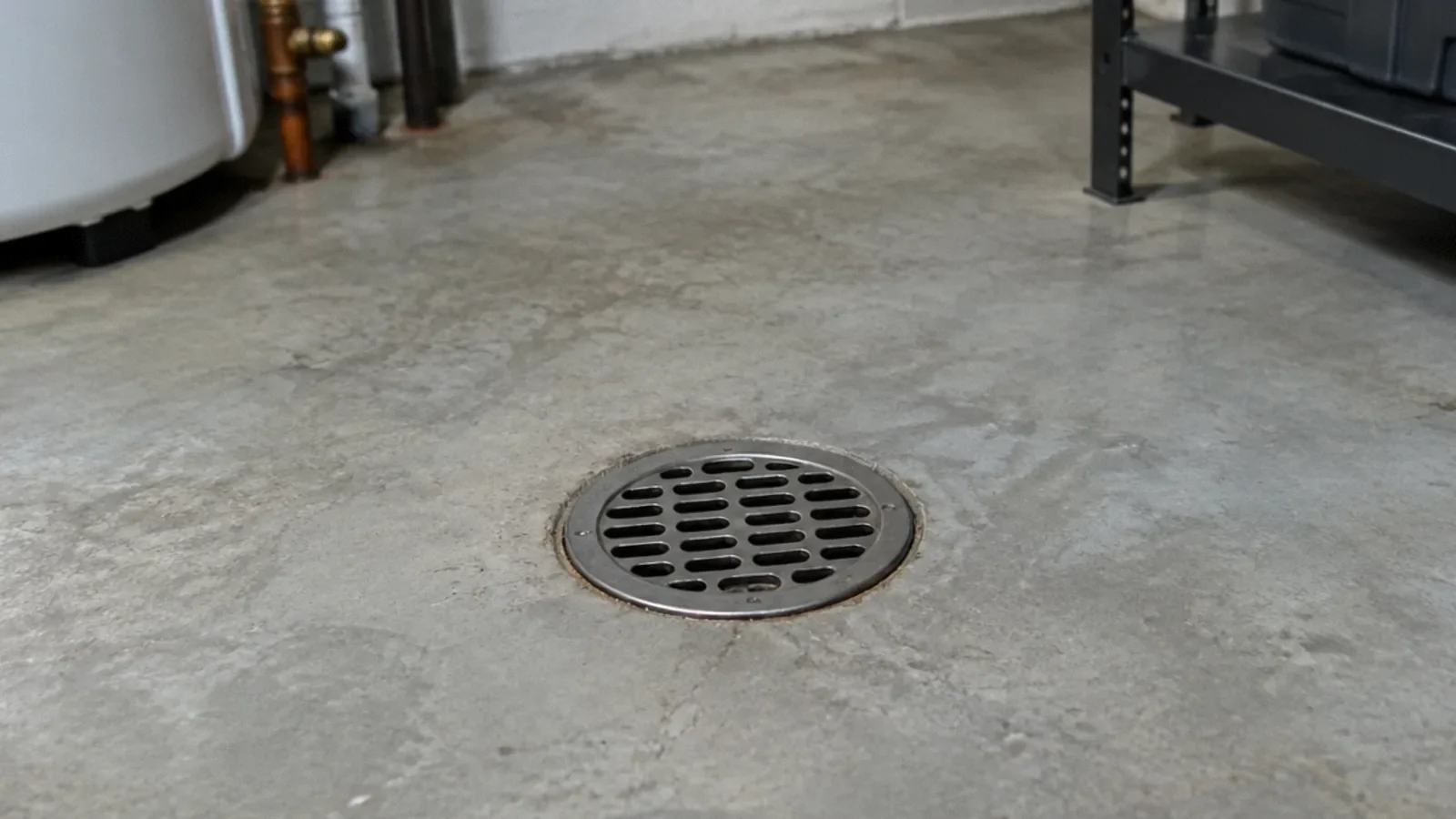
A toilet differs from a sink, where a separate P-shaped trap is commonly visible below the fixture. A toilet usually has its trap built into its ceramic body and does not normally need a second separate trap underneath. The fixture connects at its outlet to the building drain; a floor outlet and a wall outlet have different physical arrangements.
A simple trapway diagram in words
Read this as a path, not a scale drawing: bowl water → curved built-in trapway with a low water-filled bend → trapway crest → toilet outlet → building drain. The bend retains water after a normal flush. That water seal separates room air from the drain system while allowing waste and water to pass during a flush. The high point in the route helps establish the resting water level.
A search for a toilet P-trap diagram may describe this water-seal function, but the actual toilet trapway is not necessarily shaped like an exposed sink P-trap. A floor-discharge toilet sends flow down through its outlet, while a wall-outlet model sends it toward the wall. The outside letter shape is less important than the built-in water seal and the correct installation specified by the manufacturer.
What happens during a flush
When the toilet is flushed, water enters the bowl and carries waste through the trapway to the outlet. Many common designs use siphonic action as the passage fills, followed by a refill that restores water in the bowl and trap. Other designs use different flushing mechanisms. The tank, bowl passages, trapway, outlet, and downstream drain must all operate as intended for an effective flush.
A weak flush can have several causes, including insufficient tank refill, an obstruction in the bowl or trapway, a downstream blockage, or a problem with the fixture. One slow flush is not proof of a blocked trap. If water rises unusually high, stop flushing to avoid an overflow. When the cause is unclear, a plumber can inspect the fixture and drainage system.
Clogs, odors and low water
Paper or an object can lodge in the trapway, while a clog farther down the drain may cause similar symptoms. Multiple slow fixtures, a sewage backup, or repeated overflows are reasons to stop using affected plumbing and contact a plumber. Do not pour chemical drain cleaner into a toilet as a first response: products can damage surfaces, create splash hazards, or complicate a plumber’s work. Tell the plumber if chemicals have already been used.
If a seldom-used toilet has an unusually low bowl level, evaporation may have reduced the water seal. A normal refill may restore it when the fixture is otherwise functioning, but recurring low water or sewer odor needs investigation. Venting problems, leaks, or fixture defects are possible explanations. An odor alone does not prove which component failed, and a cracked fixture or persistent leak should be assessed promptly.
Inspection and repair choices
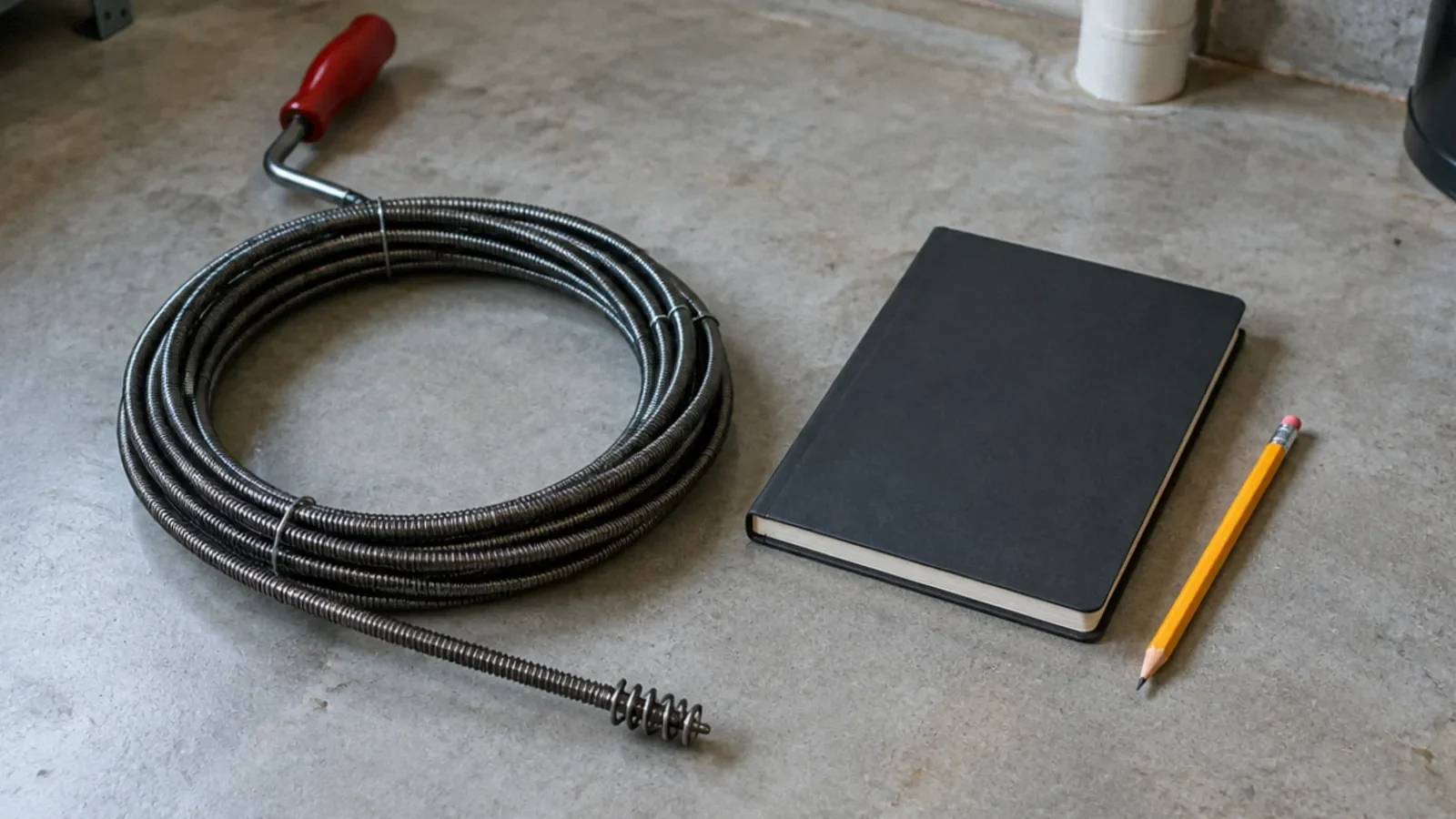
Record the model, whether other drains are affected, and when symptoms occur. A plumber may evaluate the bowl, trapway, outlet seal, drain, and venting as appropriate. An object lodged in the fixture might require a different approach from a blockage in the building sewer. Ask for the proposed diagnosis and scope before the toilet is removed or a line is opened.
If a replacement is recommended, compare the outlet position, rough-in dimensions, water supply, accessibility needs, and local requirements. Product diagrams show the specific fixture more reliably than a generic drawing. The seal at the floor or wall connection is distinct from the water seal inside the trapway; both have roles, and a problem with one should not be assumed to be a problem with the other.
Your next-step checklist
- Identify the fixture model and outlet type.
- Stop flushing if water rises toward the rim.
- Call a plumber for persistent odor or repeated blockage.
Related questions
Is the trap under the floor?
The water-seal passage is normally built into the toilet bowl; the downstream drain connects at the outlet.
Does a slow flush prove the trap is clogged?
No. A blockage downstream or a problem with the flushing mechanism can cause similar symptoms.
Sources & context
Public guidance supports the principles in this article. The practical questions and examples are editorial interpretation, not a site assessment or a coverage decision. State-specific rules apply only where identified.