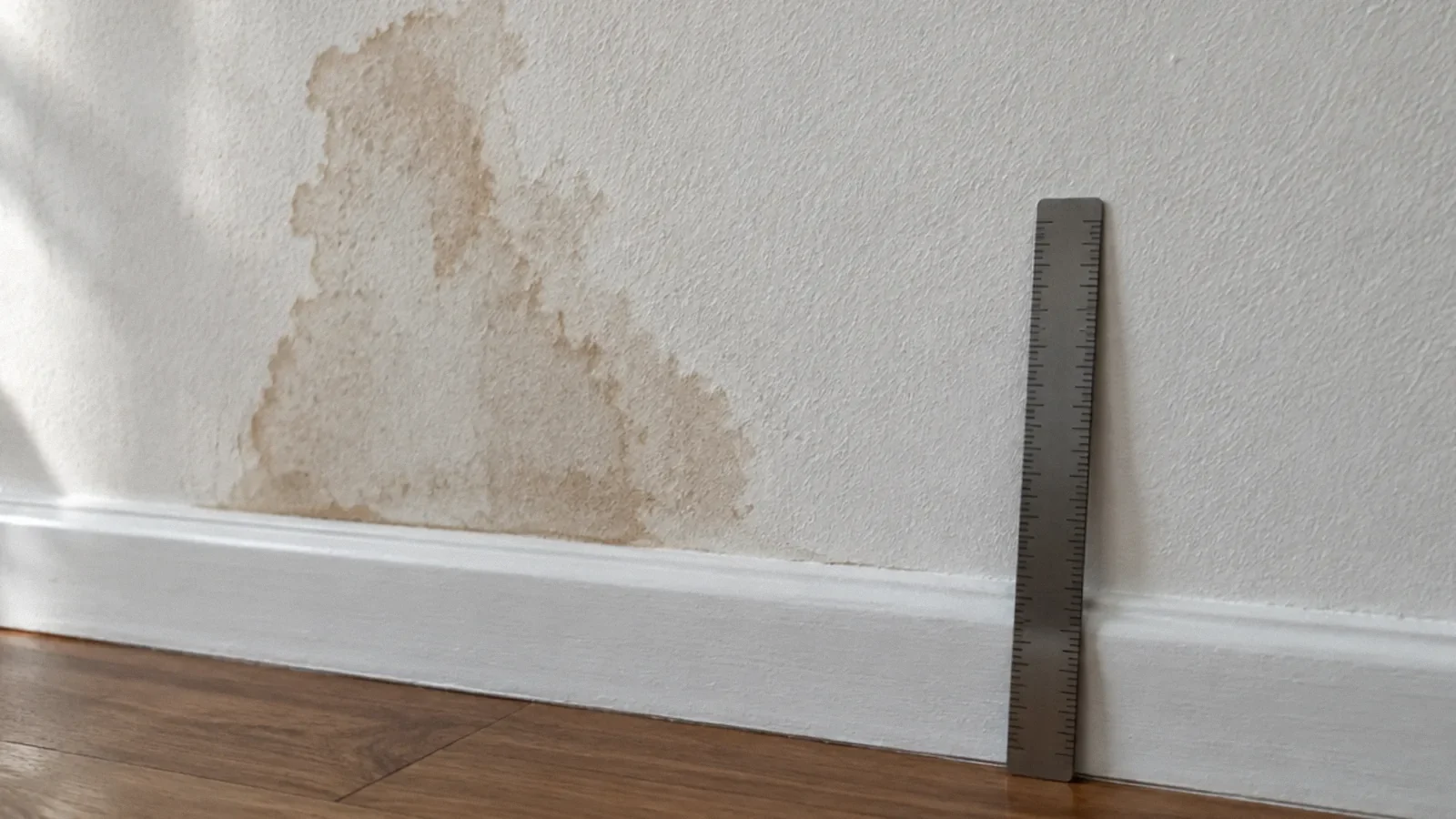
Compare the likely covered loss with the applicable deductible, but account for hidden damage and reporting duties. A small visible stain can be a poor estimate of the final repair scope.
Estimate the loss before treating it as small
The cost of repainting a stain is not the same as the cost of diagnosing and repairing the water event behind it. An initial assessment should distinguish source repair, emergency protection, damaged building materials and belongings. If the source remains active or the affected area is unknown, the financial comparison is incomplete. Arrange appropriate investigation without postponing reasonable protection of the property.
The NAIC claims guide recommends checking the deductible and recognizing that not all damage may be visible. That supports a measured decision, not a rule that every water incident should become a claim. Ask a qualified person what can be established now, what remains concealed and what additional investigation would change the estimate.
Find the deductible that actually applies
Policies may have different deductibles for different perils or endorsements. Read the declarations and the form applicable to the event. A percentage deductible may refer to an insured value rather than a percentage of the contractor invoice. Ask the insurer or agent to explain the calculation in writing if the wording is unclear.
Do not subtract the deductible from the gross repair quote and call the result a guaranteed payment. The insurer must also consider covered causes, limits, depreciation and eligible expenses. Conversely, an expense outside coverage should not be counted as though insurance will reimburse it merely because it makes the total exceed the deductible.
Build a range with a clear uncertainty column
Use three groups: confirmed costs, estimated covered damage and unresolved items. Confirmed costs might include a paid emergency service invoice. An estimated repair should identify its quantities and assumptions. An unresolved item could be concealed flooring damage that cannot be evaluated until access is available. Avoid disguising that uncertainty as a precise total.
For illustration only, a repair close to the deductible with a verified isolated source presents a different decision from a similar initial estimate with several wet rooms and inaccessible cavities. The amounts alone do not capture the risk of an incomplete scope. Ask what observation would move the case from the lower-cost estimate to a substantially larger repair.
Ask how inquiries and notice are handled
A homeowner may want to understand coverage before deciding how to proceed. Ask the agent or insurer how the conversation will be recorded and what constitutes opening a claim in its process. Do not assume an inquiry is invisible, and do not assume every inquiry produces an identical consequence. Underwriting and claims-history practices vary.
At the same time, the policy may impose prompt notice or other duties. A decision to gather estimates is not permission to ignore them. Ask which obligations apply while the extent is being investigated. Retain a record of the answer, including the person, date and any reference number. No online rule about waiting a fixed number of days can replace the applicable policy requirements.
A decision worksheet without a universal threshold
Write four questions on one page: what damage is confirmed, what covered expense is reasonably expected, what remains unknown and what notice duty applies now? Answer each with a source, such as an inspection finding, policy page or written insurer response. This is more useful than a simple yes-or-no comparison between a repair quote and the deductible.
For example, an isolated fixture leak with a verified source repair and a small accessible affected area may have relatively limited uncertainty. A wet floor extending under fixed cabinets has a different uncertainty profile even if the first visible repair quote is similar. In the second case, ask what access or measurements are needed before relying on the estimate. Do not assume hidden damage exists, but do not price it as zero merely because it has not been examined.
If you contact the insurer while undecided, state the purpose accurately and ask how the interaction is recorded. Keep the response. An agent can explain policy features and process, but cannot reliably promise that a future premium or renewal outcome will never change. Make the decision with the available facts, household capacity and policy obligations rather than a guarantee about an unknowable future. Record the reason for the decision so it can be revisited when new evidence appears.
Your next-step checklist
- Get a scope-based estimate rather than a cosmetic repair guess.
- Confirm the correct deductible and any special water-loss limit.
- Ask how the insurer records an inquiry and what notice duties apply.
- Keep photographs and receipts even if paying without insurance.
- Reassess promptly if additional affected materials or rooms are discovered.
Related questions
Is there a universal claim amount that makes filing worthwhile?
No. The deductible, covered scope, available funds, uncertainty and policy obligations differ. A fixed internet threshold can produce the wrong decision for an extensive concealed loss.
Can I wait until every invoice is final before notifying the insurer?
Do not assume so. Check the policy and obtain guidance about notice while the scope is developing. Final pricing and initial reporting are different stages of the process.
Sources & context
Public guidance supports the principles in this article. The practical questions and examples are editorial interpretation, not a site assessment or a coverage decision. State-specific rules apply only where identified.
- NAIC: Post-Disaster Claims Guideofficial
- California Department of Insurance: Residential Insurance, Homeowners and Rentersofficial
- California Department of Insurance: Residential property claims guidestate insurance guidance
Community questions behind this topic
These discussions helped identify reader concerns. They are anecdotal, not technical or legal authority.