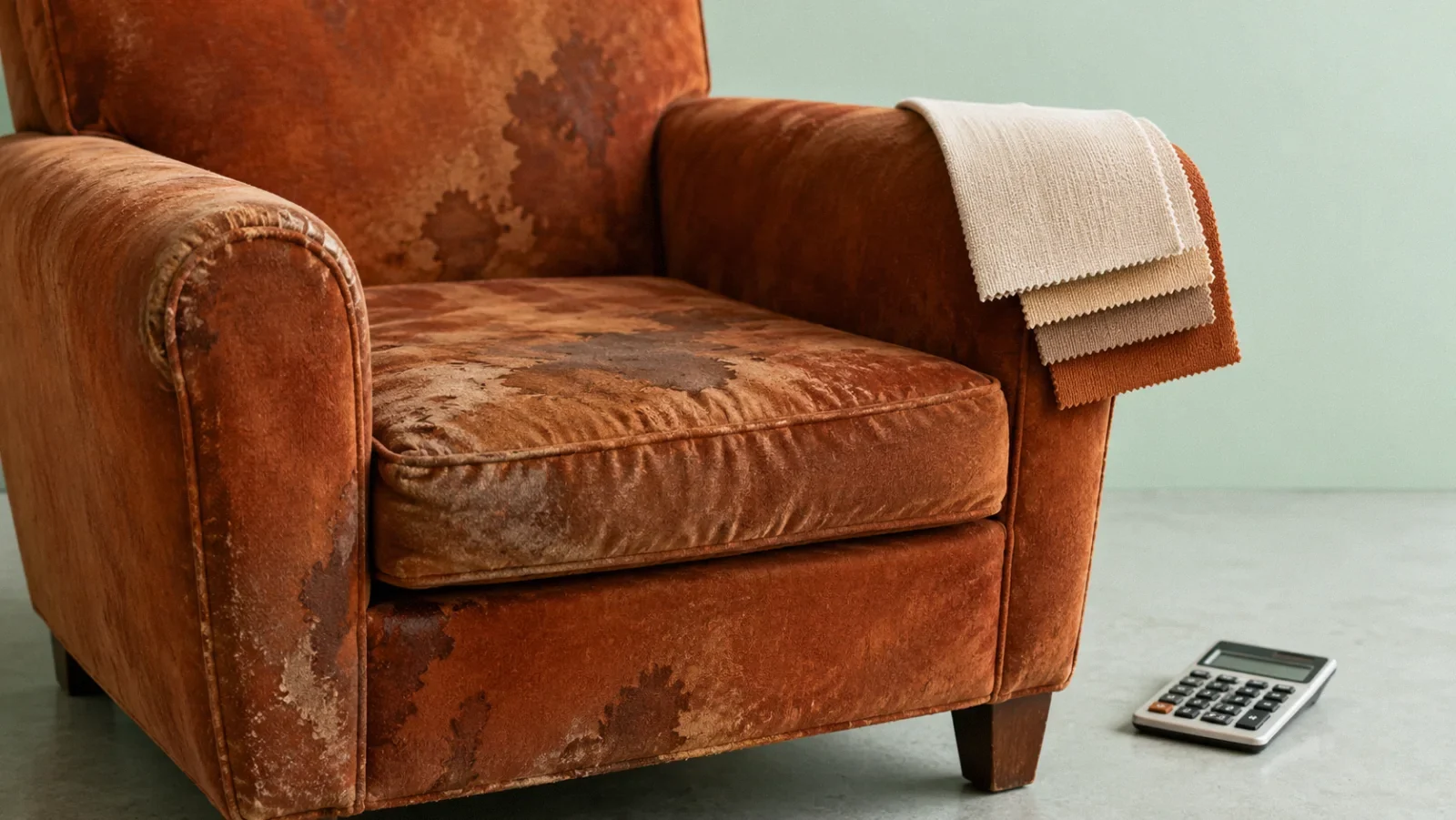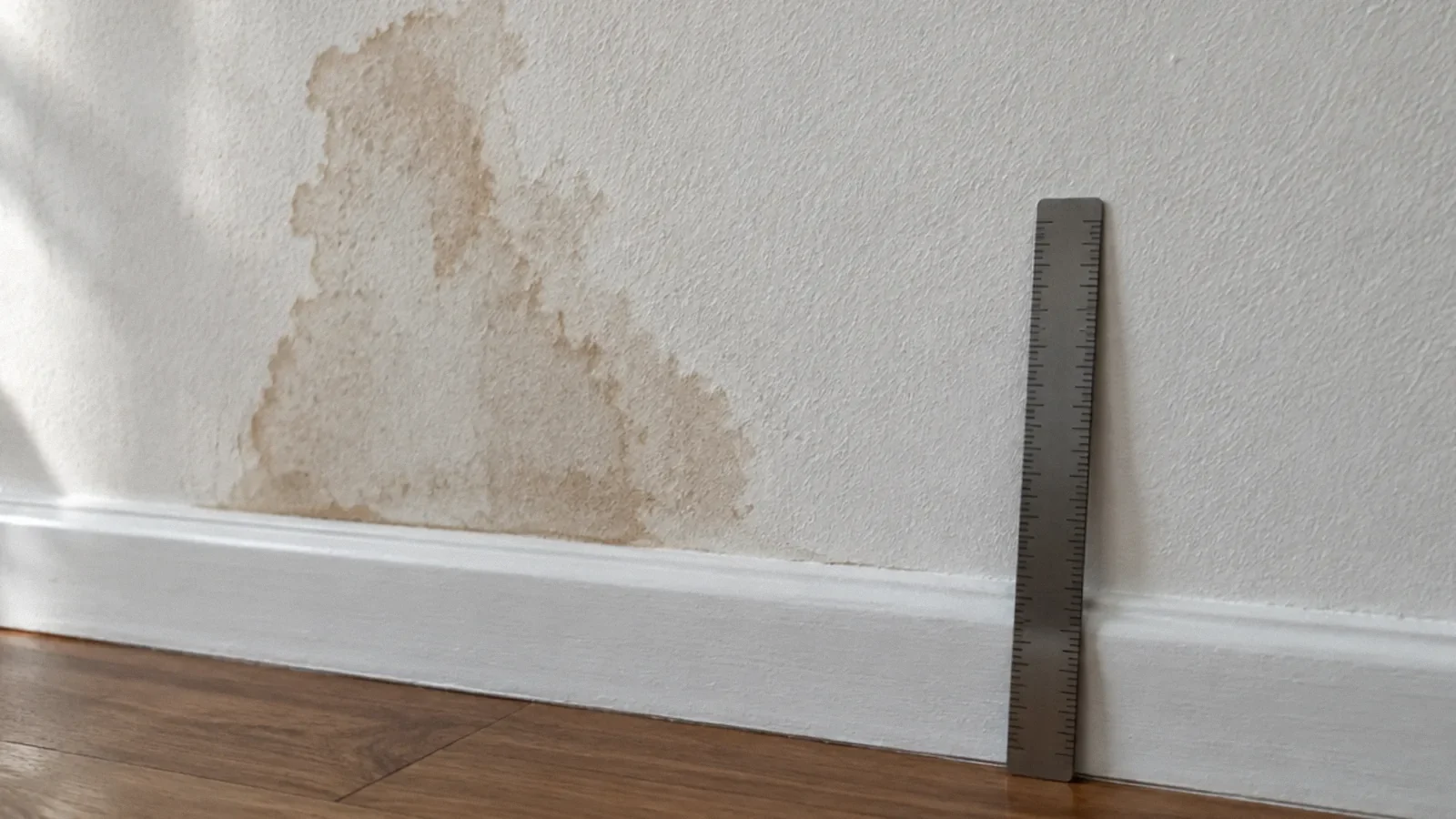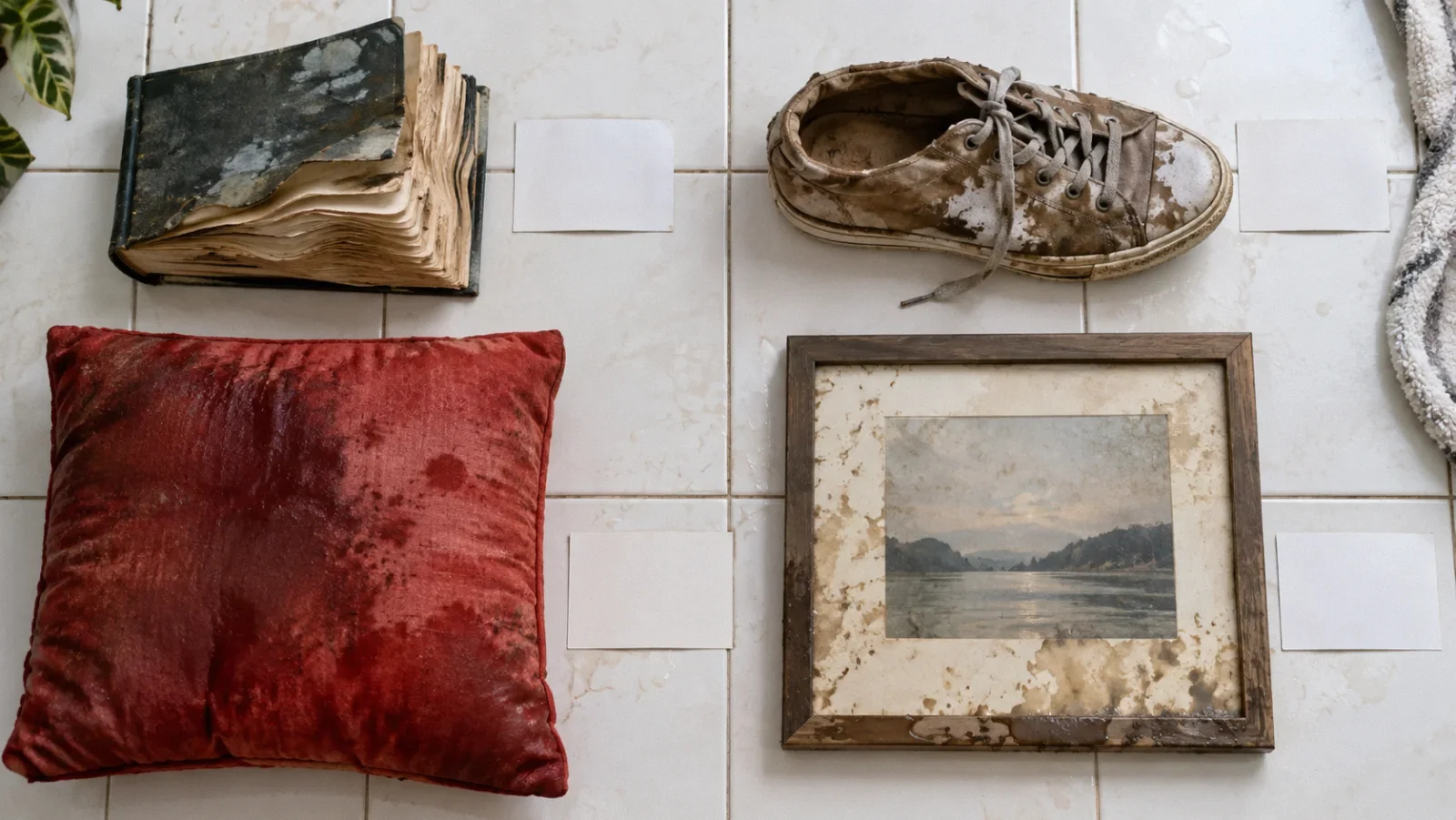
Build the inventory item by item, with location, description, age, condition and supporting evidence. Separate destroyed property from items awaiting a cleaning or repair decision.
Inventory is a record, not a disposal instruction
A contents inventory describes what was affected and supports valuation. It should not tell a homeowner to discard every object that touched water or to save everything regardless of contamination. Decisions about safe cleaning, disposal or specialist conservation belong in a separate assessment. Link that decision to the inventory entry once it is made.
A Reddit homeowner after a septic backup asked how to record decorations, family pictures and sealed memorial objects. The issue was more nuanced than a list of expensive electronics. Low-price items can be numerous, sentimental value may not translate into insured market value, and a cleanable object may generate a restoration expense rather than a replacement claim.
Describe items so a reviewer can identify an equivalent
A useful description includes the item type, dimensions or capacity, material, important features, approximate purchase date and pre-loss condition. For clothing or household goods, record meaningful counts and categories rather than writing miscellaneous belongings. For a set, distinguish complete loss from individual damaged pieces.
Avoid upgrading the description to match a more expensive modern item. If an exact model is discontinued, retain evidence of its features and note that the comparison is an equivalent rather than an exact match. The goal is an accurate replacement or valuation basis under the policy, not the largest price found online. Original receipts help, but they are not the only possible record.
Recover evidence when receipts are missing
The NAIC claims guide suggests using photographs, memory and other available records to reconstruct an inventory. Household photos, online order history, product manuals and financial records may help identify an item and its age. State when an age or purchase price is estimated. Do not invent a receipt or exact date to make an entry appear complete.
Use one consistent identifier for each item or logically grouped set. A photograph filename can include that identifier, while the spreadsheet links to a folder containing supporting material. Preserve original files and keep explanatory edits separate. This makes it easier to answer questions without repeatedly searching a pile of unrelated photographs.
Separate condition, action and valuation
Use different columns for observed damage, recommended action and requested amount. Observed damage might be water exposure, visible swelling or contamination. Recommended action might be specialist evaluation, cleaning, repair or disposal. Requested amount should reflect the type of expense and supporting quote or receipt.
Do not mark an item destroyed merely because its treatment is undecided. Likewise, do not omit a damaged item solely because it might be cleanable. Ask the adjuster how to record evaluation and cleaning costs, and obtain relevant authorization. Special categories such as collectibles, jewelry or fine art may have policy limits or scheduled coverage that require separate attention.
Reconcile the inventory with payments and replacements
The California claims guide distinguishes actual cash value and replacement cost and explains that replacement-cost payments can involve later documentation. Ask which valuation method applies to contents and what evidence is needed for any additional payment. The exact conditions and time requirements come from the policy and applicable law.
Track the insurer allowance, any depreciation, initial payment, replacement purchase and later submission for each entry. If an item is repaired instead of replaced, update the record rather than leaving an obsolete replacement claim uncorrected. If a missing object is later found intact, notify the insurer. A transparent revision history is more useful than silently overwriting the original list.
- Identification fields: item number, room, description, quantity and supporting photograph reference.
- History fields: approximate age, purchase information, pre-loss condition and evidence source.
- Damage fields: observed effect, assessor recommendation and whether the decision is pending.
- Financial fields: quoted cleaning or replacement cost, insurer allowance, payments and outstanding questions.
An inventory entry for a partly salvageable collection
Suppose a box contains holiday decorations, framed photographs and several objects with sentimental significance. Do not reduce it to one line reading basement box. Group similar low-value items where the insurer accepts that format, state the quantity and provide photographs. Give distinct items their own entry when their material, condition or treatment differs. Note which items were directly exposed to contaminated water and which were stored above it.
For a framed photograph, the physical frame, printed image and possible reproduction cost are separate from its emotional significance. Ask how the insurer wants a restoration or reproduction quote recorded. For a sealed object that may be cleanable, mark evaluation or cleaning pending rather than automatically claiming replacement. The inventory should describe the condition, not predetermine a technical treatment.
When an item is later cleaned successfully, update its action and cost fields while retaining the earlier version. When a specialist concludes that treatment is impractical, attach that finding. This preserves an honest chain from initial observation to final request. It also prevents the common spreadsheet problem of submitting both an estimated replacement cost and the actual cleaning charge as separate unreimbursed losses for the same item without explanation. Ask the adjuster how to reconcile any advance already paid.
Your next-step checklist
- Start with a room-by-room walk-through or safe photographic review.
- Record ordinary household goods as well as high-value objects.
- Label uncertain ages and values as estimates with their basis.
- Keep cleaning, repair and replacement decisions distinct.
- Ask for inventory submission requirements and retain every version sent.
Related questions
Can I claim sentimental value?
Do not assume an insurance policy pays emotional value. Document the physical item and ask about eligible restoration, reproduction or replacement costs. Valuable or specially insured items may require additional records or appraisal evidence.
Must every item have its own row?
Ask the adjuster how it accepts grouped items. Logical groups can be workable when quantity, description and value remain clear, but a vague whole-room total is difficult to assess and may hide significant differences.
Sources & context
Public guidance supports the principles in this article. The practical questions and examples are editorial interpretation, not a site assessment or a coverage decision. State-specific rules apply only where identified.
- California Department of Insurance: Residential Property Claims Guideofficial
- NAIC: Post-Disaster Claims Guideofficial
Community questions behind this topic
These discussions helped identify reader concerns. They are anecdotal, not technical or legal authority.