An outdoor fecal smell can come from animal waste, garbage, a plumbing vent, a damaged sewer line or a septic system. Location, timing, wet ground and drain behavior help narrow the possibilities, but smell alone cannot identify the source. Keep away from suspected sewage and have persistent or accompanied odors investigated.
Start with the location and timing
A brief unpleasant smell outdoors does not automatically mean that your sewer is broken. Animal droppings, a trash or compost container, fertilizer, nearby construction or a municipal wastewater source may produce a similar odor. Wind can move an odor away from its source, and rain or changing temperatures may make it more noticeable. Note where it is strongest, whether it comes and goes, and whether anyone else nearby notices it. Do this from a safe distance without touching unknown wet material.
Compare the timing with normal household activity. An odor near a plumbing vent after a large discharge may suggest a different investigation from a persistent smell over a wet patch in the yard. Neither observation proves a cause. A simple written log of time, weather, location and any slow drains gives a plumber or utility a useful starting point.
Check for external sources without opening anything
From a safe public or accessible part of your property, look for pet waste, a leaking garbage bag, a compost bin or a recently fertilized area. A nearby storm drain, neighboring property or public sewer facility may be involved even when the smell seems to come from your own yard. Move a closed trash container only if doing so does not require handling contaminated liquid; otherwise contact the appropriate service.
Look for a pattern rather than following the smell into a confined or unsafe place. Do not lift a septic tank lid, open a sewer cleanout, enter a tank or crawl into an enclosed space. Sewage gases and oxygen-deficient atmospheres can be dangerous. If an odor resembles natural gas or you hear a hissing sound, leave the area and contact your gas utility or emergency services from a safe place. Do not use electrical switches or flames near a suspected gas leak.
Look for clues around a septic system
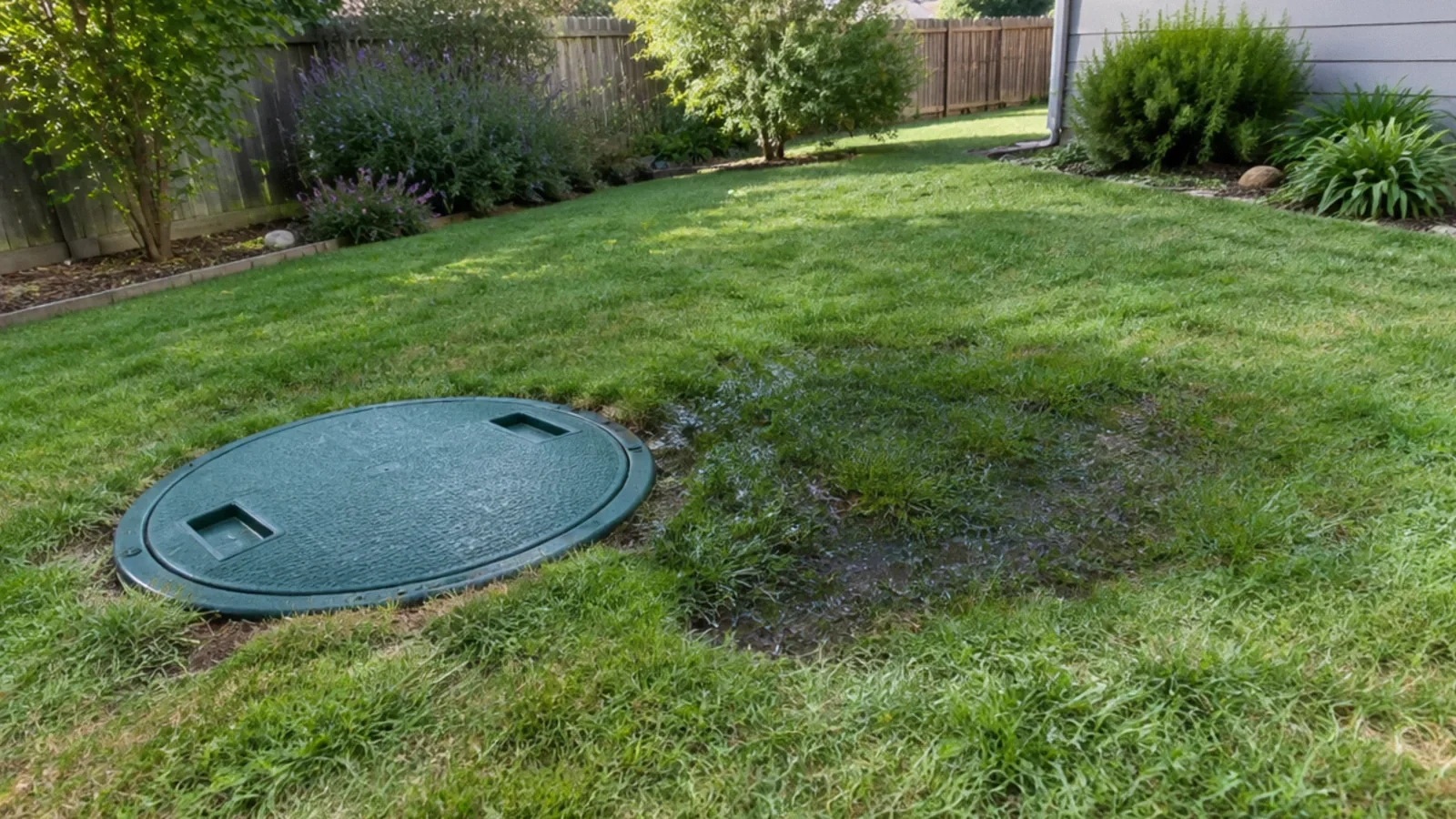
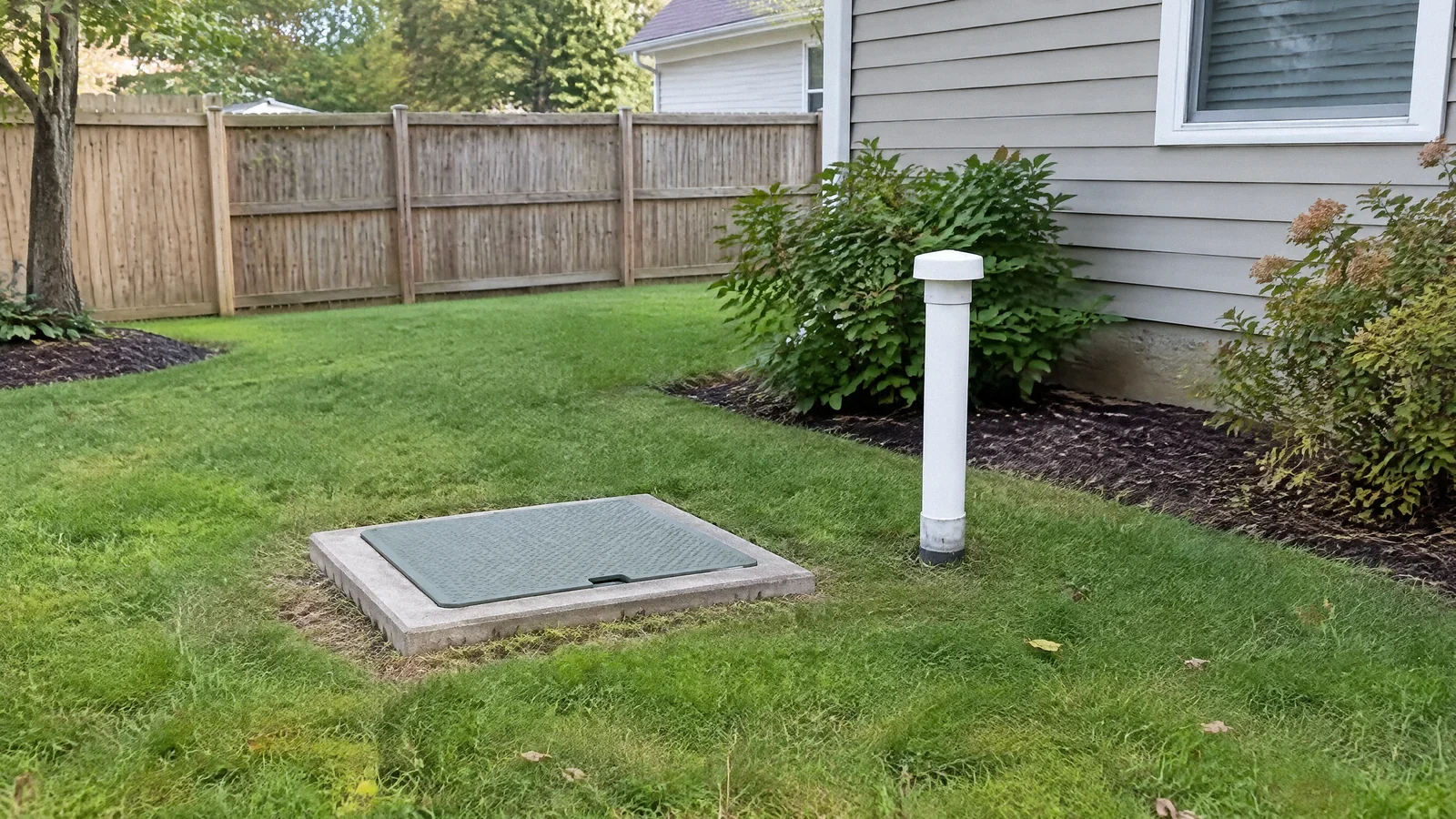
If your home uses an onsite septic system, a persistent odor around the tank or drainfield deserves attention. EPA lists sewage odors, standing water or damp soil near the system, unusually lush spongy grass, slow drains, gurgling and backups among possible signs of malfunction. One sign alone does not diagnose the problem, and a system can fail without an obvious smell.
Keep children and pets away from wet or suspected contaminated ground. Avoid driving across the drainfield, digging into it, opening covers or attempting to pump the tank yourself. Contact a qualified septic professional and share your system records, recent pumping history and observations. If wastewater is surfacing, reduce water use and contact the local health department as appropriate. During flooding, saturated ground can prevent normal septic operation; CDC recommends limiting water use and avoiding contact with water that may contain sewage.
Consider the sewer lateral and plumbing vent
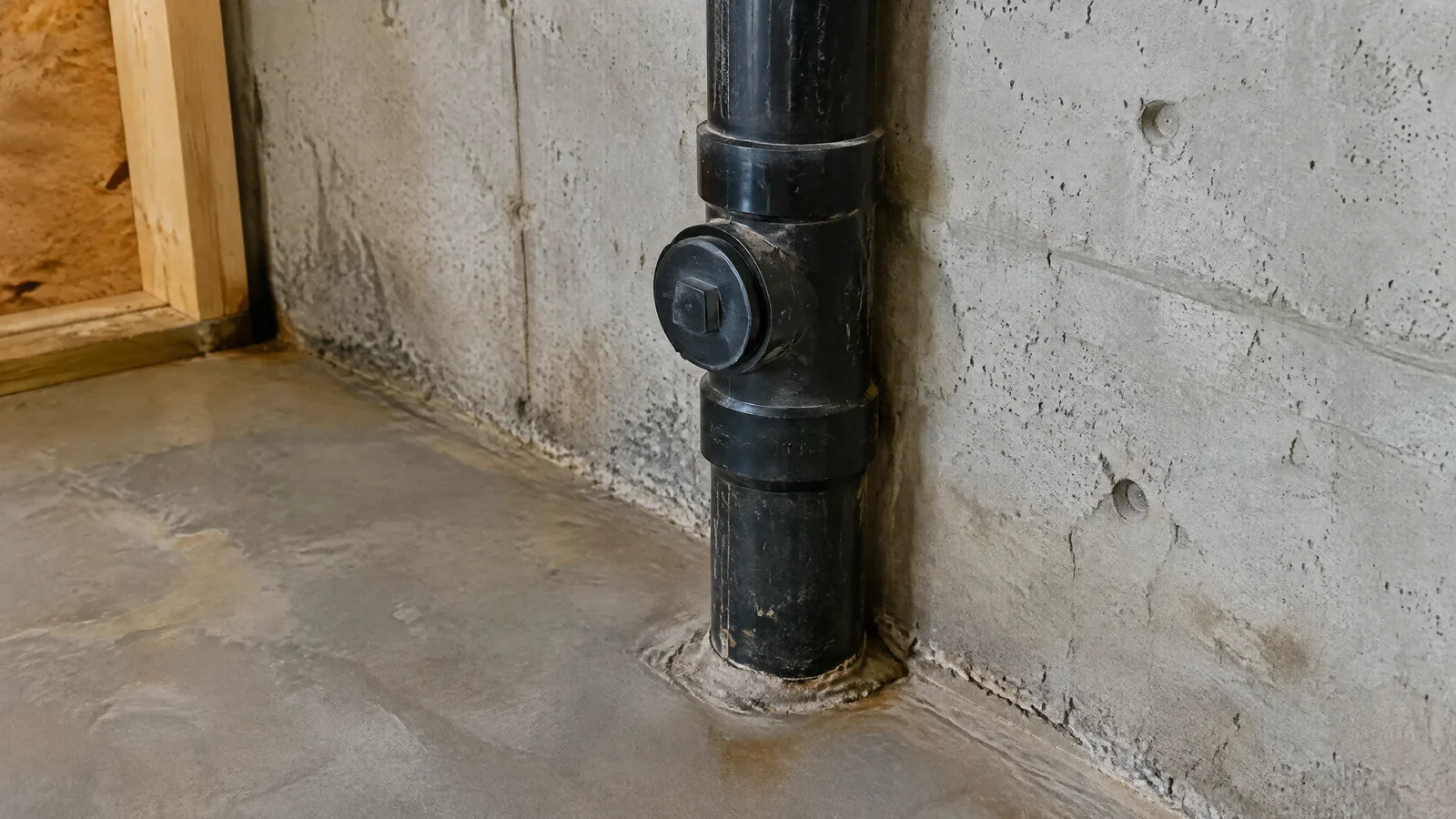
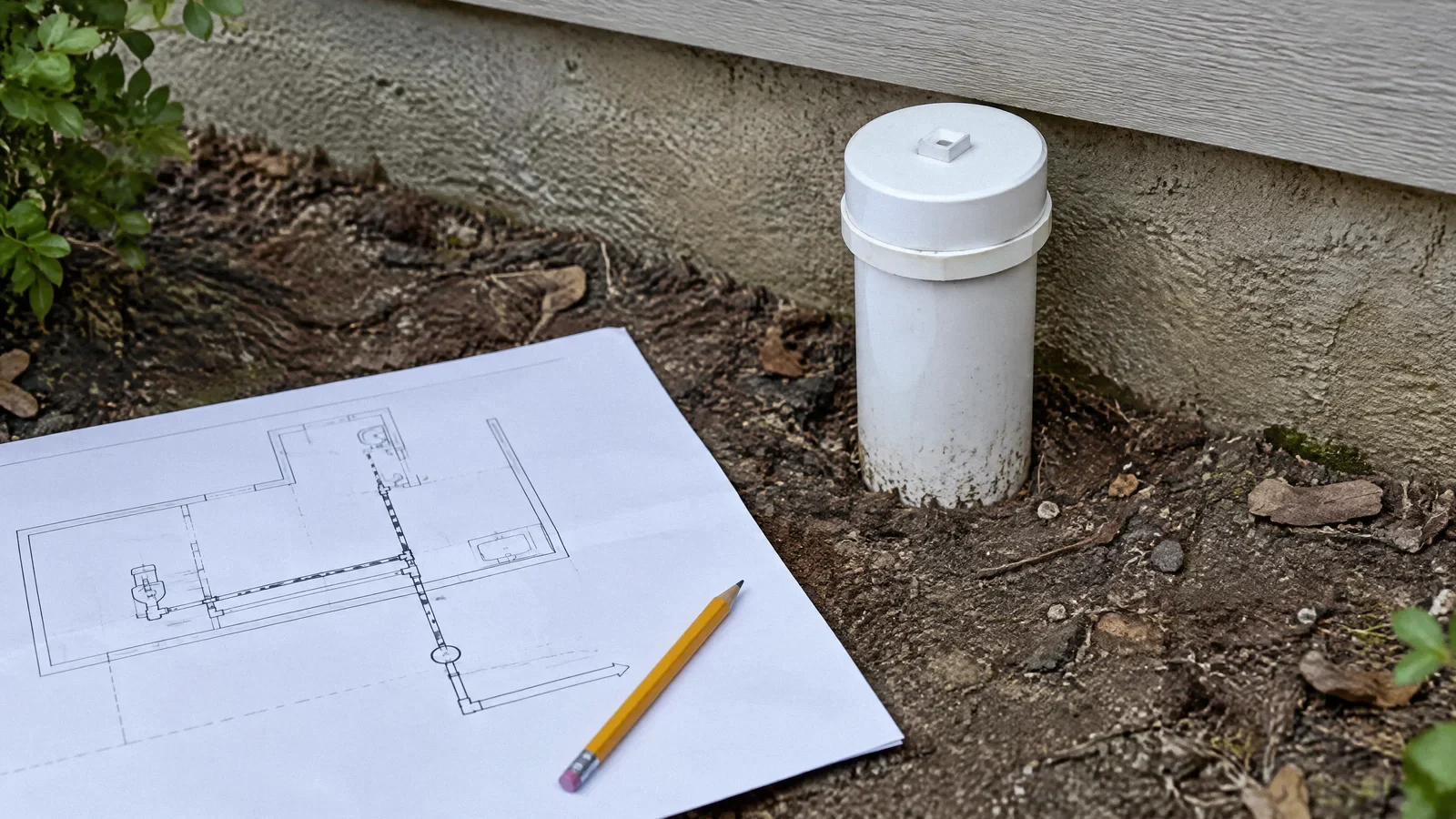
A property connected to a public sewer can also develop an outdoor odor. A damaged or obstructed private sewer line, a loose or damaged accessible cap, or wastewater escaping at a connection are possibilities a plumber can investigate. A wet area, recurring backup, multiple slow fixtures or gurgling provides additional context. The utility and property owner may have different responsibilities for different parts of the line; ask the sewer utility where its responsibility begins.
Plumbing vent outlets release gases above a building. Wind and building geometry can sometimes carry an odor toward a window or outdoor area. A persistent or unusually strong odor still warrants professional evaluation for blocked, damaged or incorrectly installed venting or another source. Do not climb onto a roof to inspect a vent. A plumber can assess the system safely and select a suitable test rather than assuming a vent is the cause.
Know whom to call and when
Call a plumber for recurring odors near the house, sewer route, cleanout or vent, particularly if drains are slow or backing up. Call a septic service when the home has a septic tank and the smell or wet area is near the tank or drainfield. Contact the municipal sewer utility if sewage appears to be coming from a street manhole or public line, or if several nearby properties are affected. Local environmental health officials can advise on an outdoor sewage release.
Treat visible wastewater as potentially contaminated. Do not walk through it, allow children or pets to play in it, hose it toward a storm drain or cover it with disinfectant to conceal the problem. Stop using affected fixtures and arrange urgent service if sewage is backing into the home. If flooding is present, avoid standing water and follow local emergency instructions; electrical hazards may be hidden.
What to record for the investigation
Take photographs from a safe distance of a wet patch or affected area, and record when it first appeared, the weather, recent rainfall and whether the smell coincides with flushing or laundry. Note whether the property has a septic system or municipal sewer, and gather any available inspection or repair records. These details help a professional decide whether to inspect a private line, septic components, a vent or a public connection.
Once a repair has been made, ask how to verify that the source has been corrected and what cleanup or ground restrictions are needed. Odor fading for a few hours does not prove that a leak has stopped, and repeated spraying of fragrance does not address a release. If the smell persists after the initial inspection, give the professional the updated pattern and ask what other sources remain to be checked.
Your next-step checklist
- Record where and when the odor is strongest.
- Look from a safe distance for pet waste, garbage, wet ground or visible wastewater.
- Note slow drains, gurgling, backups and recent rain.
- Keep away from suspected sewage and never open or enter a septic tank.
- Contact a plumber, septic professional or sewer utility according to the location.
Related questions
Does a sewage smell outside always mean a septic failure?
No. Animal waste, garbage, plumbing vents and other sources can smell similar. A persistent smell near a septic system, especially with wet ground or slow drains, should be evaluated.
Can rain make the odor worse?
Rain and saturated soil can change how an odor is noticed and can interfere with septic system operation. The timing is a clue, not proof of a particular failure.
Should I open the cleanout to investigate?
No. An obstructed line can release sewage, and the opening may expose you to hazardous gases. Ask a qualified plumber to assess it.
Sources & context
Public guidance supports the principles in this article. The practical questions and examples are editorial interpretation, not a site assessment or a coverage decision. State-specific rules apply only where identified.