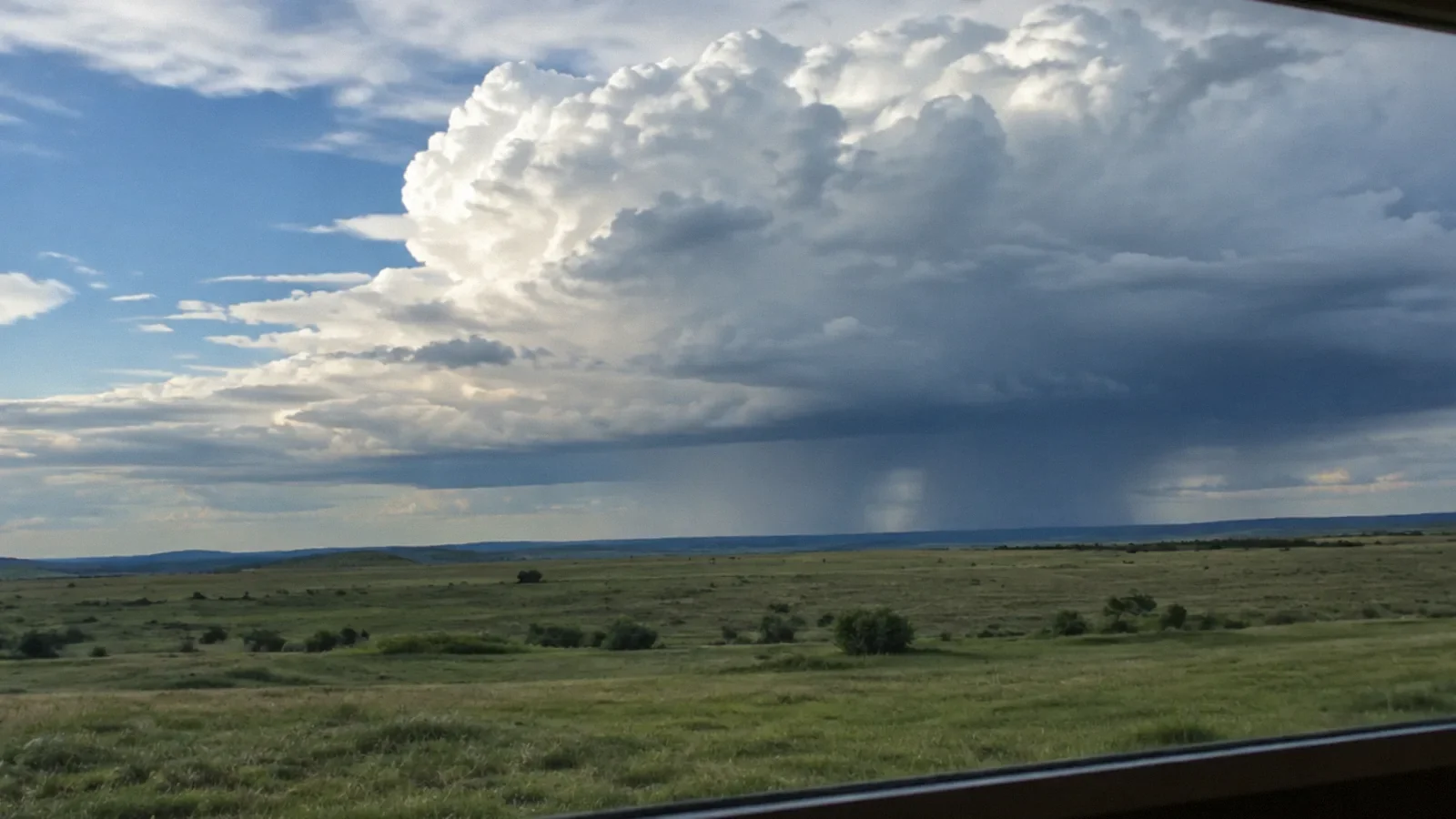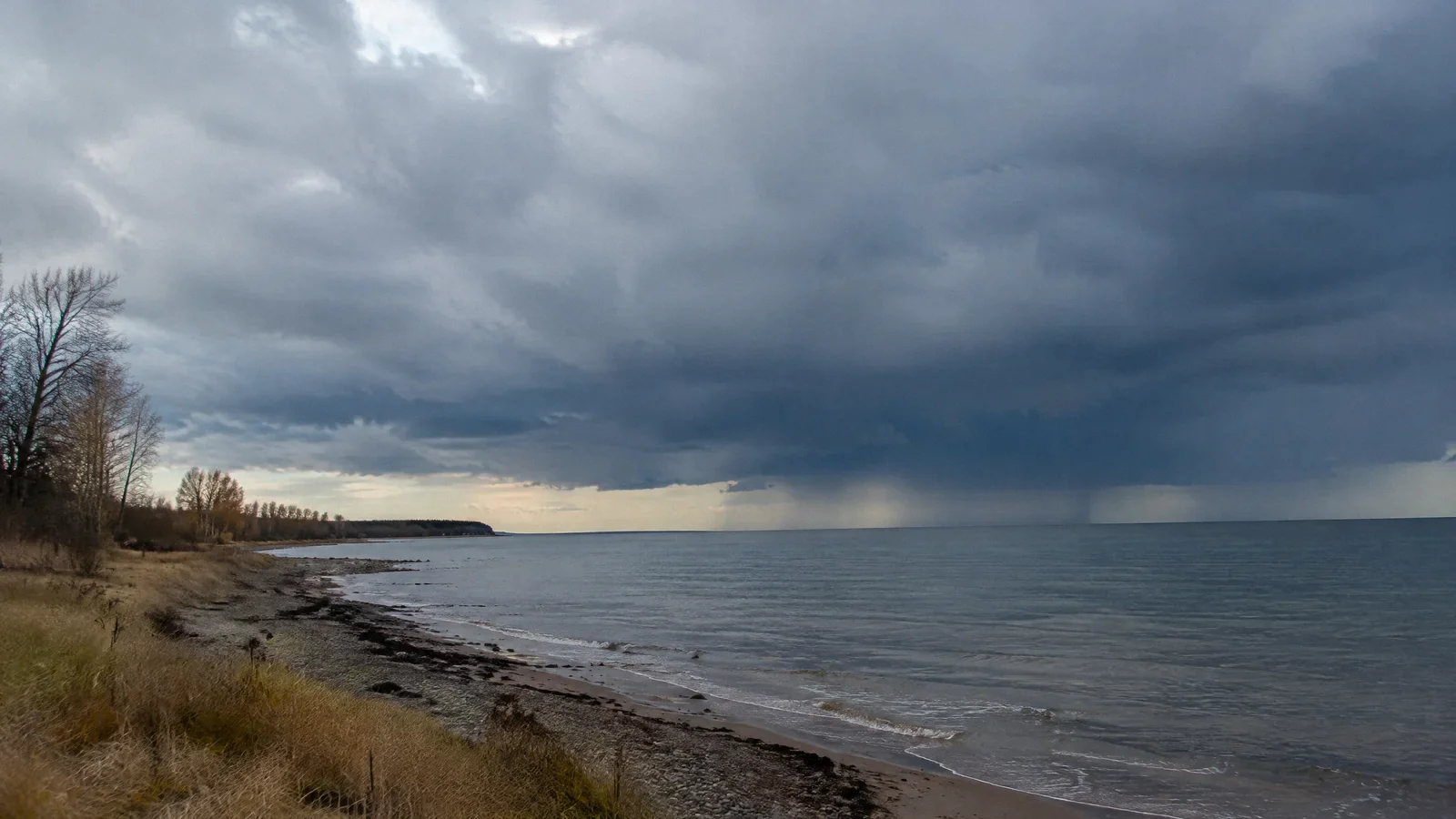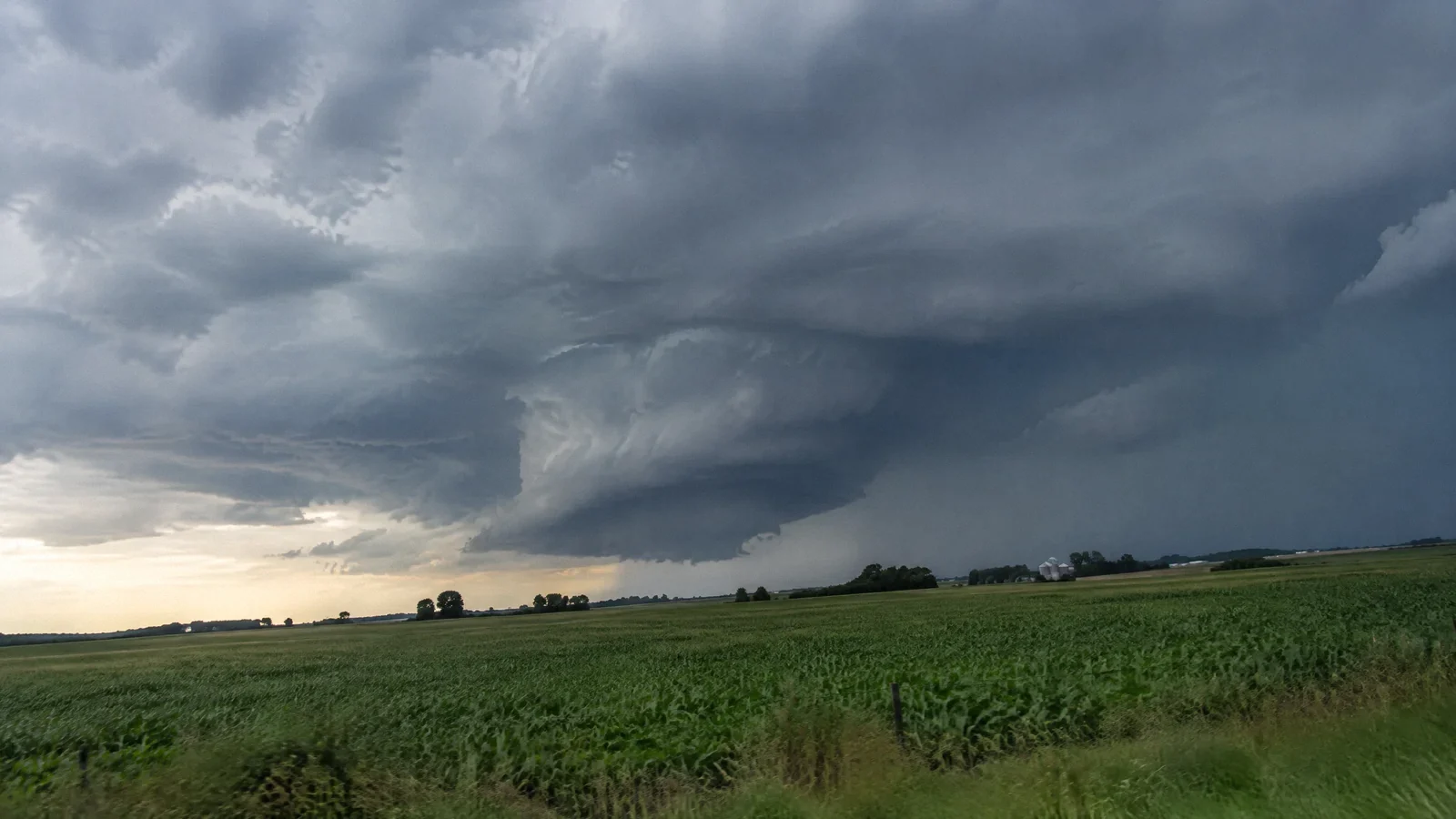
Tornado counts vary with weather patterns and how storms are observed and reported. A busy outbreak or a rise in reports alone does not establish a long-term national trend. Researchers compare consistent records and account for changing detection.
The conditions that produce tornadoes
Tornadoes form in certain thunderstorms when a combination of atmospheric ingredients supports organized rotation. Moisture and instability help thunderstorms develop, while changing winds with height can help a storm rotate. Not every rotating storm produces a tornado, and scientists continue to study why some storms do while others do not.
The United States has frequent encounters between different air masses and conditions favorable to severe thunderstorms. But favorable ingredients do not occur in the same places or at the same times every year. A sequence of storm systems can produce several active days, while another period may be much quieter.
Why a cluster can feel exceptional
A tornado outbreak can produce many reports in a short time across several communities. A single long-lived thunderstorm can produce multiple tornadoes, and several storms can occur in the same weather system. A busy day therefore reflects a particular set of atmospheric conditions; it does not by itself tell us what the national long-term trend is.
News and social media also make distant events visible almost immediately. Seeing many videos does not establish how many distinct tornadoes occurred, how strong they were or how the count compares with a consistent historical record. Treat early reports as preliminary until the National Weather Service completes its assessment.
Reports are not the same as confirmed tornadoes
During severe weather, the National Weather Service receives reports from trained spotters, emergency managers and the public, along with radar information. Initial reports can be duplicated or describe damage whose cause has not yet been established. Damage surveys and later review help determine whether a tornado occurred, its path and an estimated rating.
A preliminary report count should not be compared directly with a final annual count. Ask whether a number refers to reports, confirmed tornadoes, tornado days, injuries or another measure. Also check the geographic area and the date through which the data are complete. Each answers a different question.
Detection and reporting have changed
The observing system has changed substantially over decades. More people, improved communications, organized spotter networks and Doppler radar can make storms easier to detect and report than in earlier periods. The National Weather Service notes that increased reporting affects comparisons across historical records. An increase in recorded events does not automatically mean the same increase in actual events.
Changes can be especially consequential for weaker, short-lived tornadoes that might once have gone unnoticed in sparsely populated areas. Damage-based ratings also depend on what a tornado encounters and what can be assessed. Researchers therefore consider observation practices and uncertainty when comparing periods or regions.
What can long-term studies tell us?
NOAA’s State of the Science fact sheet explains that the historical storm-event database was not designed as a perfectly consistent long-term record. The fact sheet discusses changes in reporting and observes that annual U.S. totals of F/EF1–5 tornadoes have shown little to no trend over the record examined, while the distribution of tornado days and outbreaks has changed. This finding is specific to that dataset, rating group and study period.
Regional patterns can differ from a national total. A study summarized by the National Weather Service found increases in portions of the eastern United States and decreases in parts of the traditional Great Plains tornado area in the period analyzed. That is evidence of a geographic pattern in the study, not proof that every county or future year will follow it.
Climate, weather and uncertainty
Weather describes conditions during a particular event; climate describes patterns over longer periods. A single outbreak cannot establish the effect of climate change on tornado occurrence. Researchers study changes in storm environments and tornado records, but observation limitations and the complexity of storm formation make attribution difficult.
Avoid treating either a busy year or a quiet year as a final answer. A useful comparison states the period, region, detection method and intensity group. Scientific conclusions can change as records and methods improve. For immediate safety, the uncertainty about long-term trends does not reduce the importance of responding to a current warning.
Location and season still matter
Tornadoes can occur at any time of year and at any time of day. The National Severe Storms Laboratory explains that typical periods of higher activity vary by region, occurring earlier in spring near the Gulf Coast and later in the northern Plains and upper Midwest. These are broad patterns, not boundaries outside which tornadoes cannot occur.
A location that has experienced relatively few past tornadoes can still face a dangerous storm. Know how local warnings reach you, including at night, and choose shelter before a storm approaches. The separate guide to where and when tornadoes occur discusses regional timing in greater detail.
Use counts for context and warnings for action
For a historical comparison, use finalized data from an official source and compare the same measures over an appropriate period. Look for an explanation of what was counted and any limitations. A graphic showing reports in one week is useful for describing that week but cannot alone explain a national climate trend.
For a current threat, follow your local National Weather Service warning and move promptly to the best available shelter. A basement, storm shelter or engineered safe room offers protection; otherwise use a small interior room on the lowest floor of a sturdy building, away from windows. Protect your head and follow local emergency guidance.
Your next-step checklist
- Distinguish preliminary reports from confirmed tornadoes.
- Check the region, period and intensity group before comparing counts.
- Consider changes in detection and reporting.
- Do not infer a long-term trend from one outbreak.
- Respond immediately to a local tornado warning.
Related questions
Why do tornado counts change from year to year?
The weather conditions favorable to tornadoes vary over time, and observation and reporting also affect recorded counts.
Are more reports proof that more tornadoes are occurring?
Not by themselves. Detection, communications and reporting practices have changed, so historical comparisons require consistent methods and attention to uncertainty.
Can one outbreak prove a climate trend?
No. Researchers assess longer records, regional patterns and limitations; an individual outbreak cannot establish a long-term trend.
Can tornadoes occur outside spring?
Yes. Tornadoes can occur at any time of year, although typical periods of higher activity vary by region.
Sources & context
Public guidance supports the principles in this article. The practical questions and examples are editorial interpretation, not a site assessment or a coverage decision. State-specific rules apply only where identified.
- NOAA: Tornadoes, Climate Variability, and Climate Changefederal science assessment
- NWS: Is tornado frequency increasing in parts of the U.S.?federal research summary
- NOAA National Severe Storms Laboratory: Tornado Basicsfederal weather science
- National Weather Service: Severe Weather Reports by Yearfederal climatology guidance